
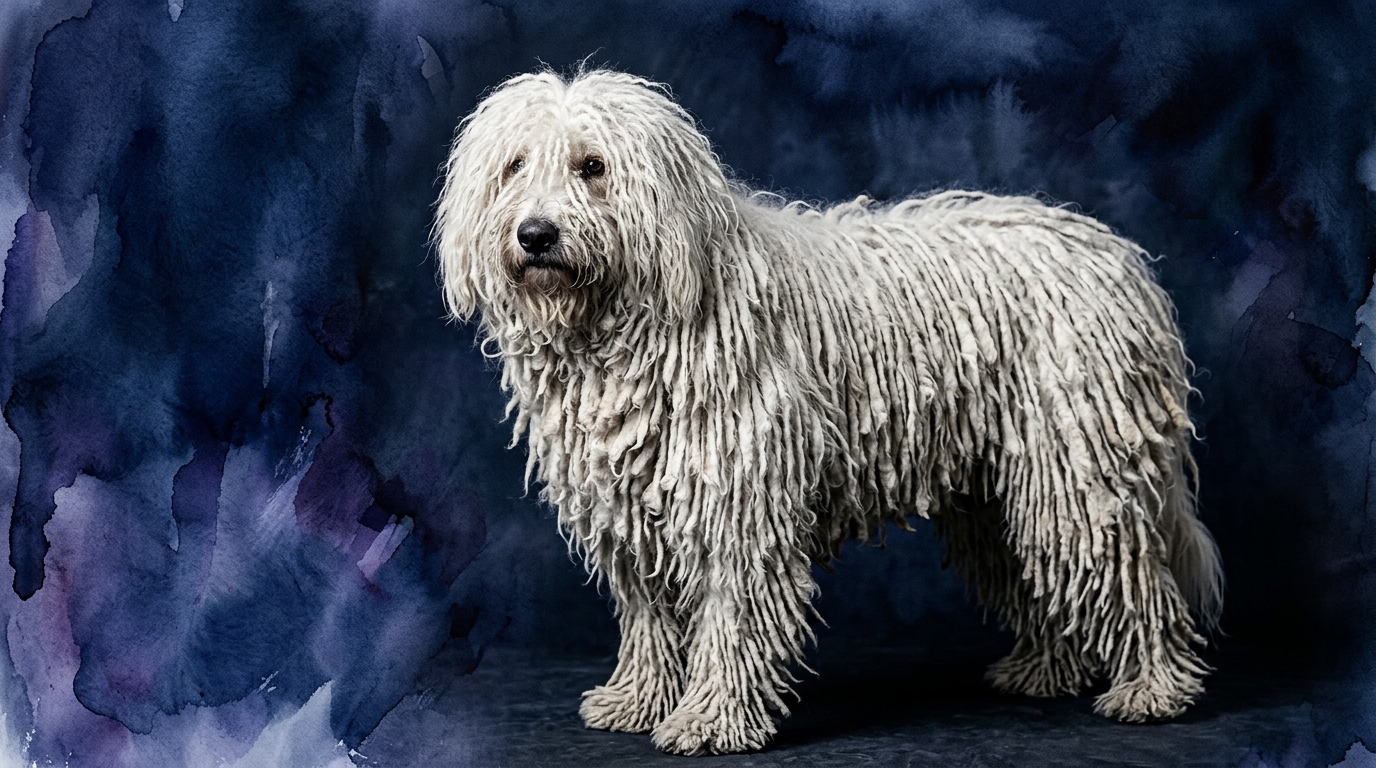
Side-by-Side IQ Profile: Groenendael vs. Komondor
The Belgian Sheepdog (Groenendael), with its Coren rank of #15, presents a profile of remarkable cognitive agility. Its Problem Solving is rated 5/5, indicating an exceptional aptitude for navigating complex situations, quickly assessing novel challenges and devising effective solutions. Training Speed also scores 5/5, meaning Groenendaels absorb new commands and routines with impressive rapidity, often grasping concepts in very few repetitions. Their Social Intelligence and Instinctive Drive are both 3/5, suggesting a capacity for strong handler bonds and a moderate herding drive focused on task execution. A stellar 5/5 Memory ensures they retain learned behaviors and environmental information over extended periods, making training cumulative and lasting.
In contrast, the Komondor, holding a Coren rank of #67, exhibits a cognitive makeup tailored for independent guardianship. Its Problem Solving is 3/5; Komondors approach challenges with a deliberate, independent thought process, often relying on innate guarding strategies rather than seeking constant human direction. Training Speed, also 3/5, means learning for a Komondor is a steady, thoughtful process; they require consistent, patient repetition to integrate new commands, reflecting their self-reliant nature. Social Intelligence at 3/5 is geared towards assessing threats and maintaining boundaries, leading to a reserved but watchful demeanor. An Instinctive Drive of 3/5 highlights their powerful, inherent drive to protect livestock and territory, influencing their decision-making. Their Memory, rated 3/5, allows them to retain important information related to their environment, routine, and perceived threats reliably.
Where the Belgian Sheepdog (Groenendael) Wins Cognitively
The Groenendael's cognitive strengths are particularly evident in its 5/5 Problem Solving and Training Speed. This breed excels at analytical problem-solving, a direct result of their historical role in complex herding tasks where dynamic situations demanded immediate, effective responses. This isn't merely about learning tricks; it's about their inherent capacity to figure out how to open a gate, navigate an agility course with minimal prior instruction, or adapt to novel scenarios with precision.
Their 5/5 Training Speed is a standout feature. Groenendaels don't just learn quickly; they eagerly anticipate the next command and delight in mastering it. This rapid acquisition of skills makes them exceptionally receptive to advanced obedience, competitive dog sports, and specialized working roles, where quick comprehension is paramount. Furthermore, their 5/5 Memory ensures that once a Groenendael learns something, it is deeply ingrained, rarely forgotten even after long breaks. This robust memory underpins their consistent performance and ability to build upon a vast repertoire of commands and experiences in demanding environments.
Where the Komondor Wins Cognitively
While its scores may appear lower, the Komondor's cognitive profile is perfectly optimized for its millennia-old purpose. Its 3/5 Problem Solving reflects a specialized form of self-reliant cognition. A Komondor needs to assess threats and make decisions independently in the field, without a human handler present, relying on subtle environmental cues and past experiences. This isn't a deficiency; it's a crucial strength for a livestock guardian dog, where immediate, autonomous judgment regarding territorial integrity and threat assessment is paramount.
The Komondor's 3/5 Social Intelligence is acutely tuned to discerning friend from foe and maintaining a stable, protective presence. Their reserved nature means they are not easily swayed or distracted by external stimuli, allowing them to remain vigilant and focused on their charges. This steady, discerning social processing minimizes unnecessary interactions, conserving energy for genuine threats and fostering a quiet, unwavering bond with their family. Additionally, their 3/5 Memory is robust for what truly matters in their world: remembering the layout of their territory, recognizing family members and approved visitors, and recalling past threats. This practical and enduring memory serves their protective instincts, ensuring consistent vigilance.
Training Dynamics: Which is Easier and Why?
The Belgian Sheepdog (Groenendael) is unequivocally easier to train for general obedience and competitive tasks. Their 5/5 Training Speed and Memory mean they pick up commands almost instantly and retain them reliably. Groenendaels are eager to please, thrive on mental stimulation, and possess a strong work ethic derived from their herding background. They look to their handler for direction and enjoy the collaborative process of learning, with their focus primarily on interaction and task mastery. This inherent drive for partnership makes them highly responsive to positive reinforcement and consistent training.
Training a Komondor, however, requires a different approach and significant patience. Their 3/5 Training Speed and Problem Solving indicate they learn at a more deliberate pace. Komondors are independent thinkers, bred to make their own decisions in the field rather than constantly seeking human input. Training them involves convincing them that a command serves a purpose they deem valuable or aligns with their protective instincts. They will comply not out of a primary desire to please, but because they respect their handler and understand the command's utility. Their instinctive drive is towards guarding, not necessarily performing arbitrary tasks for human approval, demanding a respectful and consistent approach from their owner.
Matching Canine Cognition to Owner Lifestyles
For active owners seeking a dynamic partner, the Belgian Sheepdog (Groenendael) is an exceptional fit. Their high cognitive scores, particularly in problem-solving and training speed, mean they crave mental engagement as much as physical activity. Groenendaels excel in dog sports like agility, obedience, and herding trials, requiring an owner who can commit to consistent training, challenging activities, and an active lifestyle. A Groenendael thrives with a 'job' to do, whether it's formal sport, an active family companion, or a working role, demanding an owner who can channel their considerable intelligence and energy.
The Komondor, while requiring significant socialization and management, suits an owner who appreciates independence and a less 'busy' dog in terms of constant interaction, though not a truly 'relaxed' owner in terms of commitment. They are not high-energy dogs in the same way a herding breed is; their energy is reserved for guarding and patrolling their territory rather than constant running or playing fetch. Owners must appreciate their self-possessed nature and be prepared for a dog that is deliberate and watchful, requiring a calm, confident leader who understands their guarding instincts, rather than an owner seeking constant interaction or a dog that lives for obedience commands. They are for those who value a steadfast, independent guardian over a highly interactive companion.
The Verdict
Opt for a Groenendael if you seek a highly trainable, interactive partner for dog sports, advanced obedience, or a demanding working role, and can provide ample mental and physical stimulation.
Select a Komondor if you value an independent, steadfast guardian with a reserved demeanor, understand the commitment to early socialization and consistent boundaries, and are prepared for a dog whose primary drive is protection rather than constant engagement.
🧠 Find Your Pet's IQ Score
Our Pet IQ Lab assessment covers 25+ tests across 5 cognitive dimensions — personalized to your breed.
Take the Full IQ Test →Frequently Asked Questions
How does the Coren rank influence their trainability?
The Coren rank reflects a breed's working and obedience intelligence, indicating how quickly they learn and obey commands. A rank of #15 for the Groenendael suggests they learn new commands rapidly and obey consistently, while the Komondor's #67 rank indicates a more deliberate learning pace and a greater tendency towards independent decision-making over immediate compliance. This difference directly impacts the speed and ease of training for typical obedience tasks.
Can a Komondor be trained for advanced obedience or dog sports?
While possible, training a Komondor for advanced obedience or dog sports requires exceptional patience, consistency, and a deep understanding of their independent nature. Their problem-solving and training speed scores of 3/5 mean they will learn more slowly and may not find the same intrinsic joy in repetitive tasks as a Groenendael, often preferring to engage in activities that align with their guarding instincts.
Which breed is better for a first-time dog owner?
Given their high training speed, eagerness to please, and strong desire for handler interaction, the Belgian Sheepdog (Groenendael) is generally a more suitable choice for a dedicated first-time owner willing to commit to extensive training and activity. The Komondor's strong guarding instincts and independent nature typically require a confident, experienced owner who understands the nuances of livestock guardian breeds.