
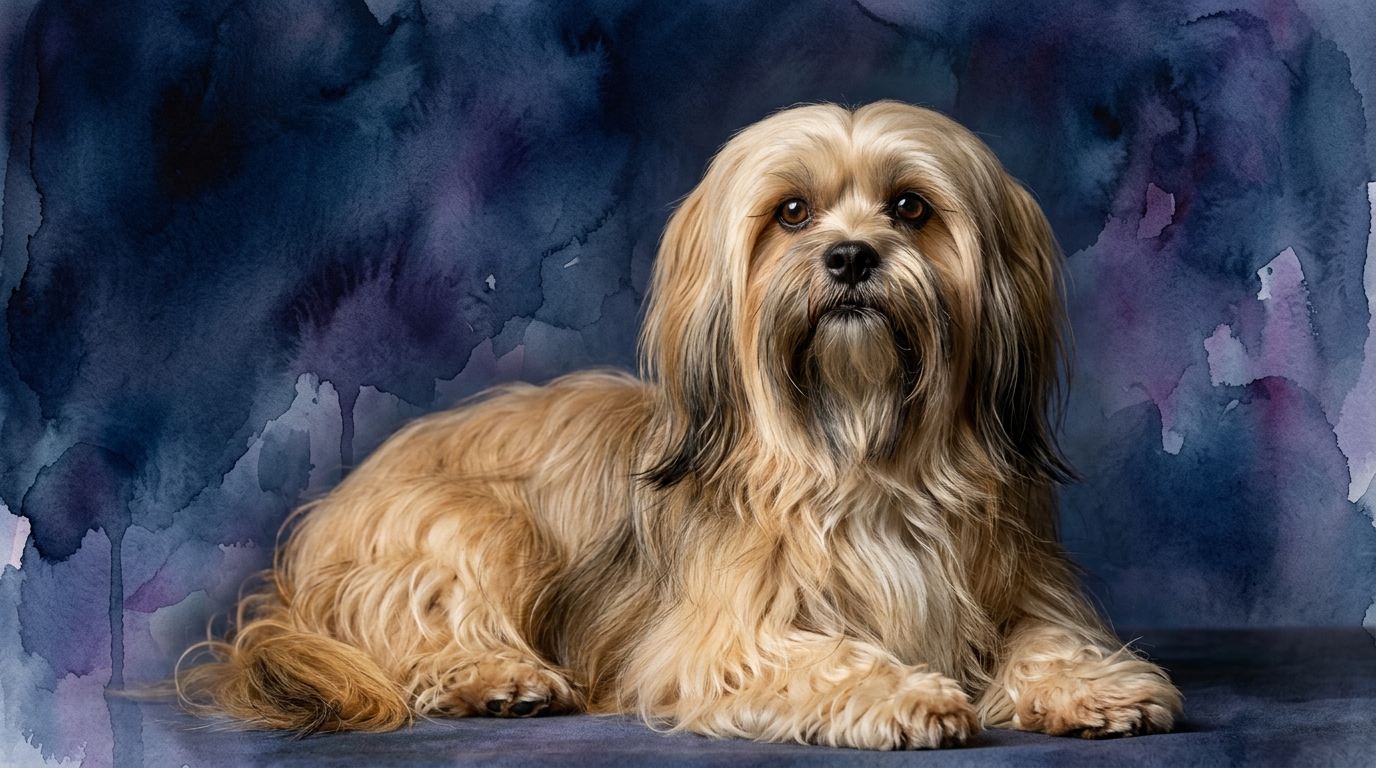
A Tale of Two Cognitions: Side-by-Side IQ Profiles
The Cosmic Pet Pet IQ Lab categorizes canine intelligence across five key dimensions, offering a nuanced understanding of each breed's mental makeup. For the Belgian Sheepdog (Groenendael), a Herding breed, its cognitive profile reflects its demanding working heritage, while the Non-Sporting Lhasa Apso's scores align with its historical role as a discerning companion and sentinel.
Belgian Sheepdog (Groenendael) Problem Solving (5/5): This breed excels at navigating complex situations, often demonstrating foresight and strategic thinking in tasks. They can quickly assess environmental changes, adapt their approach, and figure out intricate sequences, whether managing a flock or learning a multi-step obstacle course. Their cognitive flexibility allows them to apply learned solutions to novel challenges with remarkable efficiency.
Belgian Sheepdog (Groenendael) Training Speed (5/5): Groenendaels absorb new commands and routines with exceptional rapidity. Their eagerness to engage and their capacity for quick association mean they can master advanced obedience, agility courses, or complex working roles efficiently. They thrive on mental stimulation and are quick to understand what is expected of them, making them highly responsive learners.
Belgian Sheepdog (Groenendael) Social Intelligence (3/5): While capable of forming deep, unwavering bonds with their primary caregivers, their social acumen with strangers or unfamiliar dogs tends to be more reserved and discerning. They are observant and protective, often assessing new individuals rather than immediately seeking interaction. This score reflects a selective rather than universally outgoing social disposition, prioritizing the security of their inner circle.
Belgian Sheepdog (Groenendael) Instinctive Drive (3/5): Their herding heritage imparts a strong drive to organize and control, often manifesting as a desire to 'gather' family members or chase moving objects. This instinct, while moderate, requires appropriate outlets and guidance to prevent unwanted behaviors like nipping at heels or obsessive chasing. It's a foundational element of their working temperament that needs constructive channeling.
Belgian Sheepdog (Groenendael) Memory (5/5): Groenendaels possess an exceptional ability to retain information over long periods, remembering commands, routes, and past experiences with striking accuracy. This robust memory contributes significantly to their training prowess and their capacity to learn complex, multi-step tasks without constant reinforcement. They rarely forget a lesson learned, making them reliable partners in intricate activities.
Lhasa Apso Problem Solving (3/5): Lhasas demonstrate a moderate ability to solve problems, often relying on persistence and observation rather than rapid strategic thinking. They can cleverly figure out how to get what they want, like accessing a comfortable spot or an extra treat, but may take more time or trial-and-error compared to breeds bred for complex working tasks. Their problem-solving is often geared towards their own comfort or desires.
Lhasa Apso Training Speed (3/5): This breed learns at a steady pace, but their independent nature means they may require more repetition and consistent motivation than highly biddable breeds. They are perfectly capable of mastering basic obedience, but complex multi-step commands might take longer to solidify. Patience, positive reinforcement, and making training enjoyable are key to effective learning with a Lhasa Apso.
Lhasa Apso Social Intelligence (3/5): Lhasas are discerningly social. They form strong attachments to their families but can be aloof or wary with strangers, a trait stemming from their historical role as watchful companions. Their social interactions are often on their own terms, preferring familiar company and observing new people from a distance, reflecting their protective instincts.
Lhasa Apso Instinctive Drive (3/5): Their primary historical instinct was to guard and alert, leading to a moderate territorial and vocal drive. This manifests as an alertness to new sounds or visitors, and a readiness to bark to signal perceived changes in their environment. While not a herding drive, it's a strong, protective instinct that shapes their daily behavior and their role as a vigilant household sentinel.
Lhasa Apso Memory (3/5): Lhasas have a solid memory for routines and familiar people, but their recall of specific commands or less-practiced lessons may not be as immediate or long-lasting as breeds with higher scores. They remember what is important to their daily lives and comfort, such as meal times or favored resting spots, but might need refreshers on less frequently used instructions.
Where the Belgian Sheepdog (Groenendael) Wins Cognitively
The Belgian Sheepdog (Groenendael) exhibits a pronounced cognitive advantage in areas demanding rapid analytical thought and information retention. Their 5/5 score in Problem Solving means they don't just react; they strategize, assessing novel situations and devising solutions, whether it's navigating an agility course or understanding complex household dynamics. This breed's mind is wired for intricate processing, allowing them to anticipate outcomes and adjust their behavior proactively, making them exceptional at tasks requiring planning and adaptability.
Coupled with their top-tier Training Speed (5/5) and Memory (5/5), Groenendaels absorb and retain vast amounts of information quickly and durably. They can master multi-step commands and intricate routines with fewer repetitions, and those lessons stick for the long term. This cognitive synergy makes them exceptionally adaptable to demanding roles, from competitive sports to service work, where precise execution and recall are paramount. Their capacity to learn from single experiences and apply those lessons to future, similar scenarios is a hallmark of their sharp cognitive abilities.
Where the Lhasa Apso Wins Cognitively
While the Lhasa Apso's scores might appear lower across the board, their cognitive strengths are uniquely suited to their historical purpose and companion role, making them adept in different ways. Their Problem Solving (3/5) often manifests as a determined resourcefulness aimed at achieving their own desired comfort or outcome. They might not solve complex mathematical equations, but they can cleverly manipulate situations to get the best sunbeam, a prime spot on the sofa, or an extra treat, demonstrating a persistent, goal-oriented application of their mental faculties tailored to their personal well-being.
Their Social Intelligence (3/5) and Instinctive Drive (3/5) are not about universal friendliness but about discernment and protective vigilance. A Lhasa Apso excels at accurately assessing newcomers, quickly differentiating between a welcome guest and a perceived intruder, a crucial trait for a guardian companion. This selective social acumen, combined with their strong alerting instinct, means they are highly attuned to their immediate environment and the security of their family, exhibiting a focused cognitive awareness of their surroundings that serves their watchdog role effectively.
Training Dynamics: Which is Easier to Train and Why?
When it comes to ease of training, the Belgian Sheepdog (Groenendael) holds a distinct advantage due to its exceptional Training Speed (5/5), Problem Solving (5/5), and Memory (5/5). These breeds are inherently eager to engage with their handlers, absorb new commands rapidly, and retain them with minimal refreshers. Their biddable nature means they are generally keen to please and respond well to consistent, positive reinforcement. They thrive on the mental challenge of learning complex tasks, making advanced obedience, agility, or specialized work a natural fit for their cognitive profile.
The Lhasa Apso, with a Training Speed of 3/5, presents a different training experience. While perfectly capable of learning, their independent and sometimes stubborn streak requires a more patient, consistent, and creative approach. They are not as inherently driven to please and may question the necessity of a command if it doesn't align with their immediate interests. Training a Lhasa Apso often involves finding strong motivators and making sessions engaging to overcome their natural self-reliance, rather than relying solely on their eagerness to perform. Building strong rapport and demonstrating the value of cooperation are paramount.
Matching Canine Cognition to Lifestyle: Active vs. Relaxed Owners
For owners embracing an active lifestyle, the Belgian Sheepdog (Groenendael) is an ideal match. Their robust physical capabilities and sharp cognitive profile demand substantial daily engagement. These dogs thrive on activities that challenge both their bodies and minds, such as long runs, advanced obedience, agility, herding trials, or even protection work. An owner who can dedicate several hours daily to structured exercise, training sessions, and mental puzzles will find a highly cooperative and fulfilled companion. Neglecting their need for stimulation can lead to boredom-driven behaviors, making them unsuitable for predominantly relaxed or sedentary households.
Conversely, the Lhasa Apso is a better fit for more relaxed owners, though they still appreciate regular, moderate activity. While they enjoy walks and playtime, their exercise requirements are significantly lower than a Groenendael's. Their compact size and adaptable nature mean they can thrive in various living situations, from apartments to houses, as long as they receive consistent attention and mental engagement in the form of short training sessions or puzzle toys. Owners who appreciate a devoted, watchful companion content with a comfortable routine and less strenuous physical demands will find the Lhasa Apso a suitable and charming addition to their home.
The Verdict
Choose the Belgian Sheepdog (Groenendael) if you seek a dynamic, highly trainable partner for sports, work, or an extremely active lifestyle, capable of complex problem-solving and deep learning.
Choose the Lhasa Apso if you desire a discerning, devoted companion who thrives on a comfortable routine, offers watchful companionship, and doesn't require intense physical or mental exertion, appreciating their independent spirit.
🧠 Find Your Pet's IQ Score
Our Pet IQ Lab assessment covers 25+ tests across 5 cognitive dimensions — personalized to your breed.
Take the Full IQ Test →Frequently Asked Questions
Is the Groenendael a good family dog?
Yes, Groenendaels can be excellent family dogs, forming strong bonds and being protective of their household. However, their strong herding instincts and high energy levels mean they require consistent training and socialization from a young age, and supervision around very young children who might be perceived as 'flock'.
Do Lhasa Apsos bark a lot?
Lhasa Apsos are known for their vocal nature, stemming from their historical role as alarm dogs. They tend to bark to alert their owners to new sounds, visitors, or perceived threats, which can be managed with consistent training but is a natural part of their communication.
What kind of mental stimulation does a Groenendael need?
A Groenendael needs extensive mental stimulation, including advanced obedience training, puzzle toys, scent work, agility, or even learning complex tricks. Their high problem-solving and memory scores mean they excel when given challenging tasks that engage their sharp minds daily.