
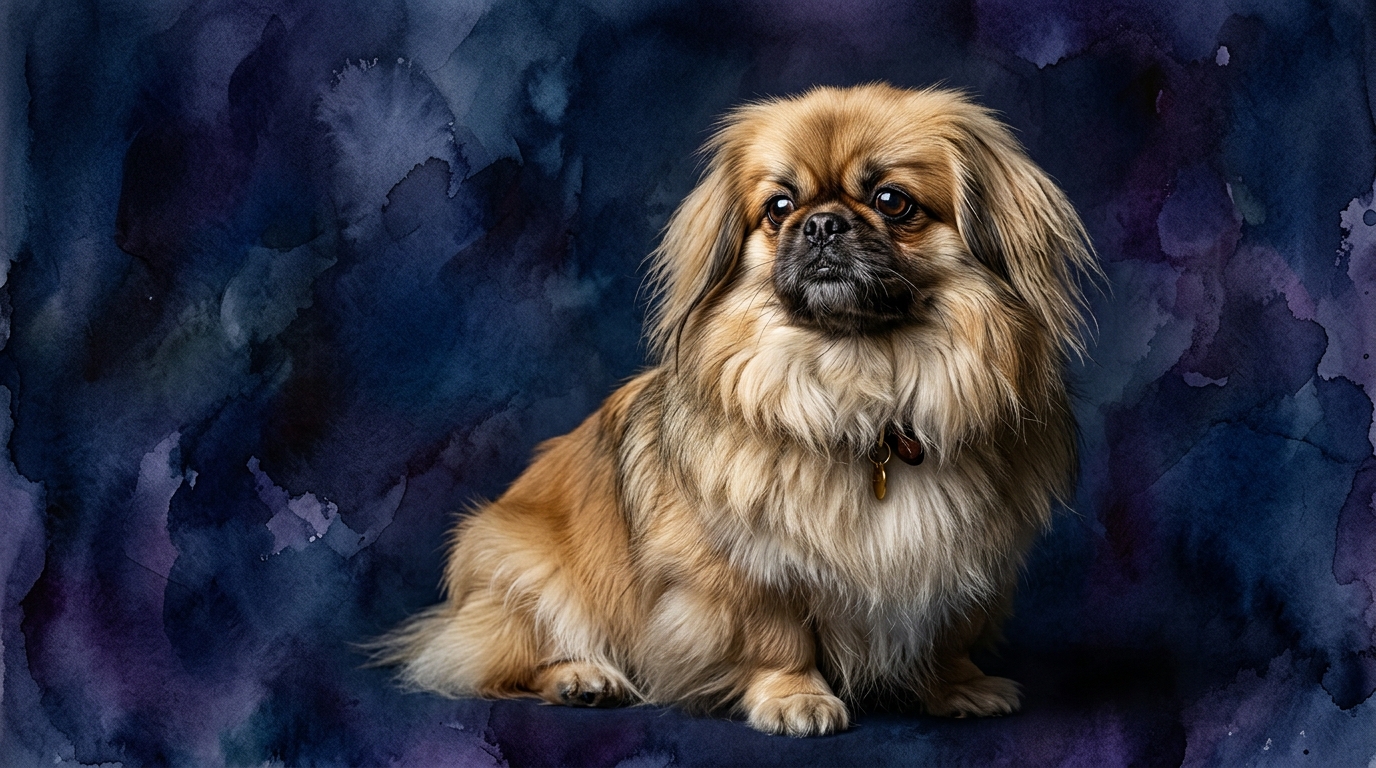
Side-by-Side IQ Profile: Groenendael vs. Pekingese
To understand the unique cognitive landscapes of these breeds, The Cosmic Pet Pet IQ Lab employs five core dimensions. Let's examine how the Belgian Sheepdog (Groenendael) and the Pekingese measure up in each area, offering a clear picture of their inherent abilities and tendencies.
The Belgian Sheepdog (Groenendael) presents a robust cognitive profile, reflecting its working heritage. Its **Problem Solving (5/5)** indicates exceptional cognitive flexibility, allowing it to readily analyze new situations and formulate effective solutions, excelling at tasks requiring strategic thought. With a **Training Speed (5/5)**, Groenendaels acquire new commands and behaviors with remarkable alacrity, grasping concepts quickly and often requiring minimal repetitions. Their **Social Intelligence (3/5)** suggests strong bonds with primary caregivers, though they may be more reserved with strangers, observing cues but preferring their trusted circle. A moderate **Instinctive Drive (3/5)** motivates them with a purpose-driven desire to herd and protect, making them attentive partners without extreme intensity. Finally, their **Memory (5/5)** is outstanding, ensuring long-term retention of learned behaviors, locations, and intricate routines.
The Pekingese, a toy breed, displays a more moderate and independent cognitive makeup. Its **Problem Solving (3/5)** reflects a capacity for learning and navigating its environment, but it may not spontaneously devise complex strategies for novel challenges, often favoring familiar routines. With a **Training Speed (3/5)**, the Pekingese learns new commands effectively but benefits from a steady, consistent approach, requiring patience and more repetition to solidify new behaviors. Their **Social Intelligence (3/5)** means deep attachments with their human family, often accompanied by an independent or aloof demeanor towards outsiders, understanding social dynamics within their established circle but not seeking broad engagement. A moderate **Instinctive Drive (3/5)** primarily focuses on companionship and guarding their immediate territory, manifesting as a desire for comfort and a watchful nature rather than strong task-oriented urges. Their **Memory (3/5)** is functional and reliable for daily routines and learned associations, retaining important information though perhaps not intricate sequences with the same precision as breeds with higher scores.
Where the Belgian Sheepdog (Groenendael) Wins Cognitively
The Groenendael's cognitive profile showcases clear advantages in domains demanding active mental engagement and rapid, adaptive learning. Its 5/5 Problem Solving score means it can quickly assess unfamiliar situations, like figuring out how to open a child-proof gate or completing intricate scent work. This isn't just about following commands; it's about understanding the underlying task and adapting strategies autonomously. Coupled with a 5/5 Training Speed, these dogs absorb new information almost effortlessly, making them prime candidates for advanced obedience, agility, or protection sports where complex sequences and quick reactions are paramount. Furthermore, their 5/5 Memory ensures that once a skill is learned, it's retained with impressive longevity, reducing the need for constant re-training and allowing for the continuous building of a sophisticated behavioral repertoire. Owners often observe them anticipating next steps in a routine or remembering a specific pathway after a long absence, reflecting a robust cognitive map and capacity for long-term recall.
Where the Pekingese Wins Cognitively
While the Pekingese doesn't boast the same high scores in active cognitive domains, its moderate profile presents distinct advantages for certain lifestyles and owner preferences. Its 3/5 in Problem Solving means it is less likely to become bored and destructive if not constantly challenged with complex mental tasks, a "win" for owners who cannot dedicate extensive time to intricate brain games. This breed's moderate 3/5 Instinctive Drive translates into a calmer domestic presence, with less inherent urge to herd, dig, or roam, making them well-suited to urban living or smaller homes where high-drive behaviors might be problematic. Their moderate 3/5 Social Intelligence can be interpreted as a delightful independence; while deeply affectionate with their chosen people, they are not typically clingy or overly demanding of constant external validation, offering a serene companionship that many find appealing. This self-contained nature can be a significant cognitive "win" for those seeking a dog content with a more relaxed, internal focus.
Which is Easier to Train and Why
When considering ease of training, the Belgian Sheepdog (Groenendael) stands out significantly. Its 5/5 Training Speed means it picks up new commands and routines with remarkable efficiency, often needing only a few repetitions to understand what is expected. This rapid acquisition of knowledge, combined with their 5/5 Problem Solving, allows them to generalize learned behaviors to new contexts and quickly adapt to variations in commands or environments. For example, a Groenendael can be taught to "stay" in one room and readily apply that understanding to a busy park, demonstrating an ability to grasp the concept beyond the specific setting. Their inherent desire to work and please also contributes to their trainability, making them enthusiastic participants in learning sessions.
Conversely, the Pekingese, with its 3/5 Training Speed and Problem Solving, requires a more patient, consistent, and repetitive approach. While they are certainly capable of learning, an owner will need to break down tasks into smaller steps, use clear and consistent cues, and employ ample positive reinforcement over a longer period. A Pekingese might take more time to solidify a "stay" command and may need more specific practice in various environments before reliably performing it, highlighting a difference in learning curve and cognitive flexibility. Their less intense instinctive drive also means they may not be as inherently motivated to work in a structured training setting, requiring trainers to be more creative in finding motivators and keeping sessions engaging and positive.
Which Suits Active Owners vs. Relaxed Owners
The distinct cognitive profiles of these two breeds align with vastly different owner lifestyles. The Belgian Sheepdog (Groenendael), with its 5/5 Problem Solving, 5/5 Training Speed, and 3/5 Instinctive Drive, is an ideal match for active owners who thrive on engagement and purpose. These dogs require consistent mental stimulation through training, dog sports like agility or obedience, and complex interactive games to prevent boredom and channel their cognitive energy constructively. Their desire to learn and participate makes them excellent partners for hiking, jogging, or any activity that challenges both body and mind. A Groenendael left without sufficient mental outlets may invent its own "problems" to solve, which can manifest as undesirable behaviors.
In contrast, the Pekingese, with its moderate scores across the board (3/5 in Problem Solving, Training Speed, Social Intelligence, Instinctive Drive, and Memory), is better suited for more relaxed owners seeking a companion content with a less demanding schedule. While they enjoy short walks and gentle play, their cognitive needs are met with less intensity. They appreciate comfortable routines, quiet companionship, and a watchful role within the home, making them excellent apartment dwellers or companions for individuals with a more sedentary lifestyle. Their independent nature means they don't constantly demand attention, fitting seamlessly into a calm household rhythm and offering a serene presence.
The Verdict
Select a Groenendael if you are an active, experienced owner ready to provide consistent, high-level mental stimulation and structured training for a highly capable and engaged partner.
Opt for a Pekingese if you desire a charming, independent companion who thrives in a relaxed home environment and requires a more patient, gentle approach to training.
🧠 Find Your Pet's IQ Score
Our Pet IQ Lab assessment covers 25+ tests across 5 cognitive dimensions — personalized to your breed.
Take the Full IQ Test →Frequently Asked Questions
How do their Coren ranks (Groenendael #15, Pekingese #77) relate to their IQ scores?
Coren's ranking primarily reflects "working and obedience intelligence," heavily weighted by training speed and obedience. The Groenendael's #15 rank aligns perfectly with its 5/5 Training Speed and Problem Solving, while the Pekingese's #77 rank reflects its moderate 3/5 scores in these same areas.
Does a lower IQ score mean a dog is less affectionate or a poorer companion?
Absolutely not; IQ scores describe cognitive function, not affection or companionship quality. A Pekingese's moderate scores indicate different learning styles and mental stimulation needs, but they are known for forming deep, loyal bonds and being delightful companions in their own way.
Can a Pekingese learn complex tricks or tasks despite its moderate scores?
Yes, a Pekingese can certainly learn complex tricks and tasks, but it will typically require more patience, repetition, and consistent positive reinforcement from the owner. Their learning curve is simply different, not prohibitive, and they can achieve impressive feats with dedicated training and a motivated approach.