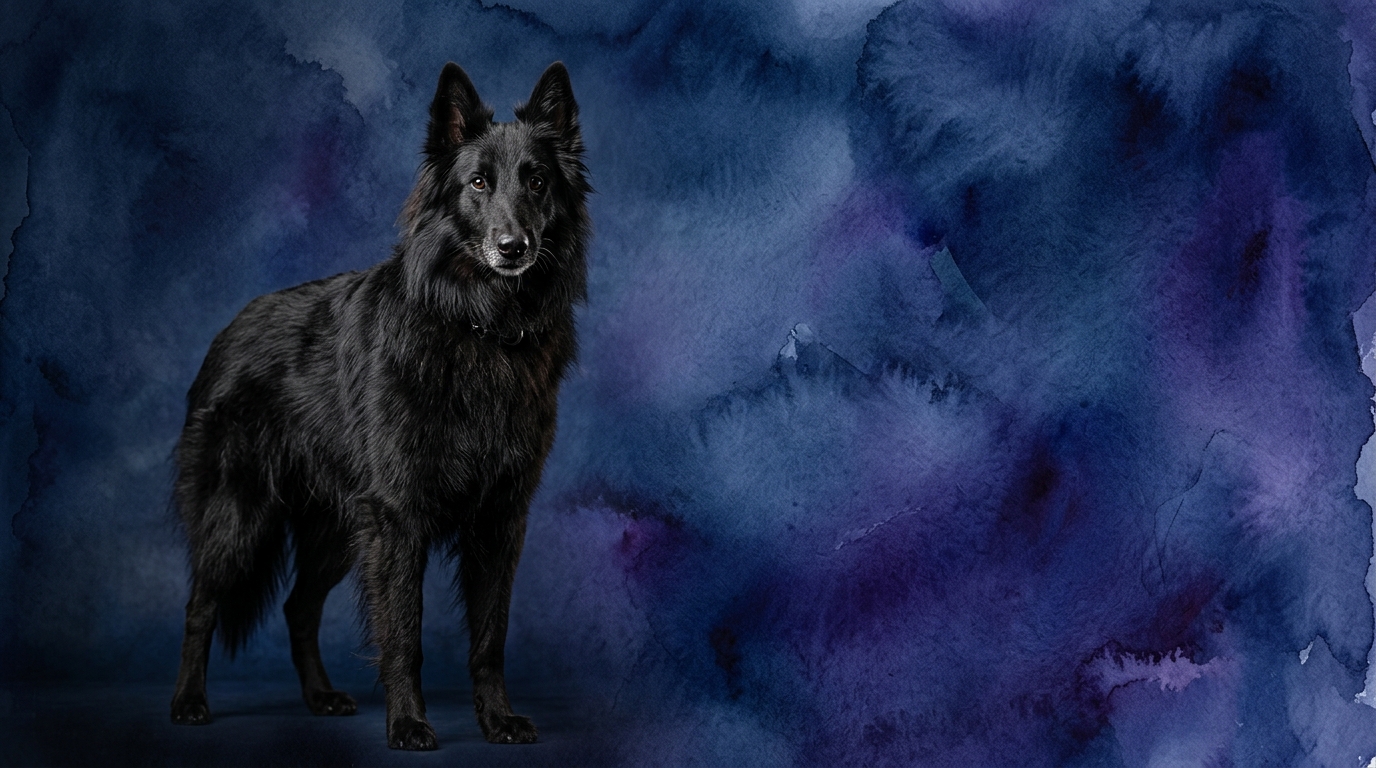
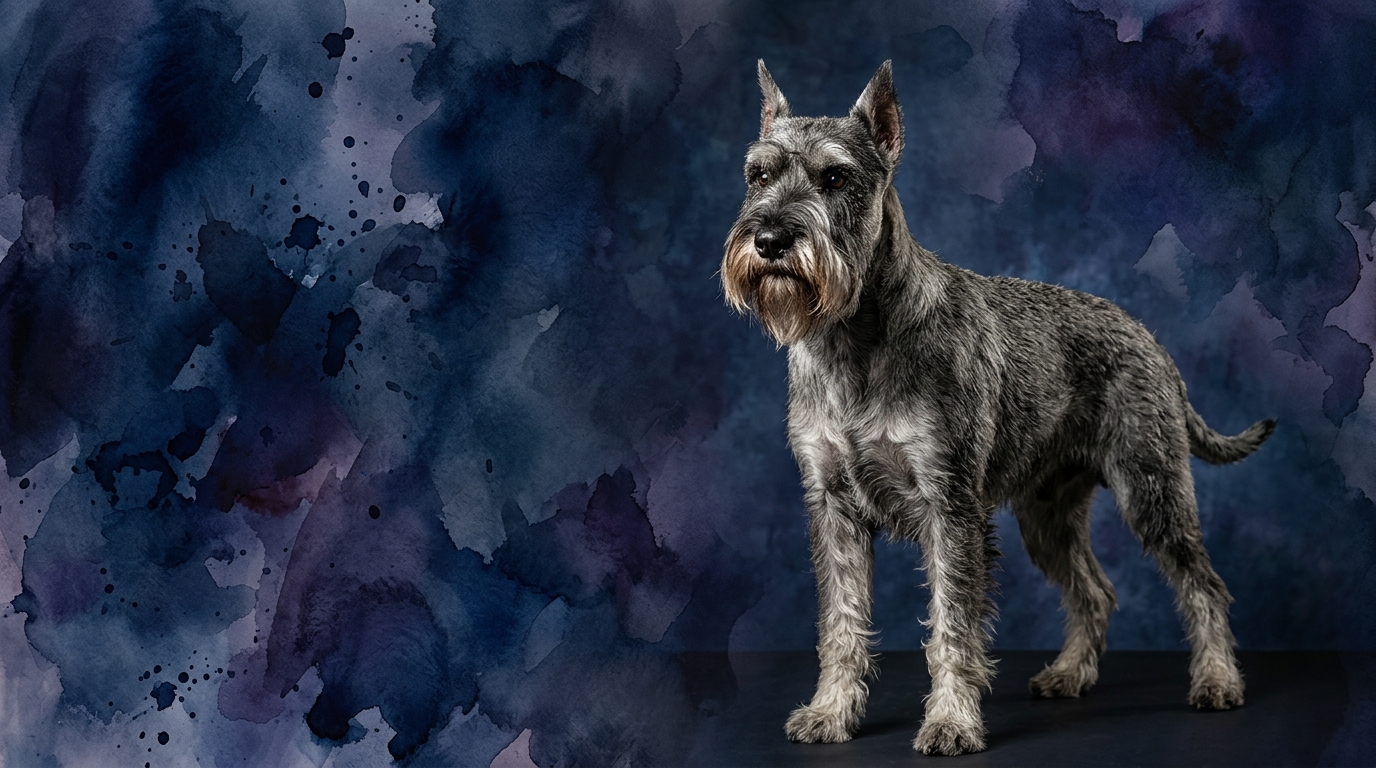
Side-by-Side IQ Profile
The Cosmic Pet Pet IQ Lab categorizes canine intelligence across five key dimensions: Problem Solving, Training Speed, Social Intelligence, Instinctive Drive, and Memory. Understanding how the Belgian Sheepdog (Groenendael) and Standard Schnauzer score in each dimension provides a clear picture of their cognitive strengths and approaches to learning.
For the **Belgian Sheepdog (Groenendael)**, a Herding breed ranked #15 by Coren, its profile is marked by exceptional cognitive prowess. Its **Problem Solving (5/5)** indicates an outstanding capacity for complex thought, allowing them to quickly grasp multi-step commands, navigate novel environments, and devise independent solutions to challenges. They demonstrate a strong ability to generalize learned concepts and apply them to new situations, often anticipating owner intentions. Their **Training Speed (5/5)** reflects rapid acquisition of new behaviors and commands, often needing very few repetitions to achieve proficiency, with an eagerness to engage and focus on their handler. **Social Intelligence (3/5)** suggests they are attuned to human emotional cues and form deep bonds, yet can be reserved with strangers, preferring to observe. Their **Instinctive Drive (3/5)** is a moderate but purposeful herding inclination, manifesting as a desire to gather and organize. Finally, an outstanding **Memory (5/5)** allows Groenendaels to retain a vast repertoire of commands, routines, and experiences over long periods, recalling intricate sequences with remarkable accuracy.
The **Standard Schnauzer**, a Working breed ranked #22 by Coren, presents a robust and practical cognitive profile. Its **Problem Solving (4/5)** signifies a strong capacity to figure out new puzzles and adapt to changing situations, learning quickly from experience and independently navigating moderate challenges, though perhaps requiring more structured guidance in highly abstract scenarios. Their **Training Speed (4/5)** is commendable, as they generally pick up new commands and routines efficiently; while not instantaneous, they respond well to consistent, positive reinforcement. **Social Intelligence (3/5)**, similar to the Groenendael, means they are loyal and attentive to their family, understanding emotional nuances, but often maintain a watchful demeanor around unfamiliar people. Their **Instinctive Drive (3/5)**, stemming from their working background, manifests as a strong desire to guard, patrol, and engage in tasks requiring focus and determination. A strong **Memory (4/5)** allows Standard Schnauzers to recall commands, learned behaviors, and past experiences effectively, making them dependable partners once a skill is established, even if not quite at the 5/5 level of detail.
Where Belgian Sheepdog (Groenendael) Wins Cognitively
The Groenendael's distinct cognitive edge lies in its superior scores in Problem Solving (5/5 vs. 4/5), Training Speed (5/5 vs. 4/5), and Memory (5/5 vs. 4/5). This combination makes them exceptionally adept at advanced learning and complex task execution. Their 5/5 Problem Solving means they don't just learn commands; they understand the underlying principles, allowing them to adapt learned behaviors to new contexts with minimal intervention. For instance, a Groenendael might independently figure out how to open a new type of latch after learning how to open a different one, demonstrating an abstract understanding of “opening.” This capacity extends to rapidly grasping intricate sequences in obedience, agility, or protection work, often excelling where multi-stage thinking is required. The 5/5 Training Speed means fewer repetitions are needed for skill acquisition, allowing handlers to progress through advanced curricula at an accelerated pace. This breed thrives on intricate challenges, quickly linking cause and effect, and retaining these complex associations with their 5/5 Memory. They are highly capable of learning and recalling extensive repertoires of signals, verbal cues, and environmental associations, making them formidable competitors in dog sports and reliable partners in demanding roles.
Where Standard Schnauzer Wins Cognitively
While the Standard Schnauzer's scores are generally a point lower than the Groenendael's in several cognitive dimensions, its unique blend of attributes creates a different kind of cognitive strength, particularly suited for practical, robust application. Its 4/5 in Problem Solving and Training Speed, combined with its 3/5 Instinctive Drive, means it approaches tasks with a grounded, determined focus rather than the Groenendael's often more abstract, rapid-fire processing. The Schnauzer excels in scenarios requiring persistent, resilient application of learned skills, perhaps being less prone to overthinking or becoming creatively bored once a task is mastered. For example, in a working context like vermin control or property guarding, the Schnauzer’s 4/5 Problem Solving allows it to effectively navigate environmental challenges and learn efficient strategies, while its solid 3/5 Instinctive Drive ensures it maintains focus on its primary objective without needing constant novelty or intricate mental puzzles. Its memory (4/5) is excellent for retaining practical skills and routines, making it a dependable, consistent worker. This breed's cognitive profile suggests a pragmatic intelligence that excels at mastering a set of useful tasks and applying them reliably, often with a tenacious spirit that ensures completion.
Which is Easier to Train and Why
Based on their cognitive profiles, the Belgian Sheepdog (Groenendael) is generally easier to train, primarily due to its 5/5 Training Speed and 5/5 Problem Solving. Groenendaels possess an innate drive to understand and comply, coupled with a remarkable ability to process and retain information quickly. They often pick up new commands after just a few repetitions, making them highly responsive to positive reinforcement methods and capable of learning a wide array of behaviors in a relatively short time. Their problem-solving prowess means they can often generalize commands, applying “sit” in a new location without needing to be re-taught, or figuring out a sequence of actions with minimal handler guidance. This translates into a training experience that can feel almost intuitive, as they anticipate cues and demonstrate a strong desire for mental engagement and partnership.
The Standard Schnauzer, with its 4/5 Training Speed and 4/5 Problem Solving, is still a very capable breed, but typically requires more consistent repetition and a patient, structured approach. Schnauzers are intelligent and capable, but they might take a few more sessions to solidify a new command or might need more explicit guidance when encountering a novel variation of a familiar task. Their working background means they can be more independent thinkers, sometimes evaluating a command before executing it, which can be mistaken for stubbornness rather than a deliberate cognitive process. While they retain training well (4/5 Memory), the initial acquisition phase might demand a bit more perseverance from the handler compared to the Groenendael's almost instantaneous grasp.
Which Suits Active Owners vs Relaxed Owners
Both the Belgian Sheepdog (Groenendael) and the Standard Schnauzer are breeds that thrive with active owners, given their working and herding heritage. However, the type and intensity of activity they require differ based on their cognitive profiles.
The Belgian Sheepdog (Groenendael), with its 5/5 Problem Solving, 5/5 Training Speed, and 5/5 Memory, demands an owner who is not only physically active but also deeply committed to providing consistent, complex mental stimulation. These dogs require daily intellectual challenges, whether through advanced obedience, agility, tracking, or protection sports, to prevent boredom and potential behavioral issues. A “relaxed” owner who offers only basic walks and minimal mental engagement will quickly find a Groenendael inventing its own, often undesirable, “problems” to solve. Their mental acuity necessitates an owner who enjoys teaching, training, and engaging in high-level interactive activities that tap into their exceptional cognitive capabilities.
The Standard Schnauzer, while also requiring significant physical activity, might be slightly less demanding in the sheer complexity of daily mental work needed. Its 4/5 scores in Problem Solving, Training Speed, and Memory, combined with its 3/5 Instinctive Drive, means it appreciates purpose-driven activities like long hikes, structured walks, earthdog trials, or consistent obedience work. While it benefits immensely from mental challenges, a Schnauzer might be more content with mastering a consistent set of skills and routines rather than constantly seeking novel, intricate puzzles. An owner who is active and enjoys outdoor adventures, but perhaps isn't looking to commit to the intense, competitive dog sport circuit every day, might find the Schnauzer's robust and practical intelligence a better fit. Neither breed is suitable for truly relaxed owners who prefer a sedentary lifestyle.
The Verdict
Select a Groenendael if you are an experienced, dedicated owner eager to engage in advanced dog sports or work that demands exceptional problem-solving, rapid learning, and profound memory, providing consistent, high-level mental and physical challenges.
Opt for a Standard Schnauzer if you desire a steadfast, capable working companion who excels in practical problem-solving and consistent training, thriving with an active owner committed to structured activities and a purposeful life without requiring constant, intricate mental novelty.
🧠 Find Your Pet's IQ Score
Our Pet IQ Lab assessment covers 25+ tests across 5 cognitive dimensions — personalized to your breed.
Take the Full IQ Test →Frequently Asked Questions
Do Belgian Sheepdogs (Groenendael) get bored easily?
Yes, Groenendaels, with their 5/5 Problem Solving and Memory, are highly prone to boredom if not adequately stimulated. They require consistent mental challenges and purposeful activities to channel their exceptional cognitive abilities positively. Without sufficient engagement, they may develop destructive behaviors or become overly anxious.
What kind of mental activities best suit a Standard Schnauzer?
Standard Schnauzers thrive on activities that engage their practical problem-solving (4/5) and working drive (3/5), such as earthdog trials, agility, advanced obedience, or scent work. They enjoy mastering a repertoire of skills and applying them consistently, benefitting from structured training and purposeful tasks.
How do their social intelligence scores (3/5 for both) impact their family life?
A 3/5 social intelligence score for both breeds means they are deeply loyal and connected to their immediate family, understanding human emotions well. However, they tend to be reserved or watchful around strangers, preferring to observe rather than immediately engage, which can make them excellent guardians but requires careful socialization.