
Side-by-Side IQ Profile
The Cosmic Pet Pet IQ Lab offers a granular view into canine cognition, and comparing the Belgian Sheepdog (Groenendael) and the Swedish Vallhund reveals two distinct intellectual blueprints. The Groenendael presents a profile marked by exceptional cognitive peaks: a stellar 5/5 in Problem Solving, Training Speed, and Memory. This indicates a canine adept at intricate thought processes, rapid assimilation of new information, and robust long-term recall. Its Social Intelligence and Instinctive Drive register at a balanced 3/5, suggesting a focused companion with a manageable intrinsic drive that is neither overly aloof nor overwhelmingly intense, allowing for deep handler connection without constant external stimulation demands.
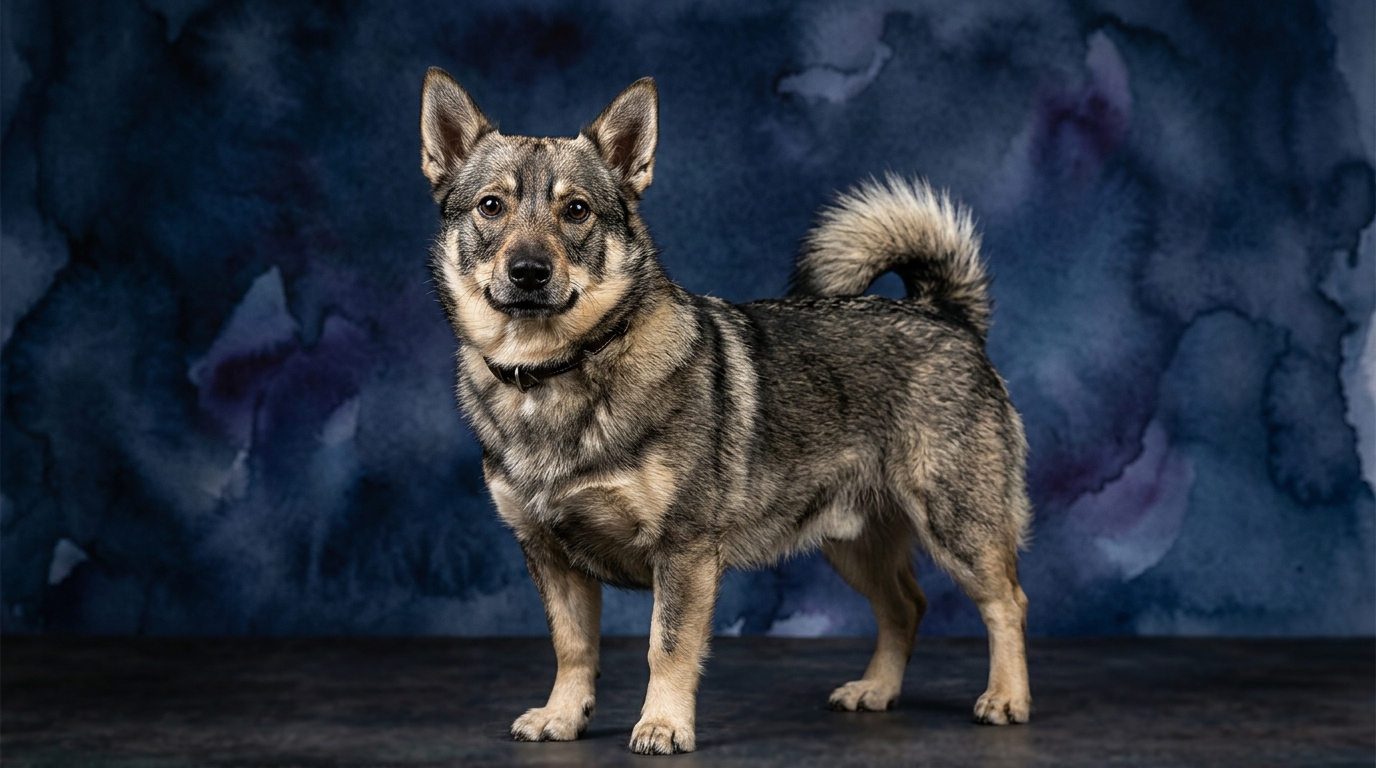
In contrast, the Swedish Vallhund exhibits a remarkably consistent cognitive architecture, scoring 3/5 across all five dimensions: Problem Solving, Training Speed, Social Intelligence, Instinctive Drive, and Memory. This uniform profile points to a dog possessing a practical, capable, and reliable set of cognitive functions. While not displaying extreme strengths in any single area, the Vallhund’s consistent scores signify a balanced intellect that is competent and predictable in its approach to learning, social interaction, and environmental engagement.
Where Belgian Sheepdog (Groenendael) Wins Cognitively
When examining the cognitive landscape, the Belgian Sheepdog (Groenendael) truly excels in dimensions that demand high-level intellectual engagement, securing clear victories according to The Cosmic Pet Pet IQ Lab. Its Problem Solving at 5/5 signifies a profound capacity for analytical thought and strategic execution. A Groenendael can dissect complex tasks, understand multi-step sequences, and adapt its approach when faced with novel challenges, often figuring out solutions independently. This cognitive flexibility makes them outstanding candidates for roles requiring critical thinking under pressure, such as search and rescue or advanced protection work.
Furthermore, their Training Speed, also rated at 5/5, indicates an almost instantaneous grasp of new behaviors and concepts. They absorb commands with remarkable swiftness, often requiring fewer repetitions than many other breeds. This rapid acquisition isn't just about rote memorization; it's fueled by an eagerness to engage and a deep understanding of cause-and-effect, leading to highly efficient and rewarding training sessions. This quick uptake allows trainers to progress rapidly to advanced skills and complex routines.
Complementing these strengths is a Memory score of 5/5, ensuring that once a lesson is learned, it is retained with enduring clarity. Whether it's a vast repertoire of commands or the intricacies of a scent discrimination task, the Groenendael’s recall is robust. This robust retention minimizes the need for constant refreshing of old lessons, allowing for consistent performance and building a reliable foundation of knowledge over their lifetime. These combined cognitive strengths position the Groenendael as a formidable intellectual partner for those seeking a canine capable of sophisticated mental feats.
Where Swedish Vallhund Wins Cognitively
While the Belgian Sheepdog boasts cognitive peaks, the Swedish Vallhund’s strength lies in its balanced and practical intelligence, a unique win in itself. Its consistent 3/5 scores across all dimensions—Problem Solving, Training Speed, Social Intelligence, Instinctive Drive, and Memory—create a cognitive profile that is highly adaptable and less prone to the potential intensity associated with extreme intellect. A Vallhund's 3/5 Problem Solving means it’s perfectly capable of learning to navigate challenges and understand routines, albeit potentially requiring more structured guidance. This makes them less likely to overthink or become bored as quickly with repetitive, yet engaging, tasks.
Their 3/5 Training Speed indicates they are receptive learners who thrive with patient, consistent methods, making them highly accessible to a broader range of owners who might not be seeking a dog that learns at lightning speed. The 3/5 Instinctive Drive suggests a dog with a clear working heritage but one that might be easier for a less experienced owner to channel and satisfy; their herding drive is present but generally manageable. This balanced drive, combined with a 3/5 Social Intelligence, allows for a versatile companion who is engaged but not constantly demanding complex mental stimulation. The Vallhund's collective scores speak to a predictable, sturdy cognitive framework that competently handles a variety of roles, making it a robust and dependable companion for many households.
Which Is Easier to Train and Why
The Belgian Sheepdog (Groenendael) generally presents as the “easier” dog to train in terms of speed and complexity. Its 5/5 Training Speed means it absorbs commands and concepts with remarkable swiftness, often requiring fewer repetitions to master new skills. This rapid acquisition stems from a profound ability to understand and connect behaviors with consequences, making advanced obedience, competitive dog sports, and specialized tasks highly achievable. Their 5/5 Problem Solving and Memory further enhance this, allowing them to generalize learned behaviors and retain them over long periods. However, this capacity also means they can quickly learn undesirable behaviors if not properly guided, demanding vigilant and consistent direction.
The Swedish Vallhund, with its 3/5 Training Speed, requires a more patient and consistent approach. While perfectly capable of learning a wide array of commands and tricks, they may take more repetitions to solidify a behavior. Their learning curve is steady rather than explosive. Owners need to be clear, positive, and persistent, breaking down tasks into smaller, manageable steps. Vallhunds respond well to positive reinforcement and can become bored or resistant if training becomes overly repetitive or harsh. Their moderate Instinctive Drive also means their focus can sometimes be diverted by environmental stimuli, requiring an owner to maintain engagement and make training sessions enjoyable and varied. In essence, the Groenendael is a fast-track learner for complex tasks, while the Vallhund is a diligent, steady learner who thrives with clear, positive guidance.
Which Suits Active Owners vs. Relaxed Owners
The Belgian Sheepdog (Groenendael) undeniably aligns better with highly active owners. Their 5/5 Problem Solving, 5/5 Training Speed, and 5/5 Memory, combined with a 3/5 Instinctive Drive, signify a dog that thrives on constant mental and physical engagement. They excel in demanding activities like agility, obedience trials, protection sports, and even search and rescue. An owner who can dedicate significant time daily to advanced training, structured play, and vigorous exercise will find a deeply fulfilled and responsive partner in a Groenendael. Their intelligence demands an outlet, and without it, they can become bored, potentially developing their own “problem-solving” solutions that might not align with household rules.
The Swedish Vallhund, with its consistent 3/5 scores, is a more adaptable choice for owners seeking a balanced companion who still enjoys activity but doesn't require the same intensity of mental gymnastics. While they certainly need daily exercise and mental stimulation to prevent boredom, their needs are generally less extreme than the Groenendael's. A Vallhund would be content with regular walks, puzzle toys, and moderate training sessions, fitting well into a household that enjoys outdoor activities but isn't necessarily pursuing competitive dog sports at an elite level. Their more moderate instinctive drive and problem-solving approach mean they can relax more readily after exercise and don't constantly seek out complex mental challenges.
The Verdict
Choose the Belgian Sheepdog (Groenendael) if you are an experienced, active owner eager to engage in advanced training, competitive dog sports, or demanding working roles, and are prepared to meet their profound cognitive and physical needs daily.
Opt for the Swedish Vallhund if you seek a sturdy, adaptable herding dog with a balanced, practical intelligence that thrives on consistent, positive training and regular activity, without requiring the extreme mental intensity of a top-tier working breed.
🧠 Find Your Pet's IQ Score
Our Pet IQ Lab assessment covers 25+ tests across 5 cognitive dimensions — personalized to your breed.
Take the Full IQ Test →Frequently Asked Questions
Does a lower Coren rank mean the Swedish Vallhund is not intelligent?
Not at all. Coren's ranking primarily assesses "working and obedience intelligence," focusing on how quickly a dog learns and obeys commands. The Swedish Vallhund's balanced 3/5 scores across multiple cognitive dimensions indicate a capable and intelligent dog, simply one whose specific cognitive strengths may not align with the narrow criteria of Coren's study.
Can a Belgian Sheepdog (Groenendael) be a good family pet despite its high IQ scores?
Yes, absolutely, but with caveats. Their high IQ means they require significant mental stimulation and structured activity to prevent boredom and destructive behaviors. With consistent training, clear boundaries, and ample engagement, a Groenendael can be a loyal, protective, and loving family member, thriving in an environment that provides purpose.
What kind of mental stimulation is best for a Swedish Vallhund?
Swedish Vallhunds benefit greatly from activities that engage their herding instincts and problem-solving skills at a moderate level. This includes puzzle toys, scent work, trick training, agility (at a recreational level), and consistent obedience training. Short, frequent sessions keep them engaged and prevent boredom, channeling their innate drives productively.