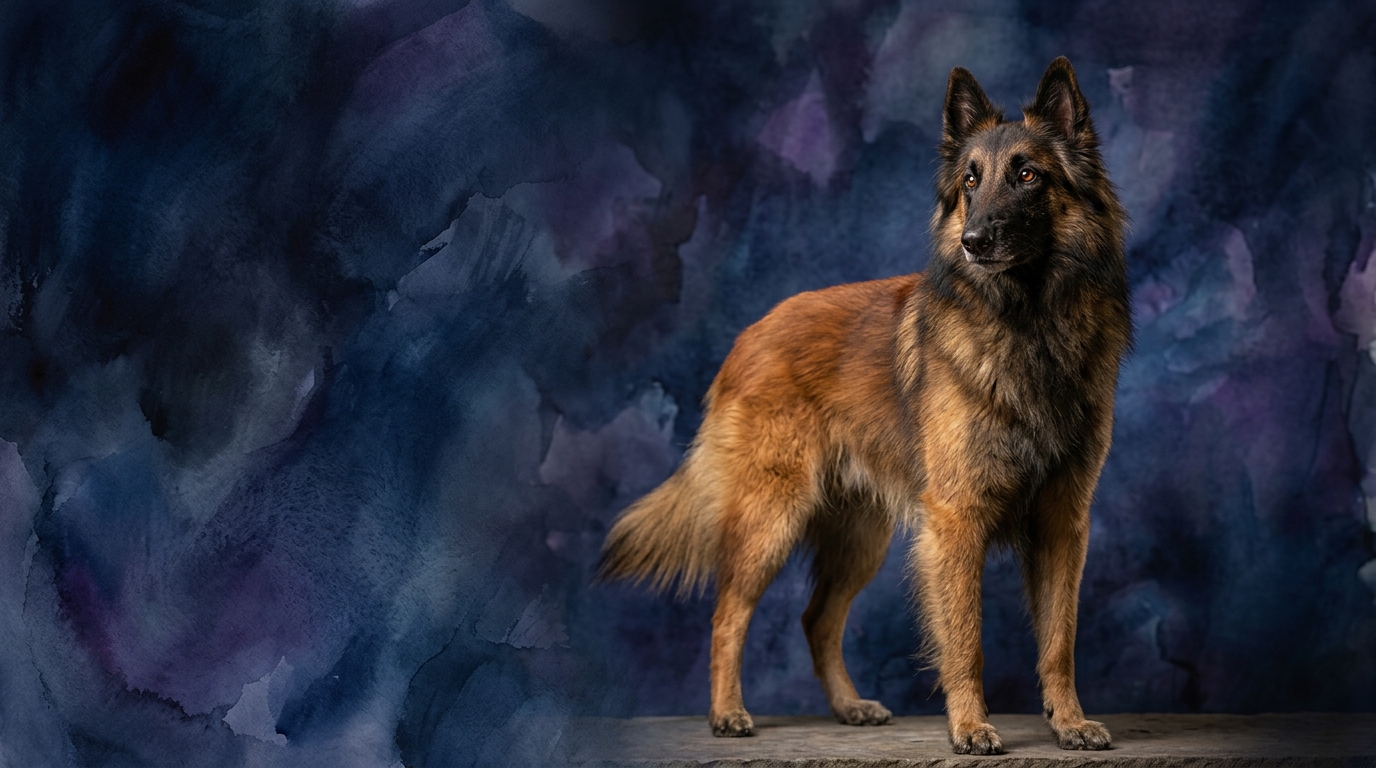
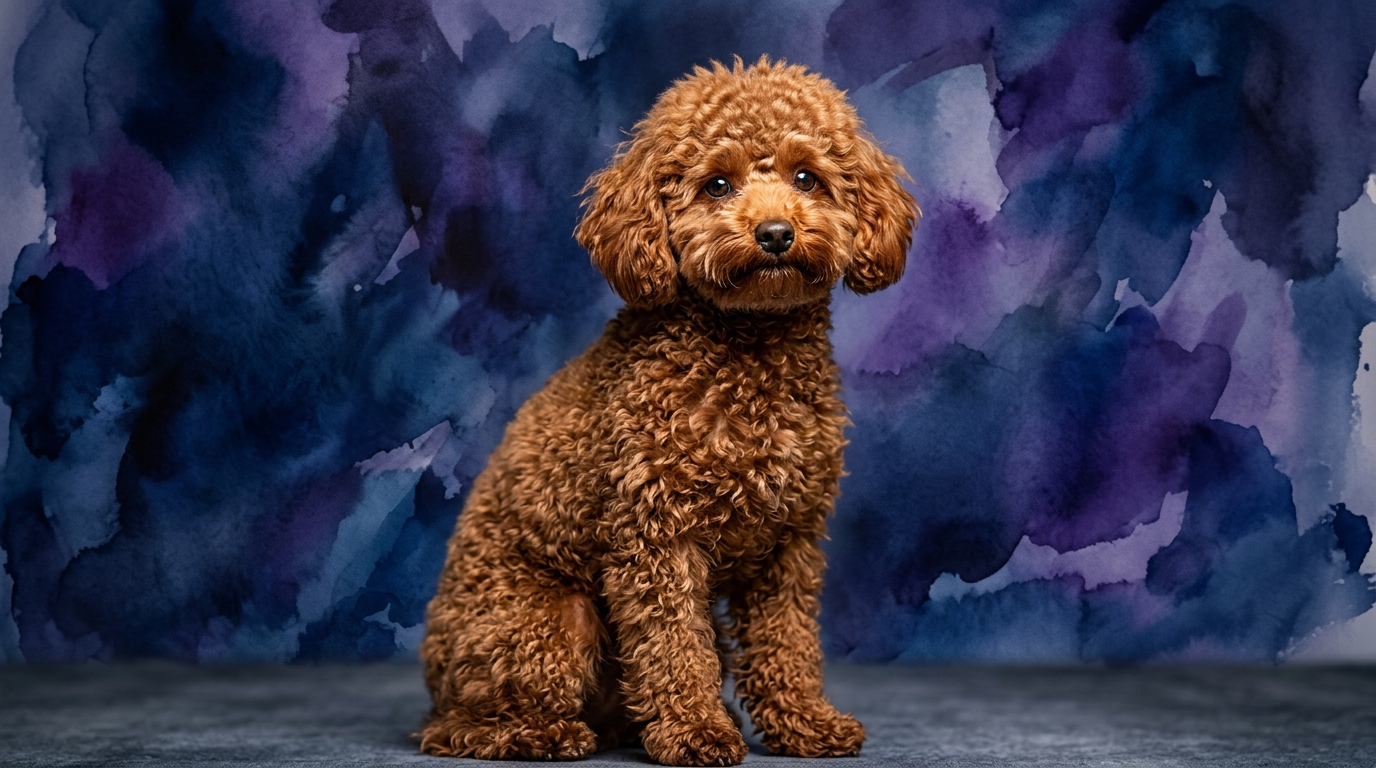
Side-by-Side Cognitive Profiles: Decoding Identical Scores
While their physical forms and historical roles diverge significantly, both the Belgian Tervuren and the Toy Poodle earn identical 5/5 ratings for Problem Solving, Training Speed, and Memory, alongside 3/5 for Social Intelligence and Instinctive Drive. This means that, at a fundamental cognitive level, their capacity for learning, retention, and analytical thought is remarkably similar, though its manifestation differs profoundly based on their breed-specific predispositions and physical attributes.
For Problem Solving (5/5), a Belgian Tervuren excels at navigating complex herding scenarios, understanding multi-part commands in agility, or strategizing in protection work, often requiring independent decision-making in dynamic environments. A Toy Poodle, with the same score, demonstrates this by mastering intricate trick sequences, understanding the nuances of household routines, or cleverly figuring out how to access a desired toy, often within a more confined, human-centric setting.
Training Speed (5/5) for the Tervuren translates to rapidly grasping complex obedience commands, quickly learning new patterns in dog sports, and adapting to varied instructions during working tasks. For the Toy Poodle, this means an impressive aptitude for picking up new tricks, quickly understanding house rules, and efficiently learning sequences for competitive obedience or even canine freestyle. Their swift comprehension enables both to progress quickly in structured training.
Social Intelligence (3/5) indicates a moderate capacity for understanding and navigating social cues. For the Belgian Tervuren, this often means a deep bond with their primary handler and family, but a reserved or watchful demeanor towards strangers, necessitating careful socialization. The Toy Poodle, also at 3/5, similarly forms strong attachments to their human companions and can be sensitive to their moods, but may display initial wariness or aloofness with unfamiliar individuals, often preferring the company of their chosen few.
Instinctive Drive (3/5) manifests differently yet similarly for both. The Tervuren's drive, while moderate, is rooted in its herding heritage, showing up as a desire to chase, gather, or patrol, requiring outlets like fetch or structured 'work.' The Toy Poodle's drive, though also moderate, leans towards retrieving, playful chasing, and a desire for engagement, often expressed in games of fetch or through a keen interest in exploring their immediate surroundings. Neither is overwhelmingly driven, but both possess inherent urges that need appropriate channeling.
Finally, Memory (5/5) means both breeds possess an excellent recall for learned behaviors, routines, and experiences. A Tervuren will remember complex agility courses, multi-stage protection scenarios, and the specific commands associated with each. A Toy Poodle will retain a vast repertoire of tricks, remember specific routes during walks, and recall the precise steps of learned behaviors, making both breeds reliable once a behavior is established.
Where the Belgian Tervuren Holds a Cognitive Edge
Despite identical scores, the Tervuren's herding lineage and robust physique grant it cognitive advantages in specific domains. Its 5/5 Problem Solving manifests uniquely in its capacity for independent decision-making in vast, open environments, such as strategically maneuvering livestock or assessing threats from a distance. This breed excels at sustained, high-intensity focus on tasks that require physical stamina combined with mental processing over extended periods, like tracking or complex search patterns.
Their cognitive strength lies in integrating physical exertion with intricate mental mapping and predictive reasoning. A Tervuren can process multiple environmental stimuli simultaneously while executing a learned task, demonstrating a formidable ability to maintain task integrity amidst distractions. This is not merely about learning a command, but about applying it intelligently and adaptively in unpredictable, real-world working scenarios where the stakes are higher than a simple trick.
Where the Toy Poodle Shines Cognitively
The Toy Poodle, with its compact size and history as a companion and performer, showcases its 5/5 Problem Solving and Training Speed in distinct ways. This breed excels at learning and executing intricate, multi-part tricks that demand fine motor control and precise timing, often performed in close proximity to a human. Their cognitive prowess is evident in their ability to adapt quickly to new learning contexts within a domestic setting, mastering novel behaviors with remarkable efficiency.
Their cognitive strength is particularly pronounced in observational learning within a human household, picking up on routines and human cues with a keen sensitivity that often goes unnoticed in larger breeds. The Toy Poodle also often demonstrates a superior capacity for vocal communication and interpreting subtle human body language, leveraging their intelligence to effectively communicate their needs and desires within the close social fabric of a family unit.
Training Dynamics: Which Breed is 'Easier' and Why
Given their identical 5/5 Training Speed, both breeds learn commands quickly. However, the 'ease' of training hinges significantly on the handler's experience and the specific behavioral outcomes desired. A Belgian Tervuren's training, while rapid, requires a handler who understands how to channel their moderate instinctive drive (3/5) and manage their often-intense focus. They can be 'too smart' for an inexperienced owner, quickly learning to challenge boundaries or become bored without sufficient mental engagement. Their moderate social intelligence (3/5) means early and consistent socialization is crucial to prevent reservation or wariness towards strangers from impacting training in public settings.
The Toy Poodle's training, while equally swift, often feels 'easier' for many owners due to their smaller physical presence and typically less demanding physical exercise requirements. Their intelligence is readily applied to learning a vast array of tricks and household manners, and their moderate instinctive drive (3/5) is generally easier to redirect in a home environment compared to a herding breed's powerful impulses. While also possessing moderate social intelligence (3/5), their smaller size often makes people less intimidated, which can facilitate smoother social training experiences, provided they are properly socialized to avoid becoming overly timid or yappy.
Matching Breeds to Lifestyles: Active vs. Relaxed Owners
For owners with an active lifestyle, the Belgian Tervuren is an ideal match. This breed requires extensive physical exercise, such as long runs, hikes, or engaging in demanding dog sports like agility, obedience, or protection work. Crucially, their advanced cognitive abilities demand an equally robust mental workout, making them perfect for owners who thrive on structured training, problem-solving games, and a deep, working partnership with their dog. A Tervuren will languish without consistent mental and physical challenges, potentially developing undesirable behaviors stemming from boredom.
While no dog with 5/5 Problem Solving and Memory is suited for a truly 'relaxed' owner who offers minimal engagement, the Toy Poodle can fit into a moderately active household. They still require daily walks and significant mental stimulation through trick training, puzzle toys, and interactive play. Owners who enjoy teaching new behaviors, participating in lower-impact dog sports like rally obedience or canine freestyle, and providing consistent companionship will find the Toy Poodle a rewarding and engaging partner. They are not a couch potato, but their exercise needs are more adaptable to urban living or less intense outdoor activities compared to the Tervuren.
The Verdict
Choose the Belgian Tervuren if you are an experienced, active owner seeking a dedicated, mentally robust working partner for advanced dog sports, protection work, or complex obedience, capable of providing consistent, challenging engagement.
Opt for the Toy Poodle if you desire a clever, adaptable companion who thrives on intricate trick training, interactive play, and moderate physical activity, fitting well into a home environment with regular mental stimulation and close human interaction.
🧠 Find Your Pet's IQ Score
Our Pet IQ Lab assessment covers 25+ tests across 5 cognitive dimensions — personalized to your breed.
Take the Full IQ Test →Frequently Asked Questions
Are Belgian Tervuren and Toy Poodles equally good at learning?
The Cosmic Pet Pet IQ Lab indicates both breeds possess identical 5/5 Training Speed and Memory, meaning they have an equal capacity for quickly learning and retaining new information. The difference lies in the types of tasks they are typically trained for and the intensity of engagement required by their breed heritage.
Do their Coren ranks contradict their IQ Lab scores?
Coren's ranking primarily assesses 'working and obedience intelligence' based on learning a new command and obeying it consistently, where the Toy Poodle (Rank #2) excels over the Tervuren (Rank #14). The IQ Lab scores, however, break down intelligence into specific cognitive dimensions, revealing that their fundamental problem-solving, training speed, and memory capacities are equally high, regardless of their working obedience aptitude.
Which breed is better for a first-time dog owner?
Neither breed is typically recommended for a truly novice owner due to their high cognitive needs and moderate social intelligence. However, the Toy Poodle might be a more manageable choice for a committed first-timer willing to invest in consistent training and mental enrichment, largely due to their smaller size and more adaptable physical exercise requirements compared to the demanding Belgian Tervuren.