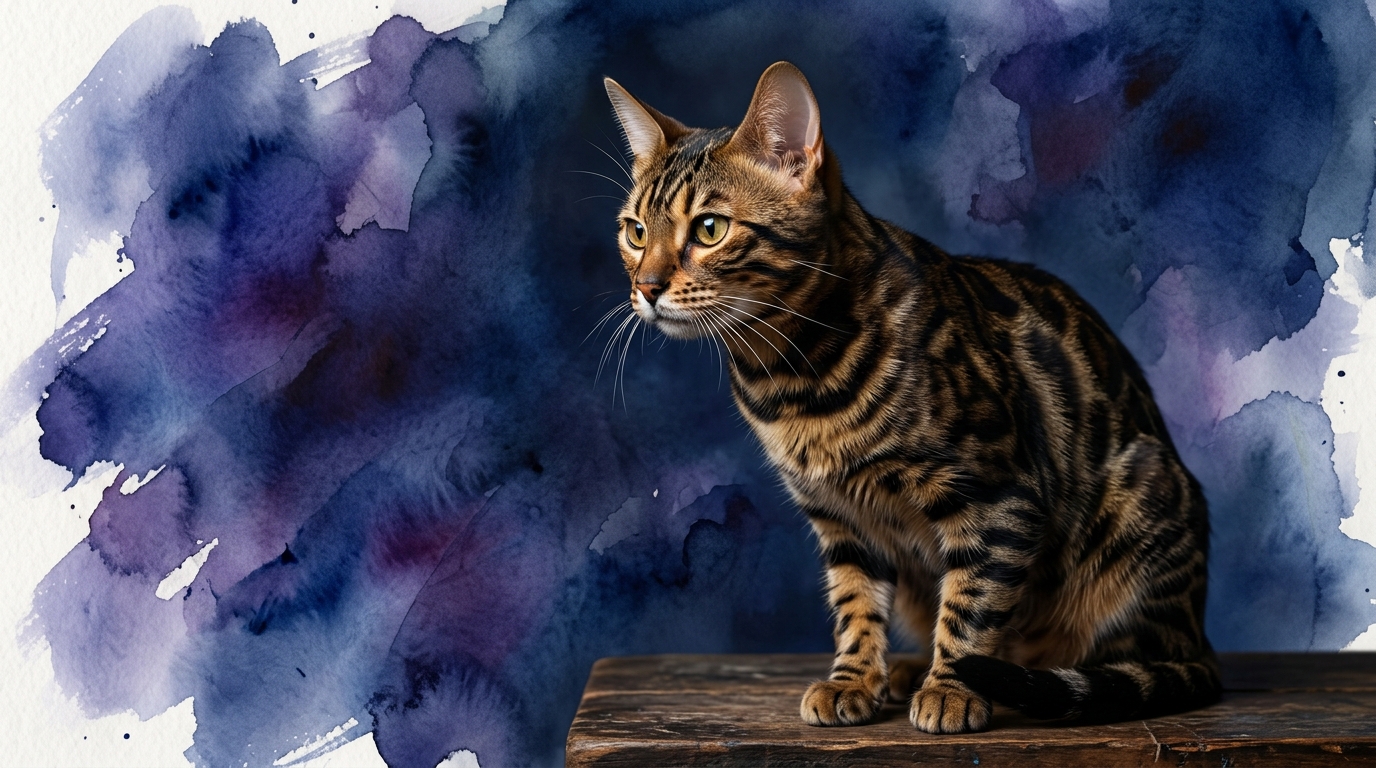
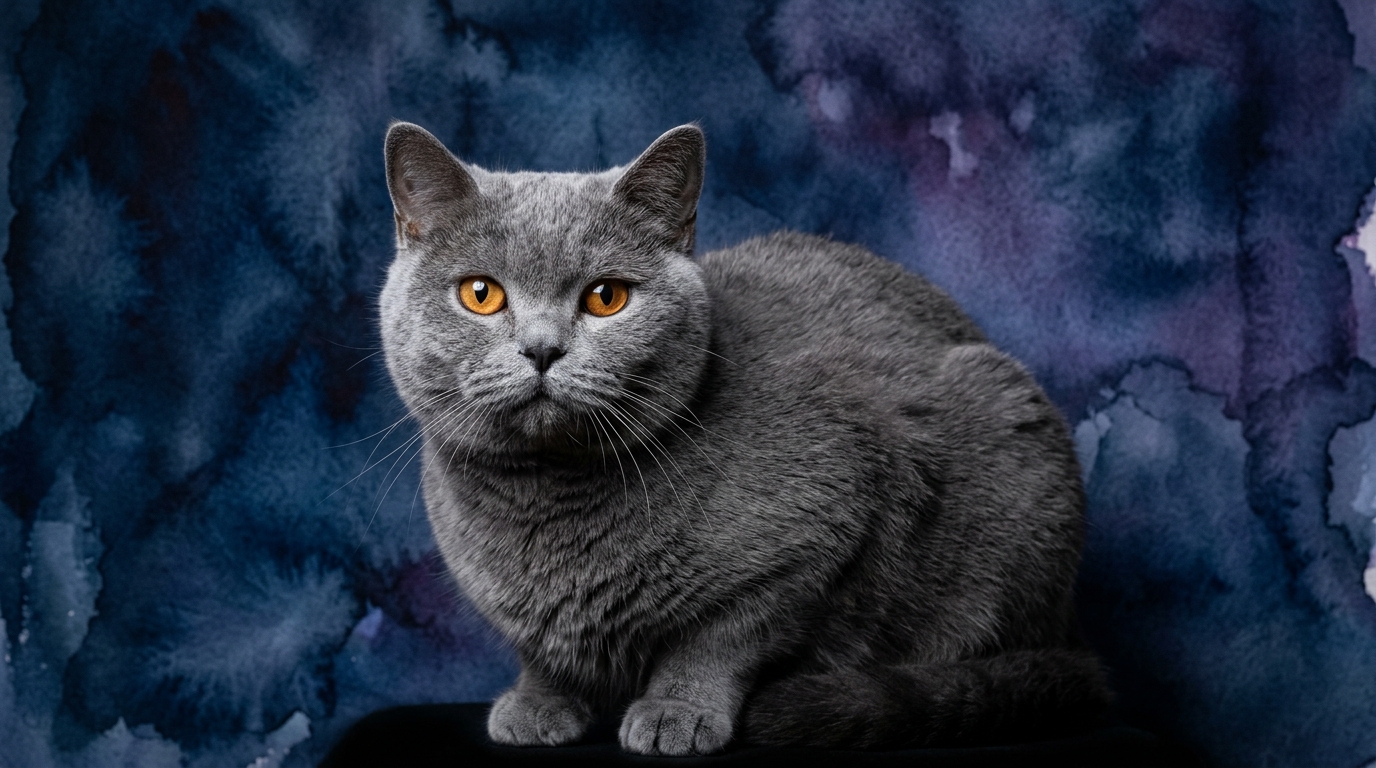
Side-by-Side IQ Profile: Bengal vs. British Shorthair
The Cosmic Pet Pet IQ Lab provides a fascinating framework for understanding the distinct cognitive abilities of cat breeds. For the Bengal, a breed famed for its vivacious spirit, the scores reflect a mind constantly engaged and seeking interaction. Conversely, the British Shorthair's profile paints a picture of a more measured, serene intellect.
For the Bengal, Problem Solving scores a perfect 5/5. This breed demonstrates exceptional ingenuity, often figuring out complex latches, opening cabinets, or devising novel ways to reach desired objects. Their approach to challenges is typically hands-on and persistent, indicative of a mind that actively seeks solutions rather than waiting for intervention. Training Speed is rated 4/5, as Bengals absorb new commands and routines with remarkable alacrity. Their eagerness to engage and their capacity for associative learning mean they can pick up tricks, leash training, and even complex sequences in relatively few repetitions, making them responsive pupils. Social Intelligence, at 4/5, shows these cats exhibit a strong capacity to understand and respond to human cues, forming deep bonds and often initiating interactions. They can interpret moods and intentions, adjusting their behavior accordingly, and frequently seek out companionship and collaborative play. Instinctive Drive is a powerful 5/5, rooted in their wild heritage, manifesting as a profound urge for exploration, hunting, and physical activity. This shapes their cognitive engagement, driving them to stalk, pounce, climb, and investigate every corner of their environment. Finally, Memory scores 5/5, demonstrating an impressive retention of learned behaviors, routines, and spatial layouts. They can recall complex sequences of actions, remember where specific toys are hidden, and retain training over long periods, suggesting a robust cognitive map of their surroundings and experiences.
The British Shorthair presents a contrasting cognitive landscape, with consistent scores of 3/5 across all dimensions. In Problem Solving, they approach challenges with a more measured, observational style. While capable of solving straightforward puzzles, they might prefer to analyze a situation before acting, or simply decide a task isn't worth the effort if it requires sustained, complex manipulation; their solutions are often practical rather than innovative. Training Speed at 3/5 means these cats learn at a steady pace, requiring consistent reinforcement and patience. They are capable of understanding routines and basic commands, but their learning curve is generally more gradual compared to breeds driven by intense curiosity or high energy, preferring a calm, repetitive approach. Their Social Intelligence, also 3/5, indicates they are affectionate and form strong attachments, but their social engagement is often more subtle and less overtly demanding. They appreciate companionship and can certainly read human emotions, but they might express their understanding through quiet presence rather than active participation, valuing personal space. Instinctive Drive, rated 3/5, reflects natural drives that are present but typically less intense than more active breeds. They enjoy play and exploration, but usually in bursts and within a comfortable, familiar territory, with hunting instincts often satisfied with interactive toys. Lastly, Memory at 3/5 suggests British Shorthairs possess a functional memory for daily routines, favorite people, and preferred spots. They remember pleasant and unpleasant experiences, guiding their future interactions, but might not demonstrate the same capacity for recalling intricate sequences or detailed spatial maps as breeds with higher scores.
Where the Bengal's Mind Shines Brightest
Bengals excel in environments demanding dynamic cognitive engagement. Their 5/5 problem-solving ability means they don't just react; they actively strategize. Owners often report Bengals mastering child-proof locks, opening doors, or even fetching specific items on command, not just through rote learning but by understanding the mechanics of a task. This cognitive flexibility, combined with a 5/5 memory, allows them to build upon past successes, remembering intricate steps to achieve a goal or recalling where a hidden toy was placed weeks ago. Their powerful 5/5 instinctive drive isn't merely physical; it fuels a relentless curiosity and a desire to understand and manipulate their surroundings, making them adept at navigating complex environments and quickly adapting to new challenges. This breed's mind is always 'on,' seeking input and opportunities to learn and interact, often turning everyday household objects into intricate puzzles to be solved.
The British Shorthair's Unique Cognitive Strengths
While the British Shorthair's cognitive scores might appear lower across the board, their particular mental makeup offers distinct advantages, especially for specific living situations. Their 3/5 problem-solving isn't a deficit in intelligence but rather a preference for efficiency and observation over constant, active manipulation. They are adept at learning optimal routines through quiet observation, discerning which actions yield comfort or treats without excessive trial and error. Their 3/5 social intelligence manifests as a calm, steady companionship; they excel at providing a comforting presence, understanding cues for affection or space without demanding constant interaction. This breed's cognitive strengths lie in their capacity for peaceful contentment and their ability to thrive in a predictable environment, processing information in a way that promotes tranquility rather than constant stimulation. Their memory, while rated 3/5, is perfectly sufficient for recalling beloved family members, preferred sleeping spots, and the rhythm of the household, contributing to their reputation as stable and dependable companions.
Training Dynamics: Which Breed Learns Faster?
When it comes to training, the Bengal generally offers a more responsive and rapid learning experience. Their 4/5 training speed is directly supported by their exceptional 5/5 problem-solving and 5/5 instinctive drive. Bengals are highly motivated by novelty, interaction, and the challenge itself. They quickly grasp cause-and-effect relationships, making them ideal candidates for clicker training, leash walking, and even complex trick learning. Their innate drive means they often see training as an engaging game, eager to participate and quick to understand what's expected. For instance, a Bengal might learn to fetch a specific toy in a handful of sessions, driven by their natural desire to retrieve and interact. The British Shorthair, with a 3/5 training speed, requires a different approach. Their training journey is typically characterized by patience and consistency. While they are certainly capable of learning, their motivation often leans towards comfort and routine rather than intense, active engagement. Teaching a British Shorthair to perform a trick might take more repetitions and rely heavily on positive reinforcement with high-value treats, as their instinctive drive is less about active manipulation and more about quiet observation. They learn best in calm, predictable environments, responding to gentle encouragement rather than high-energy commands. For example, a British Shorthair might master using a scratching post through consistent redirection and praise, but a complex agility course might not appeal to their more sedate cognitive preferences.
Matching Minds: Active vs. Relaxed Owners
The cognitive profiles of these two breeds clearly delineate their suitability for different owner lifestyles. Owners who thrive on active engagement, mental stimulation, and a pet that actively participates in their daily adventures will find the Bengal an ideal match. Their 5/5 problem-solving and instinctive drive mean they require consistent mental challenges, whether through puzzle toys, interactive play sessions, or even learning new commands. A Bengal often seeks out interaction, initiating games or 'conversations,' making them perfect for owners who enjoy teaching tricks, going on supervised outdoor excursions, or having a cat that is deeply integrated into their active routines. They can become bored and destructive if their sharp minds are not sufficiently exercised. In contrast, the British Shorthair's cognitive makeup aligns beautifully with more relaxed, contemplative owners. Their 3/5 instinctive drive and problem-solving scores mean they are perfectly content with a less demanding schedule of play and mental stimulation. These cats appreciate a predictable environment and a quiet presence, making them excellent companions for individuals or families who prefer a calm home atmosphere. While they enjoy interaction, it's often on their terms and in measured doses. A British Shorthair is happy to observe the household from a comfortable perch, offering quiet companionship and occasional bursts of gentle play, fitting seamlessly into a serene lifestyle without requiring constant intellectual exertion.
The Verdict
Opt for a Bengal if you seek a highly interactive, intellectually driven companion eager to solve puzzles, learn tricks, and participate actively in your dynamic life. Their sharp minds and adventurous spirit thrive with consistent mental and physical challenges.
Choose a British Shorthair if you desire a calm, affectionate, and low-key companion who offers quiet presence and contentment, fitting perfectly into a relaxed household appreciative of their steady, amiable nature.
🧠 Find Your Pet's IQ Score
Our Pet IQ Lab assessment covers 25+ tests across 5 cognitive dimensions — personalized to your breed.
Take the Full IQ Test →Frequently Asked Questions
Are Bengals good for first-time cat owners?
Bengals are best for experienced cat owners who understand their need for extensive mental and physical stimulation, as their sharp minds and high energy require dedicated engagement to prevent boredom.
Do British Shorthairs like to play?
Yes, British Shorthairs enjoy play, but often in shorter, less intense bursts than more active breeds. They appreciate interactive toys that stimulate their hunting instincts without demanding constant, high-energy exertion.
Can British Shorthairs be leash trained?
While less common than with Bengals, British Shorthairs can be leash trained with patience, positive reinforcement, and a calm approach, particularly if introduced at a young age to harness and outdoor experiences.