The Cosmic Pet IQ Profile: Bengal vs. Oriental Shorthair
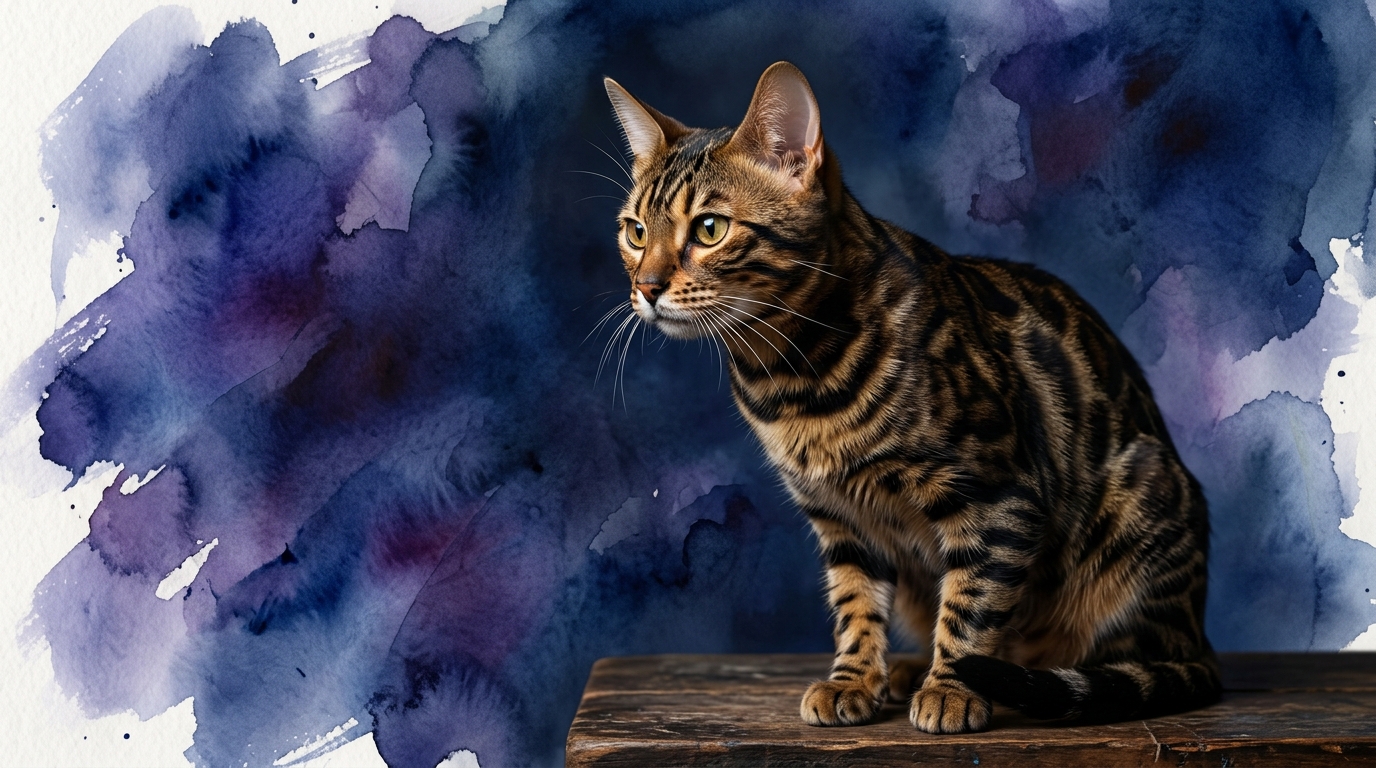
The Cosmic Pet IQ Lab assesses feline intelligence across five crucial dimensions, providing a nuanced understanding of each breed's cognitive strengths. For the Bengal, a breed with recent wild ancestry, its profile reflects a highly engaged and capable mind. Its Problem Solving is rated an exceptional 5/5, indicating a feline that actively seeks solutions to environmental challenges, from opening latches to navigating complex spaces. Training Speed stands at 4/5, suggesting a quick grasp of new commands and routines, while Social Intelligence also scores 4/5, highlighting their capacity for deep bonds and understanding human cues. The Bengal's Instinctive Drive is a powerful 5/5, reflecting strong hunting behaviors and an innate need for exploration, complemented by an outstanding Memory of 5/5, allowing them to retain complex information and learned sequences over time.
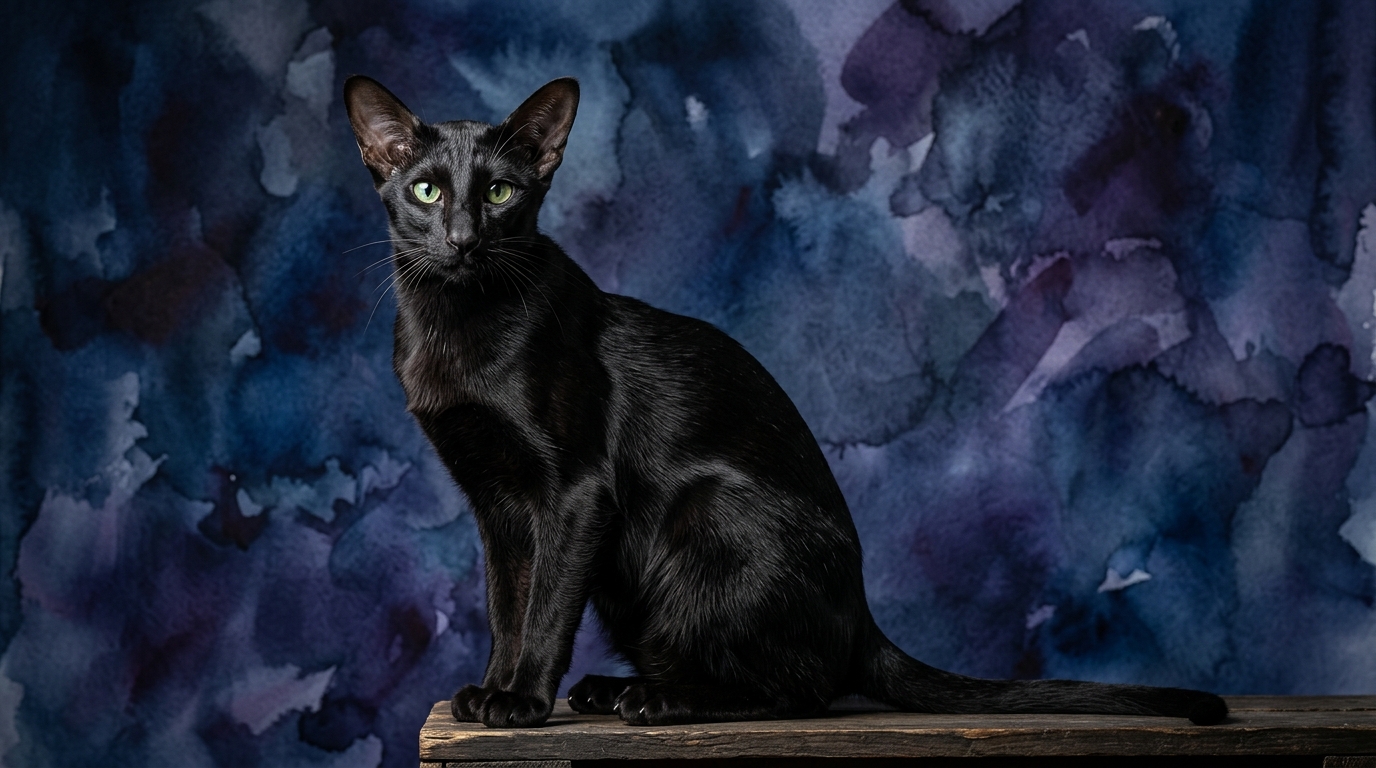
In contrast, the Oriental Shorthair, a breed celebrated for its elegant lines and vocal personality, presents a more moderate, yet equally valid, cognitive profile. Across all five dimensions – Problem Solving, Training Speed, Social Intelligence, Instinctive Drive, and Memory – the Oriental Shorthair consistently scores 3/5. This indicates a cat that is competent and capable in everyday situations but perhaps less inclined towards extreme intellectual challenges or intense predatory behaviors. Their moderate scores suggest a balanced cognitive approach, allowing them to adapt well to domestic life without the constant need for intense mental stimulation that a higher-scoring breed might exhibit. They are perfectly capable of learning, bonding, and engaging, but typically within a more predictable and less demanding framework.
Where the Bengal Excels Cognitively
The Bengal's cognitive profile showcases several areas where it distinctly excels, largely due to its high scores in Problem Solving, Instinctive Drive, and Memory. Their Problem Solving score of 5/5 means Bengals are adept at navigating complex environments and figuring out how things work. Owners often report Bengals learning to open cabinets, doors, and even manipulate puzzle toys with impressive speed and ingenuity, actively seeking out ways to achieve their goals rather than waiting for assistance. This isn't just curiosity; it's a persistent, analytical approach to their surroundings.
The Bengal's 5/5 Instinctive Drive fuels a relentless curiosity and a strong need for physical and mental engagement. This manifests as a deep desire to explore, climb, and engage in simulated hunting behaviors, making them incredibly interactive and often requiring significant enrichment to prevent boredom. This drive, combined with their problem-solving prowess, means they are always observing and strategizing, whether it's for their next play session or how to reach a high shelf. Furthermore, their superior Memory, also a 5/5, allows them to retain intricate sequences of actions and learned solutions, ensuring that once a Bengal figures something out, it rarely forgets. This long-term retention underpins their ability to master complex tricks and remember routines, making them formidable learners and engaging companions.
Cognitive Advantages of the Oriental Shorthair
While the Oriental Shorthair's scores are consistently 3/5, this moderate cognitive profile presents its own unique advantages, particularly for owners seeking a more predictable and less intensely demanding companion. Their 3/5 in Problem Solving means they are competent enough for daily life but are less likely to constantly test boundaries, outsmart security measures, or invent complex schemes to access forbidden areas. This often translates to a calmer household environment, with fewer surprises stemming from a cat's ingenious escapades.
The Oriental Shorthair's moderate Instinctive Drive (3/5) is another key advantage. While they certainly enjoy play and interaction, their predatory instincts are generally less intense and easier to satisfy compared to the Bengal. This means less likelihood of obsessive hunting of small household items or a constant need for high-energy, simulated 'hunts.' Their play often focuses more on direct interaction with their human rather than elaborate, independent exploration. Similarly, their 3/5 Social Intelligence provides a loving, affectionate bond without the sometimes overwhelming intensity or complex social demands that can accompany breeds with higher scores. They are wonderfully communicative and form strong attachments, offering devoted companionship that is deeply appreciated without requiring constant, high-level intellectual engagement.
Their 3/5 Memory, while not as expansive as the Bengal's, is perfectly sufficient for remembering daily routines, recognizing family members, and retaining basic learned behaviors. This ensures they are reliable and adaptable to household schedules without necessarily remembering every minute detail or past transgression, contributing to their generally agreeable nature.
Training: Bengal's Quickness vs. Oriental Shorthair's Consistency
When it comes to training, the cognitive profiles of the Bengal and Oriental Shorthair lead to distinct experiences. The Bengal, with its 4/5 Training Speed, 5/5 Problem Solving, and 5/5 Memory, is often a rapid learner. They quickly grasp complex commands, understand the mechanics of tricks, and retain this knowledge over long periods. Bengals thrive on mental challenges, making them excellent candidates for leash training, agility courses, and learning elaborate trick sequences. Their problem-solving ability means they often understand the 'why' behind a command, which can accelerate the learning process. However, their formidable 5/5 Instinctive Drive means training must be engaging, consistent, and channel their energy productively; a bored Bengal can quickly become a destructive one, using their problem-solving skills to create their own 'entertainment' if not adequately stimulated.
The Oriental Shorthair, with its 3/5 scores across Training Speed, Problem Solving, and Memory, is certainly trainable, but the approach differs. They learn at a more moderate pace, requiring more repetition and patience from their owners. Their training often focuses on basic obedience, such as coming when called, using scratching posts, and accepting harness training for walks. While they may not pick up complex tricks as quickly as a Bengal, their moderate instinctive drive means they are generally less prone to using their intellect to challenge household rules. Consistency is key for Oriental Shorthairs; they thrive on routine and clear expectations, making them reliable companions once behaviors are established. Their social nature means they often respond well to positive reinforcement rooted in affection and attention, rather than purely task-based rewards.
Which Suits Your Lifestyle: Active Explorers vs. Affectionate Companions
Understanding these cognitive distinctions is crucial for matching a cat to an owner's lifestyle. The Bengal, with its powerful 5/5 Problem Solving, 5/5 Instinctive Drive, and 5/5 Memory, is ideally suited for active owners who relish in providing constant mental and physical enrichment. These cats thrive on interactive play sessions, puzzle feeders, leash walks, and opportunities to explore secure outdoor environments like catios. Owners must be prepared for a feline companion that is constantly curious, requires significant engagement to prevent boredom, and will actively participate in household activities. A Bengal needs an owner who views their cat as an active partner in adventure and challenge, prepared to invest time in stimulating their sharp mind and channeling their energetic drive.
The Oriental Shorthair, with its consistent 3/5 scores across all cognitive dimensions, is a wonderful fit for owners who appreciate an affectionate, social cat that integrates seamlessly into a home without demanding constant, high-level intellectual stimulation. While they enjoy play and interaction, their needs are typically met with standard interactive toys and regular cuddle sessions. They are content with a more predictable daily routine and less prone to seeking out complex challenges or creating their own 'problems' out of boredom. Oriental Shorthairs are excellent companions for relaxed owners who desire a devoted feline presence that is communicative and engaging, yet not overwhelmingly demanding of their intellectual resources. They offer a balanced blend of affection and independence, fitting comfortably into a variety of home environments.
The Verdict
Choose a Bengal if you are an active owner seeking a highly interactive, problem-solving companion who thrives on mental and physical challenges and you are prepared to meet their significant enrichment needs.
Choose an Oriental Shorthair if you desire an affectionate, social cat that offers devoted companionship without demanding constant, complex mental engagement, preferring a more predictable and calm household.
🧠 Find Your Pet's IQ Score
Our Pet IQ Lab assessment covers 25+ tests across 5 cognitive dimensions — personalized to your breed.
Take the Full IQ Test →Frequently Asked Questions
Are Bengals good with other pets?
With a social intelligence of 4/5, Bengals can coexist well with other pets, especially if introduced carefully and at a young age. Their high instinctive drive (5/5) means caution is needed with very small prey animals, but they often form strong, playful bonds with active dogs or other cats.
Do Oriental Shorthairs get along with children?
Oriental Shorthairs, with a social intelligence of 3/5, are generally tolerant and affectionate with respectful children. They appreciate calm interactions and can be very devoted family members, though they might retreat if playtime becomes too boisterous, making supervision important for younger kids.
How much daily playtime does each breed need to stay mentally stimulated?
Bengals, with their 5/5 instinctive drive and problem-solving, benefit from at least 45-60 minutes of varied, interactive play and puzzle time daily to prevent boredom and destructive behaviors. Oriental Shorthairs (3/5 in these areas) are content with 20-30 minutes of engaging play, valuing quality interaction over sheer duration.