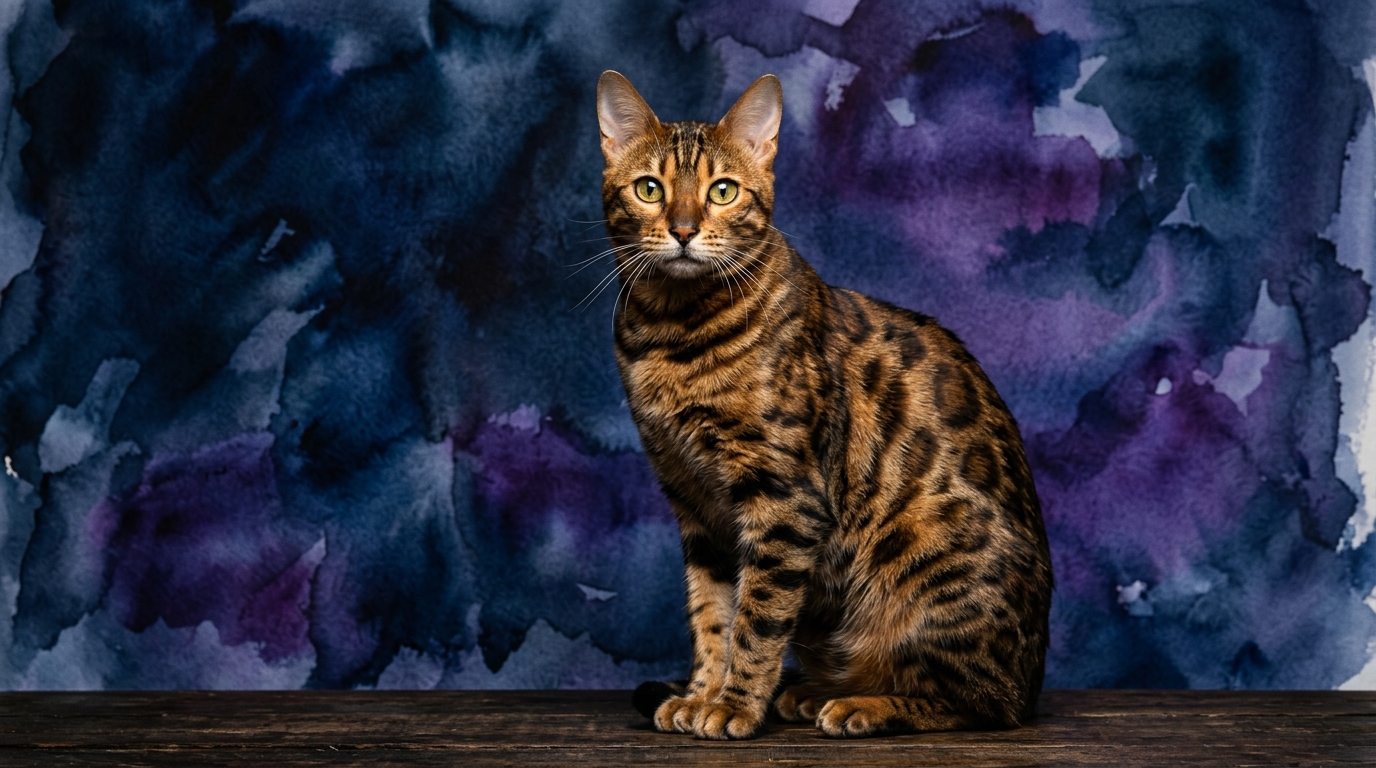
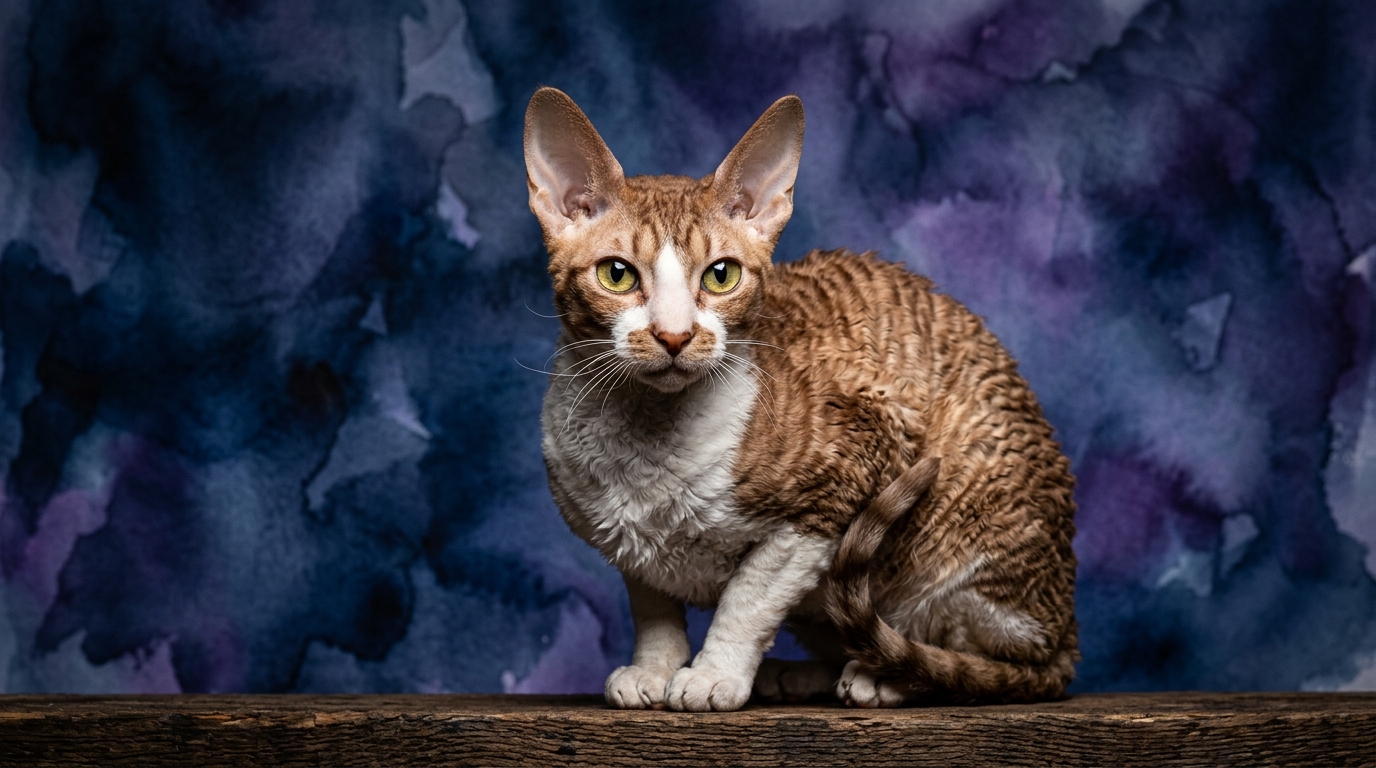
Side-by-Side IQ Profile: Bengal vs. Cornish Rex
The Cosmic Pet Pet IQ Lab provides a unique lens through which to compare the nuanced cognitive abilities of these two distinct feline breeds. The Bengal, a domestic cat with a wild ancestry, exhibits a profile geared towards complex exploration and problem-solving, while the Cornish Rex, known for its distinctive curly coat, showcases a remarkable aptitude for rapid learning and social engagement.
For the Bengal, Problem Solving scores a perfect 5/5, indicating an exceptional capacity for analytical thought and devising novel solutions to obstacles. Their Training Speed is a commendable 4/5, suggesting efficient learning, and their Social Intelligence also rates 4/5, reflecting strong interpersonal understanding. A standout feature is their Instinctive Drive, hitting 5/5, which fuels their intense curiosity and predatory behaviors, complemented by an excellent Memory at 5/5, allowing for long-term retention of complex information.
The Cornish Rex presents a slightly different cognitive emphasis. Their Problem Solving is a robust 4/5, demonstrating solid practical intelligence, but their Training Speed truly shines with a top score of 5/5, highlighting their quick grasp of new commands. Social Intelligence matches the Bengal at 4/5, affirming their strong relational capacities. Their Instinctive Drive is a moderate 3/5, suggesting a less intense focus on primal urges, and their Memory is a strong 4/5, ensuring consistent recall of learned behaviors and routines. Each score paints a picture of distinct intellectual strengths, guiding our understanding of their behavioral tendencies.
Where the Bengal Wins Cognitively
The Bengal's cognitive profile reveals several distinct advantages, particularly in areas demanding complex thought and primal engagement. Their superior Problem Solving (5/5) means they aren't just reacting to stimuli; they are actively strategizing, often attempting multiple approaches to a single puzzle. This manifests in behaviors like systematically dismantling a treat dispenser or figuring out a multi-step escape from a secure enclosure. Coupled with their outstanding Memory (5/5), a Bengal can recall not only which solution worked but also which ones failed, refining their approach over time. Furthermore, their intense Instinctive Drive (5/5) isn't just about physical activity; it's a cognitive engine. It fuels their persistent focus on 'prey' (be it a laser dot or a toy mouse), enhancing their spatial awareness and predictive tracking skills, making them adept at complex 'hunting' games that require foresight and rapid adaptation.
Where the Cornish Rex Wins Cognitively
Where the Cornish Rex truly shines is in its remarkable Training Speed (5/5), a dimension where it surpasses the Bengal. This rapid acquisition of new behaviors isn't merely about obedience; it reflects a quick-thinking, highly adaptable mind that processes new information and associations with exceptional efficiency. A Cornish Rex can often learn a new trick, like 'sit' or 'fetch,' in just a few repetitions, demonstrating an immediate grasp of the desired action and its reward. This agility extends beyond formal training; they quickly pick up household routines, understand complex sequences of events (e.g., the sound of keys meaning a walk), and adjust their behavior based on subtle environmental cues. Their moderate Instinctive Drive (3/5) also plays a role here, as they are less likely to be distracted by intense hunting urges, allowing them to focus more intently on human-directed tasks and social learning opportunities.
Which is Easier to Train and Why
Determining which breed is 'easier' to train depends heavily on the type of training and the trainer's approach. The Cornish Rex, with its top-tier Training Speed (5/5), is generally more straightforward for teaching specific commands and tricks. Their eagerness to please, coupled with their rapid associative learning, means they quickly link actions with rewards. They thrive on structured, positive reinforcement sessions and often enjoy the mental stimulation of learning new routines, making them excellent candidates for clicker training and even agility courses. In contrast, the Bengal's Training Speed (4/5) is still very good, but their formidable Instinctive Drive (5/5) and supreme Problem Solving (5/5) can sometimes present a different challenge. While they learn quickly, their strong independent thinking might lead them to question why they should perform a task, especially if their instincts suggest an alternative. Training a Bengal often requires more creativity, incorporating their natural desires into the training process, such as using puzzle-based rewards or 'hunting' for treats as part of a command sequence. They might be harder to 'break' from instinct-driven behaviors but can be trained to perform incredibly complex tasks once their motivation is aligned.
Which Suits Active Owners vs. Relaxed Owners
The cognitive profiles of these two breeds offer clear guidance for potential owners' lifestyles. Owners seeking a highly active, intellectually demanding companion will find the Bengal an ideal match. Their superior Problem Solving and Instinctive Drive demand constant mental engagement and physical outlets. These cats thrive on interactive play that simulates hunting, complex puzzle toys, and even leash training for outdoor adventures. A relaxed owner might find a Bengal's relentless curiosity and need for stimulation overwhelming, potentially leading to 'problem' behaviors born from boredom. Conversely, the Cornish Rex, while undeniably playful and energetic, generally suits a broader range of owners, including those with a more relaxed lifestyle. Their moderate Instinctive Drive means they are less intensely driven by primal urges, and their high Social Intelligence combined with rapid Training Speed makes them excellent companions for interactive play sessions, trick training, and simply enjoying close proximity. They appreciate regular engagement but don't typically demand the same level of environmental 'conquest' as a Bengal, making them a superb fit for owners who enjoy an affectionate, responsive, and easily entertained feline.
The Verdict
Choose a Bengal if you are an experienced owner seeking an intellectually formidable, highly active companion who thrives on complex challenges and intense interaction, ready to engage with a cat that truly thinks for itself.
Opt for a Cornish Rex if you desire a highly trainable, affectionate, and responsive feline companion who quickly masters routines and enjoys interactive play without the same intense primal demands.
🧠 Find Your Pet's IQ Score
Our Pet IQ Lab assessment covers 25+ tests across 5 cognitive dimensions — personalized to your breed.
Take the Full IQ Test →Frequently Asked Questions
Are Bengals good with other pets given their high instinctive drive?
Bengals possess a strong instinctive drive, which means their interactions with other pets can vary. While many Bengals can coexist peacefully with other animals, especially if introduced young, their predatory instincts might be a consideration, particularly with very small pets. Careful introductions and supervision are key to successful multi-pet households.
Does the Cornish Rex's high training speed mean they are easier to litter train?
The Cornish Rex's exceptional training speed certainly aids in quicker litter training, as they rapidly associate the litter box with the appropriate behavior. Their eagerness to please and quick understanding of routines contribute to a smoother process compared to some other breeds, though consistency from the owner remains vital.
How do their memory differences impact daily life?
The Bengal's superior memory allows them to recall complex routines, hidden objects, and past interactions with remarkable accuracy, making them highly anticipatory and adept at navigating their environment. The Cornish Rex's strong memory ensures they reliably remember commands and routines, contributing to their consistent behavior and adaptability to household schedules, making them predictable and responsive companions.