
Side-by-Side IQ Profile: Bernese Mountain Dog vs. Bedlington Terrier
The Cosmic Pet Pet IQ Lab employs a multi-faceted approach to evaluate canine cognition, assessing five key dimensions. For the Bernese Mountain Dog, a Working breed ranked #27 by Coren, its profile shows a 3/5 in Problem Solving, indicating an average capacity for independent thought in novel situations. Its Training Speed is rated 4/5, suggesting a good aptitude for learning new commands efficiently. Where the Bernese truly shines is in Social Intelligence, earning a perfect 5/5, reflecting its deep understanding of human cues and complex social dynamics. Instinctive Drive scores 4/5, highlighting its inherent motivation for tasks, while Memory sits at 3/5, indicating a moderate ability to retain information over time.
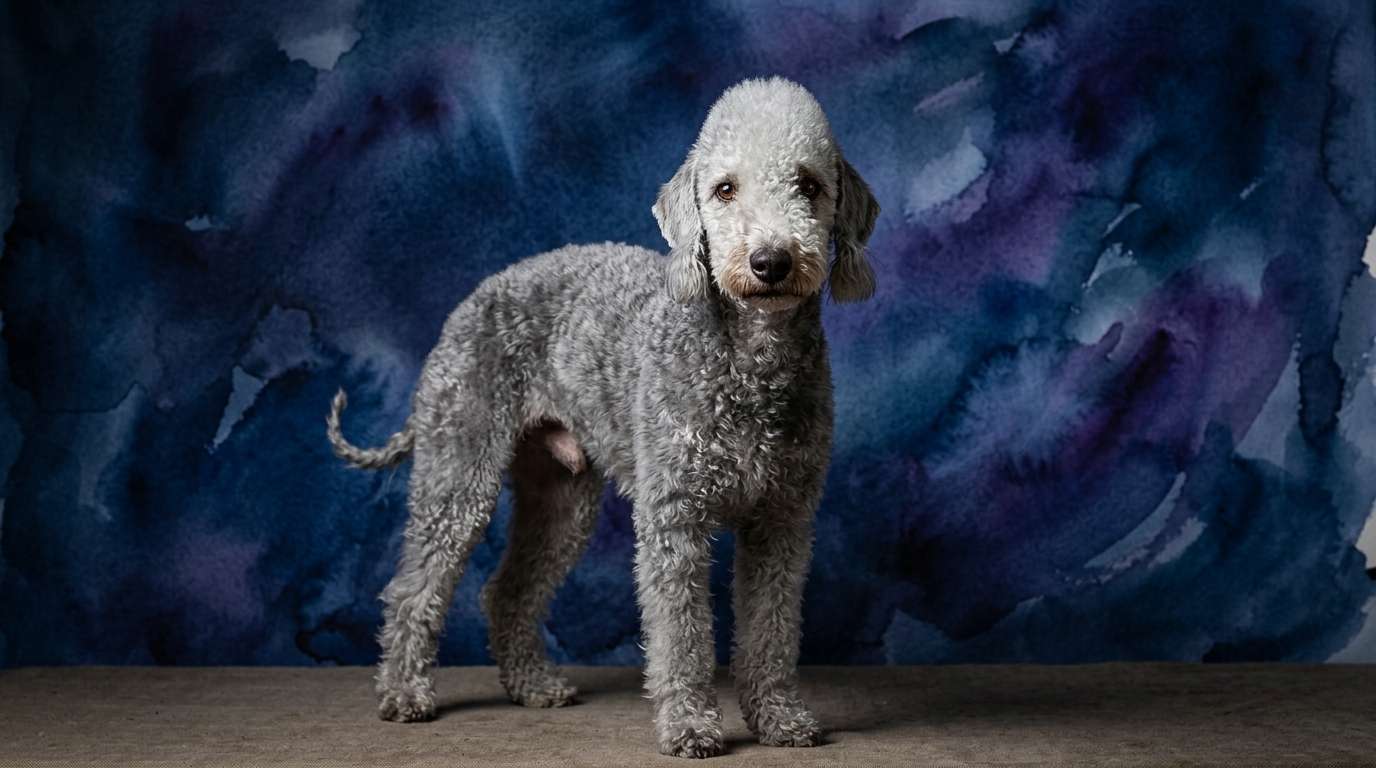
In contrast, the Bedlington Terrier, a Terrier breed without a Coren ranking, presents a more uniform cognitive landscape. Its Problem Solving ability is also rated 3/5, matching the Bernese, suggesting a similar baseline capacity for figuring things out. Training Speed for the Bedlington is 3/5, meaning it learns at an average pace, requiring consistent and engaging methods. Its Social Intelligence is rated 3/5, pointing to a more independent nature compared to the Bernese, though still capable of forming bonds. Instinctive Drive is likewise 3/5, reflecting its natural terrier instincts, but perhaps less generalized task motivation than a working dog. Finally, its Memory is also 3/5, consistent with its other scores.
Where the Bernese Mountain Dog Shows Cognitive Strengths
The Bernese Mountain Dog demonstrates clear cognitive strengths primarily in its social understanding and training responsiveness. With a 5/5 Social Intelligence score, the Bernese exhibits a profound ability to interpret human emotions, intentions, and communication, making them exceptionally attuned companions. This means they often anticipate needs, respond appropriately to varying family dynamics, and integrate seamlessly into a household's emotional fabric, a trait invaluable for a family dog. Their high social intelligence also contributes to their reputation as empathetic and gentle giants, as they are adept at reading and responding to subtle social cues.
Furthermore, the Bernese's 4/5 Training Speed indicates a quicker grasp of new commands and routines compared to many breeds. This isn't just about rote memorization; it's about their eagerness to cooperate and their capacity to link actions with desired outcomes efficiently. Their Working breed background, coupled with a 4/5 Instinctive Drive, means they possess an inherent motivation to engage in activities and tasks alongside their human partners. This combination of social attunement and trainable drive makes them particularly adept at complex obedience, service work, or even tasks requiring a nuanced understanding of human direction, such as carting or therapy work. Their Coren ranking of #27 further underscores their capacity for adaptive and responsive learning within structured environments.
Where the Bedlington Terrier Shows Cognitive Strengths
The Bedlington Terrier, while possessing a different cognitive profile, still exhibits distinct strengths, particularly in its independent problem-solving and tenacity. Matching the Bernese with a 3/5 in Problem Solving, the Bedlington is equally capable of figuring out solutions to challenges presented to them, often relying on their own wits rather than immediate human direction. This independent streak is characteristic of many terrier breeds, who were originally bred to work without constant human oversight, needing to make quick decisions in the field.
Their 3/5 Instinctive Drive, while not as high as the Bernese, is acutely focused on tasks related to their heritage, such as scent work and pursuit. This drive manifests as a determined persistence when engaged in activities that tap into their natural inclinations. While their Social Intelligence is 3/5, indicating a more self-reliant disposition, it doesn't mean they lack affection; rather, they process social interactions with a degree of independence, forming deep bonds but perhaps not constantly seeking human validation or direction. This independent nature, coupled with their inherent problem-solving capacity, allows them to excel in activities where self-reliance and focus are paramount, such as earthdog trials or agility courses where they must navigate obstacles with minimal handler input.
Which is Easier to Train and Why
When considering ease of training, the Bernese Mountain Dog generally presents a more straightforward experience due to its higher Training Speed (4/5) and exceptional Social Intelligence (5/5). Bernese dogs are inherently eager to please and highly motivated by human interaction and approval. They quickly pick up on cues, respond well to positive reinforcement, and actively seek to understand what is expected of them, making basic obedience and advanced commands relatively smooth. Their ability to read human body language and tone means they often anticipate commands, fostering a cooperative training dynamic. For example, a Bernese is more likely to maintain focus during a long training session because their social wiring makes them want to engage with their handler.
The Bedlington Terrier, with a 3/5 in Training Speed and Social Intelligence, requires a different approach. Their independent terrier spirit means they are less inherently driven to constantly seek human approval and can be more easily distracted if training isn't engaging. Consistency, patience, and creative, reward-based methods are crucial to harness their moderate trainability. While they are certainly capable of learning, trainers must work to make the process enjoyable and tap into their natural curiosity and drive, perhaps through game-based learning or scent work, rather than relying solely on their desire to please. A Bedlington might be more inclined to follow an interesting scent than a verbal command if not properly motivated, illustrating their independent decision-making.
Suitability for Active vs. Relaxed Owners
For active owners seeking a highly engaged and cooperative companion, the Bernese Mountain Dog is an excellent match. Their 4/5 Instinctive Drive means they thrive on having a purpose, whether it's accompanying owners on hikes, participating in dog sports like drafting or obedience, or simply being involved in all family activities. Their high Social Intelligence ensures they are deeply integrated into the family unit, often preferring to be wherever their people are. They require regular exercise and mental stimulation to prevent boredom, making them ideal for individuals or families who enjoy an active lifestyle and want a dog to share in those adventures.
The Bedlington Terrier, while energetic, can suit a broader range of owners, including those with a more relaxed lifestyle, provided their specific needs are met. Their 3/5 Instinctive Drive is often satisfied with regular walks, playtime, and opportunities for mental engagement, but they don't demand the same intense, constant 'job' as a Bernese. Their moderate Social Intelligence means they are content to have their own space at times, making them suitable for owners who appreciate a dog with a degree of independence, rather than one constantly underfoot. However, their terrier nature still requires outlets for digging, chasing, and exploring, so owners must be prepared to provide secure spaces and engaging activities that cater to these instincts, even if their overall lifestyle is more laid-back.
The Verdict
Choose the Bernese Mountain Dog if you desire a deeply socially attuned companion, prioritize faster training, and seek a dog eager to share in an active, family-oriented lifestyle.
Opt for the Bedlington Terrier if you appreciate an independent spirit, are prepared for consistent, engaging training methods, and value a dog that combines playfulness with a degree of self-reliance.
🧠 Find Your Pet's IQ Score
Our Pet IQ Lab assessment covers 25+ tests across 5 cognitive dimensions — personalized to your breed.
Take the Full IQ Test →Frequently Asked Questions
How does Bernese Mountain Dog's social intelligence impact its behavior?
The Bernese Mountain Dog's 5/5 Social Intelligence means it's highly empathetic and attuned to human emotions and cues. This translates to a dog that forms strong bonds, often anticipates owner needs, and integrates seamlessly into family dynamics, making them excellent therapy or family companions.
Are Bedlington Terriers difficult to train due to their independence?
Bedlington Terriers are not difficult to train, but their 3/5 Training Speed and Social Intelligence mean they require consistent, positive, and engaging methods. Their independent nature requires patience and creative motivation, rather than relying solely on a desire to please, making training a rewarding challenge for dedicated owners.
Which breed is better for first-time dog owners?
The Bernese Mountain Dog, with its higher Social Intelligence and Training Speed, is often a more forgiving choice for first-time owners who are committed to providing adequate exercise and training. The Bedlington Terrier's independent streak and specific terrier drives might be better suited to owners with some prior dog experience who understand how to manage and motivate a more self-reliant breed.