Side-by-Side Cognitive Profiles
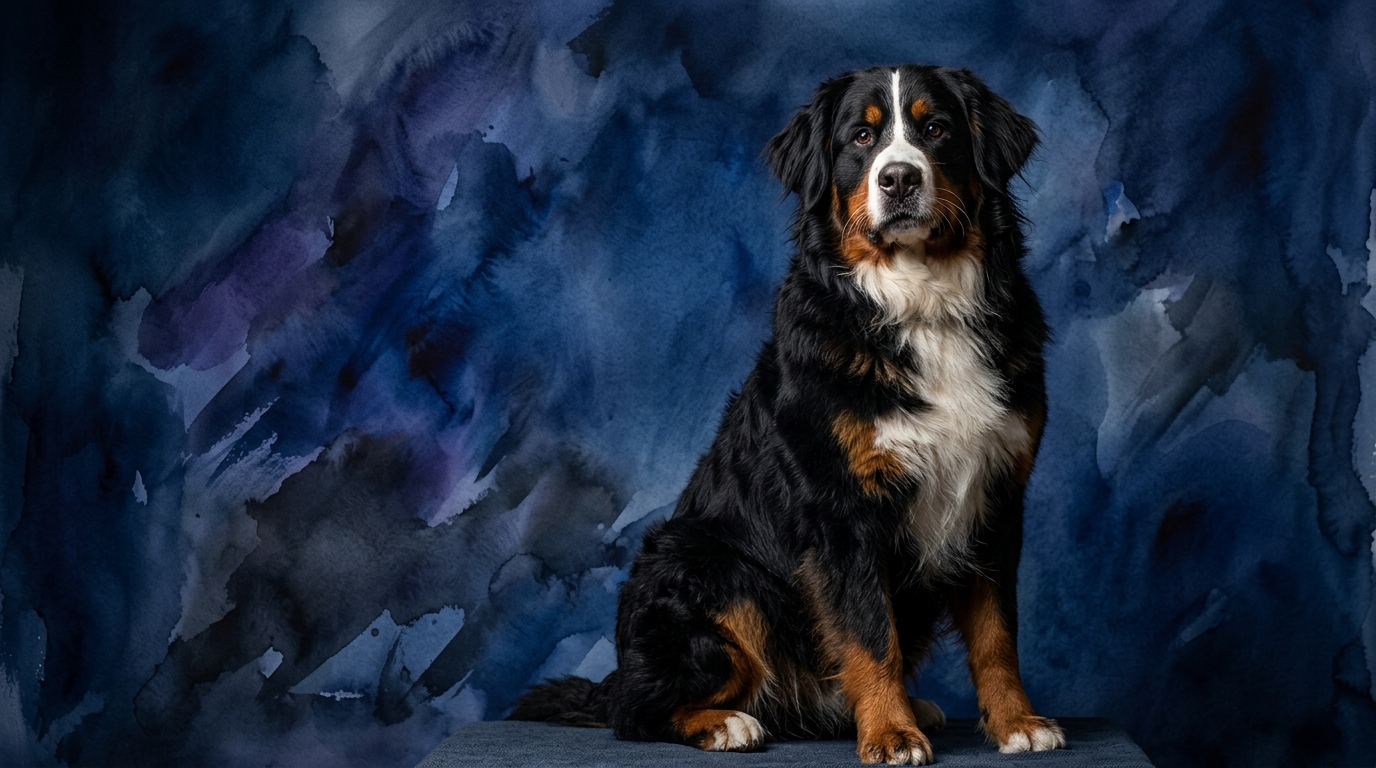
The Bernese Mountain Dog, a robust member of the Working group, holds a respectable Coren rank of #27, reflecting its capacity for obedience and adaptive learning. Its IQ profile details a Problem Solving score of 3/5, indicating a moderate ability to navigate novel situations, paired with a strong Training Speed of 4/5, suggesting a quick grasp of commands. Where the Bernese truly shines is its Social Intelligence at a perfect 5/5, showcasing a profound understanding of human interaction and emotional cues, complemented by an Instinctive Drive of 4/5, rooted in its historical roles, and a Memory score of 3/5 for retaining learned information.
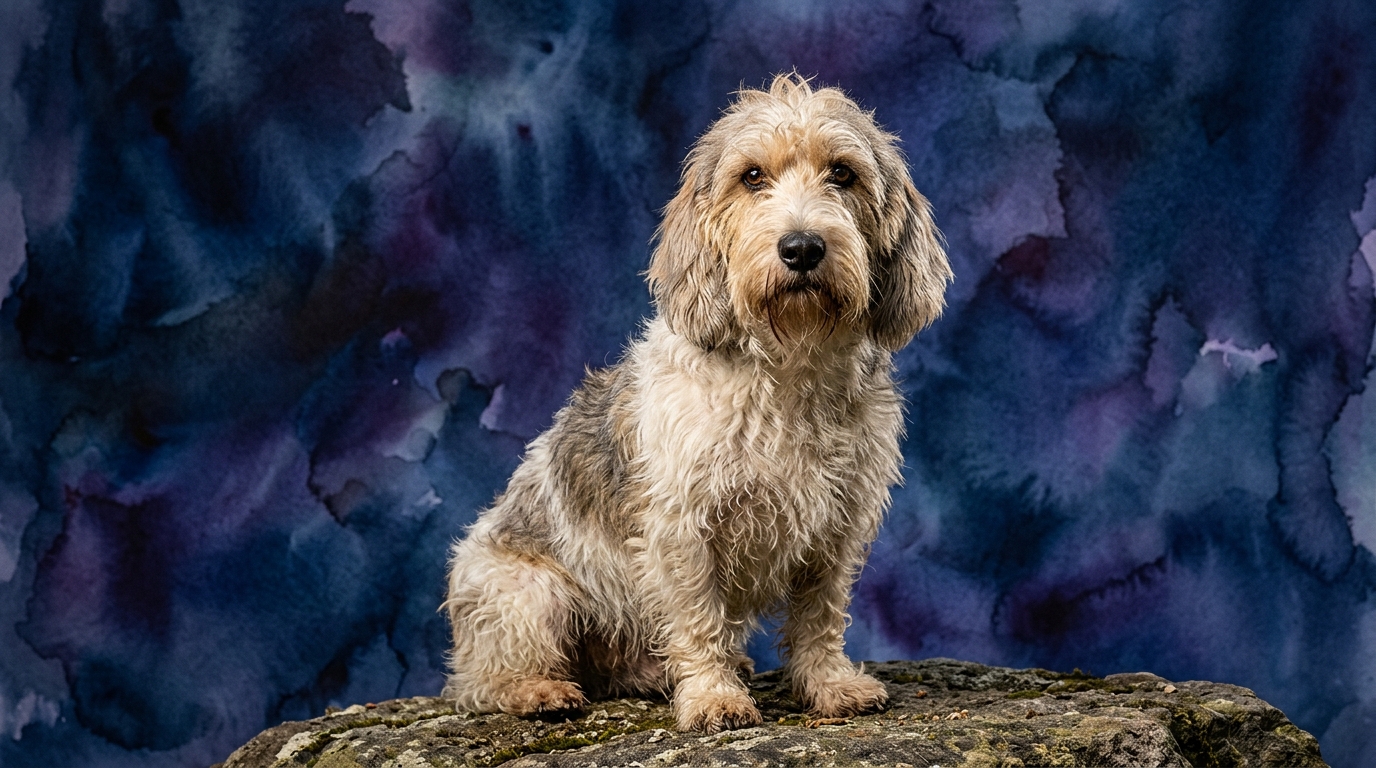
In contrast, the Petit Basset Griffon Vendéen (PBGV), a spirited Hound, does not appear on Coren's ranking, a common trait among breeds whose primary cognitive function lies in independent scent work rather than cooperative obedience. Its IQ profile presents a consistent score across the board: Problem Solving 3/5, Training Speed 3/5, Social Intelligence 3/5, Instinctive Drive 3/5, and Memory 3/5. These scores suggest a balanced but often self-directed intellect, where its inherent drive to follow a scent trail often takes precedence over human-directed tasks, characterizing its independent hunting heritage.
Where the Bernese Mountain Dog Excels Cognitively
The Bernese Mountain Dog's cognitive advantage is most apparent in its exceptional Social Intelligence, rated 5/5. This profound ability to interpret human intentions, moods, and commands makes it an incredibly responsive and empathetic companion, fostering a deep bond that facilitates cooperative tasks. Its history as a versatile farm dog, involved in herding, guarding, and drafting, demanded a keen understanding of its human partners, a trait that directly translates into its superior Training Speed of 4/5, allowing it to acquire and retain new behaviors with relative ease and enthusiasm.
Furthermore, the Bernese's Instinctive Drive of 4/5, while not as singularly focused as a scent hound's, is oriented towards purpose-driven work and collaboration. This drive, combined with its moderate Problem Solving (3/5), equips it to adapt to various household routines and learn complex sequences of actions, such as those required in obedience or draft work. Its cognitive makeup is geared towards being an active participant in a human family's life, showing a clear preference for engaging in shared activities and understanding its role within the family unit.
Where the Petit Basset Griffon Vendéen Shows Unique Strengths
The Petit Basset Griffon Vendéen's cognitive strengths, though numerically lower in some areas, are perfectly adapted to its original purpose: independent hunting. Its Instinctive Drive, rated 3/5, is a tenacious, singular focus on scent. This isn't a drive for human-directed tasks, but an intense, self-rewarding pursuit of a trail, demanding sustained concentration and an ability to ignore distractions that would deter other breeds. This drive is a cognitive engine, fueling its relentless pursuit and making it highly effective in its specialized role.
The PBGV's Problem Solving score of 3/5, combined with its Memory of 3/5, manifests differently than in a working dog. For a hound, problem-solving often involves navigating complex terrain, identifying the freshest scent, or finding its way back to the pack or hunter after a long chase. Its memory is functional for retaining vast "maps" of scent information and familiar territories. Its Social Intelligence, at 3/5, reflects a breed that values its independence during work but still enjoys affectionate companionship, viewing humans as part of its social landscape rather than its sole directive.
Training Dynamics: Bernese Mountain Dog vs. Petit Basset Griffon Vendéen
Training a Bernese Mountain Dog is generally a more straightforward and rewarding experience for the average owner, primarily due to its outstanding Social Intelligence (5/5) and rapid Training Speed (4/5). These dogs possess an innate desire to connect and cooperate with their human companions, making them highly receptive to instruction and eager to please. Their ability to quickly grasp and respond to commands, coupled with their strong bonds, means they often learn complex tasks efficiently and reliably, viewing training as a shared activity.
Conversely, the Petit Basset Griffon Vendéen presents a distinct set of training considerations, largely stemming from its independent nature and lower Social Intelligence (3/5) and Training Speed (3/5). While trainable, PBGVs are not typically motivated by constant human approval in the same way a Bernese is; their potent instinctive drive (3/5, focused on scent) often overrides other commands when a compelling scent presents itself. Training requires immense patience, consistent positive reinforcement, and a deep understanding of their hound mentality, often needing to make the desired behavior more rewarding than the allure of an interesting smell.
Ideal Lifestyles: Active Explorers vs. Cooperative Companions
The Bernese Mountain Dog thrives in a lifestyle centered around cooperative companionship and shared experiences. Its high Social Intelligence and desire to be involved make it an ideal fit for families or individuals who seek a large, affectionate, and present canine companion. While requiring regular exercise, the Bernese prefers structured activities like walks, hikes, or training sessions where it can engage with its owner, making it suitable for owners who enjoy consistent interaction and a dog that works alongside them.
The Petit Basset Griffon Vendéen, with its robust instinctive drive and independent spirit, is best suited for owners who appreciate an active explorer and can provide ample outlets for its specific cognitive needs. These dogs require significant mental and physical stimulation, particularly opportunities for scent work or off-leash exploration in secure areas. Owners who enjoy long, varied walks, scent games, or even canine sports like tracking will find a compatible partner in the PBGV, understanding that while affectionate, it also values its freedom to investigate the world on its own terms.
The Verdict
Choose the Bernese Mountain Dog if you seek a highly cooperative, deeply socially intelligent companion eager to participate in family life and respond readily to training. Its empathetic nature and desire to work alongside you make it an ideal partner for structured activities and close companionship.
Opt for the Petit Basset Griffon Vendéen if you're drawn to an independent, spirited explorer with a tenacious drive for scent, prepared to engage in patient, creative training that respects its unique hound mentality. This breed suits active owners who can provide ample opportunities for its instincts to flourish.
🧠 Find Your Pet's IQ Score
Our Pet IQ Lab assessment covers 25+ tests across 5 cognitive dimensions — personalized to your breed.
Take the Full IQ Test →Frequently Asked Questions
Are Bernese Mountain Dogs good family dogs?
Yes, Bernese Mountain Dogs are typically excellent family dogs due to their high social intelligence and desire for close companionship. They form strong bonds and are generally patient and affectionate with children, thriving on being an integral part of family activities.
Do Petit Basset Griffon Vendéens need a lot of exercise?
Petit Basset Griffon Vendéens do require a good amount of exercise to satisfy their strong instinctive drive and energetic nature. Daily walks, secure off-leash exploration, and opportunities for scent work are crucial to keep them mentally stimulated and physically content.
Is the PBGV difficult to train?
Training a PBGV can be more challenging than some other breeds due to their independent hound mentality and potent scent drive. They require patience, consistency, and positive reinforcement, often needing owners to make training highly engaging to compete with the allure of outdoor smells.