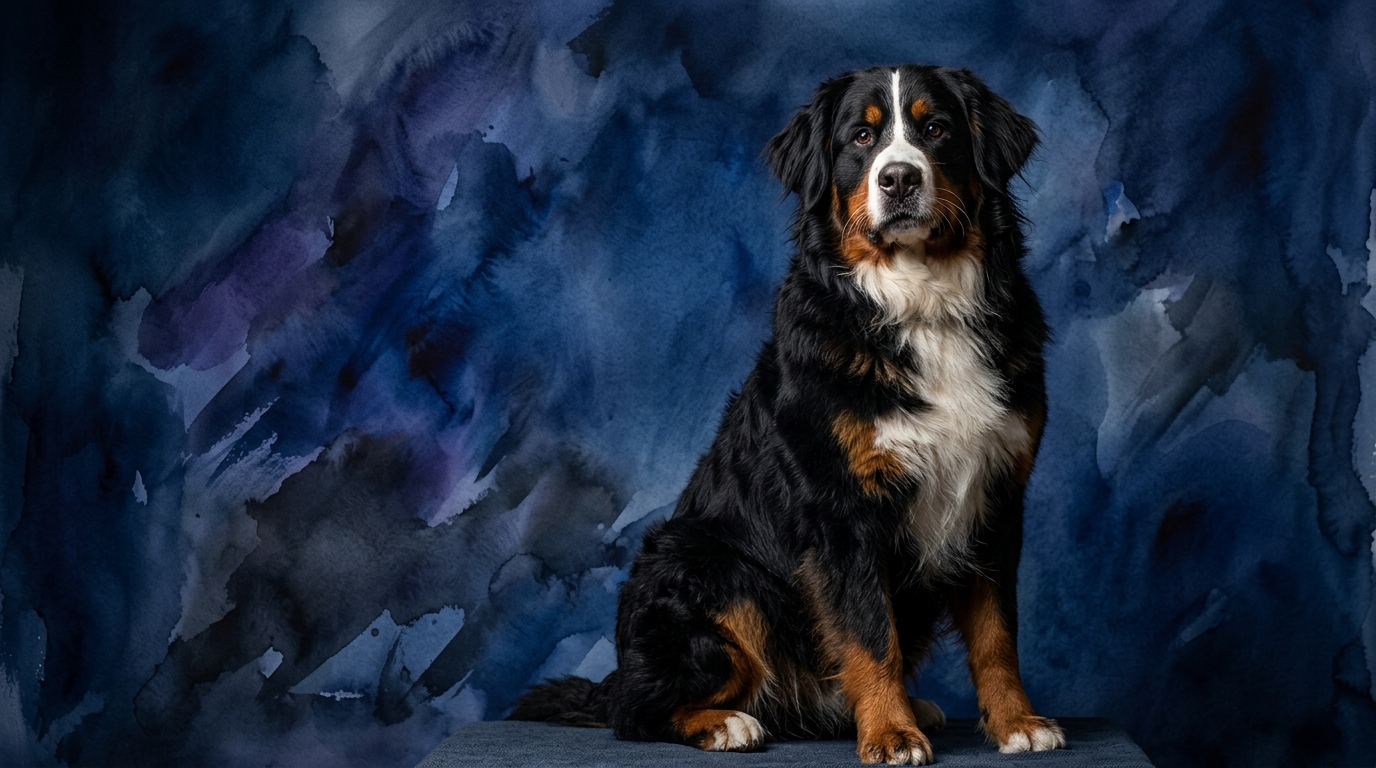

Side-by-Side IQ Profile: Bernese Mountain Dog vs. Yorkshire Terrier
The Cosmic Pet Pet IQ Lab employs five key dimensions to evaluate canine intelligence, offering a granular view beyond general classifications. For the Bernese Mountain Dog, a working breed, we observe a Problem Solving score of 3/5, indicating a capacity for understanding tasks but perhaps less inclination for independent, novel solutions. Their Training Speed stands at a commendable 4/5, reflecting their responsiveness to consistent instruction. Social Intelligence is where they truly shine, scoring a perfect 5/5, showcasing an exceptional attunement to human emotion and social cues. Their Instinctive Drive is rated 4/5, aligning with their heritage of working and companionship, while Memory is 3/5, suggesting good retention of routines but potentially less recall for intricate, less frequent events.
The Yorkshire Terrier, a terrier breed, mirrors the Bernese Mountain Dog in Problem Solving at 3/5, demonstrating a cleverness in navigating their environment, often finding resourceful ways to achieve goals. Their Training Speed also matches at 4/5, indicating a quick grasp of commands and a enjoyment of mental stimulation. In Social Intelligence, they score a strong 4/5, displaying keen awareness of their owner's mood and a desire for interaction. Their Instinctive Drive is likewise 4/5, fueled by their terrier legacy of hunting and exploration. Where the Yorkshire Terrier differentiates itself is in Memory, scoring 4/5, suggesting a more precise recall of specific locations, objects, and established routines.
Where the Bernese Mountain Dog Excels Cognitively
The Bernese Mountain Dog's primary cognitive strength lies in its profound social intelligence, scoring an unparalleled 5/5. This isn't merely about being friendly; it reflects an advanced capacity for empathy and understanding human emotional states. A Bernese will often intuitively pick up on an owner's mood, offering comfort or adapting their behavior accordingly. This exceptional social acuity makes them superb cooperative partners, thriving in environments where they can work alongside their humans and contribute to the family unit. Their cognitive framework supports deep, reciprocal bonds, making them highly attuned to the dynamics and needs of their human companions, a trait that goes far beyond simple obedience.
Where the Yorkshire Terrier Wins Cognitively
The Yorkshire Terrier demonstrates a notable cognitive advantage in the realm of memory, scoring 4/5 compared to the Bernese Mountain Dog's 3/5. This superior recall allows a Yorkie to establish and remember routines with impressive accuracy, whether it's the location of a favorite toy, the specific sequence of a daily walk, or previously learned commands. Their ability to retain detailed information about their environment and past experiences contributes to their adaptability and resourcefulness. This robust memory helps them quickly acclimate to new situations and can make them particularly adept at remembering specific cues or intricate sequences once they've been taught and reinforced.
Which is Easier to Train and Why
Despite both breeds scoring a 4/5 in training speed, the practical experience of training them can differ due to their underlying cognitive profiles and inherent drives. The Bernese Mountain Dog's exceptional social intelligence (5/5) and inherent desire to work cooperatively with humans often translate into a more eager and consistent training partner. They are profoundly motivated by praise and the strong bond they share, making them highly responsive to positive reinforcement and clear, consistent guidance. Their relatively lower problem-solving score (3/5) means they might prefer to follow known commands rather than improvising, which aids in structured training environments, fostering a predictable and compliant learning experience.
In contrast, the Yorkshire Terrier, while quick to grasp new commands (4/5 training speed), can present unique challenges. Their strong instinctive drive (4/5), rooted in their terrier heritage, means they possess a spirited independence and a tendency to follow their own nose or interests. This can sometimes lead to selective hearing or a playful defiance during training sessions, where their quick wit might be used to test boundaries. Their knack for problem-solving (3/5) often manifests in finding creative ways to get what they want, which can sometimes be at odds with the trainer's objectives. Effective training for a Yorkie often requires more engaging, game-based approaches and an understanding that their compliance is sometimes a choice, not just a learned response. Therefore, while both learn quickly, the Bernese often proves easier to consistently direct due to their cooperative nature, whereas the Yorkie requires a more nuanced approach to harness their quick wit and independent spirit.
Suited for Active vs. Relaxed Owners
The choice between a Bernese Mountain Dog and a Yorkshire Terrier also hinges significantly on an owner's lifestyle. The Bernese Mountain Dog, with its strong instinctive drive (4/5) for work and companionship, thrives with owners who can integrate them into daily activities and provide consistent, moderate physical and mental engagement. While not requiring the high-intensity exercise of some sporting breeds, they need regular walks, opportunities for supervised outdoor exploration, and tasks that engage their social intelligence and cooperative nature. Owners who enjoy family outings, consistent training sessions, and desire a deeply bonded companion who participates actively in home life will find the Bernese a rewarding match. They are ideal for those who appreciate a gentle giant that enjoys being present and involved, rather than a solitary, independent pet.
Conversely, the Yorkshire Terrier, despite its smaller stature, possesses a robust instinctive drive (4/5) and a keen, active mind. They require regular playtime, short walks, and consistent mental stimulation to prevent boredom and channel their terrier energy. While they can adapt to more relaxed indoor lifestyles, they are far from sedentary. Owners who enjoy interactive games, puzzle toys, and can dedicate time to engaging their Yorkie's quick wit and problem-solving abilities (3/5) will find them a delightful companion. Their size makes them suitable for apartment living, but their spirited personality demands an owner prepared to provide consistent attention and mental challenges. They are a good fit for individuals or families who appreciate a lively, intelligent, and affectionate small dog that thrives on interaction, even if much of that interaction occurs within the home.
The Verdict
Choose a Bernese Mountain Dog if you seek a deeply empathetic, cooperative, and family-oriented companion who thrives on social interaction and consistent, purposeful engagement.
Opt for a Yorkshire Terrier if you desire a spirited, quick-witted, and affectionate companion who thrives on interactive play, mental challenges, and can adapt to smaller living spaces while still demanding attention.
🧠 Find Your Pet's IQ Score
Our Pet IQ Lab assessment covers 25+ tests across 5 cognitive dimensions — personalized to your breed.
Take the Full IQ Test →Frequently Asked Questions
Are Bernese Mountain Dogs good family dogs?
Yes, their exceptional social intelligence (5/5) means they are highly attuned to human emotions and form deep bonds, making them excellent, gentle, and protective family members who thrive on interaction.
Do Yorkshire Terriers bark a lot?
Their strong instinctive drive (4/5) and terrier vigilance can lead to frequent barking, especially at perceived threats or new stimuli. Consistent training and early socialization can help manage this.
Which breed is better for first-time owners?
The Bernese Mountain Dog's cooperative nature and high social intelligence often make them a more straightforward choice for first-time owners who can provide consistent guidance and moderate activity. Yorkshire Terriers, while quick learners, require a more nuanced approach to manage their independent terrier spirit.