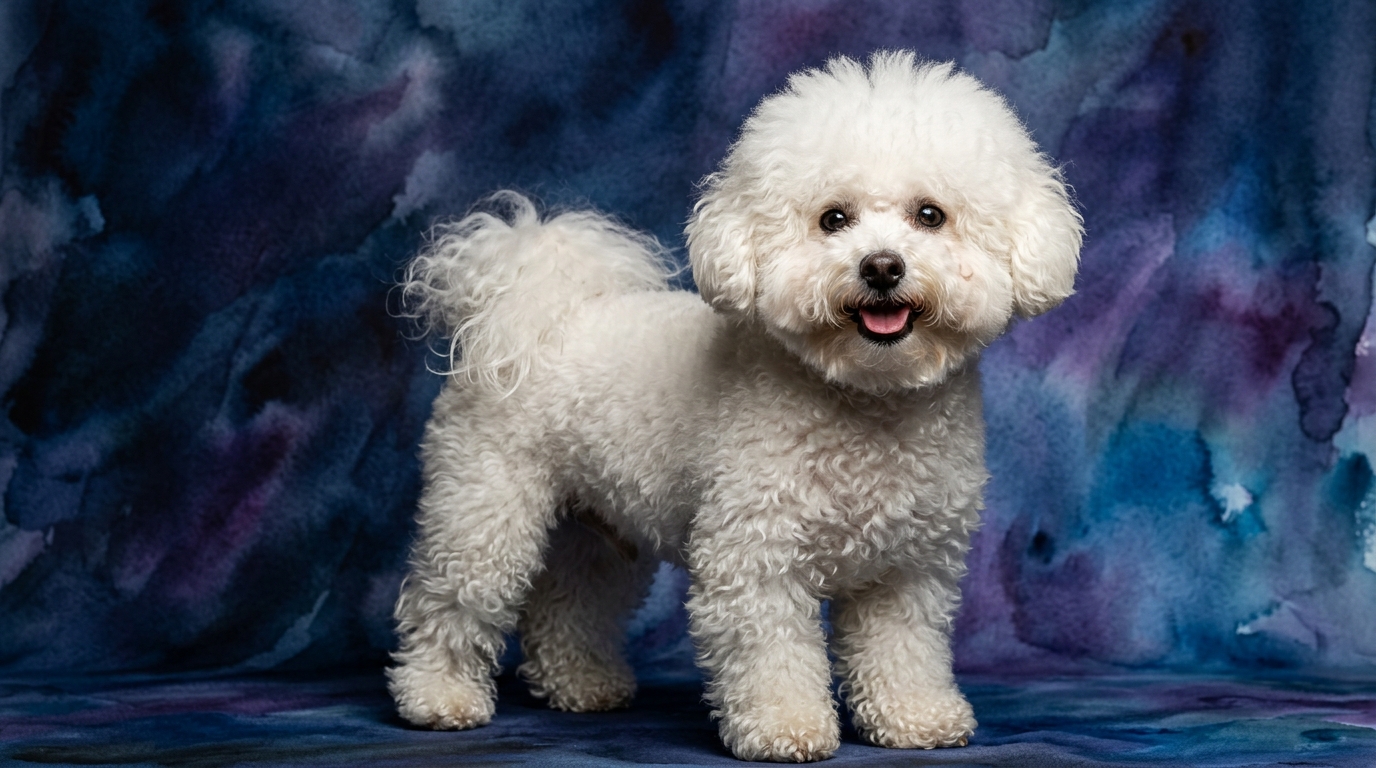

Side-by-Side Cognitive Profiles: Bichon Frisé vs. Cane Corso
At The Cosmic Pet Pet IQ Lab, we evaluate canine intelligence across five key dimensions to provide a comprehensive understanding of each breed’s mental landscape. For the Bichon Frisé and Cane Corso, these profiles highlight their inherent predispositions and cognitive strengths, offering a window into their unique ways of thinking and learning.
The Bichon Frisé, a delightful Non-Sporting breed, exhibits a Problem Solving score of 3/5, indicating a moderate capacity for navigating novel situations or figuring out simple environmental puzzles. Their Training Speed is also 3/5; while they grasp new commands with consistent effort, their eagerness often stems from their profound social connections. Their Social Intelligence shines at an exceptional 5/5, reflecting an unparalleled ability to interpret human emotions and cues, forming deep, empathetic bonds. With an Instinctive Drive of 2/5, Bichons are less governed by primal urges like hunting or guarding, prioritizing human interaction. Their Memory, rated at 3/5, allows them to retain learned routines and recall familiar faces reliably. This breed’s Coren rank of #45 further underscores a respectable capacity for obedience and working intelligence in a general context, suggesting a willingness to learn structured tasks.
The Cane Corso, a powerful Working breed, shares a Problem Solving score of 3/5, often manifesting in practical, purpose-driven scenarios, such as assessing a situation or navigating an obstacle to achieve a goal. Their Training Speed also stands at 3/5; they can quickly acquire commands when motivated by a clear task or reward, but their independent nature necessitates a firm, consistent, and engaging training approach. Their Social Intelligence is a discerning 3/5; while deeply devoted and protective of their immediate family, they approach strangers with caution and assessment rather than immediate openness. Possessing an Instinctive Drive of 3/5, Cane Corsos are naturally inclined towards guarding and protection, a drive that requires careful channeling through training. Their Memory is likewise 3/5, enabling them to recall training, routines, and experiences, particularly concerning their protective duties and established family relationships. Although not Coren-ranked, this does not imply a lack of intelligence but rather suggests their cognitive strengths are specialized, focused on practical application and independent decision-making inherent to their historical working roles.
Where the Bichon Frisé Excels Cognitively
The Bichon Frisé’s cognitive superiority lies unequivocally in its exceptional Social Intelligence, scoring a perfect 5/5 against the Cane Corso’s 3/5. This translates into an extraordinary capacity for emotional attunement; Bichons can interpret subtle human moods, respond empathetically to emotional states, and seamlessly integrate into family dynamics, often anticipating needs or offering comfort without explicit prompts. Their world revolves around their human companions, making them highly perceptive of social cues and deeply responsive to shared experiences.
Furthermore, their low Instinctive Drive (2/5) is a cognitive advantage in a companion setting. Bichons are less distracted by primal urges like hunting, territorial patrol, or independent exploration. This lower drive allows them to maintain a more consistent focus on human interaction and direction, making them incredibly amenable to guidance and eager to participate in shared activities. This combination of high social awareness and low independent drive results in a dog that is exceptionally attuned to its human environment, readily accepting and thriving within structured routines and close companionship, making them ideal for roles where a deep, reciprocal emotional bond is paramount.
Where the Cane Corso Holds Cognitive Strengths
The Cane Corso's cognitive strengths are deeply rooted in its heritage as a working guardian, particularly evident in its moderate Instinctive Drive (3/5) compared to the Bichon’s 2/5. This inherent drive equips them with a purpose-driven focus, allowing them to excel in roles requiring vigilance, assessment of surroundings, and protective action. While not universally outgoing, their Social Intelligence, rated at 3/5, is highly discerning. This means they possess a sophisticated ability to assess individuals and situations, forming profound, protective bonds with their trusted family while maintaining a watchful wariness towards strangers. This discernment is a critical cognitive skill, enabling them to differentiate between benign and perceived threats.
This blend of discerning social cognition and moderate instinctive drive allows Cane Corsos to make independent judgments in guarding scenarios, a vital cognitive attribute for their traditional role. Their intelligence, while not typically measured by general obedience rankings, is practical and situationally aware. They are adept at tasks requiring independent decision-making for security and protection, demonstrating a mental fortitude geared towards assessing and acting within their environment to fulfill a perceived duty. This makes them highly effective in roles demanding both mental and physical presence, where their cognitive focus is on maintaining the safety and integrity of their home and family.
Training Dynamics: Which is Easier and Why?
Both the Bichon Frisé and the Cane Corso share a moderate Training Speed score of 3/5, suggesting that neither breed is inherently quick or slow to grasp new commands. However, the practical experience of training each can differ significantly due to their other cognitive traits. The Bichon Frisé, with its exceptional Social Intelligence (5/5) and low Instinctive Drive (2/5), is generally perceived as more straightforward to train for companion behaviors. Their strong desire to please and deep connection to their human companions mean they are highly motivated by positive reinforcement, social praise, and maintaining harmony within the family unit. They are less likely to become distracted by independent urges, making them more receptive to instruction and eager to follow cues to solidify their bond.
In contrast, the Cane Corso’s moderate Social Intelligence (3/5) and higher Instinctive Drive (3/5) mean their training often requires a more purpose-driven and assertive approach. While capable learners, their independent nature and inherent protective instincts necessitate a confident, consistent leader who can provide clear direction and compelling motivation. They are less inclined to perform simply for social approval and respond best when tasks have a perceived purpose or tangible reward. Training a Cane Corso is more about establishing clear communication, mutual respect, and channeling their natural drives, requiring an owner with the experience and commitment to manage a powerful and discerning dog effectively.
Cognition and Lifestyle: Active vs. Relaxed Owners
Understanding the cognitive profiles of these breeds is paramount when matching them to an owner’s lifestyle. The Bichon Frisé, with its high Social Intelligence and low Instinctive Drive, is an ideal fit for relaxed owners seeking a devoted and emotionally responsive companion. Their cognitive makeup means they thrive on close human interaction, gentle play, and participating in the daily rhythms of a calm household. They are less driven by the need for strenuous physical or mental tasks beyond companionship, making them content with moderate activity and ample cuddle time. Their cognitive focus is primarily on their human bond, fitting perfectly into a more sedentary or family-oriented lifestyle where their main 'job' is to be a loving and comforting presence.
Conversely, the Cane Corso, with its moderate Instinctive Drive and discerning Social Intelligence, is better suited for active, experienced owners who can channel their inherent purposefulness. These dogs need more than just casual companionship; they require structured activities that engage their minds and bodies, often related to their protective instincts. Owners who enjoy regular training sessions, structured walks, and potentially canine sports will find a willing and capable partner in the Cane Corso. Their cognitive need for purpose and their careful assessment of their environment mean they thrive with owners who understand and respect their working heritage, providing consistent leadership and mental stimulation rather than just casual interaction. They require an owner who can consistently provide direction and engage their formidable mental and physical attributes.
The Verdict
Opt for a Bichon Frisé if your home seeks an exceptionally empathetic, highly social companion dog whose primary joy is close human connection and whose cognitive focus is on harmonious interaction within the family.
Select a Cane Corso if you are an experienced, active owner prepared to provide consistent leadership and structured mental engagement for a discerning, protective dog with a strong sense of purpose.
🧠 Find Your Pet's IQ Score
Our Pet IQ Lab assessment covers 25+ tests across 5 cognitive dimensions — personalized to your breed.
Take the Full IQ Test →Frequently Asked Questions
Are Bichon Frisé easy to train?
While Bichon Frisé have a moderate training speed (3/5), their exceptional social intelligence (5/5) and strong desire to please their human companions often make them seem easier to train for companion behaviors. They respond very well to positive reinforcement and consistency, eager to engage in activities that deepen their bond with their family.
Is a Cane Corso a good family dog?
A Cane Corso can be an excellent family dog for the right household, especially one with experienced owners. Their social intelligence (3/5) means they form deep, protective bonds with their family members, but they are typically reserved with strangers and require consistent socialization and training to channel their moderate instinctive drive (3/5) appropriately.
How do their memory scores impact daily life?
Both breeds have a moderate memory score (3/5), meaning they are capable of retaining learned commands, routines, and experiences over time. This ensures they can remember their training, recognize familiar faces, and recall past interactions, contributing to consistent behavior and stable relationships within their established environments.