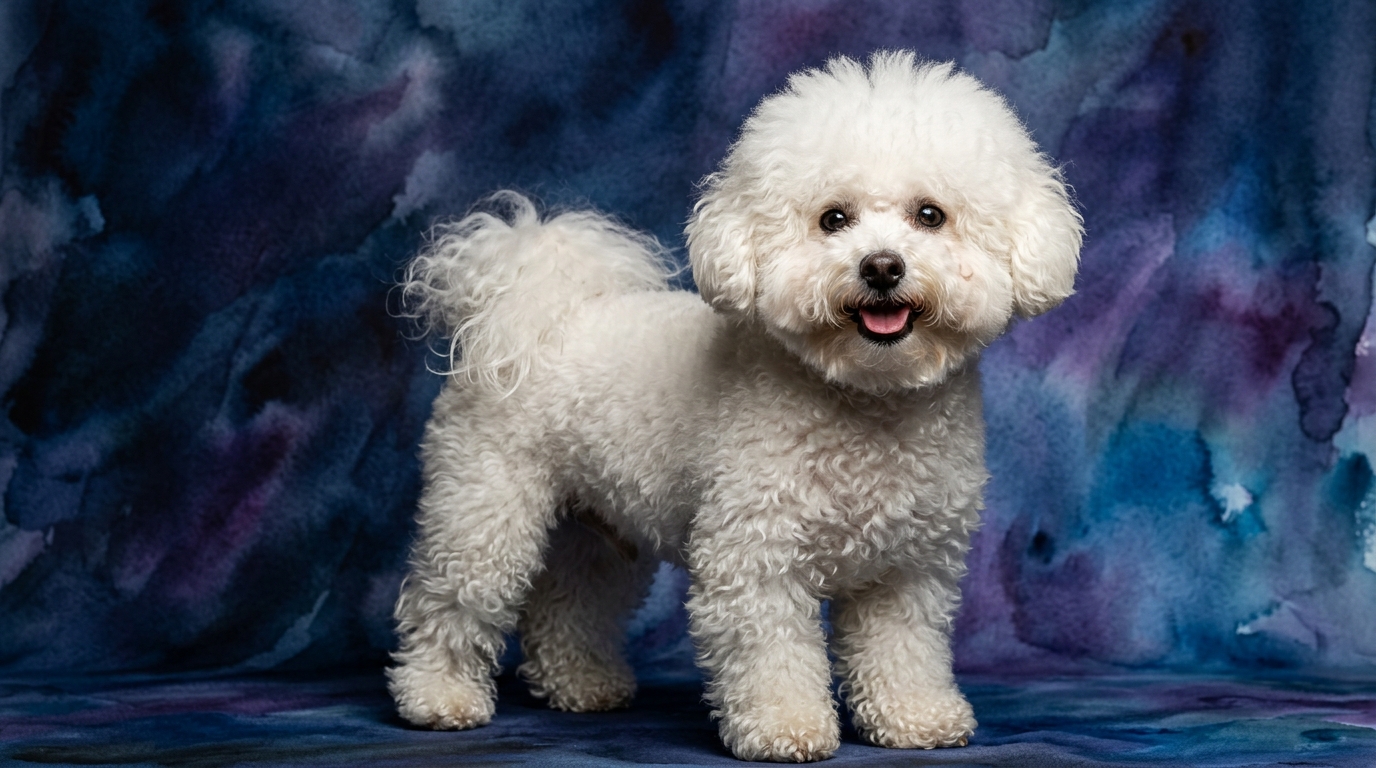
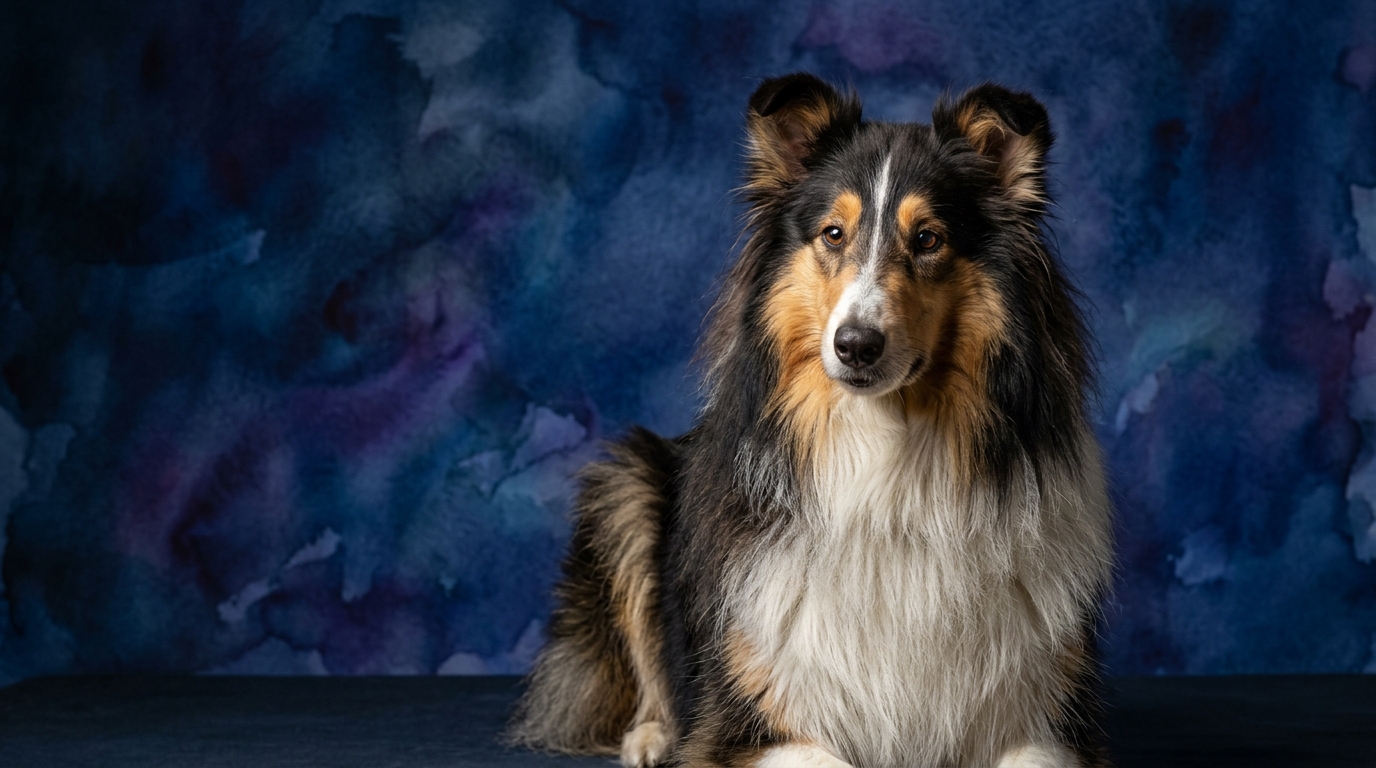
Side-by-Side IQ Profile: Bichon Frisé vs. Collie (Rough)
To understand the cognitive differences between these two breeds, The Cosmic Pet Pet IQ Lab employs a five-dimensional framework, providing a nuanced view beyond simple obedience rankings. The Bichon Frisé, a Non-Sporting breed, holds a Coren rank of #45, while the Herding Collie (Rough) is positioned significantly higher at Coren rank #16.
The Bichon Frisé's cognitive blueprint emphasizes social connection. Their Problem Solving score of 3/5 suggests a moderate capacity for navigating novel challenges; they can learn to overcome simple obstacles like opening a treat-dispensing toy, but complex, multi-step puzzles might exceed their typical engagement threshold. Training Speed, also at 3/5, indicates they are willing learners for basic commands, responding well to consistent, positive reinforcement, though patience is key. Where the Bichon truly excels is Social Intelligence, scoring a perfect 5/5. This reflects an exceptional ability to perceive human emotions, respond to subtle cues, and form deep, empathetic bonds, often adjusting their behavior to provide comfort or elicit interaction. Their Instinctive Drive is low at 2/5, meaning they typically lack strong urges for activities like hunting or herding, focusing instead on companionship. Finally, their Memory is rated 3/5, allowing them to retain learned commands, routines, and familiar faces, but perhaps with less robustness for complex sequences.
The Collie (Rough), in contrast, presents a cognitive profile geared towards purpose and work. Their Problem Solving capability is stronger at 4/5, enabling them to analyze situations and devise solutions to achieve goals, a trait rooted in their herding heritage. This strategic thinking allows them to navigate complex environments or manipulate objects to their advantage. Training Speed is also higher at 4/5; these dogs are quick learners, often grasping new commands after just a few repetitions, thriving on mental engagement and clear instruction. While affectionate, their Social Intelligence at 3/5 is more focused on understanding their role within a group dynamic rather than intense emotional attunement. Their Instinctive Drive is moderate at 3/5, manifesting as an inclination to gather and manage their 'flock,' requiring appropriate outlets. The Collie’s most notable cognitive strength is its Memory, scoring an exceptional 5/5. They can recall a vast array of commands, complex sequences, and past experiences with remarkable accuracy over long periods, invaluable for intricate tasks and advanced obedience.
Where the Bichon Frisé Wins Cognitively
The Bichon Frisé genuinely excels in the realm of social intelligence, scoring a perfect 5/5 on this dimension. This breed's cognitive strength lies in its profound ability to perceive and interpret human emotions, nuances in tone, and body language. They possess an innate empathy, often anticipating their owner's needs for comfort or play without explicit commands. This superior social cognition fosters an incredibly deep, intuitive bond, allowing them to seamlessly integrate into family life as perceptive and responsive companions. Their social acumen means they are adept at reading a room, understanding when to be playful and when to offer quiet solace, making them exceptional emotional support animals who are highly attuned to their human counterparts.
Where the Collie (Rough) Wins Cognitively
The Collie (Rough) demonstrates a clear cognitive advantage across several dimensions, underpinned by its higher Coren rank of #16 compared to the Bichon’s #45. Their problem-solving capabilities (4/5) are more robust, reflecting an an innate capacity to approach and resolve challenges with greater strategic thought and independence. This is complemented by a faster training speed (4/5), indicating a quicker grasp of new concepts and commands, often requiring fewer repetitions to solidify learning. However, the Collie's most striking cognitive strength is its exceptional memory (5/5). This allows them to retain complex sequences of behaviors, elaborate routines, and a vast vocabulary of commands over extended periods, making them highly capable for advanced training and intricate tasks. This combination of superior problem-solving, rapid learning, and remarkable recall positions the Collie as a breed with a more pronounced capacity for complex cognitive work and sustained mental engagement.
Which Is Easier to Train and Why
When comparing trainability, the Collie (Rough) generally presents as the easier breed to train for a wider range of tasks, primarily due to its higher scores in training speed and problem-solving, alongside its impressive memory. Collies grasp new commands quickly, often with just a few repetitions, and possess the cognitive flexibility to apply learned behaviors to new situations. Their moderate instinctive drive, while requiring an outlet, can also be channeled into productive training, as they often enjoy having a 'job' and thrive on structure. In contrast, the Bichon Frisé, with a training speed of 3/5, requires more patience and consistency. While eager to please due to their high social intelligence, their problem-solving (3/5) and memory (3/5) are not as robust, meaning they might take longer to generalize commands or recall less frequently practiced behaviors. Real behavioral differences include the Collie’s inherent desire for purpose and structured activity, making them more receptive to formal training sessions, whereas the Bichon's motivation is more heavily tied to social interaction and affection, which can be a powerful training tool but might not translate to complex task learning as readily.
Suitability for Active vs. Relaxed Owners
The choice between a Bichon Frisé and a Collie (Rough) largely depends on an owner's lifestyle and their capacity to meet a dog's cognitive and physical needs. The Collie (Rough) is better suited for active owners who can provide consistent mental stimulation and moderate physical exercise. Their moderate instinctive drive and higher scores in problem-solving and memory mean they thrive with activities like obedience, agility, herding games, or long, exploratory walks that engage their minds and bodies. Owners who enjoy structured training and want a dog capable of learning complex tasks will find the Collie a rewarding partner, as they truly flourish with a sense of purpose and activity. Conversely, the Bichon Frisé is an excellent match for more relaxed owners or those seeking a devoted companion whose primary needs are social interaction and gentle play. With a lower instinctive drive and moderate energy levels, Bichons are content with shorter walks, indoor play, and ample cuddle time. Their exceptional social intelligence makes them ideal for owners who prioritize emotional connection and a dog that is highly attuned to their presence, rather than one requiring extensive physical or mental challenges or a 'job' to perform.
The Verdict
Choose a Bichon Frisé if your priority is an exceptionally socially intelligent, empathetic companion who thrives on close emotional bonds and requires moderate physical and mental engagement.
Opt for a Collie (Rough) if you are an active owner seeking a highly trainable, intelligent partner for complex tasks, who excels in problem-solving and possesses a remarkable memory for advanced training.
🧠 Find Your Pet's IQ Score
Our Pet IQ Lab assessment covers 25+ tests across 5 cognitive dimensions — personalized to your breed.
Take the Full IQ Test →Frequently Asked Questions
Does Coren rank directly correlate with a dog's overall happiness?
Coren rank indicates a breed's working and obedience intelligence, reflecting their ability to understand and obey commands. It doesn't directly measure happiness, which is influenced by various factors like environment, health, and owner interaction, regardless of a dog's cognitive aptitude.
Can a Bichon Frisé be trained for advanced obedience or agility?
While Bichons may not have the inherent drive or training speed of a Collie, their high social intelligence and desire to please mean they can certainly learn advanced obedience and participate in agility. Success requires patience, positive reinforcement, and making training a fun, bonding experience.
How important is instinctive drive for a pet dog?
Instinctive drive, though crucial for working breeds, still matters for pets as it informs their natural inclinations. Understanding a dog's drive helps owners provide appropriate outlets for behaviors like chasing, herding, or digging, preventing boredom or unwanted habits, and promoting a more fulfilled life.