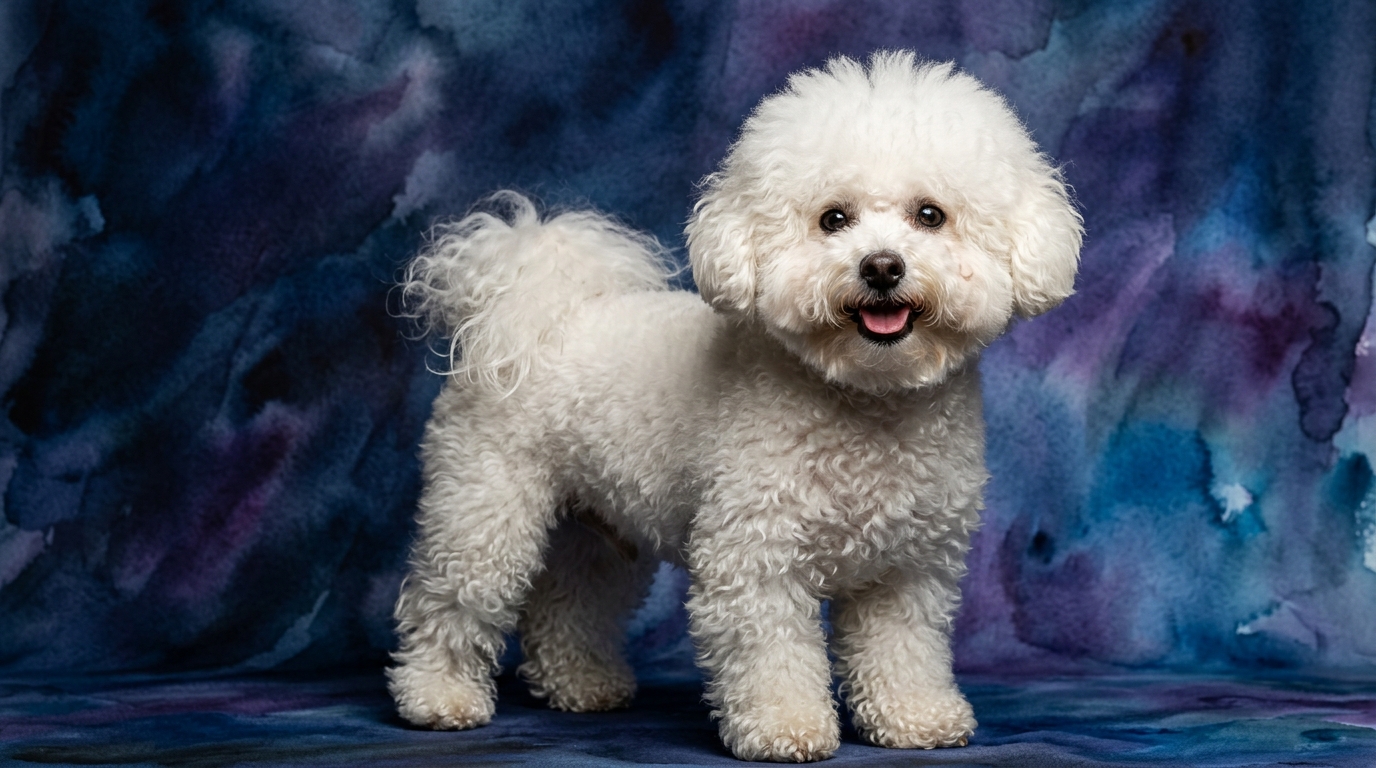
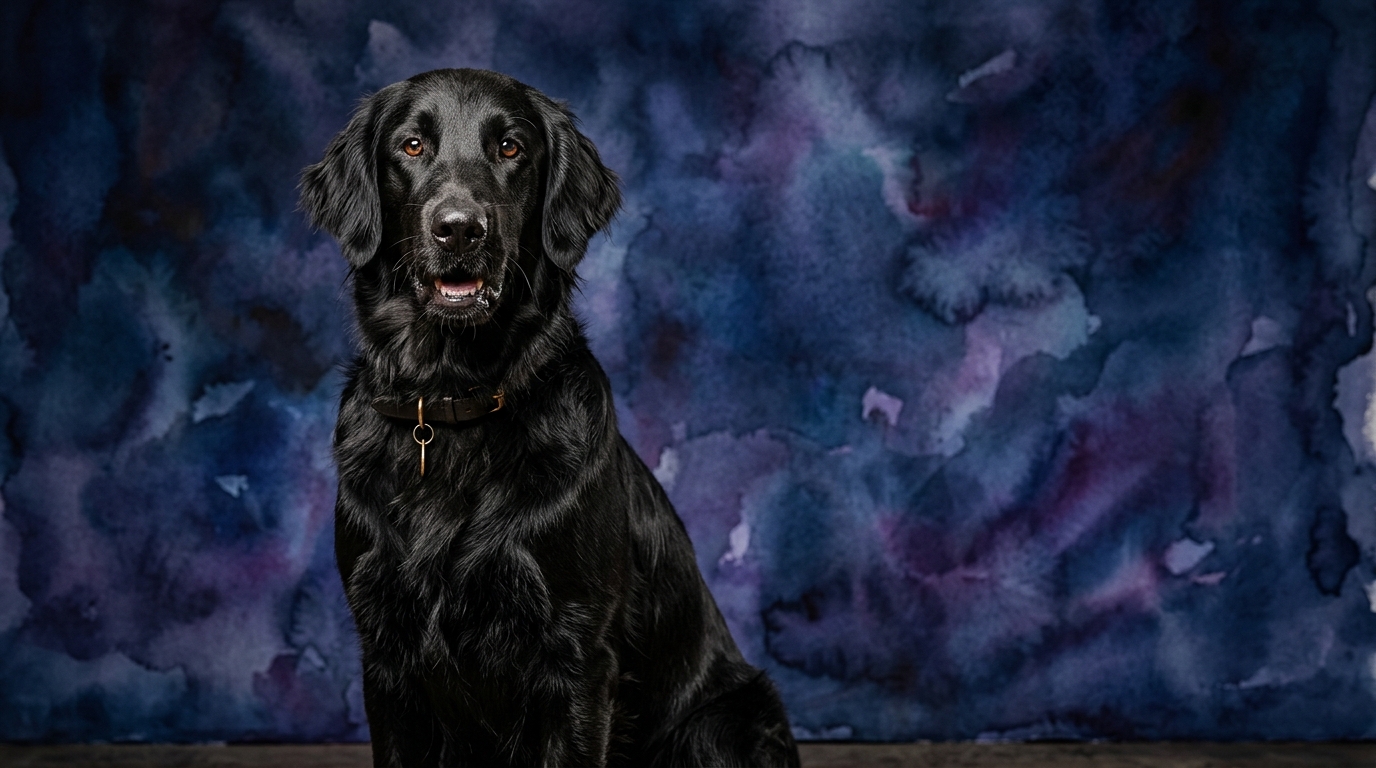
Side-by-Side IQ Profile: Bichon Frisé vs. Flat-Coated Retriever
The Cosmic Pet Pet IQ Lab provides a nuanced framework for understanding canine cognition across five key dimensions. For the Bichon Frisé, a delightful member of the Non-Sporting group, their profile reveals a Coren rank of #45. Their Problem Solving is rated 3/5, indicating a moderate ability to navigate novel situations and figure out simple puzzles. Training Speed also scores 3/5, suggesting they learn new commands and routines at an average pace, requiring consistent but not overly intensive repetition. Where the Bichon truly shines is in Social Intelligence, earning a perfect 5/5, reflecting an exceptional capacity to understand human emotions and cues. Their Instinctive Drive is low at 2/5, meaning they possess minimal inherent motivation for tasks like retrieving or herding, while Memory is a solid 3/5, allowing for good retention of learned behaviors and experiences.
In contrast, the Flat-Coated Retriever, a spirited Sporting group dog, holds a more prominent Coren rank of #17, hinting at a different cognitive emphasis. Their Problem Solving ability is strong at 4/5, indicating a knack for tackling more complex challenges and adapting quickly to new environments. Training Speed matches this at 4/5, signifying a quick grasp of new commands and a readiness to learn. Unlike the Bichon, their Social Intelligence is rated 3/5, which is good but perhaps less emotionally intricate than their companion counterpart. The Flat-Coat's Instinctive Drive is moderate at 3/5, reflecting their natural inclination for retrieving and working alongside humans. Their Memory is exceptional, scoring a perfect 5/5, suggesting an outstanding capacity for recalling past events, commands, and locations.
Where the Bichon Frisé Wins Cognitively
The Bichon Frisé's undisputed cognitive strength lies in their remarkable Social Intelligence, scoring a rare 5/5. This isn't merely about being friendly; it reflects an advanced capacity to interpret subtle human cues, emotional states, and social dynamics. A Bichon often seems to anticipate their owner's mood, offering comfort or playful distraction precisely when needed. This profound empathy and ability to connect deeply on an emotional level makes them exceptional companion animals, often excelling in roles that require sensitivity, such as therapy or emotional support work. They thrive on interaction and reciprocate affection with an understanding that goes beyond simple learned behaviors, demonstrating a genuine awareness of their human partners' inner worlds.
Their moderate Problem Solving (3/5) and Memory (3/5) are perfectly adequate for navigating a typical household environment and remembering routines, but it's their social acumen that truly sets them apart. They might not be solving complex multi-step puzzles, but they are masters of social navigation, using their charm and understanding to foster strong, reciprocal bonds. This social prowess means they are often highly attuned to their family's daily rhythms and preferences, making them incredibly adaptable and harmonious additions to a home where emotional connection is prioritized.
Where the Flat-Coated Retriever Wins Cognitively
The Flat-Coated Retriever's cognitive profile highlights a suite of strengths geared towards active engagement and practical application. Their Problem Solving (4/5) and Training Speed (4/5) are significantly higher, indicating a dog that not only learns quickly but can also apply that learning to novel situations. This means they are adept at figuring out how to open gates, retrieve items from challenging spots, or navigate complex agility courses. Their quick uptake of commands makes them a joy to train for various disciplines, from advanced obedience to competitive sports.
Perhaps their most standout cognitive asset is their perfect 5/5 score in Memory. Flat-Coats possess an extraordinary recall for commands, routines, and experiences, which is crucial for a working or sporting dog. This exceptional memory allows them to retain vast repertoires of cues and sequences, making them highly reliable in complex tasks or off-leash environments. Coupled with a moderate Instinctive Drive (3/5), their memory and problem-solving skills make them formidable partners for activities requiring consistency, precision, and sustained attention, such as retrieving game, performing intricate tricks, or participating in scent work.
Which is Easier to Train and Why?
Based on their IQ scores, the Flat-Coated Retriever is generally easier to train for task-oriented activities, largely due to their superior Training Speed (4/5), Problem Solving (4/5), and exceptional Memory (5/5). These combined attributes mean they grasp new commands rapidly, can generalize learned behaviors to different contexts, and retain information over long periods. Their moderate Instinctive Drive (3/5) also provides a natural inclination for cooperative work, especially retrieving, which can be channeled effectively into training. For instance, a Flat-Coat will likely pick up a multi-step retrieve command, like 'find the keys and bring them here,' with fewer repetitions and remember it more consistently than a Bichon.
The Bichon Frisé, with a Training Speed of 3/5 and Problem Solving of 3/5, is certainly trainable but might require more patience and creative motivation. Their training often benefits from leveraging their high Social Intelligence (5/5); they respond exceptionally well to positive reinforcement that emphasizes connection and praise. While they can learn commands and house rules, their lower Instinctive Drive (2/5) means they are less inherently motivated by work-related tasks and more by companionship. Teaching a Bichon complex sequences might take more time and focus on making the training a fun, social interaction rather than a rigid task, as they are less driven by the 'job' itself and more by pleasing their person.
Which Suits Active Owners vs. Relaxed Owners?
The Flat-Coated Retriever, with its higher scores in Problem Solving, Training Speed, Memory, and a moderate Instinctive Drive, is an ideal match for active owners. These are dogs that thrive on engagement, requiring consistent physical exercise and mental stimulation. Owners who enjoy hiking, running, dog sports like agility or flyball, or who are keen on advanced obedience training will find a Flat-Coat a willing and capable partner. Their cognitive makeup demands an outlet for their energy and intellect; without sufficient activity, they may invent their own 'problems' to solve, potentially leading to undesirable behaviors.
Conversely, the Bichon Frisé, with its exceptional Social Intelligence and lower Instinctive Drive, is perfectly suited for more relaxed owners who prioritize companionship and emotional connection over strenuous activities. While they do enjoy play and walks, their primary need is for human interaction and affection. Their moderate Problem Solving and Memory are well-suited to a comfortable home life, and their low drive means they are less likely to become destructive if daily adventures aren't extensive. They are content to be lap dogs, attentive listeners, and charming companions, making them excellent choices for individuals or families seeking a devoted, emotionally responsive pet without the demands of a high-drive working breed.
The Verdict: When to Choose Each
The Verdict
Choose the Bichon Frisé if your priority is a deeply empathetic companion who excels in social connection and thrives on emotional bonding, content with a more relaxed pace of life.
Opt for the Flat-Coated Retriever if you seek an active, highly trainable partner for dog sports, outdoor adventures, and consistent mental challenges, appreciating their quick learning and remarkable memory.
🧠 Find Your Pet's IQ Score
Our Pet IQ Lab assessment covers 25+ tests across 5 cognitive dimensions — personalized to your breed.
Take the Full IQ Test →Frequently Asked Questions
Are Bichon Frisés good at learning tricks?
Yes, Bichon Frisés can learn tricks, especially those that involve interaction and charm. While their training speed is moderate, their high social intelligence means they are often eager to please and respond well to positive, connection-based reinforcement.
Do Flat-Coated Retrievers require a lot of mental stimulation?
Absolutely. With strong problem-solving skills and exceptional memory, Flat-Coated Retrievers thrive on mental challenges. Puzzle toys, training sessions, and varied activities are crucial to keep their minds engaged and prevent boredom.
Which breed is better for a first-time dog owner?
The choice depends heavily on the owner's lifestyle and commitment. A Bichon Frisé might be more forgiving for a relaxed owner due to lower exercise demands, but a Flat-Coated Retriever, while requiring more activity and consistent training, can be a rewarding choice for a first-timer willing to dedicate time to their cognitive and physical needs.