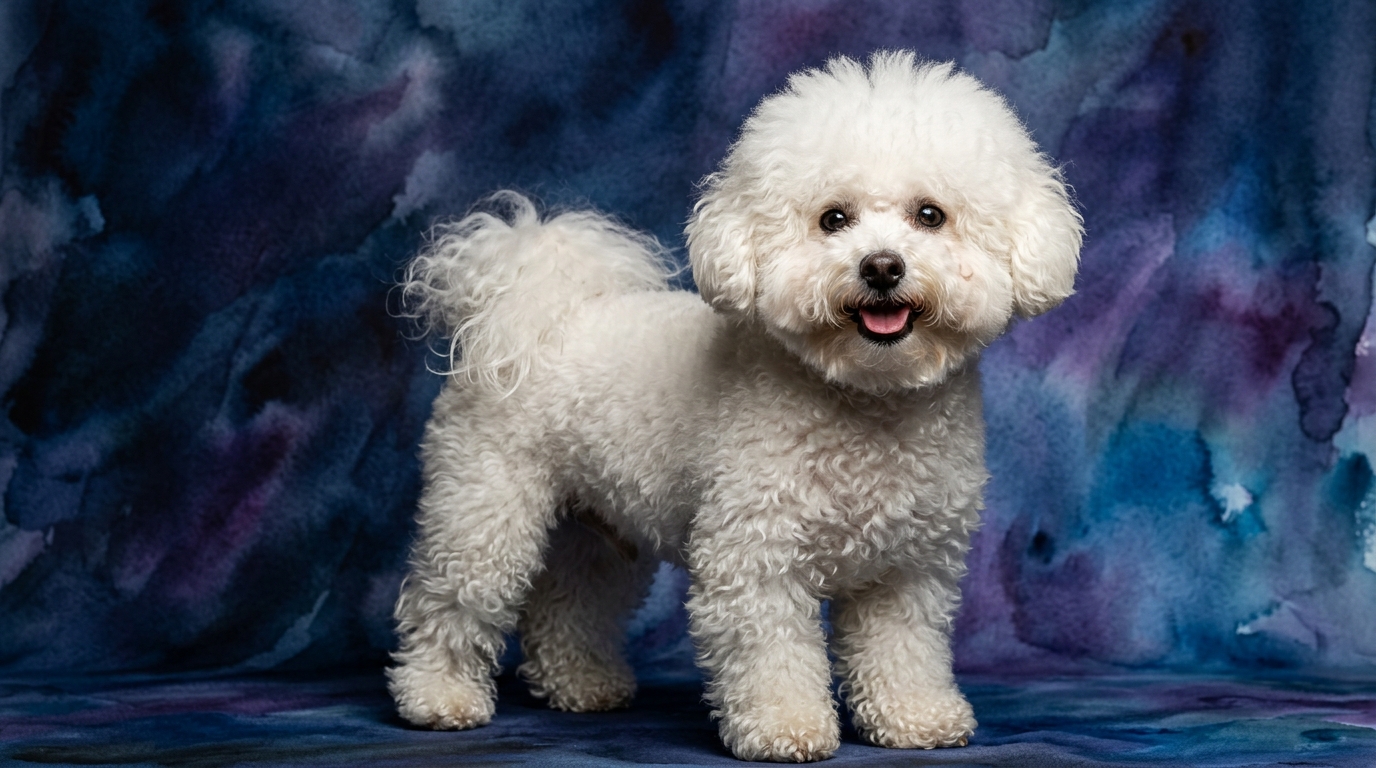

Side-by-Side Cognitive Profiles: Bichon Frisé vs. Manchester Terrier
Our Pet IQ Lab provides a nuanced look at canine intelligence, assessing five crucial dimensions beyond simple rankings. The Bichon Frisé, from the Non-Sporting group, and the Manchester Terrier, a spirited Terrier breed, each bring a distinct cognitive signature. For the Bichon Frisé, Problem Solving is 3/5, indicating a moderate capacity for novel challenges. Their Training Speed is also 3/5, suggesting an average pace for new commands. The Bichon truly shines in Social Intelligence, scoring an exceptional 5/5, reflecting a profound ability to understand human emotions and social cues, making them highly empathetic. Their Instinctive Drive is a low 2/5, meaning minimal intrinsic motivation for tasks like hunting, preferring interaction. Lastly, their Memory is 3/5, indicating average retention of learned information.
In contrast, the Manchester Terrier presents a profile of balanced capabilities. Problem Solving is 3/5, mirroring the Bichon's practical problem-solving capacity. Training Speed is also 3/5, suggesting a similar pace in acquiring behaviors. The Manchester's Social Intelligence is 3/5, indicating a solid understanding of human interaction, though without the Bichon's depth of emotional attunement. Their Instinctive Drive is a moderate 3/5, reflecting a more pronounced natural inclination for activities rooted in their terrier heritage, such as chasing or exploring. Their Memory, like the Bichon's, is rated 3/5, signifying average retention of lessons and experiences.
Where the Bichon Frisé Cognitively Excels
The Bichon Frisé's standout cognitive strength lies in their extraordinary Social Intelligence, scoring a rare 5 out of 5. This dimension signifies an unparalleled ability to interpret human emotions, body language, and vocal inflections, making them exceptionally attuned to their owners' moods and intentions. A Bichon might instinctively offer comfort during distress or mirror joyful energy, demonstrating a deep empathetic connection beyond simple learned responses. This high social acumen allows them to thrive in human-centric environments, making them incredibly responsive to interactive play, subtle cues, and family dynamics. Their cognitive processing is heavily geared towards understanding and engaging with their human companions, making social interaction a core aspect of their intellectual engagement.
Where the Manchester Terrier Cognitively Excels
The Manchester Terrier demonstrates unique cognitive strengths through its balanced, yet more pronounced, Instinctive Drive compared to the Bichon, scoring 3 out of 5. This moderate drive means they possess a natural inclination for engagement with their environment, often manifesting as a keen interest in exploring, chasing small objects, or engaging in tasks requiring focus and determination. While the Bichon prioritizes social engagement, the Manchester's mind is more readily stimulated by opportunities to utilize their senses and physical capabilities, reflecting their terrier heritage. This drive translates into robust curiosity and a willingness to investigate, making them adept at activities like scent work or agility where natural instincts can be harnessed. Their cognitive processing is geared towards active engagement, seeking out stimuli and challenges that satisfy their innate drive.
Training Dynamics: Bichon Frisé vs. Manchester Terrier
Both breeds share a Training Speed score of 3/5, suggesting neither is exceptionally quick nor particularly slow to grasp new commands. However, the *approach* to training and the *ease* of integration differ due to their other cognitive profiles. The Bichon Frisé's exceptional Social Intelligence (5/5) means they are highly motivated by positive reinforcement strengthening their bond and providing social praise. They are eager to please and respond well to gentle, consistent, and emotionally engaging methods, as their primary goal is often harmony and connection. They may be sensitive to harsh tones, potentially withdrawing if the social dynamic feels threatened.
In contrast, the Manchester Terrier's balanced Social Intelligence (3/5) combined with its moderate Instinctive Drive (3/5) suggests a need for clear, consistent, and perhaps more task-oriented training. While they appreciate positive reinforcement, their motivation might also stem from the satisfaction of completing a job or engaging in an activity tapping into their natural drive. They might be less inclined to perform purely for emotional validation and could benefit from training incorporating play, problem-solving, or high-energy bursts. Their terrier nature means they might be more easily distracted by environmental stimuli (scents, movement) than the less instinctively driven Bichon, requiring a trainer to maintain focus and make sessions engaging.
Matching Breeds to Lifestyles: Active vs. Relaxed Owners
Understanding these cognitive profiles is crucial for matching breeds with appropriate owner lifestyles. For relaxed owners seeking a devoted, empathetic companion, the Bichon Frisé is ideal. Their peak Social Intelligence (5/5) means they thrive on close companionship, quiet interaction, and being an integral part of family life, often content with moderate indoor play and short walks. They are less driven by independent exploration or intense physical tasks, preferring direct engagement with their human family. A relaxed owner will appreciate a dog highly attuned to their emotional state and happy to simply be present, offering comfort and light-hearted interaction without demanding constant stimulation.
Conversely, the Manchester Terrier suits active owners who enjoy structured activities and can provide outlets for a dog with a moderate Instinctive Drive (3/5). While not requiring extreme athleticism, their cognitive makeup benefits from regular walks, playtime involving chasing or retrieving, and potentially participation in dog sports like agility or obedience. An active owner who enjoys training, exploring, and providing mental stimulation through varied activities will find the Manchester Terrier a rewarding partner. Their balanced cognitive scores suggest they appreciate a routine including both physical and mental challenges, making them an excellent fit for individuals or families leading a moderately active lifestyle prepared to channel their inherent terrier energy constructively.
The Verdict
Choose a Bichon Frisé if you prioritize an extraordinarily empathetic companion who thrives on close social interaction and mirrors your emotional state, perfect for relaxed households seeking a devoted, low-instinctive drive pet.
Opt for a Manchester Terrier if you're an active owner looking for a spirited, moderately driven dog that enjoys structured activities and engaging tasks, offering a balanced cognitive profile for a rewarding, interactive partnership.
🧠 Find Your Pet's IQ Score
Our Pet IQ Lab assessment covers 25+ tests across 5 cognitive dimensions — personalized to your breed.
Take the Full IQ Test →Frequently Asked Questions
Do Bichon Frisés get bored easily if not constantly entertained?
While Bichons love attention due to their high social intelligence, their low instinctive drive means they are generally less prone to destructive boredom than breeds requiring constant mental and physical tasks. They are often content simply being near their family, though regular interaction is still important for their well-being.
Can a Manchester Terrier be a good apartment dog despite its instinctive drive?
Yes, a Manchester Terrier can thrive in an apartment if their moderate instinctive drive is adequately met through daily walks, playtime, and mental stimulation. Consistent training and engaging activities are key to preventing boredom and channeling their energy constructively in smaller living spaces.
How do their memory scores impact training consistency?
Both breeds share an average memory score of 3/5, meaning they retain information reasonably well but benefit from consistent reinforcement and regular practice sessions to solidify learned behaviors. Neither breed is prone to forgetting commands quickly, nor do they possess exceptional recall that negates the need for ongoing training.