Side-by-Side IQ Profile: Bichon Frisé vs. Portuguese Water Dog
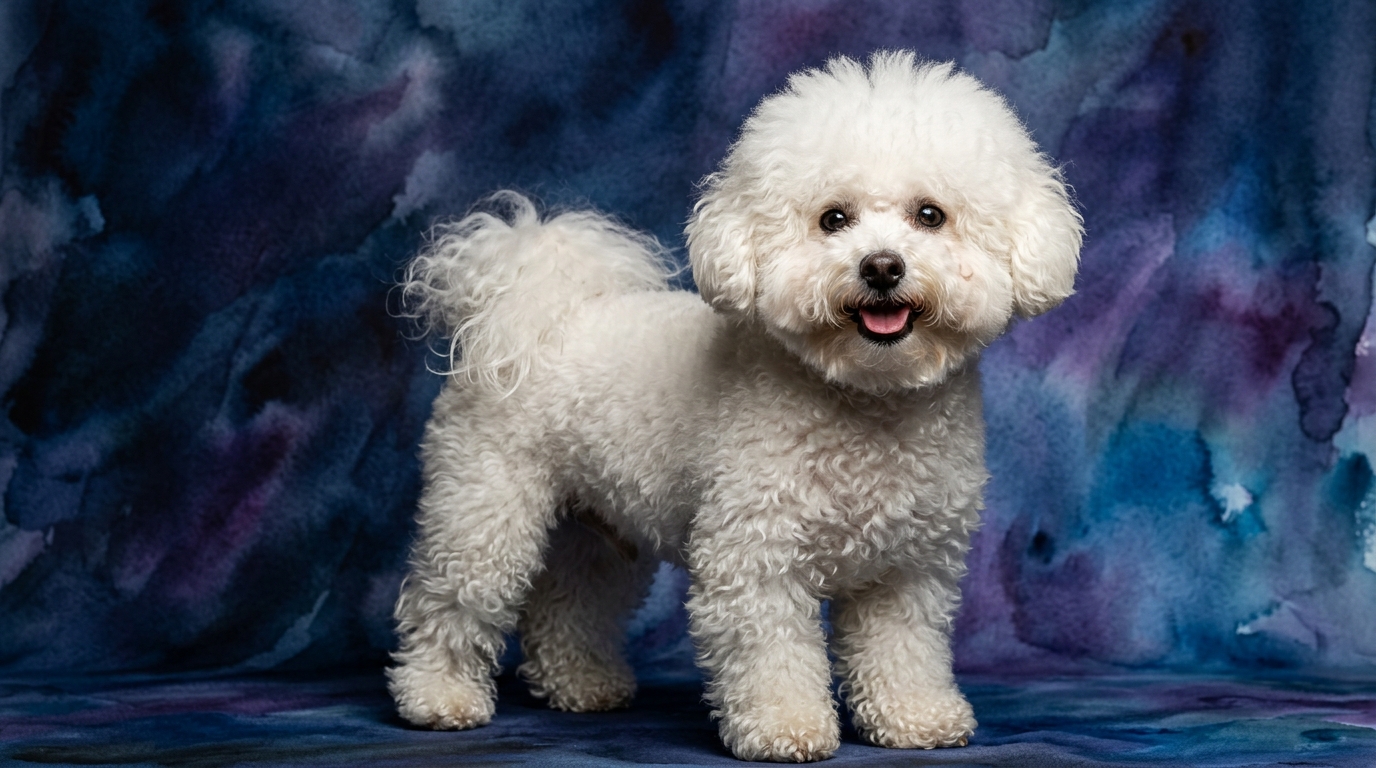
The Cosmic Pet Pet IQ Lab evaluates canine cognition across five distinct dimensions. For the Bichon Frisé, their Problem Solving score stands at 3 out of 5, indicating a moderate capacity for navigating novel challenges independently. Their Training Speed also rates 3 out of 5, suggesting they grasp new commands at an average pace. Where the Bichon truly shines is in Social Intelligence, scoring an impressive 5 out of 5, reflecting a profound ability to understand and respond to human cues and social dynamics. Their Instinctive Drive is lower at 2 out of 5, meaning they possess less inherent motivation for task-oriented work or prey drive. Memory for the Bichon Frisé is a solid 3 out of 5, allowing them to retain learned information effectively.
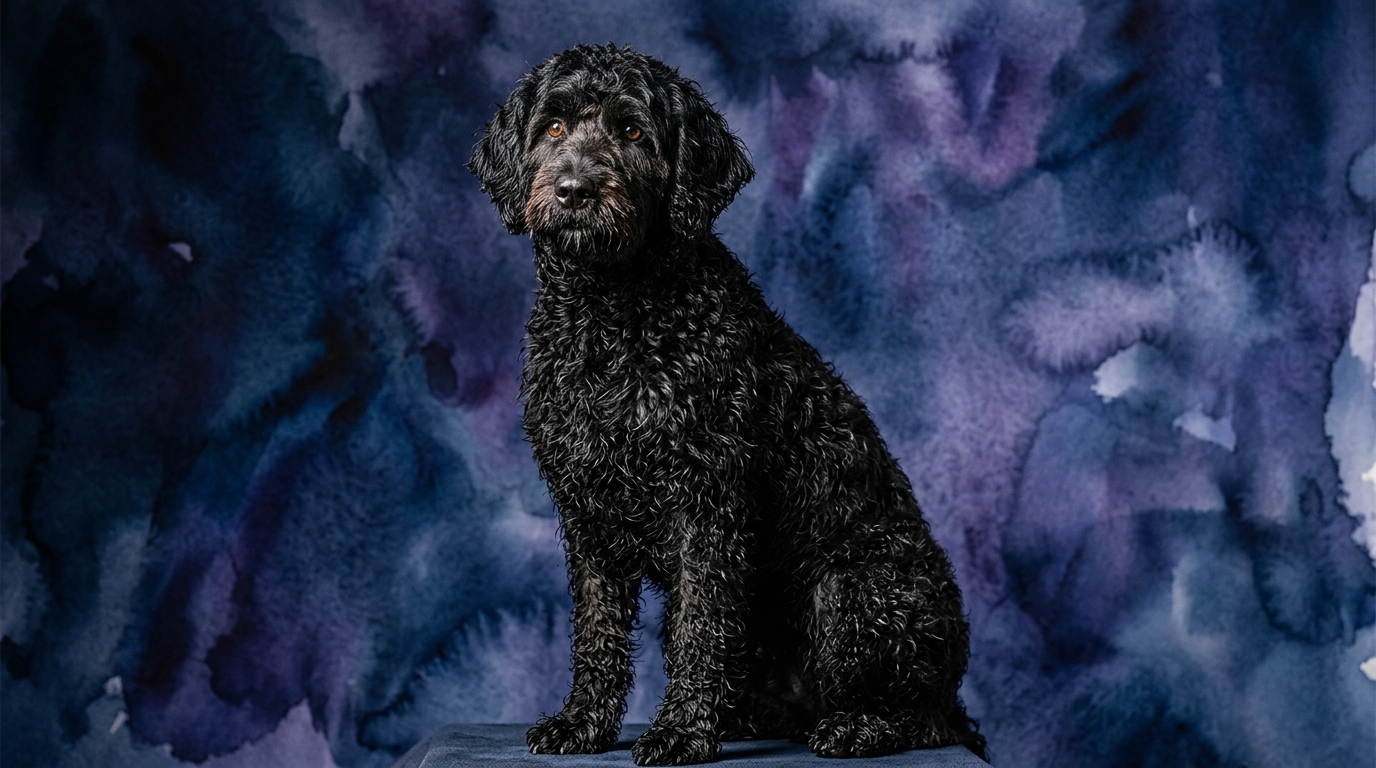
In contrast, the Portuguese Water Dog, a member of the Working Group, shares several cognitive similarities with the Bichon. Their Problem Solving ability is also rated 3 out of 5, showing a similar aptitude for figuring things out. Training Speed for the PWD matches the Bichon at 3 out of 5, indicating an equivalent rate of learning new behaviors. The PWD's Social Intelligence, however, is a moderate 3 out of 5, suggesting they are responsive to human interaction but perhaps less intuitively attuned to subtle social nuances than the Bichon. Their Instinctive Drive is higher at 3 out of 5, reflecting a stronger natural inclination for activity, exploration, and purposeful work. Like the Bichon, the Portuguese Water Dog's Memory is scored at 3 out of 5, demonstrating a reliable capacity for recall.
Where the Bichon Frisé Wins Cognitively
The Bichon Frisé undeniably holds a cognitive advantage in the realm of Social Intelligence, scoring a perfect 5 out of 5 compared to the Portuguese Water Dog's 3 out of 5. This superior social acumen means a Bichon is exceptionally adept at reading human emotions, understanding subtle body language, and adapting their behavior to fit social situations. They are highly attuned to their owners' moods and intentions, often anticipating needs or offering comfort without explicit prompts. This heightened sensitivity fosters a deep, reciprocal bond, making them remarkably responsive to positive reinforcement and eager to engage in shared activities that strengthen their connection with people. Their ability to integrate seamlessly into a family's social fabric is a hallmark of their cognitive strength.
Where the Portuguese Water Dog Wins Cognitively
The Portuguese Water Dog demonstrates a clear cognitive lead in Instinctive Drive, achieving a score of 3 out of 5 against the Bichon Frisé's 2 out of 5. This higher drive signifies a more pronounced inherent motivation for purposeful activity, exploration, and engagement with their environment. Originating as working dogs, PWDs possess a natural inclination to retrieve, swim, and perform tasks, often displaying a sustained focus when given a job. This translates into a strong desire to explore and interact with their surroundings, making them more self-directed in seeking stimulation. Their cognitive profile supports a breed that thrives on having an outlet for their physical and mental energies, often initiating play or investigation more readily than their Bichon counterparts.
Which is Easier to Train and Why
While both breeds share an identical Training Speed score of 3 out of 5, the nuances of their other cognitive dimensions influence their perceived trainability. The Bichon Frisé's exceptional Social Intelligence (5/5) means they are profoundly motivated by human interaction and approval. This makes them highly responsive to praise and connection, often eager to please and quick to pick up on what their owner desires. Training a Bichon frequently feels like a cooperative dance, where their attentiveness to human cues can make the process seem smoother for an owner who prioritizes relationship-based learning. They may be more forgiving of handler errors due to their strong social bond.
Conversely, the Portuguese Water Dog's slightly higher Instinctive Drive (3/5) means they are often motivated by the task itself or the opportunity for physical and mental engagement, in addition to human praise. While their Social Intelligence is moderate (3/5), their drive can be channeled into specific training disciplines like retrieving, agility, or scent work. Training a PWD might require more creative approaches to maintain engagement, especially if the task isn't inherently stimulating. They thrive on consistency and clear expectations, and their working background means they appreciate having a “job” to do. While both learn at a similar pace, the Bichon's social eagerness might make them appear easier for foundational obedience, whereas the PWD's drive makes them suitable for more complex, task-oriented training.
Which Suits Active Owners vs. Relaxed Owners
Considering their cognitive profiles, the Portuguese Water Dog is generally a better fit for active owners, while the Bichon Frisé aligns more with relaxed owners. The PWD's Instinctive Drive of 3 out of 5, coupled with its heritage as a working dog, implies a need for regular physical and mental stimulation. These dogs thrive when given opportunities to swim, hike, or engage in dog sports that tap into their natural inclinations for activity and problem-solving. An owner who enjoys outdoor adventures and structured training sessions will find the PWD a willing and enthusiastic partner, benefiting from their drive to participate and explore.
The Bichon Frisé, with an Instinctive Drive of 2 out of 5, has a lower inherent need for intense physical tasks or constant “work.” Their superior Social Intelligence (5/5) means they are primarily motivated by companionship and interaction within the home environment. Relaxed owners who prioritize cuddles, gentle play, and social outings will find the Bichon perfectly content. While they still require daily walks and mental engagement, their contentment stems more from being close to their human family and participating in social activities rather than fulfilling a strong urge for strenuous activity or independent task completion. They are often happy to be a lap dog or a playful indoor companion, making them ideal for individuals or families with a less rigorous lifestyle.
The Verdict
Choose a Bichon Frisé if your priority is a highly socially attuned companion eager to connect deeply and thrive on companionship in a more relaxed home environment.
Select a Portuguese Water Dog if you seek a driven partner for active outdoor pursuits and engaging in task-oriented activities that channel their natural working instincts.
🧠 Find Your Pet's IQ Score
Our Pet IQ Lab assessment covers 25+ tests across 5 cognitive dimensions — personalized to your breed.
Take the Full IQ Test →Frequently Asked Questions
Do Bichon Frisés learn tricks easily?
With a Training Speed of 3/5 and strong Social Intelligence, Bichons learn tricks effectively, especially when training involves positive interaction and rewards. Their desire to please their owner significantly aids the learning process.
Are Portuguese Water Dogs good at problem-solving games?
Yes, with a Problem Solving score of 3/5 and a good Instinctive Drive, Portuguese Water Dogs generally enjoy and excel at puzzle toys and games that challenge them to figure things out. These activities provide valuable mental stimulation.
How does social intelligence affect a dog's behavior?
High social intelligence means a dog is more sensitive to human cues, emotions, and social dynamics, leading to stronger bonds and often more compliant behavior in social settings. It enables them to adapt well to family life and respond intuitively to their owners.