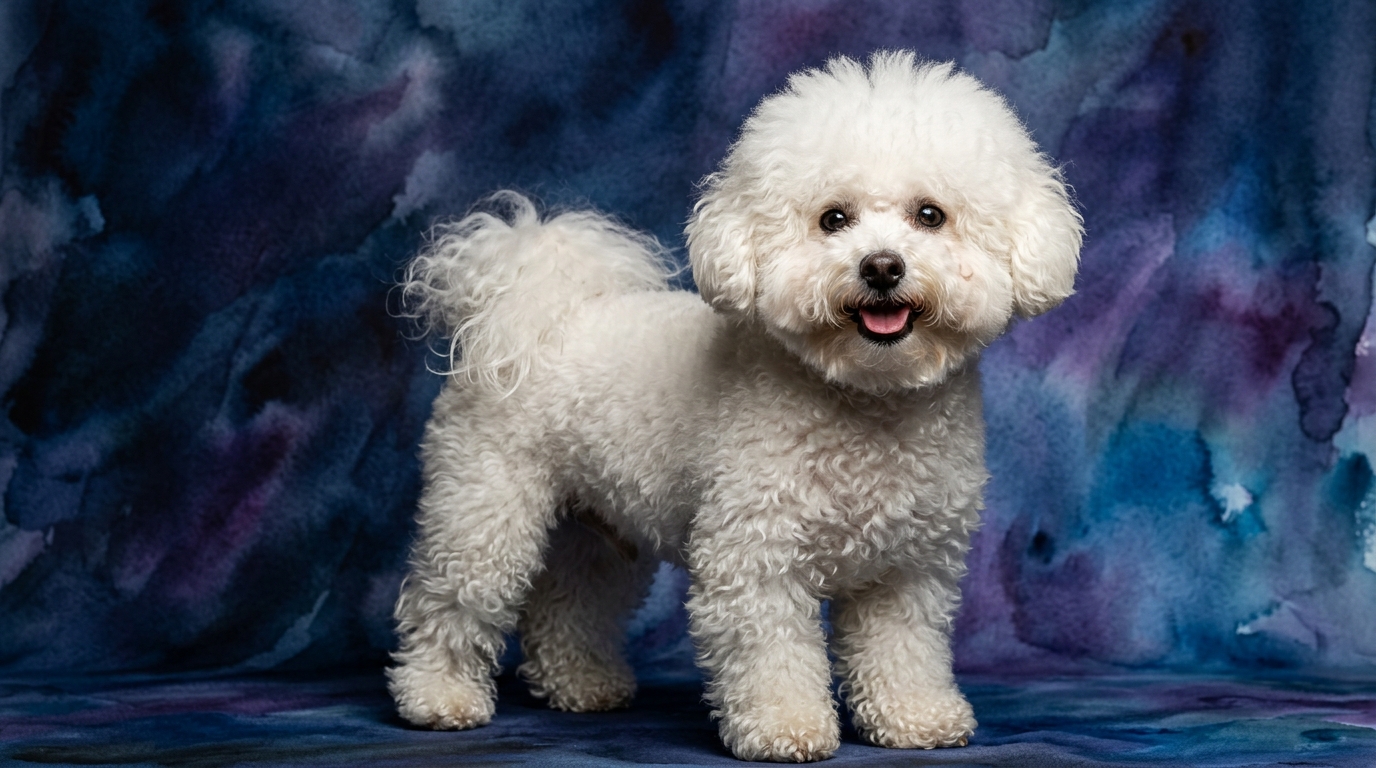
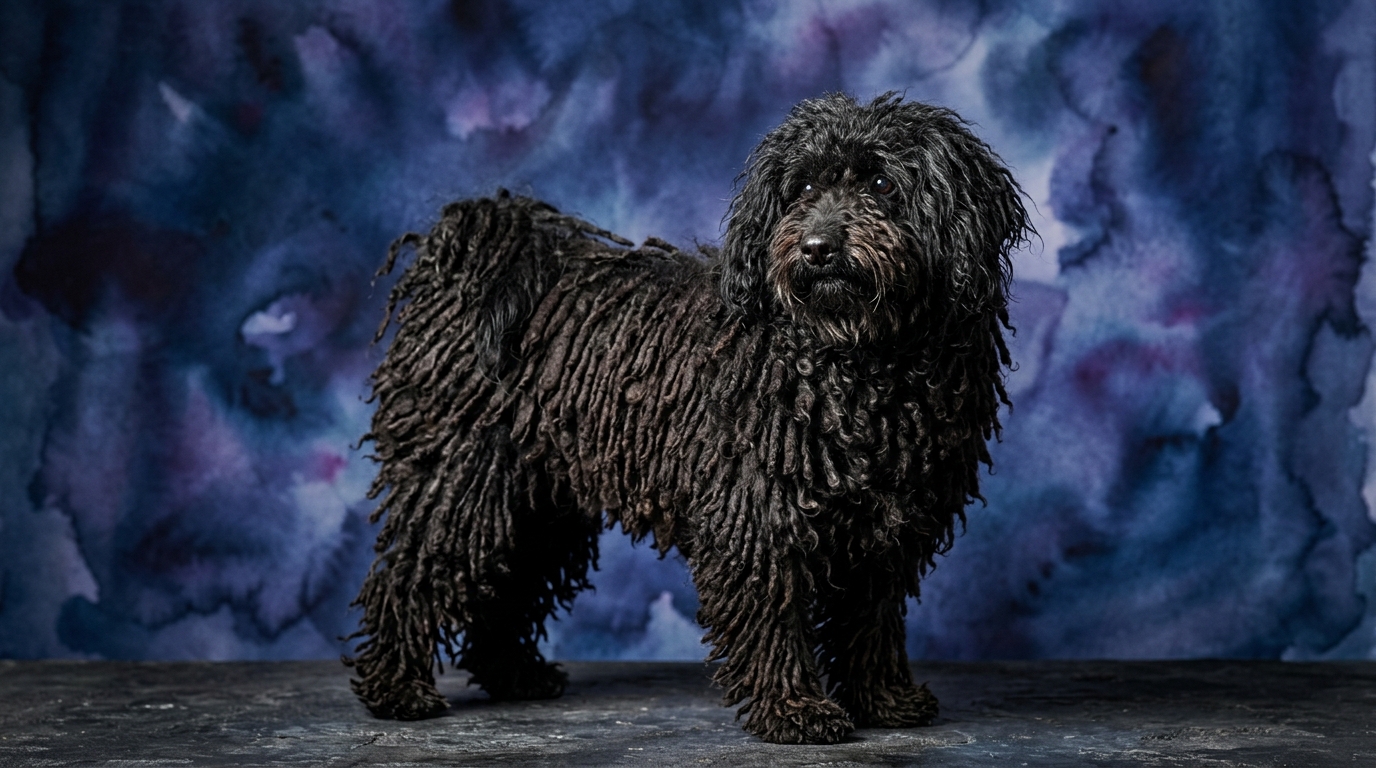
Side-by-Side IQ Profile: Bichon Frisé vs. Puli
The Cosmic Pet Pet IQ Lab employs a multi-faceted approach to understanding canine intelligence, assessing five key dimensions. For the Bichon Frisé, a delightful Non-Sporting breed with a Coren rank of #45, we observe a Problem Solving score of 3/5, indicating an ability to navigate moderately complex situations, often centered around their immediate environment or comfort. Their Training Speed registers at 3/5, suggesting they grasp new commands with consistent effort but may require more repetition than some working breeds. Where the Bichon truly shines is in Social Intelligence, earning a perfect 5/5 for their profound capacity to read human cues, empathize, and adapt to social dynamics. Their Instinctive Drive is lower at 2/5, meaning they are less driven by primal urges like hunting or herding, while their Memory sits at 3/5, sufficient for routines and basic learned behaviors.
In contrast, the Puli, a robust Herding breed ranked #25 by Coren, presents a different cognitive profile. Their Problem Solving capability is a robust 4/5, reflecting a capacity for strategic thinking and independent decision-making, crucial for their historical role in managing livestock. A Training Speed of 4/5 means they acquire new commands and routines with remarkable efficiency, often picking up concepts quickly. The Puli's Social Intelligence is 3/5, indicating a competent but more independent interaction style compared to the Bichon, often focused on task rather than overt emotional mirroring. Their Instinctive Drive is higher at 3/5, reflecting their inherent herding instincts and a desire for purpose-driven activity. Finally, their Memory scores a strong 4/5, allowing them to retain complex sequences and learned experiences over extended periods.
Where the Bichon Frisé Wins Cognitively
The Bichon Frisé's cognitive strengths are profoundly rooted in their role as cherished companions, making them exceptional in specific domains. Their preeminent Social Intelligence, scoring a perfect 5/5, signifies an unparalleled ability to perceive, interpret, and respond to human emotional states and social cues. This isn't merely about being 'friendly'; it's a sophisticated understanding of subtle shifts in tone, body language, and familial dynamics, allowing them to offer comfort or solicit attention with remarkable precision. This keen social awareness enables them to seamlessly integrate into diverse household environments, adapting their behavior to match the mood of their human counterparts or the specific social situation, making them wonderful emotional anchors.
Furthermore, their lower Instinctive Drive of 2/5, while not a 'win' in terms of raw cognitive power, translates into a significant advantage for domestic life. It means their cognitive resources are not constantly diverted by strong primal urges like chasing, guarding, or herding, which can often manifest as challenging behaviors in a home setting. Instead, their mental energy is more readily available for social engagement, gentle play, and learning within the context of companionship, making them less prone to acting on impulses that might conflict with a relaxed family routine. This cognitive setup allows for a focus on connection and shared experiences, fostering deep, harmonious bonds without the constant need to manage inherent working drives.
Where the Puli Wins Cognitively
The Puli's cognitive architecture, honed by centuries of herding work, showcases strengths geared towards independence, strategy, and efficient learning. Their Problem Solving score of 4/5 reflects a breed capable of complex reasoning, adept at navigating intricate scenarios and devising solutions to obstacles. This ability extends beyond simple obedience, allowing them to strategize in play, figure out how to access desired objects, or even outsmart livestock, demonstrating a proactive mental approach to their environment. This cognitive trait makes them engaging partners for puzzle toys and interactive games that require more than just rote memorization.
Coupled with this is their impressive Training Speed of 4/5, indicating a rapid capacity for acquiring and consolidating new information and commands. Pulis often grasp concepts quickly, requiring fewer repetitions to master a task, a testament to their efficient learning pathways. Their strong Memory, also rated 4/5, further complements this, ensuring that once a lesson is learned, it is retained with remarkable consistency over time, allowing for the building of extensive behavioral repertoires. This combination of swift learning and robust recall makes them candidates for advanced obedience, agility, and other dog sports. Additionally, their Instinctive Drive of 3/5, while needing management, means they possess an innate motivation to engage in purpose-driven activities, providing a powerful internal engine for training and task completion that many companion breeds lack. Their higher Coren rank of #25 also broadly reflects this capacity for working intelligence and trainability in more complex obedience tasks.
Which Is Easier to Train and Why
When considering ease of training, the Puli generally presents a more straightforward path for owners seeking rapid command acquisition and advanced skill development. Their higher Training Speed (4/5), coupled with strong Problem Solving (4/5) and Memory (4/5), means they quickly understand what is being asked of them and retain that information over time. Their inherent Instinctive Drive (3/5) often translates into a keen desire to work and please, especially when training taps into their natural inclinations for structure and purpose. Pulis respond well to clear, consistent instruction and thrive on mental engagement, making them excellent candidates for progressive training regimens that build upon learned skills. They are often eager participants in structured activities, viewing training as a fulfilling outlet for their cognitive energy.
The Bichon Frisé, while certainly trainable, typically requires a more patient and nuanced approach. Their Training Speed of 3/5 suggests that new commands may take more repetitions to solidify, and their Problem Solving score of 3/5 means they might not always immediately grasp complex sequences. However, their exceptional Social Intelligence (5/5) is a significant asset; they are highly attuned to their owner's emotions and body language, making positive reinforcement incredibly effective. Training a Bichon often hinges on building a strong, trusting bond and using gentle, rewarding methods that leverage their desire for social interaction and approval. While they may not pick up advanced tricks as quickly as a Puli, their willingness to engage socially and their sensitivity to human feedback can make basic obedience a joyful, bonding experience, even if it progresses at a more measured pace.
Which Suits Active Owners vs. Relaxed Owners
The choice between a Bichon Frisé and a Puli significantly depends on an owner's lifestyle and their capacity to meet a dog's specific cognitive and physical needs. Active owners, or those seeking a partner for demanding activities, will likely find the Puli a more suitable match. Their robust Problem Solving abilities (4/5), strong Instinctive Drive (3/5), and excellent Memory (4/5) mean they thrive on mental and physical challenges. Pulis require regular, engaging activities that stimulate their minds and bodies, such as agility, herding trials, long hikes, or complex obedience work. Without sufficient outlets for their cognitive and working drives, they can become bored or develop undesired behaviors, making them a commitment for those who enjoy an active, structured lifestyle.
Conversely, the Bichon Frisé aligns beautifully with more relaxed owners who prioritize companionship and gentle engagement. Their exceptionally high Social Intelligence (5/5) means they are content to be close to their human family, deriving satisfaction from interaction, cuddles, and being an integral part of daily life. Their lower Instinctive Drive (2/5) translates to a dog that generally doesn't require extensive, high-intensity exercise or complex mental tasks to be fulfilled. While they enjoy play and short walks, their primary need is consistent social interaction and affection. They adapt well to apartment living or less demanding routines, making them ideal for individuals or families seeking a warm, adaptable companion who finds joy in the simple rhythms of home life.
The Verdict
For those prioritizing a deeply empathetic, socially attuned companion content with a relaxed pace and abundant affection, the Bichon Frisé is an excellent choice.
If your lifestyle calls for a mentally agile, task-oriented partner eager for advanced training and active pursuits, the Puli will be a fulfilling and engaging companion.
🧠 Find Your Pet's IQ Score
Our Pet IQ Lab assessment covers 25+ tests across 5 cognitive dimensions — personalized to your breed.
Take the Full IQ Test →Frequently Asked Questions
Do Bichon Frisés get bored easily if not mentally stimulated?
Bichons generally thrive on social interaction more than complex mental puzzles. While they benefit from play and basic training, their high social intelligence means their primary contentment comes from being with their human family, rather than needing constant intellectual challenges.
Can a Puli live in an apartment, or do they need a large yard?
A Puli can adapt to apartment living if their significant needs for mental and physical exercise are consistently met through daily structured activities, walks, and training outside the home. A large yard is beneficial but not a substitute for engaging owner interaction and purpose-driven work.
How do their grooming needs compare, given their intelligence profiles?
Their intelligence profiles don't directly impact grooming, but the Puli's corded coat requires specialized, time-consuming care to prevent matting, whereas the Bichon's curly coat needs regular brushing and professional grooming appointments to maintain its fluffy appearance.