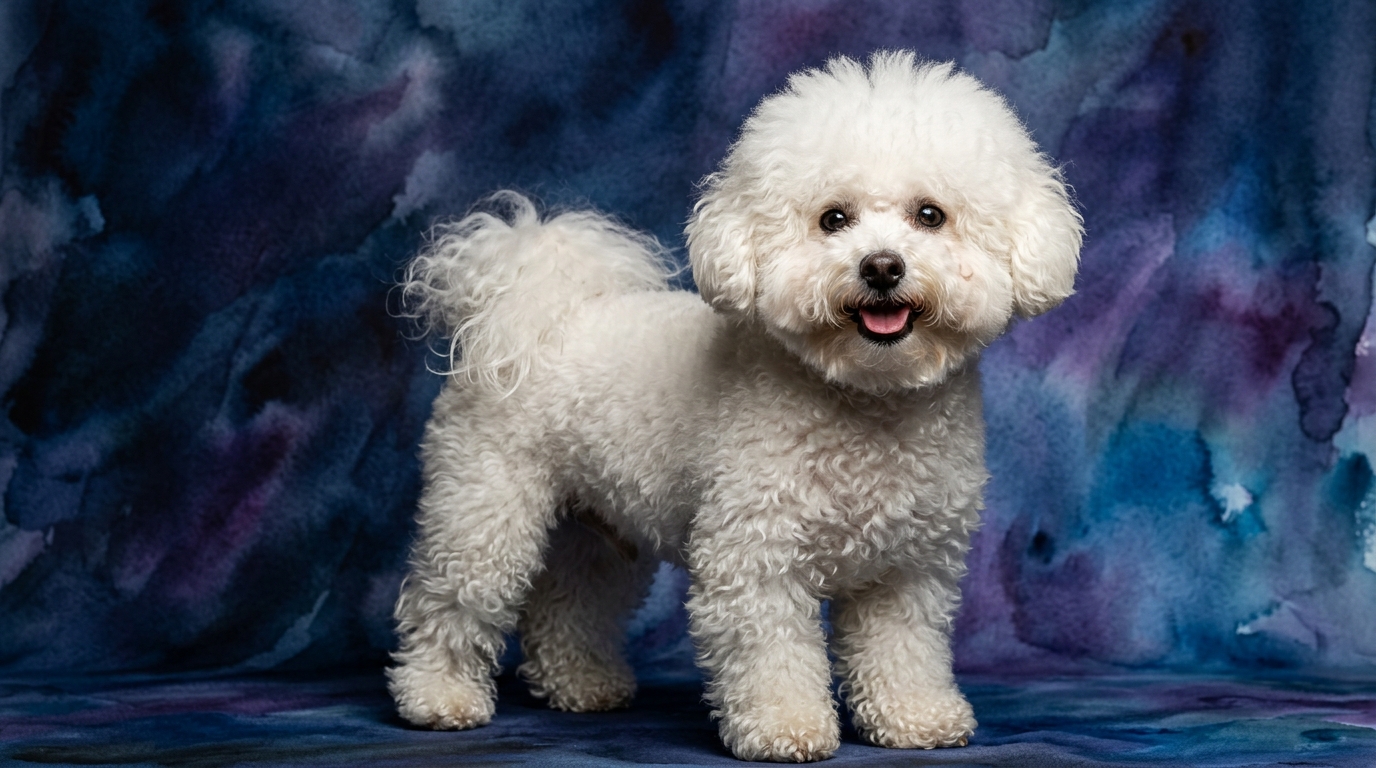
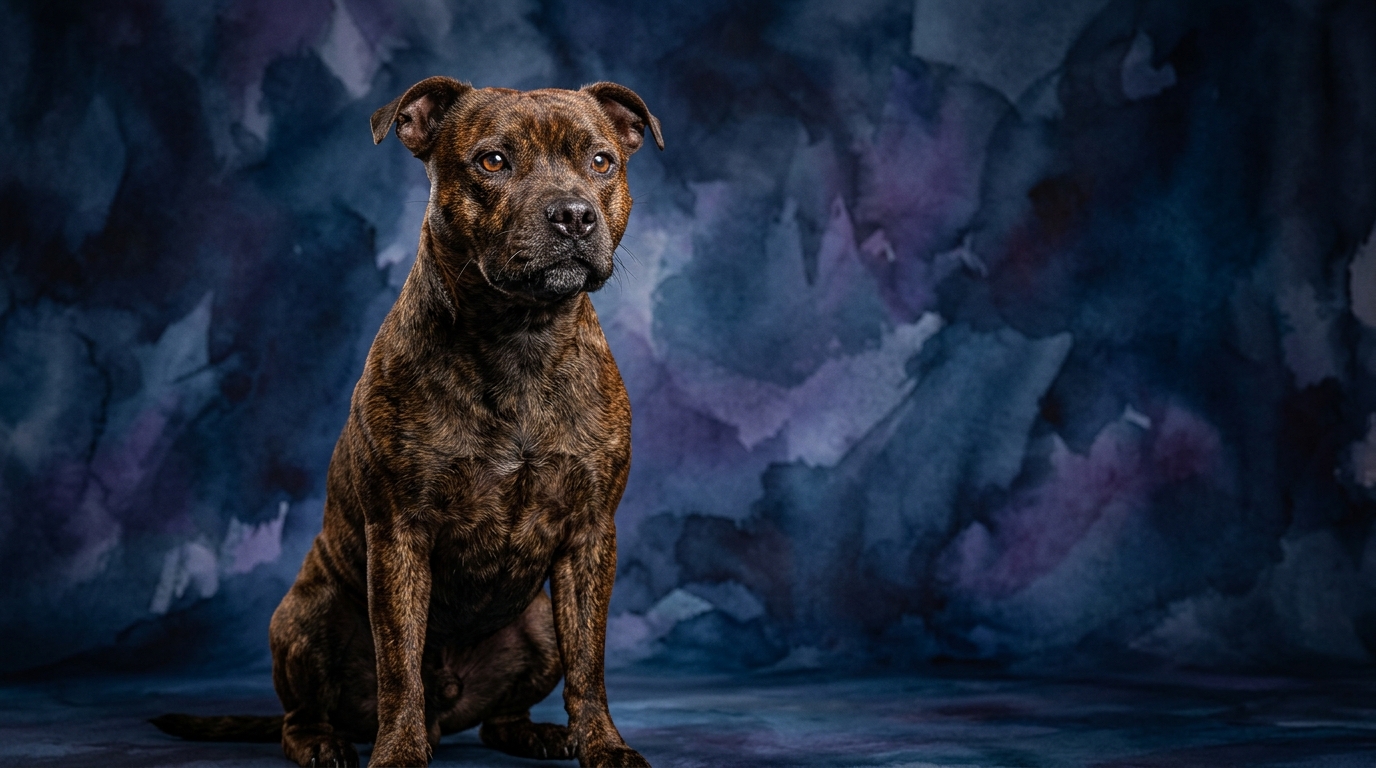
Side-by-Side IQ Profile: Bichon Frisé vs. Staffordshire Bull Terrier
The Cosmic Pet Pet IQ Lab employs a five-dimensional framework to assess canine intelligence, offering a nuanced view beyond simplistic labels. For the Bichon Frisé, we observe a Problem Solving score of 3/5, indicating an average capacity to figure out moderately complex tasks, like navigating a new toy puzzle or finding a hidden treat through trial and error. Their Training Speed also sits at 3/5, meaning they grasp new commands at a consistent, moderate pace, flourishing with positive reinforcement. Where the Bichon truly distinguishes itself is in Social Intelligence, earning a perfect 5/5; they are exceptionally adept at reading human emotions, subtle cues, and adapting their behavior within social contexts. Their Instinctive Drive is quite low at 2/5, suggesting minimal innate drives for hunting or guarding, making them primarily companion-focused. Finally, their Memory is rated 3/5, allowing them to retain learned routines and familiar faces reliably.
The Staffordshire Bull Terrier presents a fascinating contrast within this framework. Their Problem Solving ability matches the Bichon at 3/5, showing a similar aptitude for learning to overcome obstacles or solving simple environmental challenges when motivated. Their Training Speed is also 3/5, indicating an average learning curve for new commands, though their strong will often means training benefits from clear, consistent methods. In Social Intelligence, the Staffy scores 3/5; while deeply affectionate with their families, their understanding of social nuances might be more direct, focusing on clear interactions rather than subtle emotional shifts. Their Instinctive Drive is moderate at 3/5, suggesting a healthy inclination towards engaging activities, and they may exhibit some prey drive or protective instincts. Their Memory, like the Bichon, is rated 3/5, ensuring they hold onto learned behaviors and recognize familiar individuals and places effectively.
Where the Bichon Frisé Wins Cognitively
The Bichon Frisé's unparalleled cognitive strength lies unequivocally in their social intelligence, a dimension where they achieve a perfect 5/5. This metric signifies an exceptional ability to interpret human emotions, subtle body language, and the intricate social dynamics within a household. A Bichon is remarkably attuned to their owner's mood, often responding with comforting gestures or seeking to engage in play when they sense a shift in atmosphere. This acute sensitivity fosters a profound emotional connection, making them deeply empathetic companions who seem to anticipate needs or react appropriately to various social cues without explicit instruction. Their lower instinctive drive (2/5) further enhances this advantage; with fewer primal urges to override their social awareness, their behavior is more consistently guided by their connection to their human family. This makes them masters of harmonious cohabitation, excelling in subtle communication and emotional support within a domestic setting.
Where the Staffordshire Bull Terrier Wins Cognitively
While the Staffordshire Bull Terrier matches the Bichon in problem-solving and training speed, its cognitive advantages manifest through a different interplay of traits, particularly concerning its instinctive drive. With a moderate instinctive drive of 3/5, the Staffy approaches tasks with a robust and persistent determination that can exceed the Bichon's. This drive translates into a tenacious engagement with activities that appeal to their natural inclinations, such as retrieving, vigorous playtime, or working through challenging puzzle toys. Unlike the Bichon, a Staffy's motivation isn't solely rooted in social connection; they possess an inherent drive for activity and engagement that fuels sustained effort and focus. This characteristic, combined with their physical prowess, allows them to excel in pursuits requiring resilience and a pragmatic approach to their environment, making them exceptionally durable and spirited partners for hands-on activities. Their general hardiness and willingness to persist are key cognitive advantages in specific contexts.
Which Is Easier to Train and Why
Both breeds share a 3/5 rating for training speed, suggesting an average capacity to learn new commands. However, the *practical ease* of training can diverge significantly due to their distinct cognitive profiles and temperaments. The Bichon Frisé, with its superior social intelligence (5/5) and lower instinctive drive (2/5), often proves more straightforward to train for basic obedience and house manners. Their strong desire to please, coupled with their sensitivity to human feedback, makes them highly responsive to positive reinforcement and eager to engage in the social exchange of training. They are less prone to strong innate distractions, allowing them to focus intently on their owner's cues and intentions. Conversely, the Staffordshire Bull Terrier, despite its comparable training speed, can present more challenges. Their moderate instinctive drive (3/5) and often more independent, sometimes stubborn nature mean training a Staffy requires a confident, consistent handler. They thrive with clear boundaries, fair expectations, and engaging, play-based rewards that channel their drive. Their physical strength and determination also mean that any undesirable behaviors, if not properly managed through consistent training, can be more difficult to redirect than with a smaller, less driven breed.
Which Suits Active Owners vs. Relaxed Owners
The ideal owner for each breed largely depends on lifestyle and activity preferences. The Staffordshire Bull Terrier, with its moderate instinctive drive (3/5) and robust physique, thrives with active owners. They require consistent, vigorous exercise, enjoying long walks, energetic play sessions, or even participation in dog sports like agility or flyball, which engage both their bodies and minds. An owner who enjoys outdoor adventures or structured training activities will find a Staffy a willing and enthusiastic companion, as insufficient outlets for their energy can lead to boredom and potentially destructive behaviors. In contrast, the Bichon Frisé, characterized by its lower instinctive drive (2/5) and exceptional social intelligence (5/5), is an ideal fit for more relaxed owners. While they appreciate regular walks and playtime, their primary need is for companionship and mental stimulation through interaction rather than intense physical exertion. They are content with shorter, frequent strolls and flourish in environments where they can be close to their human family, receiving ample affection and participating in daily life. Their smaller size also makes them well-suited for apartment living, provided their profound social needs are met consistently.
The Verdict
Choose a Bichon Frisé if you seek a highly empathetic companion who excels at social interaction, thrives on close emotional bonds, and fits seamlessly into a more relaxed household rhythm. They are perfect for owners prioritizing companionship and subtlety in communication.
Opt for a Staffordshire Bull Terrier if you are an active owner looking for a robust, determined companion who enjoys engaging physical activities and structured training, appreciating a dog with a strong will and deep family loyalty.
🧠 Find Your Pet's IQ Score
Our Pet IQ Lab assessment covers 25+ tests across 5 cognitive dimensions — personalized to your breed.
Take the Full IQ Test →Frequently Asked Questions
Does Coren ranking apply to Staffordshire Bull Terriers?
No, the provided data indicates the Staffordshire Bull Terrier is not Coren-ranked. Coren's rankings primarily assess obedience and working intelligence, and not all breeds are included or measured by that specific metric, focusing instead on trainability for command following.
Can a Bichon Frisé be trained for agility despite its low instinctive drive?
Yes, a Bichon Frisé can certainly be trained for agility. While their instinctive drive is low, their high social intelligence and strong desire to please their owner can be powerful motivators, making them enthusiastic participants in activities like agility when training is fun and positive and focuses on connection.
Are Staffordshire Bull Terriers good with children, given their social intelligence rating?
Staffordshire Bull Terriers are often known for their deep affection for children, earning them the nickname 'nanny dog.' While their social intelligence rating is 3/5, their strong bond with family members means they can be very tolerant and protective, though supervision with children is always recommended for any breed.