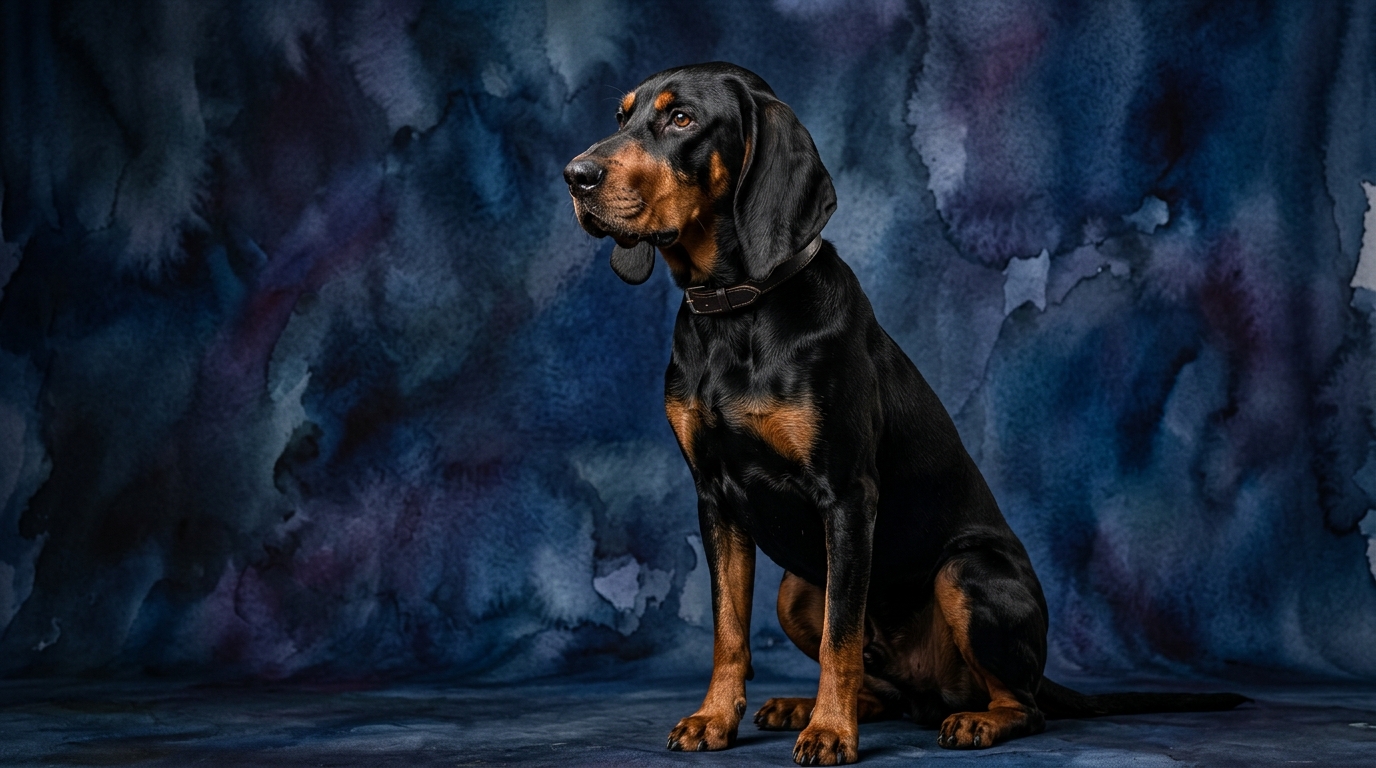
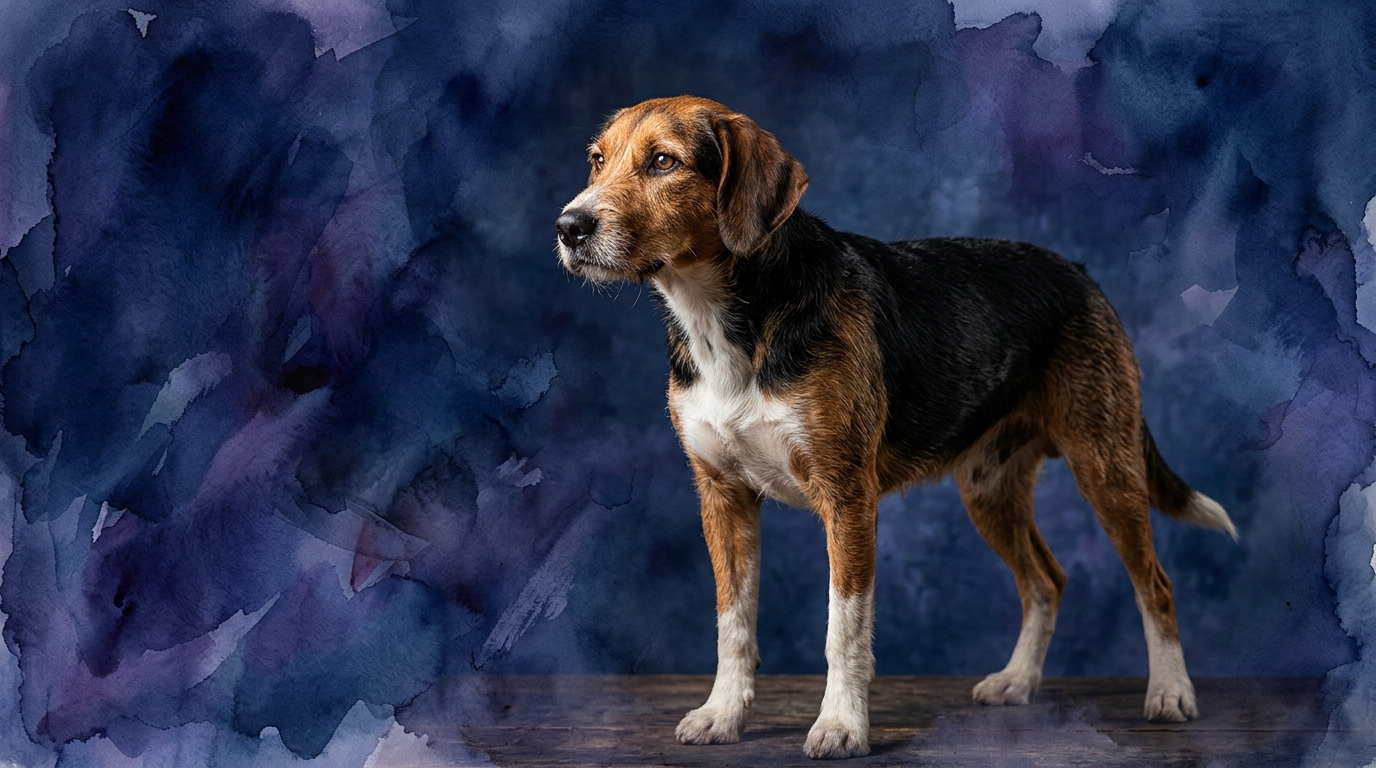
Side-by-Side Cognitive Profile: Black and Tan Coonhound vs. Harrier
Despite their numerical parity, the cognitive strengths of the Black and Tan Coonhound and the Harrier manifest in distinct ways, reflecting their specialized historical roles. Understanding these nuances is crucial for appreciating their unique intellectual makeup.
The Black and Tan Coonhound, a breed purpose-bred for trailing game like raccoons over long distances, demonstrates a cognitive profile deeply rooted in independent, methodical pursuit:
• **Problem Solving (3/5):** This breed excels at independently unraveling complex scent trails, demonstrating persistence and deductive reasoning to follow a cold line across varied terrain. Their intelligence focuses on autonomous olfactory puzzles, often for hours.
• **Training Speed (3/5):** They exhibit a moderate learning pace, often influenced by their strong independent streak and tendency to prioritize compelling scents over human commands. Consistency and patience are crucial for breaking through their self-directed focus.
• **Social Intelligence (3/5):** Possessing a balanced social understanding, they form strong bonds with family but often prioritize their olfactory world. Their interactions are usually straightforward, devoid of complex social manipulation.
• **Instinctive Drive (3/5):** Profoundly shaped by their cold-nosed trail hound role, they exhibit unwavering commitment to following a scent for extended periods, a single-mindedness that can sometimes override other stimuli.
• **Memory (3/5):** They have a robust memory for intricate scent patterns and geographical layouts encountered during hunts, allowing recall of successful routes. However, memory for arbitrary commands might require more repetition due to their selective focus.
The Harrier, a smaller English pack hound used for hunting hares, showcases a cognitive profile geared towards collaborative effort and dynamic group coordination:
• **Problem Solving (3/5):** Harriers apply their problem-solving skills within a pack context, adept at navigating obstacles and strategizing collectively to corner quarry. Their intelligence leans towards collaborative effort and dynamic environmental assessment.
• **Training Speed (3/5):** Similar to the Coonhound, Harriers exhibit a moderate learning pace; their strong prey drive and independent spirit can challenge focus, especially with external stimuli. They respond well to positive reinforcement from an understanding handler.
• **Social Intelligence (3/5):** As pack hounds, they display well-developed social intelligence, understanding canine hierarchies and thriving on companionship, both human and canine. They are generally gregarious and enjoy being part of a group.
• **Instinctive Drive (3/5):** They possess a compelling drive for hunting, characterized by high energy, stamina, and a strong desire to pursue game in a coordinated manner. This drive is a core component of their active, pursuit-oriented nature.
• **Memory (3/5):** Harriers demonstrate good memory for hunting routes, pack members, and learned routines within their environment. They retain training commands effectively once they are consistently reinforced, particularly those related to their active lifestyle.
Where the Black and Tan Coonhound Wins Cognitively
While both breeds score identically, the Black and Tan Coonhound exhibits a nuanced cognitive advantage in tasks demanding prolonged, independent focus on a singular olfactory challenge. Their specialized problem-solving, rated 3/5, shines brightest when unraveling the most complex and aged scent trails, often working alone for hours without direct human intervention. This breed's memory (3/5) is particularly attuned to recalling intricate scent patterns over vast distances, allowing them to effectively 'map' an environment through their nose. Their instinctive drive (3/5) is uniquely geared towards this solitary, methodical pursuit, demonstrating a level of individual determination to follow a track that can sometimes surpass the pack-oriented coordination of a Harrier. This cognitive profile makes them exceptional at tasks requiring deep immersion in a sensory puzzle, where the reward is the successful resolution of the trail itself.
Where the Harrier Wins Cognitively
Conversely, the Harrier, despite identical scores, presents a distinct cognitive edge in scenarios requiring dynamic social interaction and swift, collaborative action. Their social intelligence (3/5) is inherently designed for seamless integration within a pack, allowing them to interpret and respond to the cues of multiple dogs and handlers simultaneously during a hunt. Their problem-solving (3/5) thrives in a group context, where they contribute to collective strategies for flushing and pursuing game, adapting quickly to changing environmental conditions alongside their companions. The Harrier's instinctive drive (3/5) is a burst of coordinated energy, prioritizing the collective pursuit and the thrill of the chase with a group. Their memory (3/5) is adept at recalling the movements and roles of pack members, making them proficient in fluid, cooperative activities. This cognitive makeup positions the Harrier as a master of communal intelligence, excelling where teamwork and adaptable group dynamics are paramount.
Which is Easier to Train and Why
Determining which breed is 'easier' to train is less about raw intellectual capacity and more about understanding their intrinsic motivations and social structures. Both breeds are rated 3/5 for training speed, indicating a moderate learning curve influenced by their hound independence. The Black and Tan Coonhound's training often presents a challenge due to their profound single-mindedness when on a scent. Their problem-solving (3/5) is so deeply embedded in independent tracking that diverting their focus to human commands, especially outdoors, requires immense patience and highly rewarding incentives. They learn commands, and their memory (3/5) retains them, but their instinctive drive (3/5) to follow a nose can override recall in stimulating environments, making consistent off-leash reliability a long-term project. For the Harrier, while also possessing a strong instinctive drive (3/5), their pack-oriented social intelligence (3/5) can make them more amenable to training within a structured group dynamic. They often respond well to handlers who position themselves as the 'leader' of their human-canine pack. While their pursuit drive is strong, their desire for companionship and participation in a shared activity can sometimes make them more responsive to commands if the training is framed as a collaborative effort. Therefore, neither is 'easy' in the conventional sense, but the Harrier might offer slightly more leverage through their pack mentality, while the Coonhound demands a deeper respect for their independent olfactory world.
Which Suits Active Owners vs. Relaxed Owners
When considering lifestyle compatibility, the nuances of their 3/5 instinctive drive and social intelligence scores become critical. The Harrier, with its background as a hunting pack dog, is inherently suited for highly active owners. Their instinctive drive (3/5) translates into a need for substantial daily exercise, often involving running, vigorous play, or structured canine sports. Their social intelligence (3/5) means they thrive on interaction and being an integral part of family activities, making them ideal for owners who enjoy including their dog in all adventures. They are not content to be couch potatoes and require consistent mental and physical engagement to prevent boredom. The Black and Tan Coonhound, while also possessing a robust instinctive drive (3/5) for tracking, often expresses this energy differently. Their activity might involve long, meandering walks where they can follow scents, rather than high-intensity sprints. While they appreciate companionship, their social intelligence (3/5) doesn't always demand constant interaction; they can be content to 'work' a scent independently. They can be more relaxed indoors once their scenting needs are met, making them potentially suitable for owners who prefer a more sedate home life but are committed to providing ample opportunities for outdoor exploration and nose work. Neither breed is for genuinely 'relaxed' owners in terms of minimal exercise, but the *type* of activity they require differs significantly.
The Verdict
Choose the Black and Tan Coonhound if you are captivated by a dog with a profound, independent focus on scent work, and you appreciate a companion whose deep, resonant bay speaks to centuries of trailing mastery. This breed thrives with owners who can provide dedicated opportunities for nose-driven exploration and value a more relaxed indoor presence after their cognitive needs are met.
Opt for the Harrier if you seek an energetic, social partner eager to participate in vigorous outdoor activities and collaborative pursuits. This breed flourishes with active owners who can integrate them fully into family life and appreciate their spirited pack mentality, offering consistent engagement and exercise.
🧠 Find Your Pet's IQ Score
Our Pet IQ Lab assessment covers 25+ tests across 5 cognitive dimensions — personalized to your breed.
Take the Full IQ Test →Frequently Asked Questions
Do Black and Tan Coonhounds bark a lot?
Black and Tan Coonhounds are known for their distinctive baying, which is a vocalization rather than a traditional bark. They primarily use it to alert their owners during a hunt or when they've treed quarry, but they can also bay when bored or lonely, making consistent mental and physical stimulation important.
Are Harriers good with children?
Harriers generally possess a friendly and tolerant disposition, often doing well with children due to their social intelligence and playful nature. However, their high energy and strong prey drive mean they require supervision with very young children and proper introductions to ensure harmonious interactions.
How much exercise do these breeds need daily?
Both breeds require substantial daily exercise, though the *type* differs. Black and Tan Coonhounds benefit from long, scent-driven walks or structured nose work for at least an hour daily. Harriers need more vigorous activity, such as running, hiking, or dog sports, for 1-2 hours daily, ideally involving bursts of speed and mental engagement.