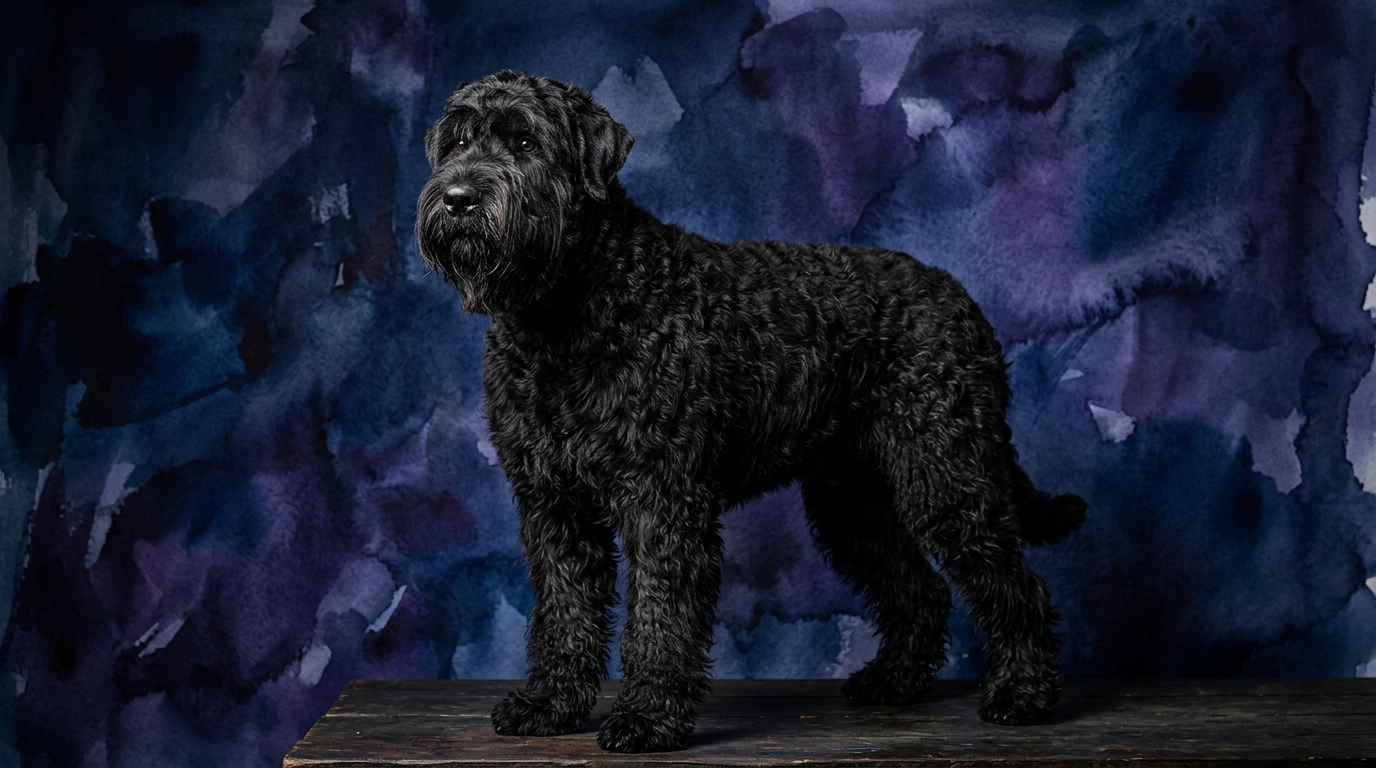

Side-by-Side IQ Profile: Black Russian Terrier
Originating as a military dog, the Black Russian Terrier possesses a robust cognitive makeup, with a 3/5 in Problem Solving reflecting their capacity to assess situations and react strategically, especially in protection scenarios. Their Training Speed, also at 3/5, indicates a solid ability to pick up complex commands, crucial for their working roles, though consistency is key. Social Intelligence at 3/5 suggests they are adept at reading their human companions and understanding social hierarchies within their family unit, vital for their guardian role. An Instinctive Drive of 3/5 is deeply rooted in their protective instincts, territoriality, and desire to work alongside their handler. Finally, a Memory score of 3/5 ensures they retain learned behaviors, boundaries, and past experiences, contributing to their reliability and consistency over time.
Side-by-Side IQ Profile: Basset Hound
The Basset Hound, a breed celebrated for its exceptional nose, presents an intriguing cognitive profile where every dimension also scores a 3/5, yet these scores are applied through a very different lens. Their Problem Solving at 3/5 is often directed towards unraveling complex scent trails, navigating obstacles in pursuit of a smell, or devising strategies to access interesting odors. A Training Speed of 3/5 signifies they can learn, but their strong individualistic streak, driven by their nose, means their compliance often takes a backseat to their olfactory pursuits, making training a unique endeavor. Social Intelligence at 3/5 allows them to form strong bonds with their family and communicate their needs, often with charming persistence, and they are generally amicable with other dogs. Their Instinctive Drive, a clear 3/5, is overwhelmingly dominated by their powerful scenting ability and an unwavering urge to follow a trail, sometimes to the exclusion of all else. A Memory score of 3/5 is particularly strong when it comes to recalling scent locations or the routines of their human companions, especially those involving food or walks.
Where the Black Russian Terrier Wins Cognitively
Despite identical numerical scores, the Black Russian Terrier's cognitive strengths shine in areas demanding structure, responsiveness, and a keen awareness of their environment. Their 3/5 in Problem Solving manifests as a more proactive and analytical approach to security. For instance, they might quickly assess a new visitor, deciding if they pose a threat or are merely a guest, and adjust their demeanor accordingly. This is a deliberate, situational problem-solving tied to their protective nature. Their 3/5 Training Speed, combined with their working dog heritage, means they are often more inclined to view commands as tasks to be mastered and executed precisely, rather than suggestions. This translates to a stronger drive for cooperative learning in obedience and protection work, where their memory (3/5) helps them build a robust repertoire of complex behaviors. The Black Russian Terrier's cognitive framework prioritizes utility and partnership in their human interactions, making them excel in roles requiring active participation and clear communication with their handler.
Where the Basset Hound Wins Cognitively
The Basset Hound's cognitive prowess, while scoring 3/5 across the board, truly excels in the nuanced world of sensory perception and independent pursuit. Their 3/5 in Problem Solving is less about overt physical tasks and more about intricate, multi-sensory challenges. A Basset might demonstrate superior problem-solving by skillfully navigating a dense undergrowth, deciphering conflicting scent information, or finding a creative path to a hidden treat, purely guided by their nose. This is a highly specialized form of intelligence, demonstrating a profound understanding of their environment through scent. Their 3/5 Instinctive Drive is an undeniable strength, manifesting as an unparalleled dedication to their primary purpose: tracking. This unwavering focus, while sometimes challenging for obedience training, is a testament to their deep-seated cognitive wiring for persistence and determination in following a trail. Their memory (3/5) is particularly acute for "scent maps" and locations of past discoveries, allowing them to recall specific scent profiles and return to areas of interest. The Basset Hound's cognitive strengths lie in their singular focus and the profound depth of their sensory world, making them masters of olfactory exploration.
Which is Easier to Train and Why
When considering ease of training, the Black Russian Terrier generally holds an advantage over the Basset Hound, despite identical 3/5 scores in Training Speed. The Black Russian Terrier, as a working breed, inherently possesses a stronger desire to please their handler and a greater inclination towards structured tasks. Their 3/5 in Instinctive Drive is channeled into cooperative activities like protection work or advanced obedience, making them receptive to learning complex command sequences. Their Social Intelligence (3/5) allows them to keenly observe and respond to their handler's cues, facilitating a smoother learning process. In contrast, the Basset Hound's 3/5 Training Speed is heavily influenced by their overwhelmingly powerful 3/5 Instinctive Drive for scent work. While they can learn, their nose often dictates their priorities, making them notoriously selective in their obedience. A Basset might understand a command perfectly but choose to ignore it if a compelling scent trail is present. Their Coren ranking of #71 further supports this, indicating they are not typically among the most compliant breeds in traditional obedience contexts. Training a Basset requires immense patience, creativity, and an understanding that their primary motivation is often their nose, not necessarily pleasing their human in the moment.
Which Suits Active Owners vs Relaxed Owners
The choice between these two breeds largely depends on an owner's lifestyle and their preferred level of engagement. The Black Russian Terrier, with its background as a working and guardian breed, is better suited for active owners who can provide consistent training, mental stimulation, and a clear leadership role. Their 3/5 Problem Solving and Instinctive Drive mean they thrive when given a "job" to do, whether it's advanced obedience, protection sports, or simply being a vigilant family guardian. They require regular, vigorous exercise and engagement to prevent boredom and channel their formidable energy constructively. An active owner who enjoys structured activities and values a highly responsive companion will find the Black Russian Terrier a rewarding partner. Conversely, the Basset Hound, despite its 3/5 Instinctive Drive for scent work, generally aligns better with more relaxed owners who appreciate a slower pace of life, but are still prepared for their unique quirks. While Bassets need daily walks and opportunities to explore with their nose, they are not typically high-energy athletes. Their 3/5 Problem Solving and Memory are often applied to low-key explorations and comfortable routines. A relaxed owner who enjoys leisurely strolls, is patient with a dog whose attention is often elsewhere (i.e., on the ground), and appreciates a companionable, sometimes stubborn, presence will find joy in a Basset Hound. They are content with a comfortable couch and a good sniff in the yard, rather than intense physical or mental exertion, though mental engagement through scent games is always beneficial.
The Verdict
Opt for the Black Russian Terrier if you are an experienced, active owner seeking a dedicated working companion who thrives on structured training, physical activity, and a strong partnership in guarding and protection roles.
Select the Basset Hound if you are a patient, relaxed owner who cherishes a charmingly stubborn companion with an unparalleled nose, enjoying leisurely activities and a dog whose primary drive is the fascinating world of scent.
🧠 Find Your Pet's IQ Score
Our Pet IQ Lab assessment covers 25+ tests across 5 cognitive dimensions — personalized to your breed.
Take the Full IQ Test →Frequently Asked Questions
Do Black Russian Terriers bark a lot?
Black Russian Terriers are not typically excessive barkers, but their 3/5 Instinctive Drive for guarding means they are vigilant and will alert to perceived threats or unusual activity, using their bark as a warning or communication tool. Consistent training can help manage this protective instinct.
Are Basset Hounds good with children?
Basset Hounds, with their 3/5 Social Intelligence, are generally known for their gentle and patient nature, making them good family companions, often tolerant of children. Supervision is always recommended, but their laid-back temperament usually makes them amiable playmates.
What kind of mental exercise do Basset Hounds need given their 3/5 problem solving?
Basset Hounds benefit greatly from mental exercise that engages their powerful 3/5 Instinctive Drive for scent. Scent work, puzzle toys, and allowing them ample time to explore and "read" their environment with their nose on walks provide excellent cognitive stimulation, tapping into their specialized problem-solving skills.