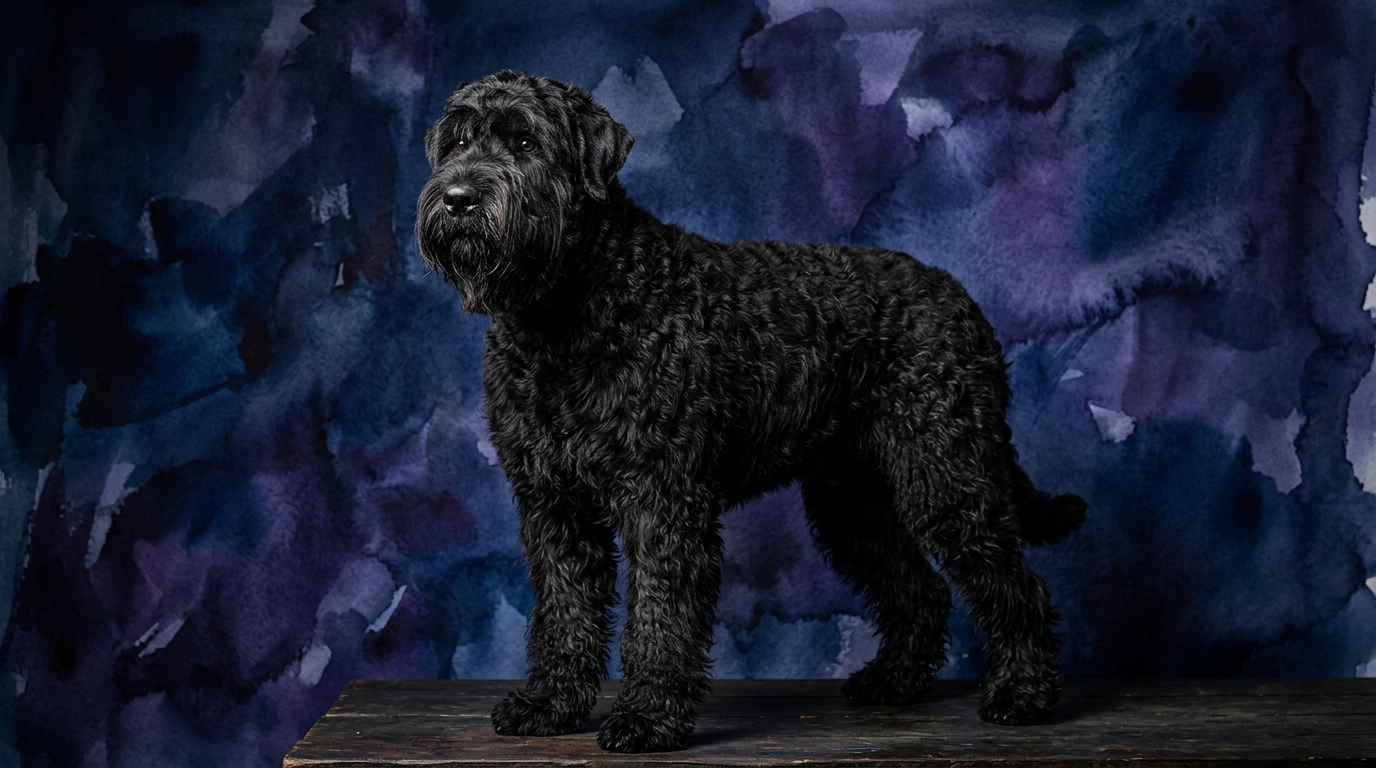

Side-by-Side IQ Profile: BRT vs. Chesapeake Bay Retriever
When we delve into the cognitive landscapes of the Black Russian Terrier and the Chesapeake Bay Retriever, we uncover distinct mental architectures, each honed by centuries of selective breeding for specific tasks. The Cosmic Pet Pet IQ Lab employs a comprehensive five-dimensional framework to map these differences: Problem Solving, Training Speed, Social Intelligence, Instinctive Drive, and Memory. For the Black Russian Terrier, a powerful dog from the Working group, its cognitive profile generally presents a balanced, robust average across these dimensions. It scores 3 out of 5 for Problem Solving, indicating a capable but not always innovative approach to novel challenges, often relying on established patterns. Its Training Speed is also rated 3 out of 5, suggesting it learns commands and routines at a steady pace, requiring consistent reinforcement. Social Intelligence stands at 3 out of 5, reflecting its discerning nature and strong bond with its family, yet often reservedness with strangers. Instinctive Drive, at 3 out of 5, points to a moderate but well-directed internal motivation, particularly in guarding and protection roles. Finally, its Memory also registers 3 out of 5, meaning it retains information and experiences adequately, though perhaps not with exceptional detail. Notably, the Black Russian Terrier is not listed on Stanley Coren’s ranking of dog intelligence, a testament to its relative rarity and specialized role.
In contrast, the Chesapeake Bay Retriever, a rugged member of the Sporting group, exhibits a cognitive profile geared towards efficiency and purpose-driven work. Its Problem Solving ability is rated 4 out of 5, indicating a strong capacity to analyze situations and devise effective solutions, a critical trait for navigating complex retrieving scenarios. This breed’s Training Speed also scores an impressive 4 out of 5, highlighting its eagerness and quickness to grasp new commands and complex sequences, making it a highly responsive pupil. Like the Black Russian Terrier, its Social Intelligence is rated 3 out of 5, suggesting a loyal and affectionate disposition towards its chosen people, but often with a degree of independence and a working mindset rather than an overt need for constant human interaction. Its Instinctive Drive similarly sits at 3 out of 5, reflecting a powerful innate urge for retrieving, swimming, and working in challenging environments. The Chesapeake Bay Retriever truly shines in Memory, achieving a 4 out of 5, which allows it to recall intricate patterns, locations of retrieves, and learned behaviors with remarkable accuracy over time. These strong cognitive traits contribute to its distinguished rank of #27 on Stanley Coren’s list of dog intelligence, placing it among breeds that excel in understanding and obeying human commands.
Where the Black Russian Terrier Wins Cognitively
While the Chesapeake Bay Retriever boasts higher scores in several cognitive dimensions, the Black Russian Terrier's unique blend of consistent average scores presents its own set of cognitive advantages, particularly for owners who value a robust self-reliance. Its 3/5 in Problem Solving, combined with strong protective instincts, means the BRT often approaches novel situations with a practical, direct mindset, less reliant on immediate human guidance. This isn't a deficit in intellect, but rather a preference for independent assessment, crucial for a guardian breed expected to make sound judgments without constant instruction. For example, when faced with an unfamiliar scent or sound, a BRT might independently investigate and assess the potential threat, relying on its internal framework rather than waiting for a cue. This independent streak, rooted in its working heritage, means it can process its environment and react with purpose, making it a formidable presence in its designated role. Its consistent 3/5 in Social Intelligence also means it forms deep, discerning bonds, evaluating interactions carefully rather than being overly eager to please everyone. This cognitive selectivity contributes to its unwavering loyalty and protective nature towards its chosen family, a quality highly valued in a companion dedicated to security.
Where the Chesapeake Bay Retriever Wins Cognitively
The Chesapeake Bay Retriever clearly demonstrates cognitive superiority in areas demanding rapid learning, complex problem-solving, and precise recall, directly aligning with its role as an elite retriever. Its 4/5 score in Problem Solving means it excels at quickly assessing environmental challenges, such as navigating dense cover to find a fallen bird or figuring out how to retrieve an object from a tricky water current; it actively strategizes. The 4/5 in Training Speed is a testament to its biddability and eagerness to absorb commands, making it a highly rewarding partner for advanced obedience, field trials, or even agility. Owners often find the Chessie can master intricate sequences of commands with fewer repetitions than many other breeds. Furthermore, its 4/5 in Memory is a significant cognitive advantage, allowing it to recall specific locations, scent trails, and learned behaviors over extended periods. This exceptional recall is indispensable for a retrieving dog that needs to remember where multiple birds fell or the precise route back to its handler through varied terrain. This combination of quick learning, strategic thinking, and strong memory places the Chesapeake Bay Retriever at a distinct advantage for roles requiring consistent, high-level performance and responsiveness to human direction.
Which is Easier to Train and Why
When considering ease of training, the Chesapeake Bay Retriever holds a clear advantage over the Black Russian Terrier. The Chessie’s 4/5 rating in Training Speed means it typically grasps new commands and behaviors with remarkable alacrity. Its eagerness to work alongside its owner, combined with its sharp intellect, translates into fewer repetitions needed to solidify a new skill. This quick uptake is further bolstered by its 4/5 Memory, ensuring that once a lesson is learned, it is retained effectively over time, allowing for the rapid building of a complex behavioral repertoire. In practical terms, an owner might introduce a new trick or command to a Chesapeake Bay Retriever, and within a few short sessions, the dog will reliably perform it, remembering the cues and the desired action. The Black Russian Terrier, with its 3/5 in both Training Speed and Memory, requires a more patient and consistent approach. While certainly capable of learning, the BRT may need more repetitions to master a command and might not retain it with the same immediate precision as the Chessie. Its independent nature means it may evaluate whether a command is truly necessary or beneficial before complying, rather than simply offering eager cooperation. This isn't a reflection of a lack of intelligence, but rather a different cognitive processing style that prioritizes self-assurance and careful consideration, necessitating a more persistent and engaging training methodology from the owner to achieve desired results.
Which Suits Active Owners vs. Relaxed Owners
Neither the Black Russian Terrier nor the Chesapeake Bay Retriever are suited for truly relaxed, sedentary owners; both require significant engagement to thrive. However, the nature of that engagement differs. The Chesapeake Bay Retriever is an ideal match for highly active owners who enjoy outdoor adventures, especially those involving water sports, hiking, or field work. Its robust physical and mental drive, coupled with its superior Problem Solving, Training Speed, and Memory, means it excels when given purposeful tasks. Owners who can channel the Chessie's intense retrieving instincts into structured games, advanced obedience, or even competitive dog sports will find a wonderfully fulfilled and cooperative companion. They thrive on having a job to do and ample physical exertion. The Black Russian Terrier, while equally needing activity, leans towards owners who appreciate a more strategic, perhaps less frenetic, approach to engagement. Its Working group background means it flourishes with consistent mental stimulation, structured training, and a clear sense of purpose within the family unit, often related to protection and companionship. While it enjoys walks and playtime, its needs are less about endless aerobic activity and more about consistent, thoughtful interaction, problem-solving toys, and training that reinforces its role as a discerning guardian. Owners who are committed to patient, firm, and consistent leadership, providing both mental challenges and a sense of belonging, will see the BRT flourish.
The Verdict
Choose the Black Russian Terrier if you seek a self-assured, discerning guardian who thrives on purposeful work and a strong bond with a consistent leader, valuing independence and robust physical presence.
Opt for the Chesapeake Bay Retriever if you desire a highly biddable, energetic partner for outdoor adventures and complex tasks, valuing quick learning, exceptional recall, and tireless enthusiasm.
🧠 Find Your Pet's IQ Score
Our Pet IQ Lab assessment covers 25+ tests across 5 cognitive dimensions — personalized to your breed.
Take the Full IQ Test →Frequently Asked Questions
Are Black Russian Terriers difficult to train?
Black Russian Terriers are capable learners but require patience and consistency. Their 3/5 training speed and independent nature mean they may take longer to master commands compared to some breeds, but they respond well to positive reinforcement and clear leadership.
Do Chesapeake Bay Retrievers need a lot of exercise?
Yes, Chesapeake Bay Retrievers are extremely active dogs with a strong working drive. They require significant daily physical exercise and mental stimulation, ideally involving retrieving, swimming, or other purposeful outdoor activities, to prevent boredom and destructive behaviors.
Which breed is better for a first-time dog owner?
Neither breed is typically recommended for first-time dog owners due to their strong drives and specific needs. However, the Chesapeake Bay Retriever's higher training speed and biddability might make it slightly more manageable for a committed novice willing to invest heavily in training and activity, compared to the Black Russian Terrier's more independent and discerning nature.