Side-by-Side IQ Profile: Unpacking the 3/5 Score
While both the Black Russian Terrier and the Harrier share a consistent 3/5 rating across all cognitive dimensions, the *flavor* and application of these scores are deeply rooted in their respective breed histories and purposes. Understanding these nuances is crucial to appreciating their distinct mental landscapes.
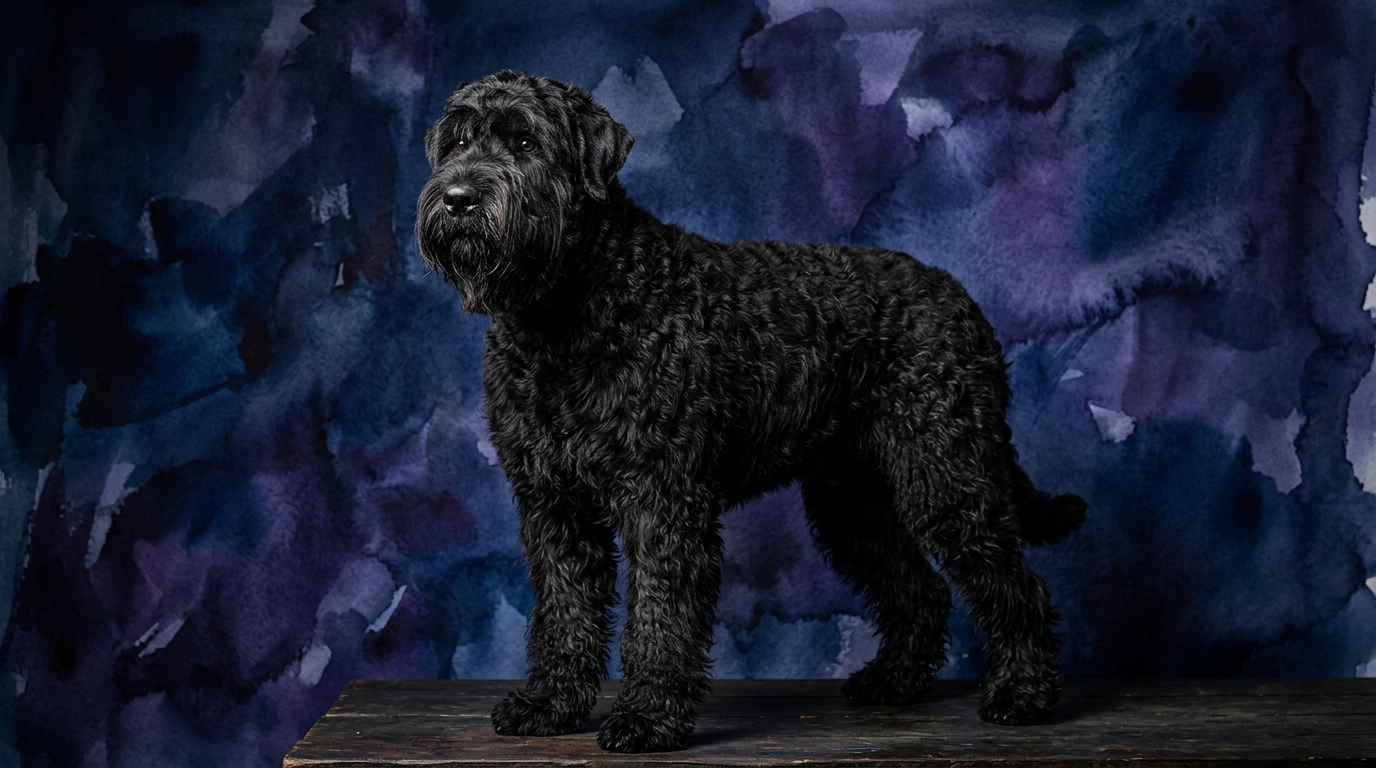
For the **Black Russian Terrier (BRT)**, a working breed, their **Problem Solving (3/5)** isn't about abstract puzzles, but practical, task-oriented solutions. They excel at figuring out how to achieve a job, such as navigating obstacles to reach a 'target' or discerning the most efficient way to patrol a perimeter. Their solutions are often tied to their protective instincts and formidable physical capabilities, demonstrating a robust, hands-on approach to challenges. Their **Training Speed (3/5)** indicates a moderate learning pace; they grasp concepts well when motivated by purpose and reward, but their inherent independence means consistent reinforcement is key. They aren't always eager to perform repetitive drills without a clear 'why.' In **Social Intelligence (3/5)**, BRTs are acutely attuned to their owner's mood and intentions, crucial for a guardian breed. They understand human cues and social hierarchies within their family unit, though they tend to be reserved and discerning with strangers, processing interactions through a filter of loyalty and protection. Their **Instinctive Drive (3/5)** is primarily focused on protection, territoriality, and guarding; they possess a natural inclination to observe, alert, and intervene when they perceive a threat, a core part of their being that influences many behaviors. Finally, their **Memory (3/5)** is solid, retaining learned commands, routines, and past experiences, particularly those related to their 'work' or family structure.
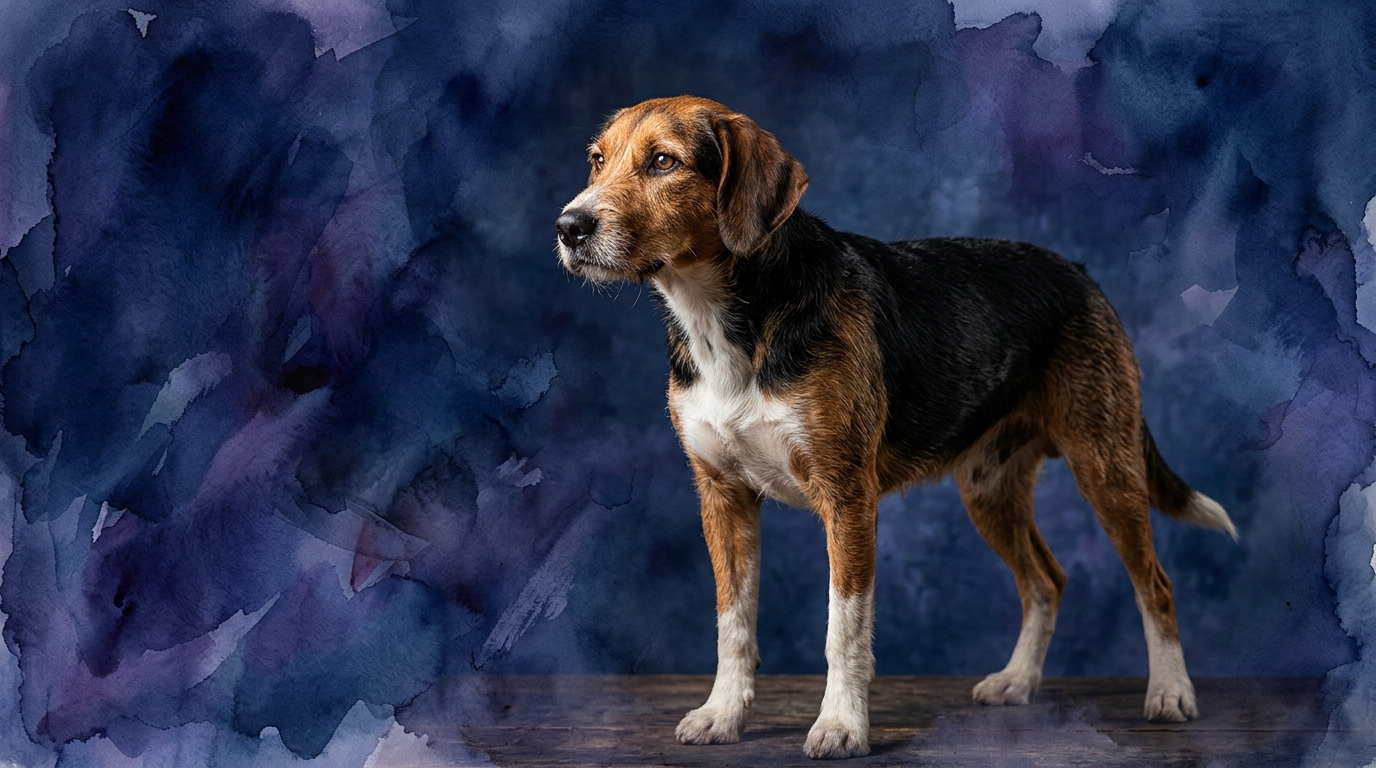
The **Harrier**, a hound breed, approaches cognition from a distinctly different angle. Their **Problem Solving (3/5)** is predominantly scent-based. They excel at tracking, navigating complex scent trails, and figuring out how to get to the source of an intriguing smell, demonstrating persistence and sensory interpretation rather than abstract reasoning. Their **Training Speed (3/5)** means they can learn commands, but their powerful prey drive and intense focus on scent can make them easily distracted. They learn best with high-value rewards and short, engaging sessions, requiring patience and creative methods to maintain their attention. Regarding **Social Intelligence (3/5)**, Harriers are highly attuned to pack dynamics, whether canine or human. They understand social cues within a group context and thrive on companionship, with their social acumen geared towards cooperation in a hunt and maintaining group cohesion. Their **Instinctive Drive (3/5)** is dominated by scenting, chasing, and vocalizing; their innate desire to follow a trail and work in a pack is powerful, often overriding other impulses and forming the bedrock of their hound identity. Lastly, their **Memory (3/5)** is excellent for scent trails, familiar routes, and the location of 'interesting' things in their environment, allowing them to recall complex routes, though their recall of commands can be challenged by an overwhelming scent stimulus.
Where the Black Russian Terrier Excels Cognitively
Despite identical 3/5 scores, the Black Russian Terrier showcases distinct cognitive strengths, particularly in areas aligning with their working heritage. Their **practical application of problem-solving** stands out. For instance, if presented with a barrier, a BRT might more readily investigate how to manipulate a latch or find a structural weakness to bypass it, demonstrating a direct, hands-on approach to overcoming physical obstacles. This contrasts with a scent hound's potential to focus on finding a path *around* the obstacle based on scent, rather than manipulating it directly. The BRT's cognitive strength lies in figuring out *how to do things* to achieve a tangible outcome, often related to security or task completion.
Furthermore, their **purpose-driven training engagement** offers an advantage in specific contexts. While their training speed is 3/5, BRTs often find structured, purposeful tasks deeply engaging. They thrive when they understand the 'why' behind a command, especially if it relates to protecting their family or property. This understanding of purpose can translate into more consistent and reliable performance in complex routines or protection work, as their motivation isn't solely reward-based but also driven by their innate desire to fulfill a role. Their discernment in social interactions is another subtle win; their **social intelligence (3/5)** is finely tuned for evaluating potential threats versus trusted individuals, processing social cues with a strong filter for safety and loyalty, which is a specialized cognitive skill for a guardian breed.
Where the Harrier Shines Cognitively
The Harrier, too, possesses cognitive strengths that, while rated 3/5, are uniquely suited to their hound nature. Their **sensory-driven problem-solving** is unparalleled within their domain. They excel at deciphering complex scent puzzles, differentiating individual odors in a cluttered environment, and maintaining focus on a specific trail for extended periods. This ability to mentally 'map' an environment through smell, following intricate pathways invisible to humans, represents a sophisticated form of problem-solving that is deeply integrated with their primary sense. A Harrier’s cognitive success often hinges on their ability to interpret and act upon olfactory data with precision.
Another distinct advantage is their **group cooperation and pack dynamics**. The Harrier’s social intelligence (3/5) truly shines in communal settings. As pack hounds, they possess an innate understanding of coordinated effort, effective communication within a group, and maintaining harmony among peers. This translates to an impressive ability to work alongside other dogs and their human 'pack members' during activities like tracking or group walks, demonstrating a cognitive aptitude for social cohesion and collaborative effort. Their **endurance in instinctive pursuit** is also a cognitive triumph; while their instinctive drive is 3/5, it manifests as relentless, sustained focus on a scent. Their memory and problem-solving abilities are often entirely in service of this drive, allowing them to recall complex routes and overcome obstacles purely to follow a trail. This sustained, instinctive focus, even when fatigued, is a testament to their specialized cognitive resilience.
Ease of Training: Nuances Beyond the Score
When comparing ease of training, the identical 3/5 training speed scores for both breeds do not tell the whole story; the *approach* and *challenges* differ significantly. The **Black Russian Terrier** can be considered easier for owners who provide clear, consistent leadership and establish a strong working relationship. They respond well to structured training that appeals to their desire to work and protect their family. Their independence means they require a confident and experienced handler, but once they understand the 'job' and trust their human, they are often eager to comply. However, their physical strength and potential for stubbornness mean that consistency, patience, and positive reinforcement are paramount to prevent them from making their own decisions.
The **Harrier**, on the other hand, demands more creativity and a profound understanding of their deep-seated prey drive and olfactory world. While they are capable of learning, their attention is easily diverted by compelling scents, making focus a primary hurdle. Owners must make training feel like a game or a hunt, utilizing high-value treats and keeping sessions short, engaging, and varied to maintain interest. Recall, in particular, can be a significant challenge due to their instinct to follow a scent, often overriding learned commands. This necessitates extensive, specialized training, often in secure, distraction-free environments before generalizing to open spaces. Therefore, while their *speed* of learning a *single command* might be similar, the *overall ease* of training for reliable, consistent behavior in varied, stimulating environments is generally more demanding with a Harrier.
Ideal Owners: Matching Temperament with Lifestyle
Choosing between these two breeds, despite their similar IQ scores, largely depends on an owner's lifestyle and what they seek in a canine companion. The **Black Russian Terrier** is an excellent fit for active owners who enjoy structured activities, such as obedience, protection sports, or extensive daily walks and hikes. They require significant mental stimulation through consistent training and purposeful tasks, alongside robust physical exercise to manage their powerful physique and working drive. A relaxed or inexperienced owner might find their energy, need for purpose, and protective instincts overwhelming, potentially leading to boredom, frustration, or the development of undesirable behaviors if their cognitive and physical needs are not met.
The **Harrier** is unequivocally for highly active, outdoors-loving individuals or families. Their enduring stamina and intense desire to follow a trail mean they need substantial physical exertion every single day, often for hours. They thrive in environments where they can engage their senses, whether it's long hikes, trail running, or dedicated scent work. A more relaxed owner would likely struggle immensely with the Harrier's boundless energy, vocal nature, and persistent curiosity. An under-exercised or under-stimulated Harrier can become restless, destructive, or excessively vocal, channeling their cognitive drive into less desirable outlets. They are best suited for those who can integrate their dog into an adventurous, outdoor-centric lifestyle.
The Verdict
Opt for the Black Russian Terrier if you seek a strong, discerning companion for protection and structured activities, valuing their practical problem-solving and loyalty within a family unit; they thrive with confident leadership and a clear 'job' to do.
Select the Harrier if you are an active, outdoors-loving individual or family, ready to engage with a dog whose world revolves around scent, pack dynamics, and persistent pursuit; they are ideal for those who enjoy extensive outdoor adventures and can manage a strong prey drive.
🧠 Find Your Pet's IQ Score
Our Pet IQ Lab assessment covers 25+ tests across 5 cognitive dimensions — personalized to your breed.
Take the Full IQ Test →Frequently Asked Questions
Do Black Russian Terriers and Harriers have similar memory capabilities?
The Cosmic Pet Pet IQ Lab rates both breeds at 3/5 for memory, suggesting they both have good retention of learned commands, routines, and experiences. However, the *types* of information they prioritize for memory might differ based on their breed instincts – BRTs for tasks and social structures, Harriers for scent trails and environmental cues.
How does their social intelligence rating of 3/5 manifest differently in each breed?
For the Black Russian Terrier, 3/5 social intelligence often means a strong, protective bond with their family and a discerning, cautious approach to strangers, reflecting their guardian role. The Harrier's 3/5 social intelligence typically manifests as strong pack awareness and cooperation, thriving in group dynamics whether with humans or other dogs, emphasizing cohesion and shared purpose.
Given their identical IQ scores, what's the key differentiator in their cognitive profiles?
The key differentiator lies in the *application* of their cognitive skills, deeply shaped by their breed origins and instincts. Black Russian Terriers apply their 3/5 problem-solving and drive to protection and practical, task-oriented challenges, while Harriers apply theirs to scent-driven pursuit, navigation, and maintaining pack cohesion, demonstrating specialized cognitive strengths in distinct domains.