Side-by-Side Cognitive Profiles
At first glance, the Black Russian Terrier (BRT) and the Skye Terrier present an intriguing paradox: both breeds register identical scores across all five dimensions of intelligence as assessed by The Cosmic Pet Pet IQ Lab. Each breed scores a 3/5 for problem-solving, training speed, social intelligence, instinctive drive, and memory. However, a deeper dive reveals that these scores, while numerically equal, manifest in distinct ways, heavily influenced by their breed groups and historical purposes. Understanding these nuances is key to appreciating their individual cognitive strengths.
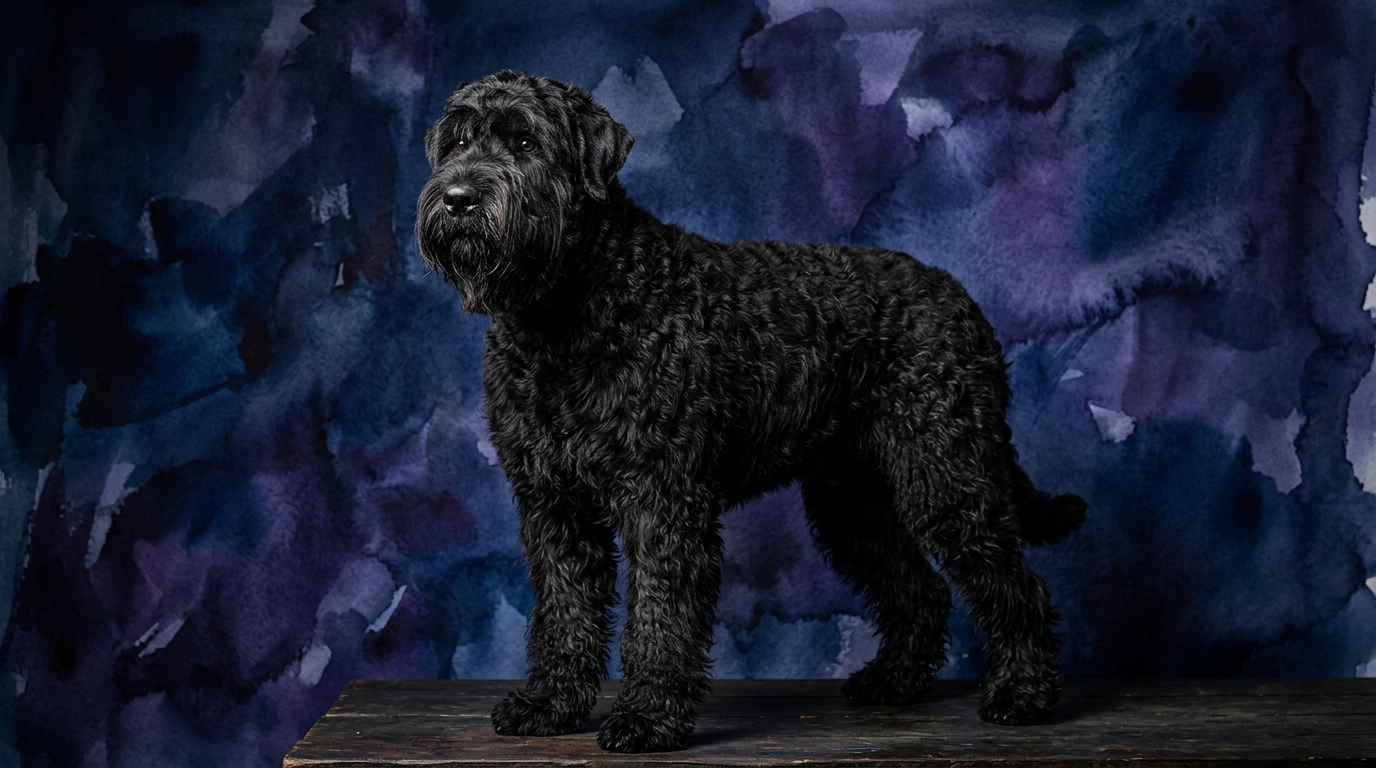
For the **Black Russian Terrier**, a breed forged for military and protection work, the 3/5 in **Problem Solving** often translates into a strategic approach to guarding. They excel at assessing situations, identifying potential threats, and formulating a response, whether it's navigating a complex obstacle course or determining the appropriate level of intervention for an unfamiliar visitor. Their problem-solving isn't just about figuring things out; it's about making calculated decisions in a structured environment. Their **Training Speed** at 3/5 reflects an impressive ability to absorb and execute multi-step commands, particularly when presented by a clear, confident leader. This efficiency is rooted in their working heritage, where rapid learning of complex tasks was essential. The 3/5 in **Social Intelligence** for a BRT speaks to their acute awareness of their family unit's dynamics and their capacity to discern friend from foe. They understand social hierarchies and respond to their human's emotional state, often displaying protective behaviors based on these observations. Their **Instinctive Drive** at 3/5 is predominantly geared towards protection and territoriality, a powerful inherent urge to safeguard their family and property. This drive is not merely aggressive but often involves intelligent decision-making about when and how to act. Finally, their **Memory** score of 3/5 indicates a strong retention of commands, routines, and experiences, crucial for consistent performance in their protective roles and remembering who belongs within their guarded space.
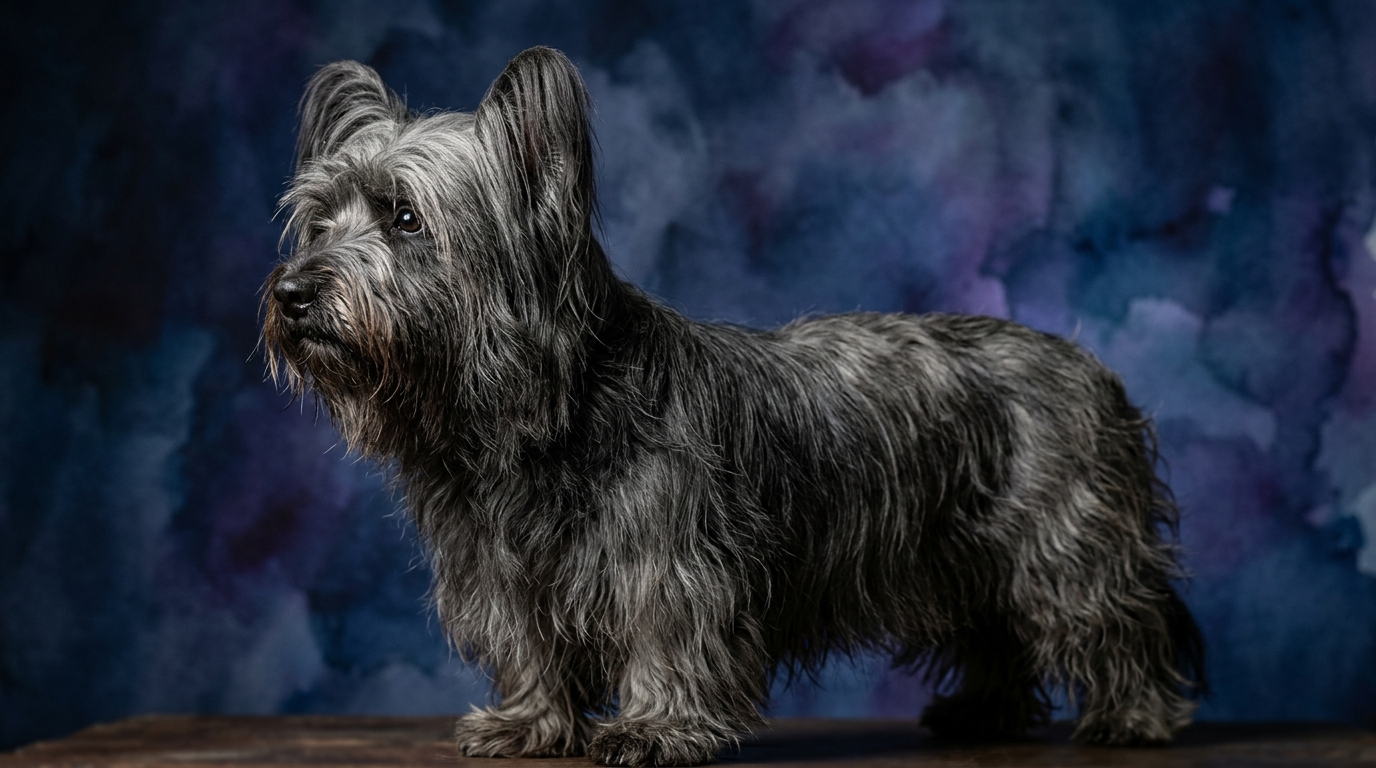
The **Skye Terrier**, a member of the Terrier group originally bred for hunting vermin, interprets these same 3/5 scores through a different lens. Their 3/5 in **Problem Solving** is less about strategic protection and more about tenacious, independent resourcefulness in pursuit of a goal. This manifests as an exceptional ability to navigate tight spaces, outwit prey, or find creative solutions to reach an objective, often involving digging or persistent exploration. Their **Training Speed** (3/5) shows they are quick to grasp new concepts, but their application of this learning is often driven by their own independent will and what they perceive as worthwhile. They learn efficiently but require consistent, engaging motivation to perform on command. The Skye's 3/5 **Social Intelligence** is characterized by a deep, singular devotion to their primary human, coupled with a reserved and often discerning attitude towards strangers. They are adept at reading their owner's moods and intentions but are less inclined to extend this social warmth broadly. Their **Instinctive Drive** at 3/5 is powerfully rooted in their hunting heritage, featuring an intense prey drive, a strong urge to dig, and remarkable persistence in tracking. This drive is a core part of their identity. For **Memory**, the 3/5 score for a Skye Terrier highlights their ability to recall hunting routes, the locations of potential successes, and specific cues related to their independent pursuits, cementing lessons learned from their environment and experiences.
Where the Black Russian Terrier Wins Cognitively
Despite identical numerical scores, the Black Russian Terrier often demonstrates a cognitive edge in scenarios demanding structured obedience, sustained focus on multi-stage tasks, and nuanced social evaluation within a family context. Their development as working dogs means they excel at processing and executing complex command sequences, maintaining composure under pressure, and understanding intricate human instructions for protection duties. A BRT's 3/5 problem-solving often involves strategic thinking in a collaborative context, making them particularly adept at tasks requiring both mental and physical discipline under human direction. Their social intelligence, while rated 3/5, often manifests as a superior ability to interpret subtle family dynamics and act as a discerning guardian, weighing threats and responding with measured force rather than pure instinct.
Where the Skye Terrier Wins Cognitively
Conversely, the Skye Terrier shines in areas requiring independent thought, persistent problem-solving, and sheer tenacity. Their cognitive strengths are evident in situations demanding self-reliance and resourcefulness, a direct legacy of their vermin-hunting past. A Skye's 3/5 problem-solving is often about finding innovative ways to overcome physical barriers or outmaneuver a target, demonstrating a relentless, almost single-minded pursuit of a goal. Their instinctive drive, also 3/5, fuels a remarkable capacity for sustained effort in challenging environments, like navigating dense undergrowth or digging for extended periods. This breed excels at making quick, independent decisions when facing dynamic, instinct-driven scenarios, often displaying a cunning that belies their charming exterior. Their memory, at 3/5, is particularly sharp for recalling environmental details and past successes in their independent endeavors.
Training: Obedience vs. Independence
When it comes to training, the practical differences between these two breeds become pronounced, even with identical 3/5 training speed scores. The Black Russian Terrier, with its working dog background, generally learns commands efficiently and is eager to please its handler, provided there is clear, consistent leadership. Their 3/5 social intelligence often means they respond well to a confident leader, viewing training as a collaborative effort. While powerful and possessing a strong will, they tend to thrive on structure and purpose, making them receptive to formal obedience training. Challenges with BRTs in training often stem from their formidable size and strength, requiring an owner capable of physically managing them and consistently reinforcing boundaries. Their training is about channeling their inherent drive and intelligence into desired behaviors.
The Skye Terrier, while possessing the same 3/5 training speed, presents a different kind of training challenge. As a terrier, their independence and self-reliance are deeply ingrained. They learn quickly but are often motivated by their own objectives rather than a strong desire to appease. Their 3/5 instinctive drive, particularly for hunting, can make them prone to distraction, and their selective hearing can test an owner's patience. Training a Skye is less about commanding and more about convincing them that your request aligns with their interests. Consistency, positive reinforcement, and making training feel like a game or a puzzle are crucial. Owners must accept that a Skye will always retain a degree of independent thought, and complete, robotic obedience is rarely their forte. Their training requires creativity and a deep understanding of the terrier psyche.
Matching Breeds to Lifestyles: Active vs. Relaxed Owners
Selecting between these two breeds also hinges significantly on an owner's lifestyle and temperament. The Black Russian Terrier is unequivocally suited for active owners. This is a large, powerful dog requiring substantial daily exercise, consistent mental stimulation, and dedicated training throughout its life. They are not content with minimal activity and can become destructive or anxious if their physical and mental needs are not met. Owners must be prepared for regular, vigorous walks, engaging play sessions, and ongoing training to channel their impressive strength and protective instincts appropriately. A BRT thrives with an owner who enjoys an active outdoor lifestyle and is committed to providing firm, fair, and consistent leadership.
The Skye Terrier, while smaller, is by no means a sedentary lap dog, making them less suitable for truly 'relaxed' owners in the sense of minimal engagement. They require regular, moderate exercise to satisfy their terrier energy and prevent boredom. However, their need for mental engagement is perhaps even more critical than sheer physical exertion. An owner who appreciates consistent, thoughtful interaction, enjoys puzzle toys, and can provide engaging training sessions will find a Skye rewarding. They are more suited to owners who are active in a 'mentally stimulating' sense, enjoying walks and play but also understanding the need for intellectual challenges to prevent their independent and sometimes mischievous nature from becoming problematic. While they may not require the same mileage as a BRT, they demand an owner who is present, consistent, and willing to engage with their clever, sometimes stubborn personality.
The Verdict
Choose the Black Russian Terrier if you seek a formidable, loyal guardian and working companion, and are prepared for a significant commitment to their exercise, training, and socialization needs.
Opt for the Skye Terrier if you appreciate an independent, tenacious, and devoted companion with a strong personality, and are willing to engage with their clever mind and distinctive terrier spirit.
🧠 Find Your Pet's IQ Score
Our Pet IQ Lab assessment covers 25+ tests across 5 cognitive dimensions — personalized to your breed.
Take the Full IQ Test →Frequently Asked Questions
Do Black Russian Terriers and Skye Terriers have the same level of intelligence?
According to The Cosmic Pet Pet IQ Lab, both breeds score identically across five cognitive dimensions (3/5 for each). However, their intelligence manifests differently; BRTs excel in structured, collaborative tasks, while Skye Terriers shine in independent, tenacious problem-solving.
Which breed is easier to house train?
Both breeds are capable of being house trained efficiently with consistency. The Black Russian Terrier's desire to please its handler can make them responsive, while the Skye Terrier's independence means success often relies on making the process highly rewarding and engaging for them.
Are these breeds good with children?
With proper socialization and training from a young age, both breeds can coexist well with children. Black Russian Terriers are often protective of their family, while Skye Terriers tend to be devoted to their immediate family but may prefer older, respectful children due to their reserved nature.