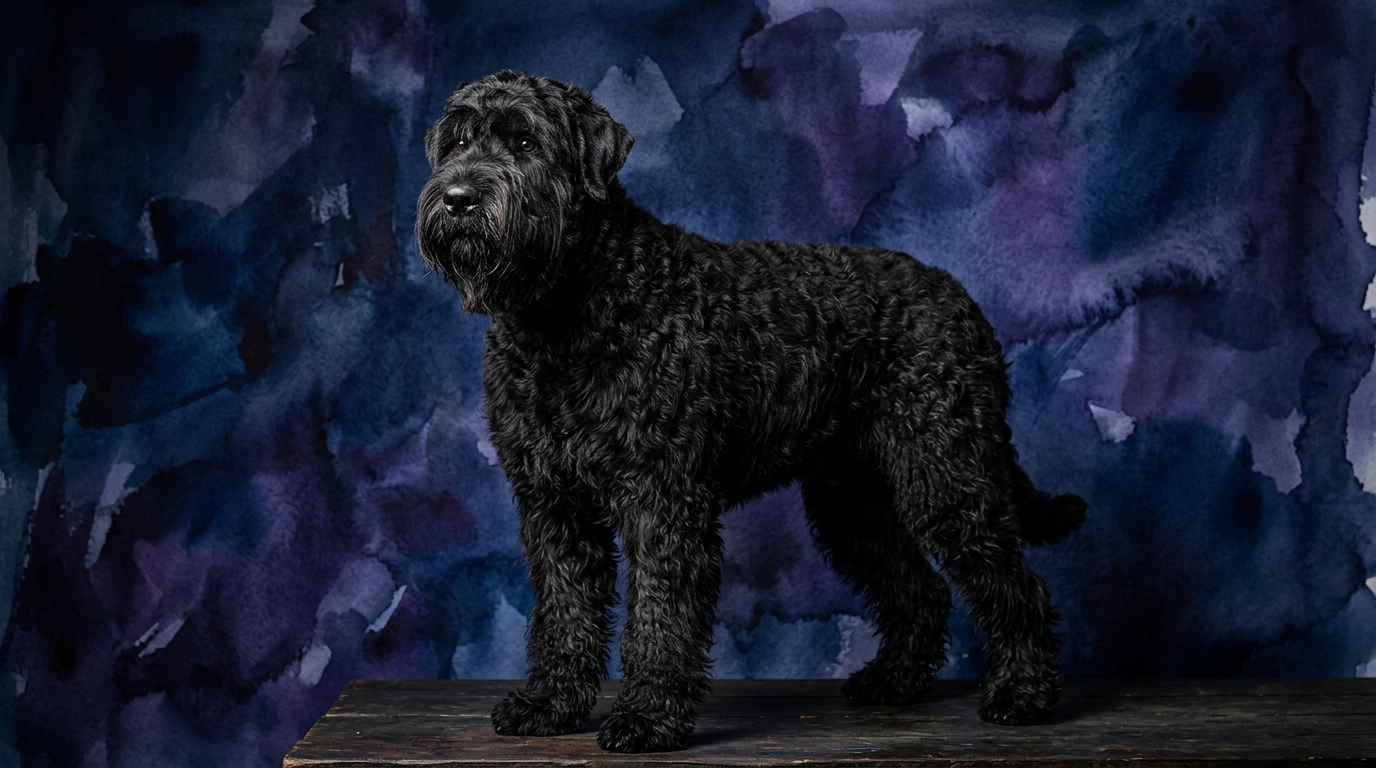

Side-by-Side Cognitive Profile
The Cosmic Pet Pet IQ Lab employs a five-dimensional framework to assess canine intelligence, offering a nuanced view beyond simple obedience. For the Black Russian Terrier (BRT), a robust working breed, and the Welsh Springer Spaniel (WSS), an energetic sporting companion, these dimensions highlight distinct mental aptitudes and preferences.
The Black Russian Terrier’s profile indicates a methodical thinker with a steady learning curve. Their Problem Solving score of 3/5 suggests they approach challenges with a structured, perhaps less spontaneous, mindset, often preferring to apply learned solutions rather than innovate on the fly. Training Speed at 3/5 means they require consistent, clear instruction and repetition to solidify new commands and behaviors, valuing thoroughness over rapid acquisition. Social Intelligence, also at 3/5, points to a breed that is observant and attuned to its primary family unit, though often reserved or discerning with strangers, understanding social cues within its trusted circle. An Instinctive Drive of 3/5 reflects strong protective instincts that are typically well-controlled and deliberate, rather than impulsive. Finally, their Memory score of 3/5 indicates reliable retention of training and experiences over time, benefiting from regular reinforcement.
In contrast, the Welsh Springer Spaniel presents a more agile and enthusiastic cognitive profile, particularly in learning and problem-solving. Their Problem Solving score of 4/5 signifies a resourceful and adaptable mind, eager to figure out novel situations or manipulate objects to achieve a goal. Training Speed, rated at 4/5, highlights their eagerness to learn and their capacity to pick up new commands and routines with efficiency and fewer repetitions. A Social Intelligence score of 3/5 suggests they are generally amiable and sensitive to human emotions, thriving on positive interaction, though they can be sensitive to harshness. Their Instinctive Drive, also 3/5, is characterized by a keen hunting and retrieving drive, yet it is typically biddable and responsive to handler direction. An impressive Memory score of 4/5 ensures excellent recall of learned behaviors, locations, and tasks, making information stick effectively.
Where the Black Russian Terrier Wins Cognitively
The Black Russian Terrier’s cognitive strengths truly emerge in scenarios demanding methodical application and considered protective responses. Their 3/5 in problem-solving, while not indicating rapid innovation, means they excel at tasks requiring systematic adherence to established protocols. For roles involving consistent vigilance, precise obedience routines, or guarding duties where reliability and predictable responses are paramount, the BRT’s cognitive style is highly effective. They are less likely to deviate from a learned procedure, which is invaluable in maintaining security or performing complex, multi-step tasks that have been thoroughly ingrained. Their social intelligence, though not outwardly effusive, allows for a deep attunement to the specific needs and perceived threats to their immediate family, leading to measured and context-appropriate protective actions. This deliberate processing of environmental cues, informed by their instinctive drive, makes them exceptionally reliable sentinels, reacting with thoughtful purpose rather than pure impulse.
Where the Welsh Springer Spaniel Wins Cognitively
The Welsh Springer Spaniel shines brightest in areas requiring cognitive flexibility and rapid assimilation of new information. Their 4/5 score in problem-solving signifies a breed that actively enjoys the process of figuring things out, whether it’s navigating complex terrain to retrieve a bird or mastering a new puzzle toy. This mental agility allows them to adapt quickly to changing environments and learn new commands or situations with minimal fuss. The 4/5 in training speed is a significant advantage, reflecting an inherent eagerness to engage with their handlers and a remarkable ability to form associations quickly, ensuring new skills are solidified efficiently. Coupled with their 4/5 memory, this means that once a lesson is learned, it is deeply ingrained, allowing for consistent and reliable performance even after periods of inactivity. This combination of quick learning and strong retention makes them exceptionally effective in field work, where precise memory of marked falls and rapid understanding of handler signals are crucial for success.
Which is Easier to Train and Why
Generally, the Welsh Springer Spaniel presents as the more straightforward breed to train, primarily due to its higher scores in training speed (4/5) and memory (4/5). Their inherent eagerness to please, combined with a quick grasp of new concepts, means they respond exceptionally well to positive reinforcement and can master a wide array of commands efficiently. Their sporting heritage has cultivated a strong attentiveness to handlers and a desire for cooperative tasks, making them highly biddable and keen to work alongside their human companions. They are often intrinsically motivated by the act of learning and participating in activities.
In contrast, the Black Russian Terrier, with its 3/5 scores in both training speed and memory, requires a more patient, consistent, and structured approach. While certainly capable of learning complex commands, they may take longer to solidify new behaviors and demand more repetition and clarity in instruction. Their working dog independence means they might occasionally question commands or require clearer, more compelling motivation than the WSS. The BRT's training benefits significantly from early socialization, consistent boundaries, and firm, fair leadership to channel its protective instincts effectively, ensuring its methodical nature translates into reliable obedience rather than stubbornness.
Which Suits Active Owners vs. Relaxed Owners
For active owners seeking a dynamic companion, the Welsh Springer Spaniel is an excellent match. Their sporting heritage demands significant physical exercise and consistent mental engagement. A WSS thrives on daily vigorous activities such as long runs, hikes, swimming, or participation in dog sports like agility, flyball, or field trials. Their problem-solving prowess and keen memory make them outstanding candidates for complex training and activities that challenge both their bodies and minds. Owners who enjoy outdoor adventures and are prepared to involve their dog deeply in an active lifestyle will find a WSS a joyful, tireless, and highly engaged partner.
Neither breed is truly suited for an owner seeking a predominantly relaxed, low-activity lifestyle. However, between the two, the Black Russian Terrier might be slightly more manageable for an owner whose activity level is consistent but perhaps less intense than what a WSS demands. While BRTs still require regular, structured exercise and mental stimulation to prevent boredom and channel their working drive, their needs can often be met with long, purposeful walks, controlled playtime, and focused training sessions rather than constant high-impact endeavors. Their protective nature also means they are content to patrol their territory or observe from a comfortable spot, provided their foundational needs for exercise and cognitive work are consistently met. They are not typically "velcro dogs" in the same way some sporting breeds can be, offering a degree of independent contentment once their physical and mental needs are satisfied.
The Verdict
Opt for a Black Russian Terrier if you seek a steadfast, protective companion who thrives on methodical training and consistent leadership, providing a calm yet watchful presence once its structured exercise and mental engagement needs are met.
Select a Welsh Springer Spaniel if you desire an enthusiastic, quick-learning partner eager for cooperative activities and outdoor adventures, thriving on regular vigorous exercise and engaging mental challenges.
🧠 Find Your Pet's IQ Score
Our Pet IQ Lab assessment covers 25+ tests across 5 cognitive dimensions — personalized to your breed.
Take the Full IQ Test →Frequently Asked Questions
Is the Black Russian Terrier difficult to train?
While not inherently difficult, the Black Russian Terrier requires consistent, clear, and patient training due to its moderate training speed and memory scores. They benefit from early socialization and firm leadership, as their working background means they are methodical and require solid reasoning for commands.
Do Welsh Springer Spaniels need a lot of exercise?
Yes, Welsh Springer Spaniels are a sporting breed with significant energy and mental stimulation needs. Daily vigorous exercise, such as long runs, engaging playtime, or participation in dog sports, is crucial to keep them happy and well-adjusted, preventing boredom-related behaviors.
Which breed is better with children?
Both breeds can be good with children when properly socialized and trained, but their approaches differ. The Welsh Springer Spaniel's generally amiable nature and eagerness to play can make them a joyful companion, while the Black Russian Terrier's protective instincts mean they are often watchful and loyal guardians within their family circle.