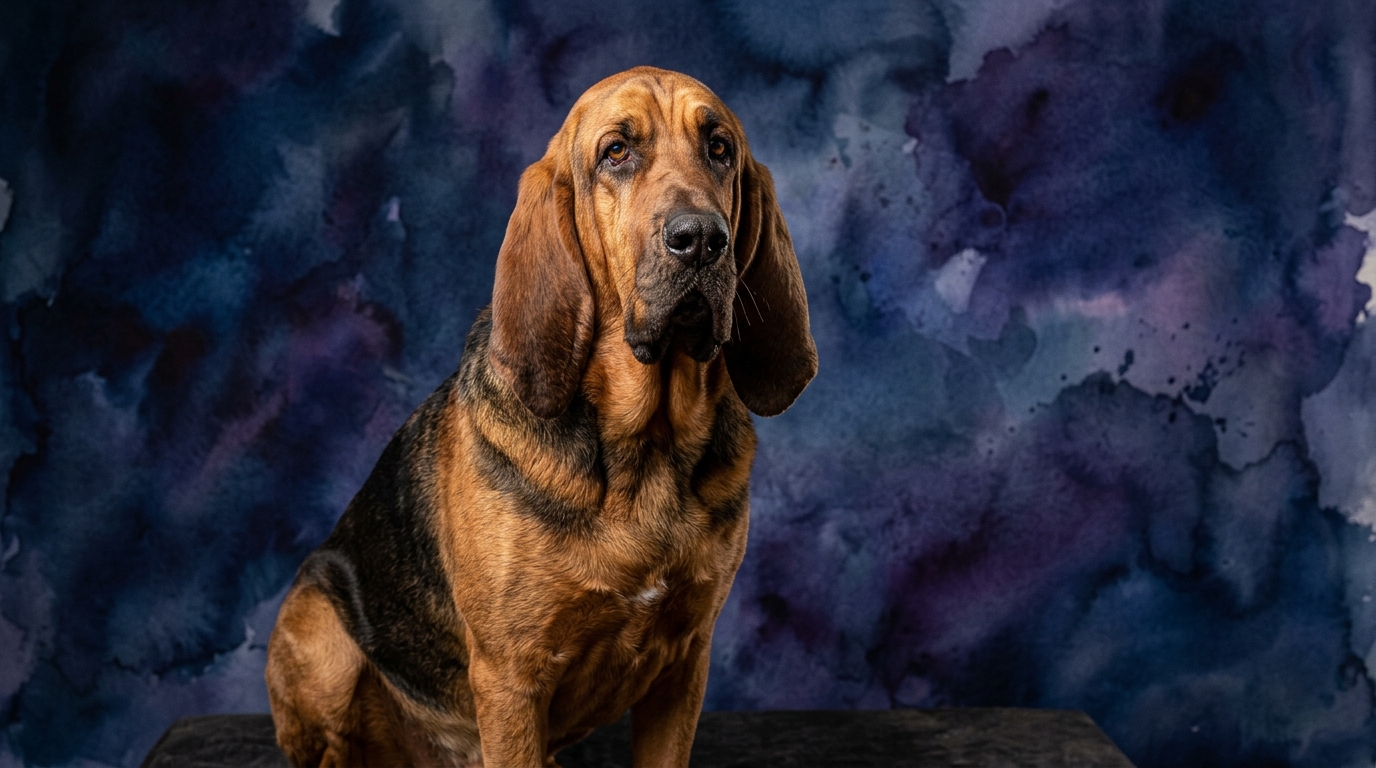
Side-by-Side IQ Profile: Bloodhound
The Bloodhound, ranked #74 by Coren, presents a cognitive profile profoundly shaped by its exceptional olfactory capabilities. Its problem-solving ability, a perfect 5/5, is almost exclusively dedicated to deciphering intricate scent puzzles, involving unparalleled pattern recognition within olfactory data and making deductive leaps from the faintest scent gradients over vast distances and time. This specialized intellect is paired with a 5/5 in memory, specifically for retaining detailed scent profiles and the spatial context of trails, allowing them to recall and follow a specific scent days later, showcasing remarkable olfactory retention.
However, this singular focus impacts other cognitive dimensions. Their training speed, a challenging 1/5, stems from an internal reward system overwhelmingly biased towards tracking, making conventional commands and motivators less compelling when a scent is present. Their social intelligence, rated 2/5, means they are amiable but less focused on nuanced human social cues, often appearing oblivious when engrossed in scent work. Underpinning all is a profound instinctive drive (5/5) to track, which dictates their behavior and intellectual application above all else.
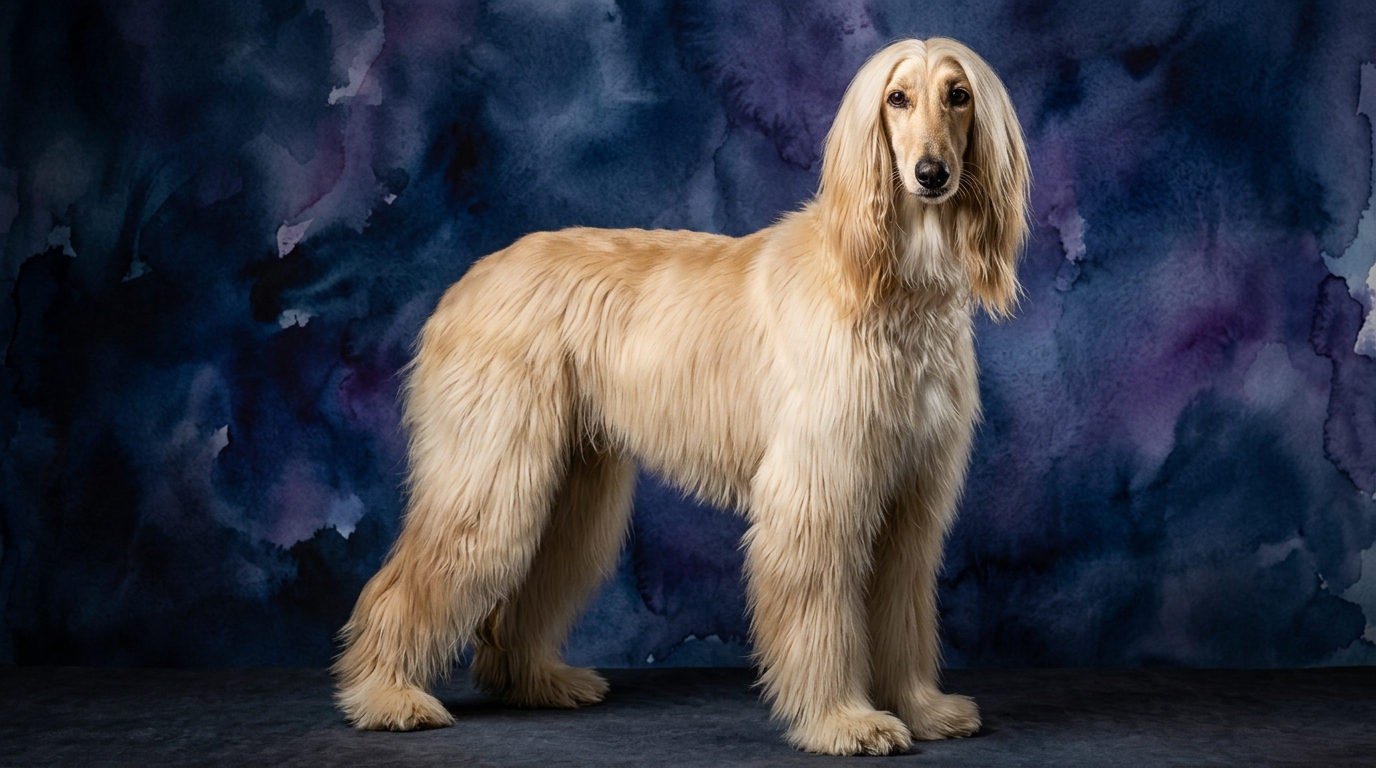
Side-by-Side IQ Profile: Afghan Hound
The Afghan Hound, Coren ranked #79, exhibits a distinct cognitive architecture, honed for independent sighthound hunting across varied terrain. Their problem-solving ability, rated 4/5, is rooted in rapid, autonomous decision-making in dynamic, visually-driven scenarios. This involves exceptional spatial reasoning, swift assessment of distances and pursuit angles for fast-moving prey, and instant adaptation of strategies without human intervention. A powerful 5/5 instinctive drive for pursuit fuels this independence, compelling them to rely on their keen vision and swift intellect rather than external guidance.
Similar to the Bloodhound, their training speed is a challenging 1/5, yet for different reasons: profound independence and self-reliance. They often perceive human commands as suggestions, prioritizing their own judgment and instincts. Their social intelligence, at 2/5, reflects a reserved and sometimes aloof nature; they form deep bonds but are not typically effusive or concerned with pleasing owners, making their social interactions subtle. Their memory, 3/5, is effective for visual landmarks and territory layouts, crucial for their self-sufficient hunting style, though not as specialized as the Bloodhound's olfactory recall.
Where the Bloodhound Wins Cognitively
The Bloodhound's cognitive superiority undeniably lies within its olfactory processing and the subsequent, intricate problem-solving it applies to scent work. With a perfect 5/5 in both problem-solving and memory, their intellect is a finely tuned instrument for navigating a world primarily defined by smell. They excel at deciphering complex scent tapestries, distinguishing individual odors amidst a cacophony of environmental smells, and maintaining an unwavering focus on a target scent for hours, even days. This cognitive strength makes them unparalleled in tasks requiring sustained, detailed sensory analysis and tracking.
Where the Afghan Hound Wins Cognitively
Conversely, the Afghan Hound's cognitive strengths manifest in a vastly different domain, reflecting its heritage as a sighthound developed for hunting swift prey across varied, often rugged terrain. Their 4/5 problem-solving score represents a different kind of intellectual agility: rapid, independent decision-making in dynamic, visually-driven scenarios. An Afghan Hound must quickly assess distances, calculate vectors for interception, and navigate obstacles at high speed, all without direct human intervention, demonstrating exceptional spatial reasoning and predictive analytics.
Which is Easier to Train and Why
When it comes to traditional obedience training, both the Bloodhound and the Afghan Hound present significant challenges, each scoring a 1/5 for training speed. However, the reasons for this difficulty diverge. The Bloodhound's challenge stems from an overwhelming instinctive drive (5/5) to follow scent; once their nose is engaged, their cognitive focus narrows, rendering human commands largely irrelevant. Their internal reward system is so powerfully linked to tracking that conventional motivators often fail to compete. The Afghan Hound, on the other hand, is difficult to train due to its profound independence and self-reliance as a solo hunter. They tend to make their own decisions based on instinct, often perceiving human commands as suggestions rather than directives. Neither breed is 'easy' in the conventional sense, but the Bloodhound's challenge is about redirecting a singular focus, while the Afghan's is about navigating a strong-willed, independent mind.
Which Suits Active Owners vs. Relaxed Owners
The choice between a Bloodhound and an Afghan Hound largely depends on an owner's lifestyle and their willingness to engage with their dog's specific cognitive and physical needs. A Bloodhound, with its unparalleled instinctive drive (5/5) and problem-solving (5/5) related to scent, is ideal for owners dedicated to scent work, tracking, or search and rescue, demanding intense mental and physical stimulation. The Afghan Hound, also possessing a 5/5 instinctive drive, requires outlets for immense speed, agility, and independent pursuit, making them excellent companions for lure coursing or long off-leash runs in secure areas. Neither breed is suited for truly 'relaxed' owners; both demand active, understanding owners willing to cater to their unique, powerful drives.
The Verdict
Choose a Bloodhound if you are captivated by the intricate world of scent, are prepared to dedicate significant time to tracking activities, and appreciate a dog with unparalleled olfactory problem-solving and memory, even if it means a challenge in traditional obedience.
Opt for an Afghan Hound if you admire independent, swift thinkers, are committed to providing ample opportunities for high-speed exercise and visual pursuit, and value a dog whose reserved social intelligence and self-reliance define its unique charm.
🧠 Find Your Pet's IQ Score
Our Pet IQ Lab assessment covers 25+ tests across 5 cognitive dimensions — personalized to your breed.
Take the Full IQ Test →Frequently Asked Questions
Is a Bloodhound truly 'smart' despite its low training speed?
Absolutely. A Bloodhound's intelligence is highly specialized, excelling in olfactory problem-solving and scent memory (5/5 each). Their low training speed (1/5) reflects their singular focus on scent, not a lack of cognitive ability, making them unparalleled in tracking tasks.
Why is the Afghan Hound considered difficult to train?
The Afghan Hound's difficulty in training (1/5) stems from its profound independence and self-reliance, traits honed as a sighthound. They prioritize their own judgment and instincts over human commands, requiring patient, engaging training that respects their strong-willed nature.
Do these breeds get along with other pets or children?
Both breeds can coexist with other pets and children, but their social intelligence (2/5 for both) suggests they may not be overly effusive. Bloodhounds are generally amiable but can be oblivious when tracking; Afghan Hounds are often reserved and dignified, requiring proper introductions and supervision, especially with small, fast-moving animals due to their prey drive.