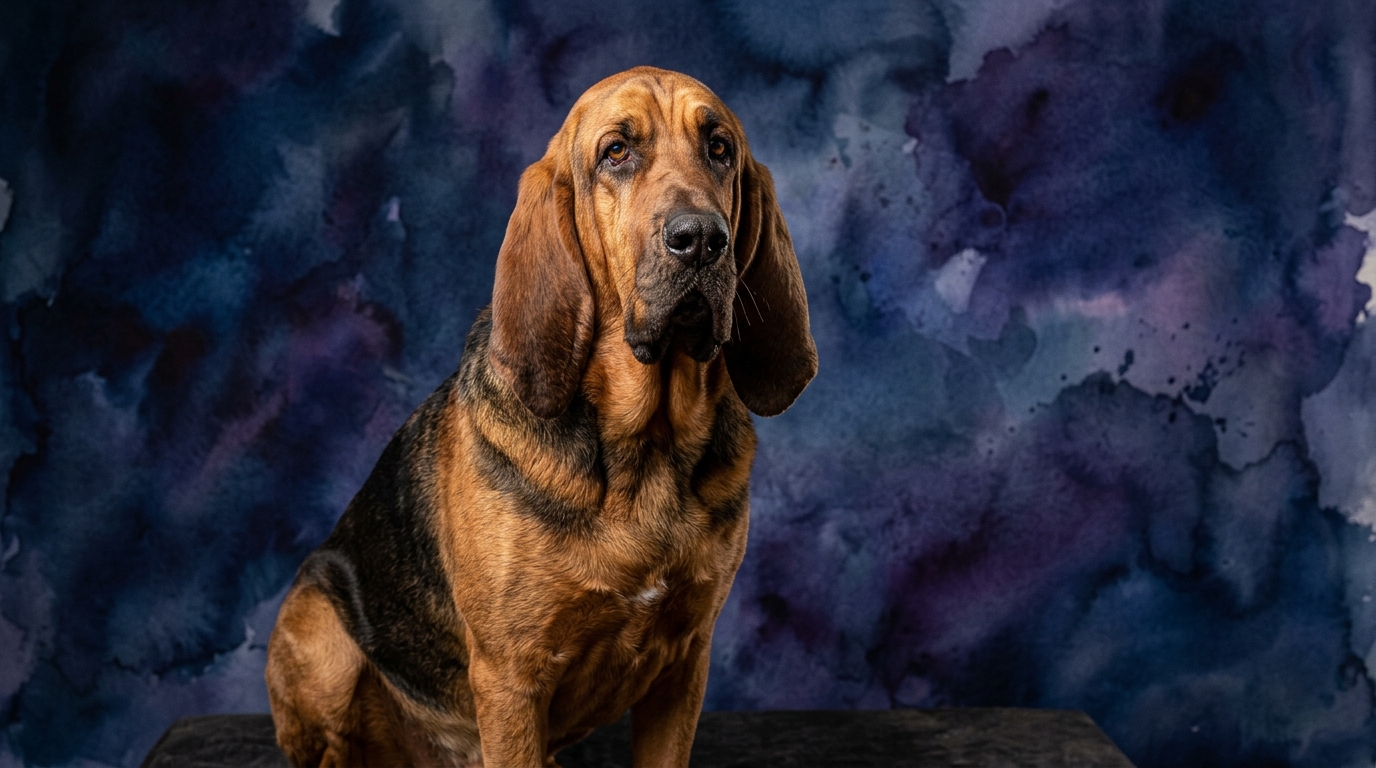
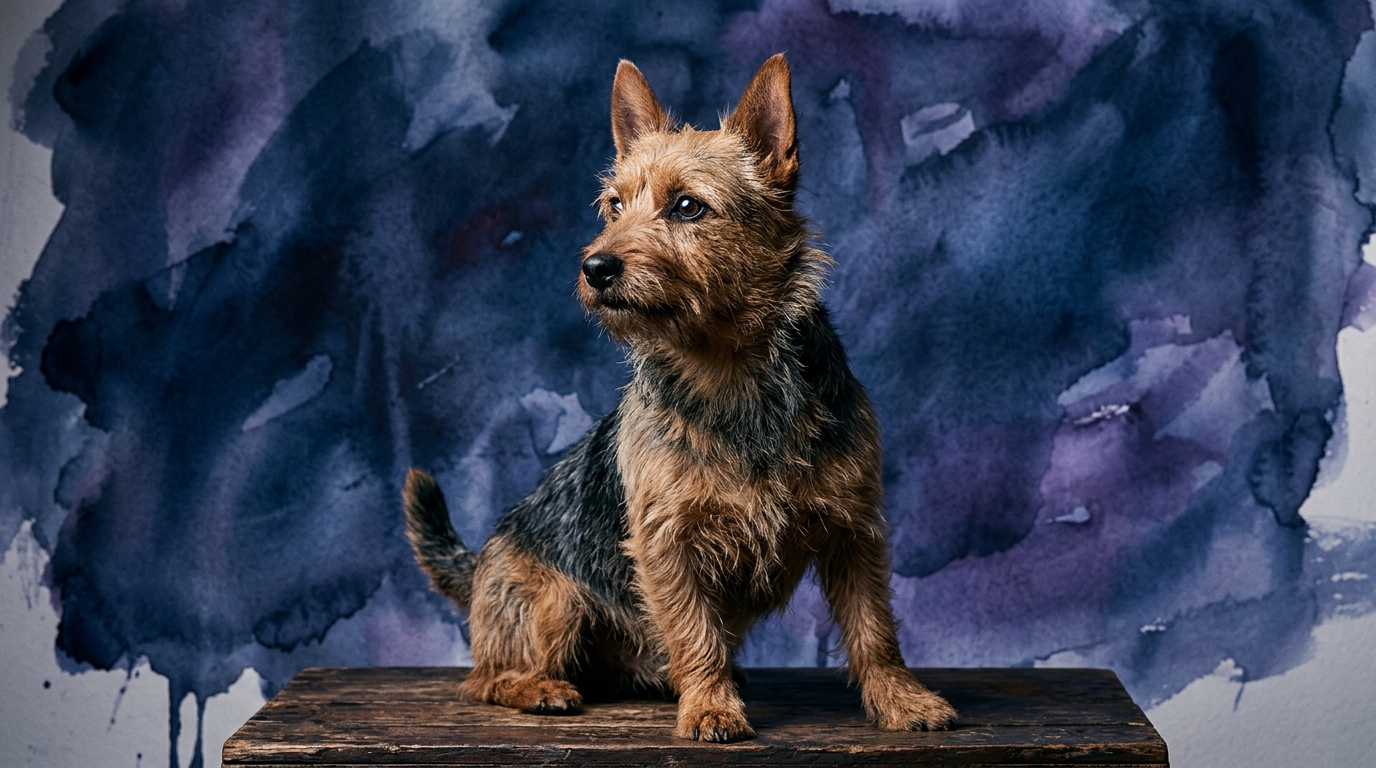
Side-by-Side IQ Profile: Bloodhound vs. Australian Terrier
The Cosmic Pet Pet IQ Lab employs a five-dimensional framework to assess canine intelligence, offering a nuanced view beyond simple obedience. Let's examine how the Bloodhound and Australian Terrier measure up across these cognitive pillars.
For the **Bloodhound**, a breed recognized for its exceptional olfactory capabilities, the IQ profile is highly specialized. Its **Problem Solving** scores a perfect 5/5, but this is almost exclusively applied to scent-related challenges, such as piecing together fragmented olfactory information over vast distances and time. **Training Speed** is notably low at 1/5, reflecting their intense focus on scent which often overrides other stimuli. **Social Intelligence** is 2/5; while generally amiable, their primary drive isn't nuanced social cues or seeking constant approval. Their **Instinctive Drive** is an overwhelming 5/5, dominated by an innate, relentless compulsion to track. Finally, **Memory** is also a perfect 5/5, specifically for recalling and distinguishing scents over long periods and through significant environmental interference, crucial for their tracking prowess.
The **Australian Terrier**, a versatile terrier breed, presents a more balanced cognitive profile. Its **Problem Solving** is rated 3/5, indicating a moderate ability to figure out how to access toys, navigate obstacles, or achieve desired outcomes through observation and trial-and-error. **Training Speed** also stands at 3/5, meaning they are generally responsive to new commands and learn at a moderate pace, neither exceptionally quick nor particularly stubborn. **Social Intelligence** is likewise 3/5; they possess a moderate degree of social awareness, capable of understanding human moods and enjoying interaction. Their **Instinctive Drive** is 3/5, retaining a typical terrier inclination for digging, chasing small prey, and asserting themselves, but generally manageable. Their **Memory** is 3/5, reflecting a typical canine capacity for remembering routines, commands, and familiar individuals and associations.
Where the Bloodhound Excels Cognitively
The Bloodhound's cognitive superiority lies in its profound specialization, particularly in its problem-solving and memory related to scent. Its 5/5 score in Problem Solving isn't about general aptitude but an unparalleled mastery of olfactory deduction. A Bloodhound's mind is a sophisticated instrument for reconstructing narratives from scent molecules, capable of distinguishing individual human scents amidst a cacophony of environmental odors, and following a specific trail even when it's hours or days old, or crossed by countless others. This requires an internal mapping system and a form of deductive reasoning based entirely on scent information, far beyond what most breeds can achieve.
This specialized problem-solving is intrinsically linked to their extraordinary 5/5 Memory. Their memory isn't just for commands; it's an expansive, detailed catalog of scents, allowing them to recall and recognize specific scent signatures from past encounters with remarkable accuracy. This ability to retain complex, nuanced sensory data is critical for their work, enabling them to pick up a cold trail and persist where others would fail. The Bloodhound's cognitive architecture is a testament to natural selection honing a singular, powerful intelligence for a specific, demanding task.
Where the Australian Terrier Excels Cognitively
The Australian Terrier's cognitive strengths stem from its adaptable and balanced intelligence, making it a more versatile companion in a typical household. While the Bloodhound's mind is a highly specialized tool, the Australian Terrier demonstrates a broader application of its cognitive abilities across various domains. Its moderate 3/5 Training Speed means it's generally more receptive to learning a variety of commands and cues, adapting its behavior to different situations and human expectations with greater ease than a Bloodhound.
Furthermore, the Australian Terrier's 3/5 Social Intelligence is more attuned to general human interaction and social dynamics. They tend to read human moods and intentions more readily, making them more responsive and engaging partners in daily life. This breed can pivot from one task to another, engaging with various forms of enrichment without being solely fixated on one drive, offering a more well-rounded cognitive experience for owners seeking a companion that integrates smoothly into diverse family environments and participates actively in a wider range of activities.
Training Dynamics: Which is Easier and Why
When evaluating ease of training, the Australian Terrier generally presents a more straightforward experience for the average owner. Its moderate Training Speed (3/5) reflects a willingness to engage and learn, making it responsive to standard positive reinforcement techniques. Australian Terriers typically enjoy the interaction involved in training sessions and are motivated by praise and treats, allowing for a relatively consistent learning curve. Their moderate Instinctive Drive (3/5) means that while they possess terrier tenacity, it can be more readily managed and redirected compared to a Bloodhound’s overwhelming compulsion.
In stark contrast, the Bloodhound's Training Speed is remarkably low (1/5). This isn't due to a lack of cognitive capacity, but rather an intense specialization. Their powerful Instinctive Drive (5/5) to track overrides nearly all other stimuli, making it incredibly challenging to gain and hold their attention for traditional obedience. A Bloodhound's nose dictates its world, and if a compelling scent is present, no amount of 'sit' or 'stay' will easily break their concentration. Training a Bloodhound demands extraordinary patience, a deep understanding of their scent-driven nature, and often requires specialized techniques that leverage their natural instincts rather than trying to suppress them. Their lower Social Intelligence (2/5) also means they are less motivated by human approval compared to breeds that thrive on closer social connection during training.
Matching Breeds to Lifestyles: Active vs. Relaxed Owners
For owners seeking a highly active partner, the Bloodhound demands a specific kind of engagement that goes beyond mere physical exercise. An 'active owner' for a Bloodhound isn't just someone who enjoys long runs; it's someone committed to providing intensive, specialized mental and physical stimulation centered around their profound Instinctive Drive (5/5) for scent work. This means regular, purposeful tracking exercises, often requiring dedicated time in varied environments to allow their Problem Solving (5/5) and Memory (5/5) to truly shine. A Bloodhound left without this vital outlet will likely become restless and potentially destructive, as its powerful cognitive machinery searches for its intended purpose.
Conversely, the Australian Terrier is a far better match for what might be considered a 'relaxed owner' or one seeking a more versatile companion. While they are energetic and enjoy play and daily walks, their needs are not as singularly specialized or demanding as the Bloodhound's. Their balanced Instinctive Drive (3/5) means they can be satisfied with moderate daily activity, a mix of indoor play, and neighborhood strolls. They are content to relax indoors with their family after their exercise needs are met, making them adaptable to a wider range of lifestyles without requiring a dedicated 'job' to fulfill their cognitive potential.
The Verdict
Choose a Bloodhound if you are a dedicated, patient individual passionate about scent work, prepared to channel their extraordinary olfactory problem-solving and memory into purposeful tracking activities. They are for those who appreciate a specialized, independent canine mind above all else.
Opt for an Australian Terrier if you seek a balanced, adaptable companion with moderate intelligence across the board, capable of integrating smoothly into family life with moderate training and exercise. They are for owners who value versatility and a generally easier-to-manage temperament.
🧠 Find Your Pet's IQ Score
Our Pet IQ Lab assessment covers 25+ tests across 5 cognitive dimensions — personalized to your breed.
Take the Full IQ Test →Frequently Asked Questions
Is a Bloodhound's low training speed a sign of low intelligence?
No, a Bloodhound's low training speed (1/5) is not indicative of low intelligence. Instead, it reflects their highly specialized cognitive focus. Their intense instinctive drive (5/5) for scent work often overrides their attention to human commands, meaning their intelligence is channeled into a singular, powerful purpose rather than broad obedience.
How does the Australian Terrier's social intelligence compare in a family setting?
The Australian Terrier's moderate social intelligence (3/5) makes them well-suited for family life. They are generally responsive to human interaction, capable of understanding basic social cues, and enjoy being part of the family unit, forming strong bonds without being overly demanding or aloof.
Can an Australian Terrier be trained for scent work like a Bloodhound?
While an Australian Terrier can certainly learn basic scent games and enjoy nose work as an enrichment activity, their instinctive drive (3/5) and specialized memory (3/5) for scent are not comparable to the Bloodhound's (5/5 in both). They lack the Bloodhound's profound genetic predisposition and cognitive architecture built for complex, persistent tracking tasks.