
The Cosmic Pet Pet IQ Lab: Bloodhound vs. Basenji Profiles
The Cosmic Pet Pet IQ Lab employs a nuanced framework to assess canine intelligence, moving beyond simple obedience to explore five distinct cognitive dimensions. This granular approach helps us understand how breeds like the Bloodhound and Basenji, despite belonging to the same Hound group and having similar Coren ranks (Bloodhound #74, Basenji #78), exhibit unique mental architectures. Let's delve into their specific IQ profiles.
The **Bloodhound** profile paints a picture of a specialized genius: Problem Solving 5/5, Training Speed 1/5, Social Intelligence 2/5, Instinctive Drive 5/5, and Memory 5/5. This breed's exceptional problem-solving is almost entirely dedicated to unraveling complex scent puzzles, a testament to their singular focus. Their training speed is low because their primary drive often overrides an interest in human-directed commands, and their social intelligence score reflects a strong internal world, less attuned to subtle human social cues. However, their instinctive drive for scent work is unparalleled, supported by an extraordinary memory for trails and environmental details.
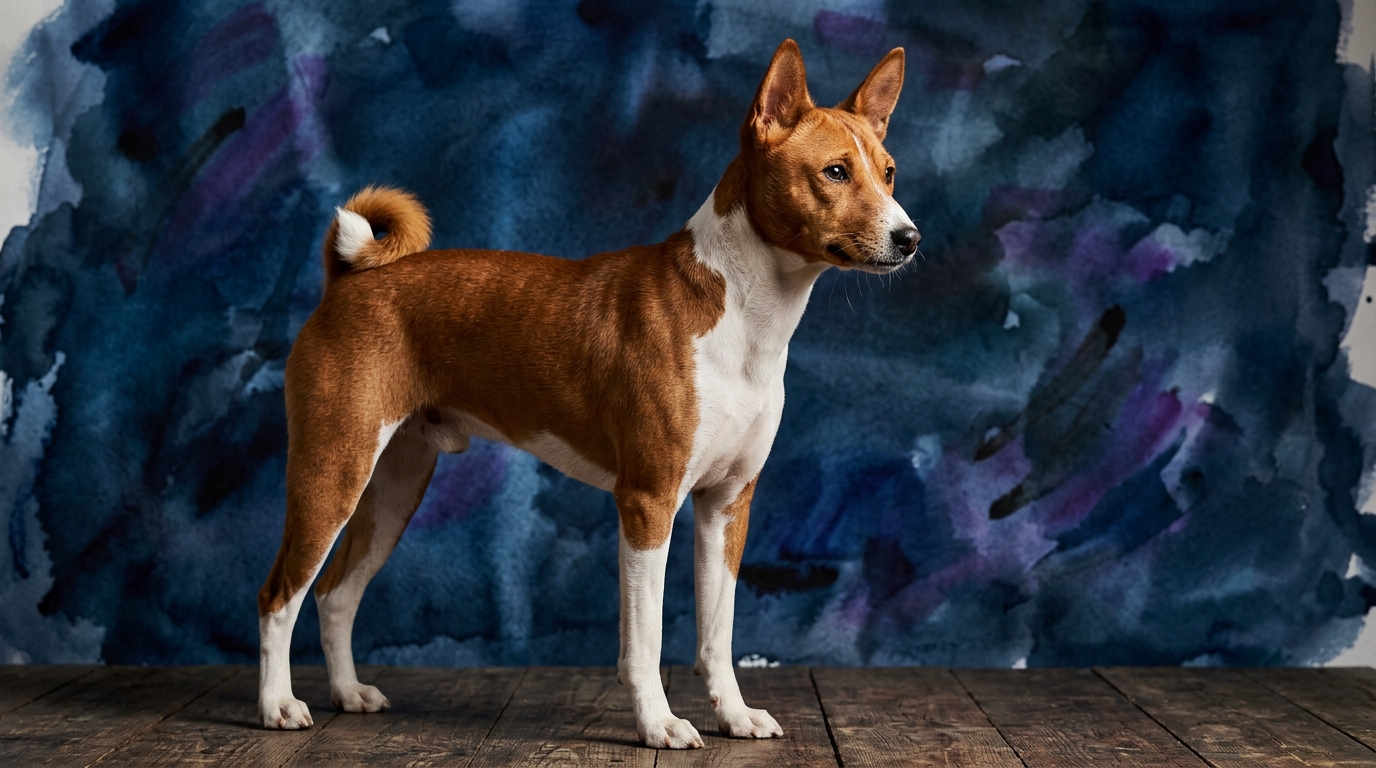
In contrast, the **Basenji** presents a slightly different cognitive fingerprint: Problem Solving 5/5, Training Speed 1/5, Social Intelligence 3/5, Instinctive Drive 5/5, and Memory 4/5. Like the Bloodhound, the Basenji possesses formidable problem-solving skills, but theirs are typically applied to achieving personal goals, often through clever, resourceful, and sometimes mischievous means. Their training speed is equally low, stemming from an independent, cat-like nature rather than a scent-driven distraction. A slightly higher social intelligence suggests they are more aware of human dynamics, though still very much their own dog. Their instinctive drive is powerful, often expressed as a strong prey drive, and their memory, while not quite Bloodhound-level for scent trails, is robust for routines, people, and effective strategies.
Where the Bloodhound Excels Cognitively
The Bloodhound's cognitive strengths are profoundly linked to their primary function: tracking. Their **Memory (5/5)** is truly exceptional, particularly concerning scent. They can recall incredibly intricate scent paths, remembering subtle changes in odor, the direction of travel, and the age of a trail over vast distances and extended periods. This isn't just remembering a command; it's a complex, multi-sensory recall system that allows them to piece together an invisible narrative in the environment. This specialized memory is a cornerstone of their unparalleled tracking ability, distinguishing them significantly.
While both breeds score 5/5 for general problem solving, the Bloodhound's **Scent-based Problem Solving** is a specific cognitive triumph. Their ability to systematically work through a complex scent puzzle, ignoring distractions and persevering through challenging terrain, demonstrates a unique application of problem-solving intelligence. It’s a deep, focused cognitive effort dedicated to a single, profound task, showcasing an unwavering mental dedication that few other breeds can match in their specific domain.
Where the Basenji Shows Cognitive Edge
The Basenji's cognitive advantages lean towards a more generalized, independent cleverness. Their **Social Intelligence (3/5 vs Bloodhound's 2/5)**, while still indicating an independent spirit, suggests a slightly keener awareness of human social dynamics. Basenjis are often observed to be more attuned to their owners' moods, subtle cues, and household routines, allowing them to navigate family life with a bit more finesse, even if they often choose to act on their own terms. This slight edge means they might integrate into complex human households with a marginally better understanding of the social landscape.
The Basenji’s **General Problem Solving (5/5)** is distinct from the Bloodhound’s hyper-specialized scent work. Basenjis are masters at devising their own solutions to achieve desired outcomes, whether it's figuring out how to open a cabinet, outsmart a baby gate, or manipulate situations to their advantage. Their problem-solving is often driven by curiosity and self-interest, demonstrating a versatile and adaptive intelligence in navigating their immediate environment and human interactions, rather than solely focusing on an external sensory trail.
Training: A Test of Patience for Both Hounds
When it comes to training speed, both the Bloodhound and Basenji score a challenging 1/5, indicating that neither breed is traditionally 'easy' to train in the conventional obedience sense. The reasons, however, differ. The Bloodhound's low training speed is predominantly due to their immense **instinctive drive for scent**. Once a Bloodhound catches a scent, their world narrows to that singular pursuit, making it incredibly difficult to divert their attention to 'sit' or 'stay' commands. Their nose is their master, and traditional obedience training often feels irrelevant to their core purpose. Training a Bloodhound requires leveraging their scent drive, perhaps by incorporating scent games into obedience, but rarely will they offer the eager-to-please attitude seen in some other breeds.
The Basenji's 1/5 training speed stems from their profound **independence and self-interest**. Often described as cat-like, Basenjis are not motivated by a strong desire to please their human companions. They will perform a command if they perceive a clear benefit to themselves, whether it's a high-value treat, a favored toy, or the removal of an undesirable situation. Rote repetition or commands that seem pointless to them are often met with disinterest or outright refusal. Training a Basenji requires immense creativity, positive reinforcement, and a deep understanding of what truly motivates them, focusing on making training a game rather than a chore.
Lifestyle Match: Active Engagement vs. Independent Spirit
Matching a dog's cognitive profile with an owner's lifestyle is crucial for a harmonious relationship. For the **Bloodhound**, owners must be prepared for an active engagement that goes beyond simple physical exercise; it requires active mental stimulation through their nose. These dogs need long, purposeful walks or training sessions where they can engage their formidable scenting abilities. They are not content with a casual stroll around the block; they need to 'work' with their nose. Owners who are dedicated to tracking, search and rescue, or extensive scent work will find the Bloodhound an unparalleled partner. Their stamina and singular focus mean they thrive with owners who embrace and facilitate their natural instincts, rather than trying to suppress them.
The **Basenji**, while also requiring significant physical activity to burn off their energetic hound nature, suits owners who appreciate an independent and clever companion. They enjoy runs, hikes, and dog sports that challenge both their body and mind. However, their activity needs can be met with a wider variety of outlets compared to the Bloodhound's specialized demands. They can be content with sufficient indoor mental challenges and play, provided they get their exercise. Basenjis thrive with owners who enjoy a dog with a distinct personality, a touch of mischief, and who are willing to engage in playful problem-solving. They are not dogs that demand constant attention in the way some breeds do, making them suitable for owners who appreciate a dog that can entertain itself but still requires dedicated exercise and mental enrichment.
The Verdict
Choose a Bloodhound if you are dedicated to providing extensive scent work, tracking opportunities, and appreciate a dog with singular focus and immense stamina for a specific, demanding task.
Choose a Basenji if you seek an independent, clever, and sometimes mischievous companion who enjoys mental challenges and physical activity, and you appreciate a dog with a unique personality that doesn't always seek to please.
🧠 Find Your Pet's IQ Score
Our Pet IQ Lab assessment covers 25+ tests across 5 cognitive dimensions — personalized to your breed.
Take the Full IQ Test →Frequently Asked Questions
Are Bloodhounds good family dogs?
Yes, Bloodhounds are generally gentle and tolerant with children and other pets, though their single-minded pursuit of scent can make them oblivious to their surroundings. Supervision is often needed to prevent accidental knocks due to their focus.
Why is the Basenji called the 'barkless dog'?
Basenjis don't bark in the conventional sense; instead, they produce a unique yodel-like sound, often described as a chortle or a baroo, which is a distinctive vocalization for the breed.
Do Bloodhounds really have a 5/5 memory?
Yes, specifically regarding scent recall. Their memory allows them to track incredibly complex and aged scent trails, remembering specific turns and nuances over vast distances and time, which is crucial for their work.