Side-by-Side IQ Profile: Bloodhound vs. Bullmastiff
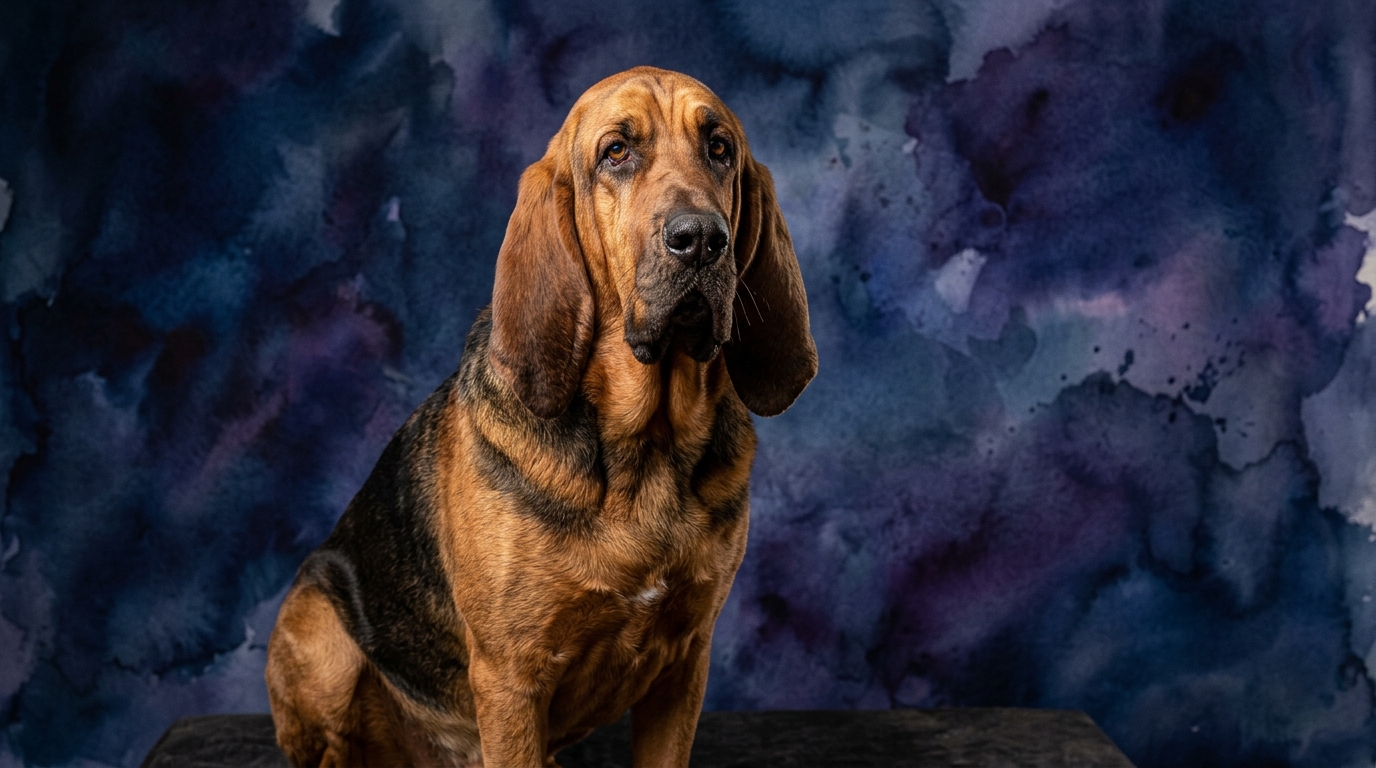
To truly appreciate the cognitive distinctions between the Bloodhound and the Bullmastiff, we must examine their individual profiles across five key dimensions of The Cosmic Pet Pet IQ Lab. The Bloodhound, with a Coren rank of #74, exhibits a highly specialized intellect. Its Problem Solving score of 5/5 reflects an extraordinary capacity to navigate complex environmental puzzles, not through abstract logic, but by meticulously interpreting and following intricate scent trails, often over vast distances and varied terrains. This involves sophisticated pattern recognition and a remarkable ability to deduce the path of a quarry. However, its Training Speed is rated a low 1/5. This isn't due to a lack of capacity, but rather an overwhelming, singular focus on scent, making them inherently difficult to redirect or motivate for conventional obedience tasks when their nose is engaged. Their Social Intelligence at 2/5 indicates they are often more absorbed in their sensory world than in human social cues; while generally gentle, their primary connection is often with the trail. The Instinctive Drive is a perfect 5/5, epitomizing their relentless, unyielding pursuit of a scent, a drive that defines their very existence. Finally, their Memory is also 5/5, showcasing a profound ability to recall specific scent profiles, track patterns, and even re-engage old trails with surprising accuracy.
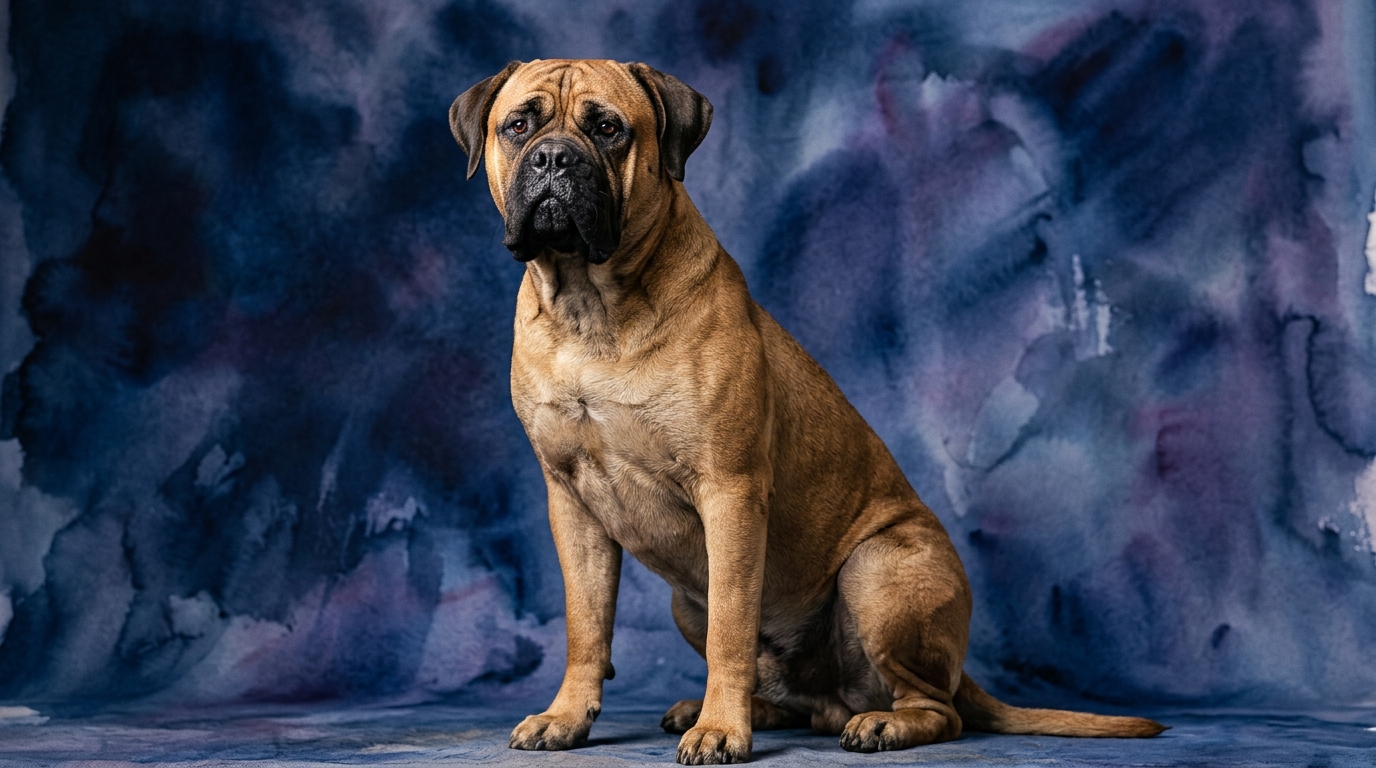
In contrast, the Bullmastiff, ranking #69 on the Coren scale, presents a more balanced and generalized intelligence. Its Problem Solving score of 3/5 signifies a practical aptitude for overcoming everyday challenges, such as figuring out how to access a favorite toy or navigate household obstacles, without the same specialized deduction seen in the Bloodhound's scent work. Their Training Speed is a moderate 3/5, indicating a reasonable ability to learn and retain commands with consistent, clear instruction. They are generally responsive and willing to cooperate, though not exceptionally fast learners. The Bullmastiff's Social Intelligence also stands at 3/5, reflecting a good awareness of their family's dynamics and moods, making them attentive companions, though they can be reserved with strangers. Their Instinctive Drive is rated 3/5, primarily manifesting as a strong, but manageable, protective instinct towards their home and family, rather than a singular, all-consuming urge. Lastly, their Memory is a solid 3/5, allowing them to remember learned behaviors, routines, and family members effectively, contributing to their reliability as a household companion.
Where the Bloodhound Excels Cognitively
The Bloodhound's cognitive superiority undeniably lies in its unparalleled sensory processing and retention, reflected in its perfect 5/5 scores for Problem Solving, Instinctive Drive, and Memory. Their problem-solving isn't about abstract logic, but a profound capacity to interpret, follow, and reconstruct complex scent narratives across varied terrains and conditions. This involves intricate spatial reasoning and an ability to filter out overwhelming environmental distractions to focus solely on the target odor. Their instinctive drive is so potent that it fuels an almost obsessive dedication to a task, allowing them to work tirelessly for hours, a trait few other breeds can match. Furthermore, their memory isn't just for basic commands; it's a vast archive of scent profiles and trail patterns, enabling them to retrace steps or pick up old trails with surprising accuracy, showcasing a highly specialized form of long-term recall.
Where the Bullmastiff Shows Cognitive Strengths
While the Bloodhound specializes, the Bullmastiff demonstrates a more balanced and adaptable cognitive profile, particularly in areas crucial for a companion and guardian. Its 3/5 scores across Problem Solving, Training Speed, Social Intelligence, Instinctive Drive, and Memory highlight a pragmatic, well-rounded intellect. The Bullmastiff's advantage is most evident in its relative ease of training compared to the Bloodhound (3/5 vs. 1/5). They are more receptive to learning general obedience commands and responding to human direction, indicating a greater willingness to engage in cooperative tasks. Their social intelligence (3/5 vs. 2/5) means they are generally more attuned to household dynamics and human emotional states, making them more responsive family members. This breed's protective instincts, while strong, are also more controllable and less singular in focus than the Bloodhound's scent drive, allowing for a more versatile application of their cognitive resources in a home environment.
Training Dynamics: Which is Easier and Why?
Comparing training ease, the Bullmastiff clearly presents a less demanding path for the average owner, primarily due to its moderate Training Speed (3/5) and Social Intelligence (3/5) scores. Bullmastiffs possess a distinct willingness to please their human companions and tend to form strong bonds that facilitate cooperative learning. They respond well to consistent, positive reinforcement methods and clear communication, making them capable of mastering a range of obedience commands and house rules at a reasonable pace. Their protective instincts, while requiring proper socialization, are generally directed and manageable within a family context. In stark contrast, the Bloodhound's Training Speed score of 1/5 is a significant indicator of the challenges involved. Their overwhelming instinctive drive (5/5) to follow a scent often overrides any desire to comply with human commands, especially once a compelling odor is detected. A Bloodhound's mental focus is so profoundly dedicated to its nose that breaking that concentration for obedience work demands extraordinary patience, creativity, and a deep understanding of their unique motivations. They are not 'stubborn' in a malicious sense, but rather profoundly 'distracted' by their primary cognitive function, making conventional training a marathon of repetition and redirection.
Matching Breeds to Owner Lifestyles
Understanding which breed aligns with an owner's lifestyle requires careful consideration of their activity levels, both physical and mental. For owners who are active in a specific, task-oriented way, particularly those interested in scent work, tracking, or engaging in extensive, specialized training, the Bloodhound can be an immensely rewarding, albeit challenging, companion. Their powerful instinctive drive and need for mental stimulation through scent require owners to be proactive in providing outlets for these natural behaviors, often involving long walks with sniffing opportunities or dedicated tracking exercises. A relaxed owner, however, might quickly find themselves overwhelmed by a Bloodhound's relentless nose and independent nature, as an underexercised or under-stimulated Bloodhound can become restless and prone to following their nose into mischief. Conversely, the Bullmastiff is an excellent match for owners who appreciate a more relaxed, but still engaged, companionship. While they benefit from regular walks and playtime, their exercise needs are moderate, and they are generally content to spend quiet time with their family. Their balanced social intelligence and moderate instinctive drive make them less prone to independent excursions motivated by an overpowering scent. Owners seeking a loyal, attentive guardian who is trainable for general household manners and enjoys a calmer pace of life would find the Bullmastiff a more fitting choice, without the extreme mental demands associated with managing a Bloodhound's singular focus.
The Verdict
Opt for a Bloodhound if you are an experienced, dedicated owner prepared to channel a powerful, independent scent drive into structured activities like tracking, valuing a dog's unparalleled sensory abilities over immediate obedience.
Select a Bullmastiff if you seek a loyal, protective companion with a balanced temperament, moderate exercise needs, and a greater receptiveness to general obedience training within a family setting.
🧠 Find Your Pet's IQ Score
Our Pet IQ Lab assessment covers 25+ tests across 5 cognitive dimensions — personalized to your breed.
Take the Full IQ Test →Frequently Asked Questions
Is a Bloodhound difficult to manage for a first-time dog owner?
A Bloodhound can be challenging for a novice owner due to its intense independent scent drive and low training speed. Its specialized cognitive focus requires significant patience and a commitment to structured scent activities to prevent behavioral issues.
Do Bullmastiffs require a lot of exercise to stay mentally stimulated?
Bullmastiffs have moderate exercise needs; regular walks and playtime are usually sufficient for their physical well-being. Their mental stimulation comes more from family interaction and light training rather than intense physical activity or specialized tasks.
Which breed is better for a family with young children?
The Bullmastiff, with its balanced social intelligence and protective instincts, often adapts well to family life and can be a gentle guardian with proper socialization. Bloodhounds, while generally good-natured, might be less attentive to children due to their intense focus on scent, and their size requires supervision.