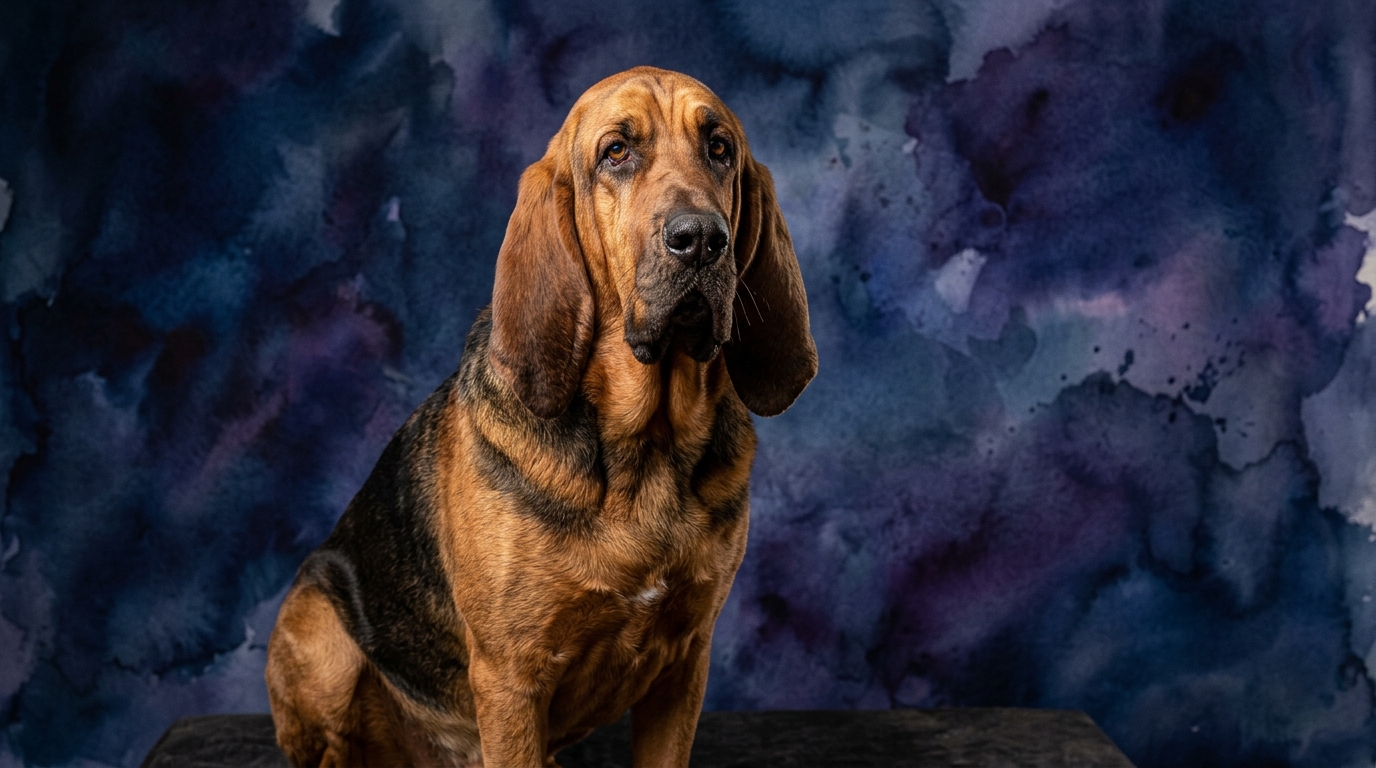
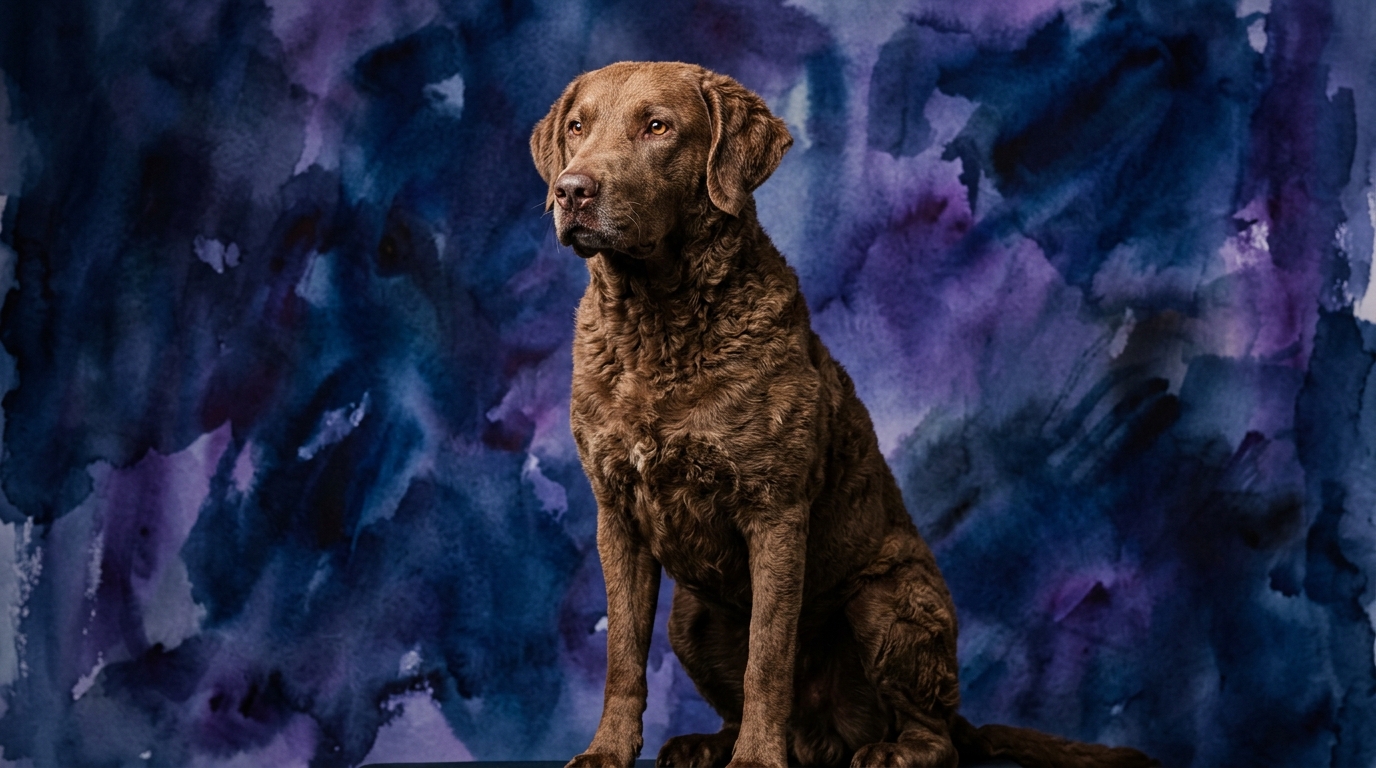
Side-by-Side IQ Profile: Bloodhound vs. Chesapeake Bay Retriever
At The Cosmic Pet Pet IQ Lab, we evaluate canine intelligence across five key dimensions. The Bloodhound, with a Coren rank of #74, presents a specialized cognitive profile: its Problem Solving is a perfect 5/5, reflecting an unparalleled ability to navigate complex scent trails and overcome obstacles to reach a target. Training Speed, however, stands at 1/5, indicating a strong independent streak and a disinterest in repetitive drills. Social Intelligence is 2/5, suggesting a focus on their primary task rather than overt human-centric interaction, though they are gentle companions. Instinctive Drive is a formidable 5/5, entirely centered on tracking and following a scent to its conclusion, while Memory is also a 5/5, allowing them to retain intricate scent patterns and recall vast scent libraries over time.
The Chesapeake Bay Retriever, holding a higher Coren rank of #27, showcases a more balanced and versatile intelligence. Its Problem Solving registers at 4/5, demonstrating a strong capacity to figure out tasks, particularly those related to retrieving and working independently in varied environments. Training Speed is a robust 4/5, meaning they grasp new commands and routines with relative ease and enthusiasm. Social Intelligence is 3/5, indicating a balanced ability to connect with humans and understand social cues, though they can be reserved with strangers. Instinctive Drive is 3/5, channeled primarily into retrieving, swimming, and outdoor activities, but less singularly focused than the Bloodhound's scent drive. Memory is 4/5, allowing them to recall complex sequences of retrieves, locations, and learned behaviors effectively.
Where the Bloodhound Wins Cognitively
The Bloodhound's cognitive superiority shines brightest in domains requiring sustained, independent problem-solving driven by an extraordinary olfactory sense. Their perfect 5/5 in Problem Solving is inextricably linked to their 5/5 Instinctive Drive for scent work; they possess an unparalleled capacity to decipher intricate scent puzzles, navigating diverse terrains and distractions for hours or even days. This isn't about human-directed puzzle toys, but about the profound, self-directed mental mapping and analytical processes involved in following a cold trail, filtering out extraneous smells, and identifying a specific target scent amidst environmental chaos. Coupled with a 5/5 Memory, a Bloodhound can recall a scent signature and its associated path for extended periods, making them the gold standard for tracking and search-and-rescue operations where human intervention might hinder rather than help. Their cognitive strength lies in this deep, primal, and incredibly effective form of specialized intelligence.
Where the Chesapeake Bay Retriever Wins Cognitively
The Chesapeake Bay Retriever, with its higher Coren rank, demonstrates a broader, more adaptable cognitive profile suited to versatile working roles. Its 4/5 in Training Speed is a clear advantage, indicating a quicker understanding of human commands and a greater willingness to perform learned tasks. This makes them significantly more amenable to complex obedience, agility, and competitive activities where rapid learning and consistent execution are paramount. Their 3/5 Social Intelligence also outpaces the Bloodhound, allowing for a more nuanced understanding of human social cues and a greater desire for cooperative interaction, which is crucial for a dog expected to work closely with a handler in dynamic situations. While their Problem Solving at 4/5 is slightly lower than the Bloodhound's, it's a more generalized, practical problem-solving that applies to various tasks, from complex retrieves in challenging conditions to figuring out how to open a gate. This adaptability and eagerness to engage in diverse learning scenarios are where the Chessie truly excels.
Which is Easier to Train and Why
There's a significant divergence in trainability between these two breeds, largely dictated by their respective IQ scores in Training Speed and Social Intelligence. The Chesapeake Bay Retriever, with its 4/5 Training Speed and 3/5 Social Intelligence, is considerably easier to train. Chessies are eager to please their handlers, quickly grasp new commands, and thrive on positive reinforcement and structured learning. They enjoy the cooperative process of training and are motivated by working alongside their human partners, making them responsive to a variety of training methods.
In stark contrast, the Bloodhound's 1/5 Training Speed and 2/5 Social Intelligence present a formidable training challenge. Their primary motivation is their nose, and once on a scent, external commands often become secondary. They possess an independent, single-minded focus on tracking, making them notoriously difficult to redirect or interrupt during scent work. Training a Bloodhound requires immense patience, understanding of their drives, and creative methods to make training feel like an extension of their natural instincts rather than a command-and-response exercise. Their lower social intelligence means they are less intrinsically motivated by human approval and more by their own internal drive, demanding a different approach to engagement and compliance.
Which Suits Active Owners vs. Relaxed Owners
Both breeds generally suit active owners, but the type of activity differs profoundly. A Bloodhound requires an owner who is not just active, but dedicated to providing outlets for its unparalleled scenting abilities. This means regular, long "sniffaris," scent work trials, or even participation in search and rescue. A relaxed owner who cannot commit to rigorous mental and physical scent-based exercise will find a Bloodhound frustrated and potentially destructive, as its 5/5 Instinctive Drive needs a constructive outlet. Their exercise isn't about running miles for physical exertion as much as it is about using their nose relentlessly.
The Chesapeake Bay Retriever also needs an active owner, but one whose activities align with a more traditional working dog. This includes daily vigorous exercise like running, swimming, and retrieving games. They thrive on structured activities like hunting, dock diving, agility, or competitive obedience. A Chessie will become bored and potentially disruptive if not given ample physical and mental stimulation that utilizes their retrieving instincts and problem-solving skills. Neither breed is suited for a truly "relaxed" owner who prefers minimal engagement; both demand significant time, energy, and commitment to their specific cognitive and physical needs to be well-adjusted companions.
The Verdict
Choose a Bloodhound if you are captivated by the profound world of scent and are prepared to dedicate yourself to nurturing an unparalleled tracking instinct, valuing independent problem-solving over traditional obedience.
Choose a Chesapeake Bay Retriever if you seek a highly trainable, versatile working companion for active, cooperative pursuits like hunting, water sports, or competitive dog sports, appreciating their balanced intelligence and eagerness to engage.
🧠 Find Your Pet's IQ Score
Our Pet IQ Lab assessment covers 25+ tests across 5 cognitive dimensions — personalized to your breed.
Take the Full IQ Test →Frequently Asked Questions
Are Bloodhounds stubborn?
Bloodhounds are often perceived as stubborn due to their single-minded focus on scent and low training speed, but it's more accurately described as an intense, independent drive. Once their nose is engaged, they prioritize following a trail above all else, making redirection challenging. This isn't malicious disobedience but a deep-seated instinct.
Can a Chesapeake Bay Retriever be a good family dog?
Yes, Chesapeake Bay Retrievers can be devoted family dogs, particularly with active families who understand their need for mental and physical stimulation. They can be reserved with strangers but are loyal and protective of their own, though early socialization is crucial. Their high energy and strong personality require consistent training and boundaries.
Which breed requires more grooming?
The Bloodhound, with its loose skin and long ears, requires more diligent grooming to prevent skin infections and ear issues, including regular cleaning of folds and ears. The Chesapeake Bay Retriever has a dense, oily double coat that is relatively low maintenance but sheds seasonally and benefits from regular brushing to manage loose hair and maintain coat health.