
Side-by-Side Cognitive Profiles
The Cosmic Pet Pet IQ Lab employs a five-dimensional framework to assess canine intelligence, offering a nuanced perspective on each breed's mental makeup. For the Bloodhound, ranked #74 by Coren, its profile highlights extreme specialization. Their Problem Solving ability rates a perfect 5/5, reflecting an unparalleled capacity to decipher complex scent puzzles and navigate intricate trails. This is intrinsically linked to their Instinctive Drive, also a 5/5, which fuels their relentless pursuit of a scent. Their Memory, another 5/5, allows them to retain vast amounts of olfactory information and past trail experiences. However, this intense focus comes at a cognitive cost in other areas: Training Speed is a low 1/5, as their primary drive often overrides human commands, and Social Intelligence scores 2/5, indicating less emphasis on subtle social cues or complex interpersonal navigation.
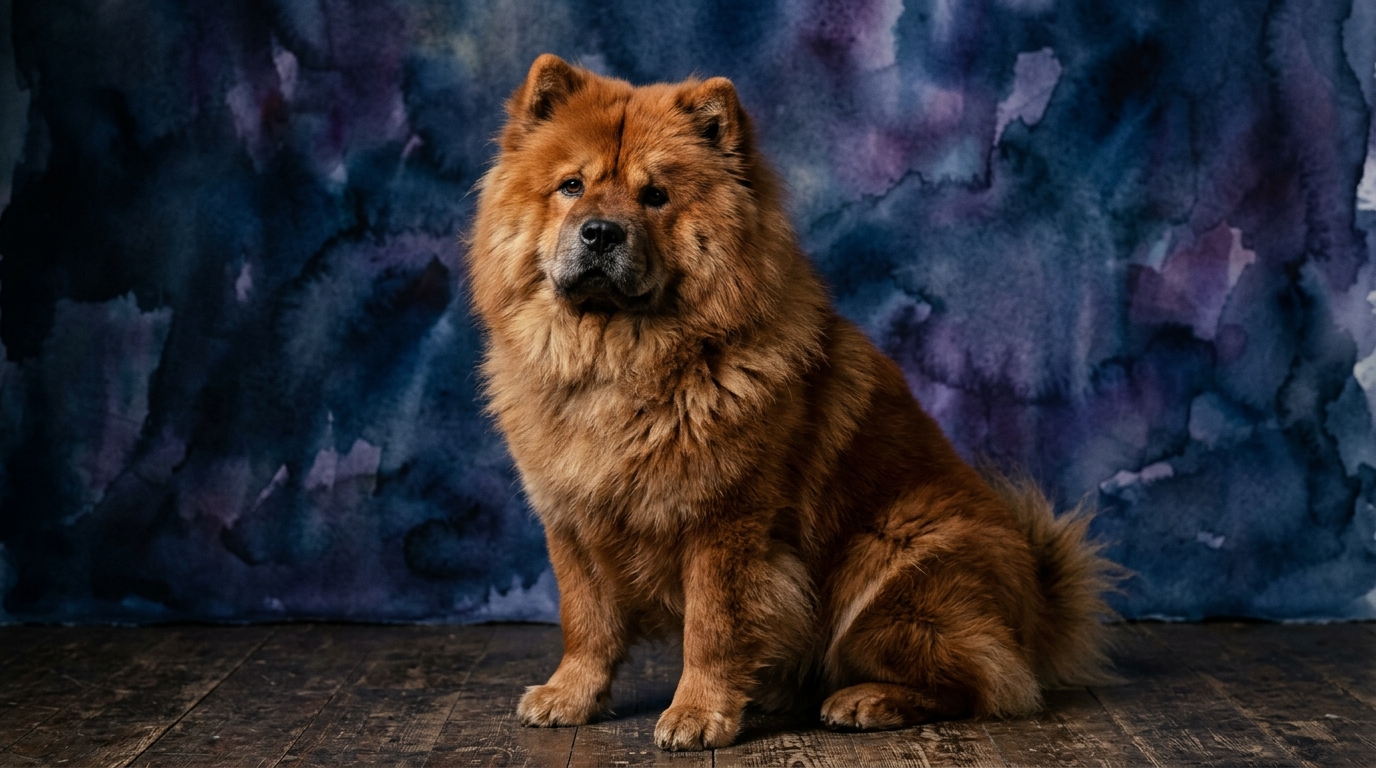
In contrast, the Chow Chow, with a Coren rank of #76, presents a remarkably balanced cognitive profile, scoring 3/5 across all five dimensions. Their Problem Solving at 3/5 suggests a competent ability to figure out challenges, though not with the Bloodhound's specialized intensity. Training Speed at 3/5 indicates they are capable learners, responding to consistent instruction without the extreme difficulty of some highly driven breeds. Social Intelligence, also 3/5, points to a capacity for understanding and engaging in social interactions, albeit often with a reserved demeanor. Their Instinctive Drive, rated 3/5, is moderate, allowing them to follow their impulses without being overwhelmingly single-minded. Finally, Memory at 3/5 means they retain information adequately, without the Bloodhound's exceptional recall for specific, highly detailed sensory input.
Where the Bloodhound's Cognition Excels
The Bloodhound's cognitive superiority lies unequivocally in its olfactory processing and the intricate problem-solving tied to scent work. Their 5/5 in Problem Solving isn't about abstract logic puzzles, but about constructing a coherent narrative from dispersed scent molecules, discerning individual tracks amidst a cacophony of odors, and overcoming environmental obstacles to maintain a trail. This unique talent is powered by an Instinctive Drive that compels them to follow a scent regardless of distraction or fatigue, a level of singular focus rarely seen in other breeds. Their 5/5 Memory is not just for commands, but for the vast library of scents they encounter, allowing them to recall specific individuals or past trails with astonishing accuracy, a critical asset in their historical role as trackers.
Furthermore, their ability to sustain high-level cognitive function during prolonged, physically demanding tasks is exceptional. A Bloodhound can mentally 'map' a complex search area, integrating new scent information with existing memories to refine its pursuit. This isn't just brute instinct; it's a sophisticated application of sensory data, spatial reasoning, and persistent goal-directed behavior, all driven by a genetic imperative to follow a scent to its conclusion.
Where the Chow Chow's Cognition Shines
The Chow Chow's cognitive strengths stem from its balanced profile, particularly its more adaptable Social Intelligence and moderate Instinctive Drive. While not excelling in a single, specialized domain like the Bloodhound, the Chow Chow's 3/5 in Social Intelligence means they are generally more attuned to the nuances of human household dynamics, capable of forming strong, if reserved, bonds and understanding social boundaries within a family unit. This moderate social cognition allows them to integrate more seamlessly into diverse living situations compared to a breed whose primary drive often overshadows social considerations.
Their 3/5 in Problem Solving, while not tracking-focused, implies a practical intelligence for navigating daily life, understanding household routines, and making independent judgments about their environment, often in a protective capacity. This cognitive balance means they are less prone to being overwhelmed by a single, all-consuming drive, allowing for a broader range of learned behaviors and a more generalized understanding of their role within a human family. They can process information across different domains—social, environmental, and instructional—without one overwhelming the others, leading to a more consistently adaptable mental performance.
Training: Bloodhound vs. Chow Chow
When it comes to ease of training, the Chow Chow generally presents a less formidable challenge than the Bloodhound, primarily due to their respective Training Speed scores of 3/5 and 1/5. The Bloodhound's exceptionally low training speed is a direct consequence of its overwhelming instinctive drive (5/5). Once a Bloodhound catches a scent, its cognitive resources are almost entirely dedicated to following that trail, making it notoriously difficult to interrupt or redirect with conventional obedience commands. Their minds are wired for independent, single-minded pursuit, meaning that while they *can* learn, it requires immense patience, specialized techniques, and an acceptance that their nose will almost always take precedence.
The Chow Chow, with a Training Speed of 3/5, is certainly not the easiest breed to train, often described as independent and sometimes stubborn. However, their moderate instinctive drive (3/5) means they are less likely to be completely deaf to commands when their attention is engaged elsewhere. They respond best to consistent, positive reinforcement methods and thrive on clear, fair boundaries. While they may not offer the eager-to-please attitude of some other breeds, their balanced cognitive profile allows for a more straightforward path to basic obedience and household manners, as their internal motivations are not as overwhelmingly singular as the Bloodhound's.
Matching Breeds to Lifestyles: Active vs. Relaxed Owners
The choice between a Bloodhound and a Chow Chow significantly depends on an owner's lifestyle and what they seek in a canine companion. Bloodhounds are ideally suited for highly active owners who are not only physically robust but also mentally prepared to engage with a breed driven by an almost insatiable desire to follow a scent. These owners should be passionate about scent work, tracking, or activities that channel the Bloodhound's intense instinctive drive and problem-solving prowess. They require extensive, secure outdoor space and a commitment to daily, long, leashed walks or scenting exercises, as their noses will lead them astray if given the chance. Their low social intelligence also means they might not be the most nuanced house guest, requiring consistent guidance on appropriate interactions.
Conversely, Chow Chows typically suit more relaxed owners who appreciate a dignified, independent, and often reserved companion. While they benefit from regular walks and mental stimulation, their exercise requirements are moderate compared to the Bloodhound's. Owners should be patient, consistent, and understand the Chow Chow's propensity for a more self-possessed demeanor rather than an overtly eager-to-please one. Their balanced social intelligence means they can integrate well into a calm household with proper socialization, making them suitable for individuals or families seeking a loyal, somewhat aloof presence that doesn't demand constant, high-octane engagement or specialized work.
The Verdict
Choose the Bloodhound if you are a dedicated, active owner passionate about canine scent work and prepared for a highly driven, independent companion with specialized cognitive strengths in tracking.
Opt for the Chow Chow if you prefer a more reserved, independent, and balanced companion who integrates into a relaxed household with consistent training and socialization.
🧠 Find Your Pet's IQ Score
Our Pet IQ Lab assessment covers 25+ tests across 5 cognitive dimensions — personalized to your breed.
Take the Full IQ Test →Frequently Asked Questions
Is a Bloodhound difficult to manage?
Yes, Bloodhounds can be challenging to manage due to their overwhelming instinctive drive to follow scent and their low training speed. They require a dedicated owner prepared for their single-minded focus and need for secure environments to prevent them from wandering.
Do Chow Chows enjoy training?
Chow Chows can enjoy training, but they are not typically as eager to please as some other breeds. With their moderate training speed, they respond best to patient, positive reinforcement methods and consistent routines, often preferring to work on their own terms.
Which breed is better with children?
Neither breed is universally recommended as 'easy' with children; both require careful socialization and supervision. The Chow Chow's balanced social intelligence can make them a composed family member with proper upbringing, while the Bloodhound's intense focus on scent might make them less attuned to subtle child interactions.