Side-by-side IQ profile
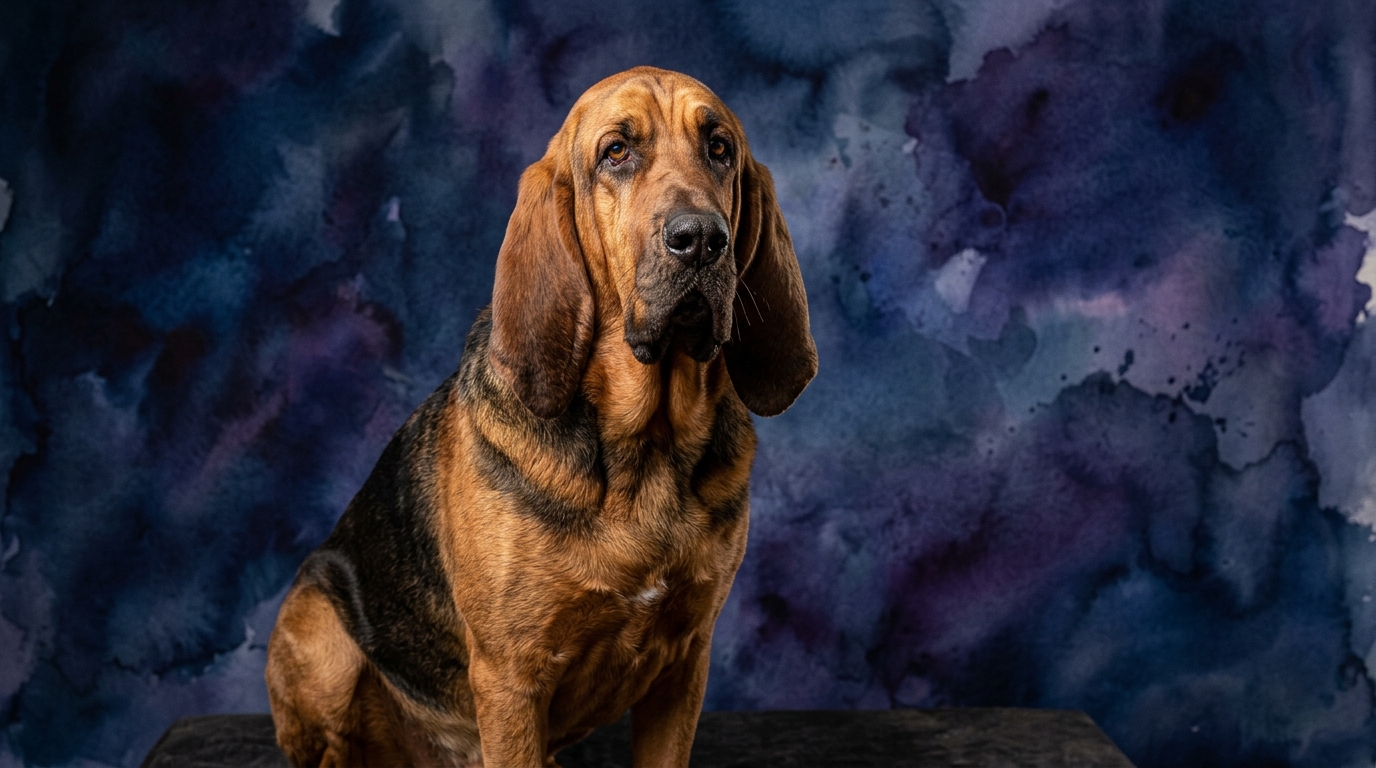
The Bloodhound, a majestic dog of the Hound group, presents a unique cognitive blueprint dominated by its olfactory prowess. Its Problem Solving ability earns a perfect 5/5, reflecting an unparalleled capacity to decipher complex scent trails, navigating intricate environments and overcoming obstacles with unwavering focus to locate a target. However, this intense specialization comes with trade-offs in other areas.
With a Training Speed of just 1/5, the Bloodhound learns traditional commands slowly; its independent nature and single-minded pursuit of scent often override a desire for human-directed tasks, requiring immense patience and highly specialized, motivation-driven training techniques. Social Intelligence, rated 2/5, indicates they are amiable but not highly attuned to subtle human social cues, often prioritizing their nose over social interaction. Their Instinctive Drive is a maximal 5/5, entirely centered on tracking, which defines their very being. Finally, their Memory is an exceptional 5/5, allowing them to recall intricate scent profiles, trail specifics, and spatial information with astounding accuracy, crucial for their work.
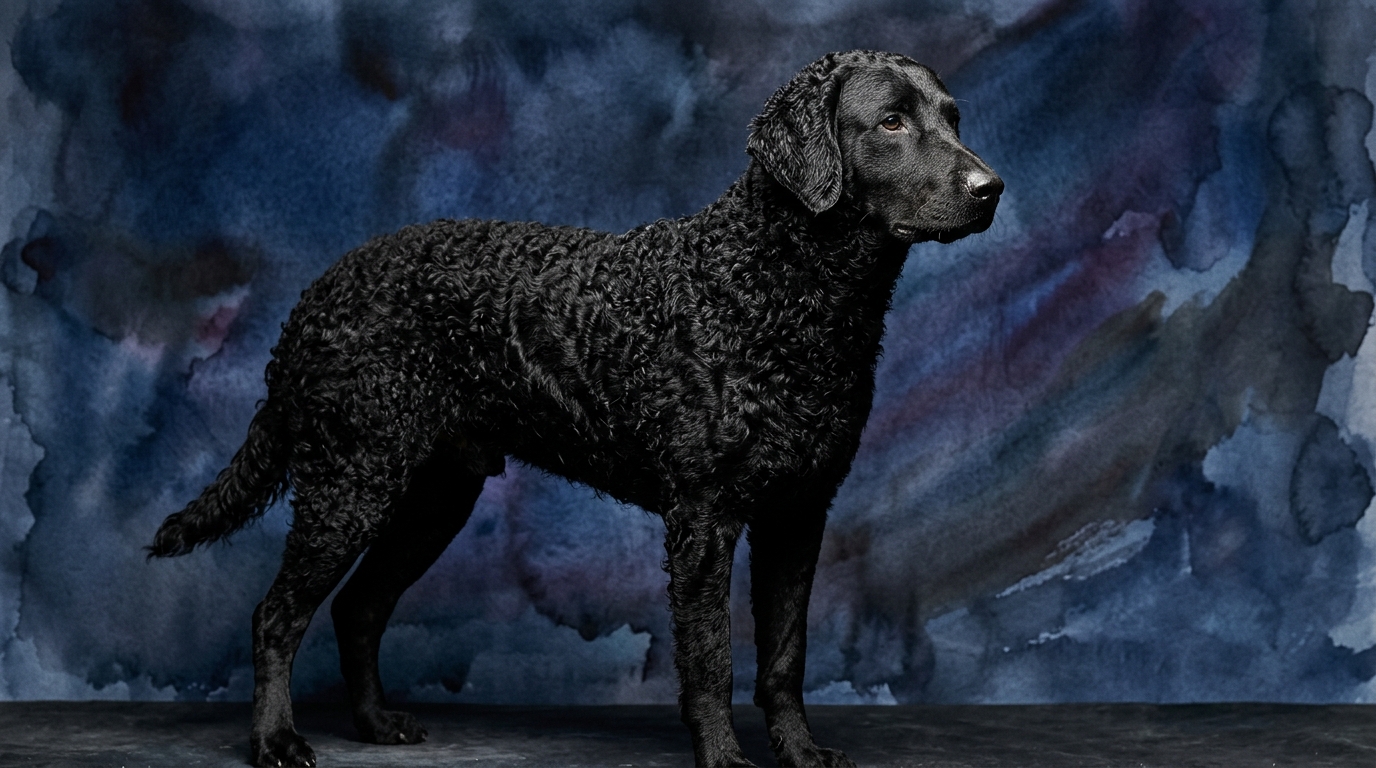
In contrast, the Curly-Coated Retriever, a member of the Sporting group, exhibits a more balanced and adaptable intelligence. Its Problem Solving score of 3/5 reflects a good ability to strategize and figure out tasks, particularly those involving retrieving, navigating obstacles to reach an objective, or understanding multi-step instructions in a practical context. This is a capable, practical intellect.
The Curly's Training Speed is a moderate 3/5, indicating they learn new commands and routines at an average pace, generally responsive to positive reinforcement and willing to engage in training sessions. Their Social Intelligence also scores 3/5, demonstrating a good understanding of human social cues, enjoying interaction, and adapting their behavior based on feedback within a family or working environment. An Instinctive Drive of 3/5 means they possess a strong but manageable desire for retrieving and water work, a drive that can be channeled into various activities rather than dominating their entire cognitive landscape. Their Memory is a strong 4/5, enabling them to reliably recall learned commands, routines, and the locations of objects or people, proving effective in both work and daily life.
Where Bloodhound wins cognitively
The Bloodhound's cognitive superiority lies unequivocally in the domain of olfactory intelligence and sustained, single-minded focus. No other breed can match its capacity for processing, interpreting, and remembering complex scent information over vast distances and prolonged periods. Their problem-solving isn't about varied tasks, but an intense, laser-focused ability to unravel the intricate puzzle of a scent trail, differentiating between countless odors and meticulously following a specific one.
This breed excels in cognitive endurance, demonstrating an unwavering commitment to a task that can span hours, requiring immense mental stamina. Their memory for the nuances of a scent, spatial awareness related to a trail, and the ability to re-engage with an aged or broken track are cognitive feats unmatched by most other dogs. They are true masters of a highly specialized, demanding form of intelligence.
Where Curly-Coated Retriever wins cognitively
The Curly-Coated Retriever's cognitive strengths shine in its versatility and balanced application of intellect across diverse situations. Unlike the Bloodhound's specialized focus, the Curly demonstrates practical problem-solving skills (3/5) that adapt well to varied challenges, from complex retrieving scenarios to learning intricate agility courses. Their intelligence is less about one profound skill and more about a well-rounded aptitude for different types of learning and tasks.
Furthermore, the Curly's moderate social intelligence (3/5) and training speed (3/5) mean they excel in cooperative tasks, readily understanding and responding to human direction. They are quicker to assimilate a broad range of commands and adapt their behavior to different social contexts, making them more pliable and generally easier to integrate into diverse human-centric activities and family dynamics. Their memory (4/5) supports this, allowing them to retain a wide repertoire of learned behaviors.
Which is easier to train and why
Without a doubt, the Curly-Coated Retriever is significantly easier to train for general obedience and a wide range of activities. Their moderate training speed (3/5) indicates a willingness and capacity to learn efficiently, and their social intelligence (3/5) means they are generally keen to please and responsive to human cues and rewards. They enjoy engaging with their handlers, making structured training sessions productive and rewarding for both parties.
The Bloodhound, conversely, presents a formidable training challenge. Their extremely low training speed (1/5) is compounded by an overwhelming instinctive drive (5/5) for scent work, which often overrides any desire to comply with human commands. Their independent nature means they prefer to follow their nose rather than a handler's instruction, requiring exceptional patience, creativity, and a deep understanding of their breed-specific motivations to achieve even basic obedience. Traditional obedience methods often prove frustratingly ineffective.
Which suits active owners vs relaxed owners
Neither breed is suited for truly “relaxed” owners who prefer minimal engagement, as both require significant physical and mental stimulation. However, their activity needs manifest differently. The Bloodhound suits active owners who are specifically dedicated to providing extensive, focused scent work, long walks where they can engage their nose, or participation in tracking sports. Their physical endurance is immense, but their mental needs are primarily olfactory, making them ideal for someone who finds deep satisfaction in specialized canine work.
The Curly-Coated Retriever, while also needing an active lifestyle, is better suited for owners who enjoy a broader range of activities. Their balanced instinctive drive (3/5) means they thrive with varied exercise like hiking, swimming, retrieving games, and participation in dog sports such as agility or obedience. They need consistent physical activity coupled with mental challenges that are more generalist and cooperative, fitting well with owners who want a versatile, engaged companion for diverse outdoor adventures.
The Verdict
Choose the Bloodhound if you are captivated by unrivaled scenting abilities and prepared to dedicate yourself to patient, specialized training that honors their profound olfactory drive.
Opt for the Curly-Coated Retriever if you seek a versatile, biddable companion for diverse outdoor activities and a responsive partner within a dynamic family environment.
🧠 Find Your Pet's IQ Score
Our Pet IQ Lab assessment covers 25+ tests across 5 cognitive dimensions — personalized to your breed.
Take the Full IQ Test →Frequently Asked Questions
Is a Bloodhound difficult to manage due to its strong scent drive?
Yes, a Bloodhound's overwhelming instinctive drive means they will prioritize a compelling scent trail over almost any command, requiring secure containment and diligent leash handling. Their intense focus can make them appear stubborn and challenging for inexperienced owners.
How does the Curly-Coated Retriever's memory compare to other retrievers?
The Curly-Coated Retriever's memory score of 4/5 indicates a strong capacity for recalling commands, routines, and past experiences, placing it well within the capable range for working retrievers. This solid memory contributes to their trainability and adaptability.
Which breed is better for a first-time dog owner?
The Curly-Coated Retriever is generally more suitable for a first-time dog owner due to its moderate training speed and social intelligence, making it more responsive and adaptable to standard training methods. The Bloodhound's extreme independence and specialized drives present a significantly greater challenge.