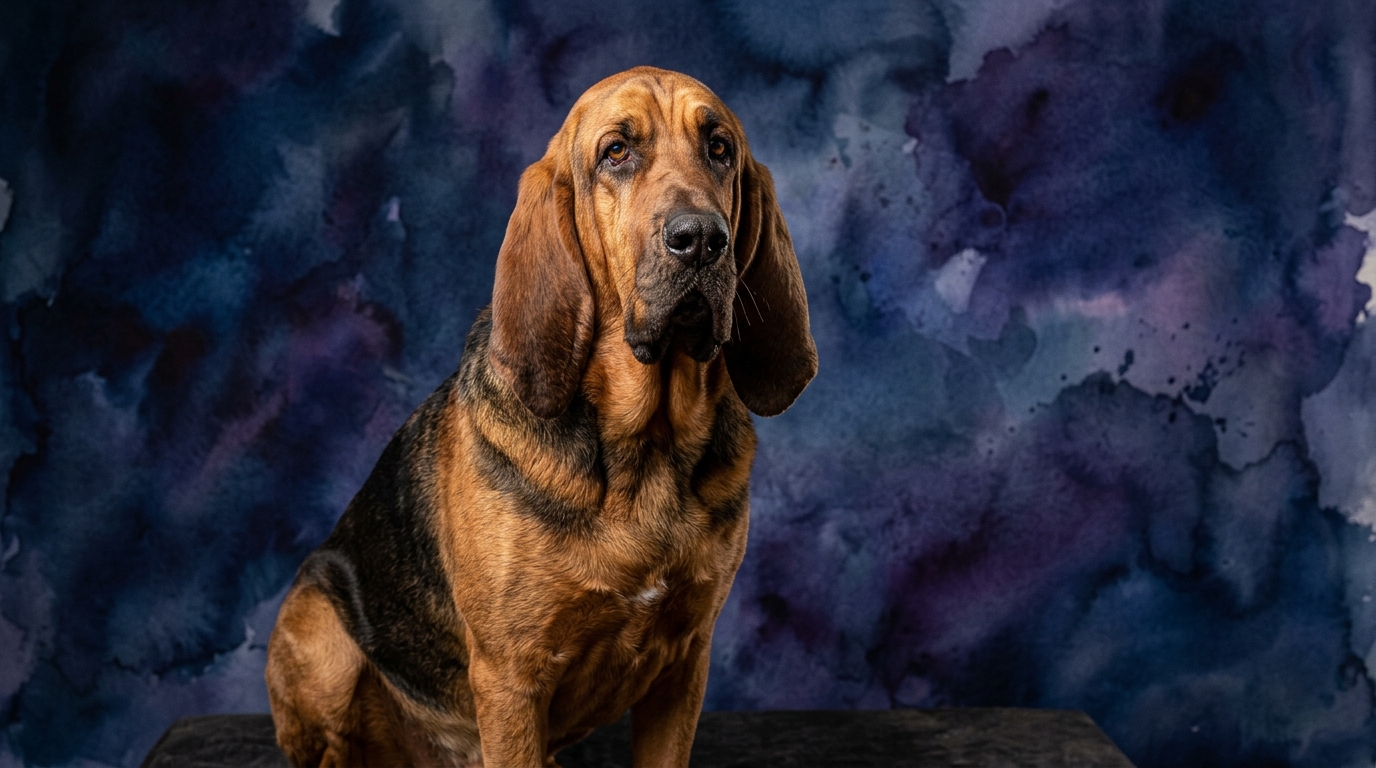
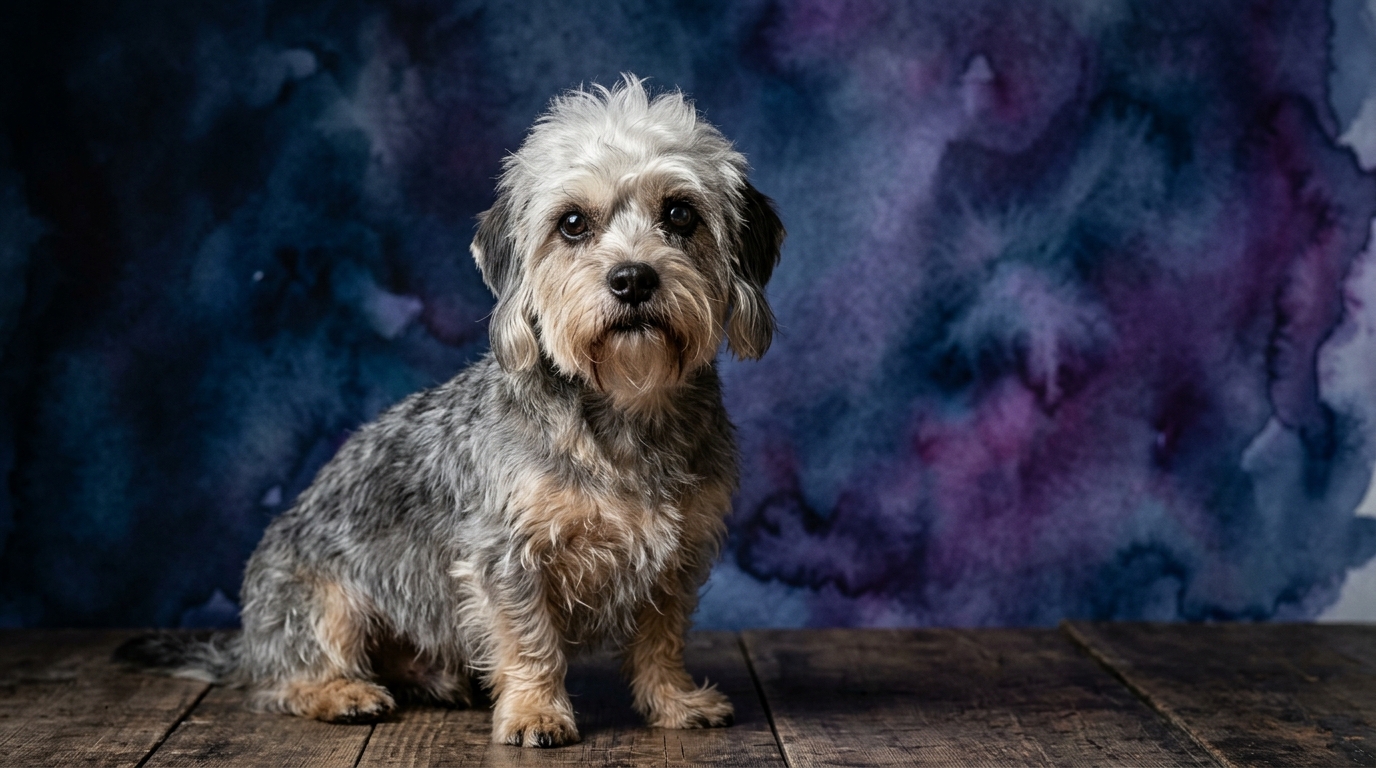
Side-by-Side IQ Profile: Bloodhound vs. Dandie Dinmont Terrier
The Cosmic Pet Pet IQ Lab employs a five-dimensional framework to assess canine intelligence, moving beyond simple obedience to capture a breed's full cognitive landscape. Let's delve into how the Bloodhound and the Dandie Dinmont Terrier measure up.
The **Bloodhound**, a venerable Hound breed, is ranked #74 by Coren, indicating a moderate capacity for working and obedience commands. Our deeper dive reveals a highly specialized intellect. Their Problem Solving is rated an exceptional 5/5, almost entirely geared towards navigating complex scent trails, demonstrating advanced spatial reasoning and persistence in pursuit of an odor. Training Speed, however, is a low 1/5, reflecting their profound independence and singular focus. Social Intelligence registers at 2/5; while generally amiable, their attention is overwhelmingly drawn to environmental scents rather than nuanced human social cues, often appearing aloof. Instinctive Drive is a perfect 5/5, an all-consuming force dictating their existence around scent. Finally, their Memory is also a stellar 5/5, showcasing an unparalleled ability to recall specific scent profiles and intricate trail patterns over long durations.
The **Dandie Dinmont Terrier**, a charming Terrier breed, does not feature on Coren's ranking, suggesting a less conventional or perhaps more balanced approach to learning and obedience. Our IQ metrics paint a picture of a more generalized intellect. Their Problem Solving is a solid 3/5, indicating competence in figuring out practical challenges, like accessing a desired toy or navigating a moderate puzzle. Training Speed also sits at 3/5; they are moderately responsive to learning, capable of mastering commands with consistent, engaging effort. Social Intelligence is rated 3/5, reflecting a balanced ability to read human moods and integrate smoothly into family dynamics, often displaying affection and adaptability. Instinctive Drive is also 3/5, typical of terriers with a drive for hunting small prey and exploring, but not to the overwhelming extent of the Bloodhound. Their Memory is likewise 3/5, good for retaining routines, learned commands, and familiar people or places, without the extreme specialization of the Bloodhound’s olfactory recall.
Where the Bloodhound Wins Cognitively
The Bloodhound's cognitive superiority lies unequivocally within the realm of olfaction and sustained, single-minded pursuit. Their 5/5 Problem Solving isn't about fetching a remote; it's about dissecting a complex aromatic tapestry, identifying a target scent, and devising a route through varied terrain to follow it. This involves sophisticated spatial mapping and an ability to filter out countless distracting odors. Their 5/5 Memory is astounding in this context, allowing them to recall the specific 'signature' of a lost person or animal, even days later, and re-engage with a trail that has been interrupted or degraded. For tasks requiring unparalleled sensory discrimination, such as distinguishing a specific human scent among hundreds in a crowded urban environment or tracking a faint trail over miles of wilderness, the Bloodhound's specialized intellect is unmatched. No other breed approaches their capacity for sustained mental focus on a singular, scent-driven objective, demonstrating a cognitive endurance that is truly exceptional.
Where the Dandie Dinmont Terrier Wins Cognitively
The Dandie Dinmont Terrier's cognitive strengths shine in their adaptability and balanced intelligence, making them more versatile across a wider array of domestic and general canine tasks. Their 3/5 Problem Solving is practical and immediate, enabling them to navigate household challenges or figure out how to gain attention more readily than a scent-obsessed Bloodhound might. The Dandie's 3/5 Social Intelligence means they are generally more attuned to human emotional states and social cues, allowing for a more reciprocal and nuanced companionship. They can adjust to new routines, people, or environments with greater ease, demonstrating a cognitive flexibility that serves them well in varied family settings. While a Bloodhound might be mentally 'checked out' if not tracking, a Dandie is more present and engaged with their human companions, capable of learning a broader range of tricks and participating in diverse activities that require general cognitive engagement rather than extreme specialization.
Which is Easier to Train and Why?
When it comes to ease of training, the Dandie Dinmont Terrier holds a distinct advantage over the Bloodhound. The Bloodhound's abysmal 1/5 Training Speed is a direct consequence of their overwhelming 5/5 Instinctive Drive. Their brain is hardwired to follow scent, and virtually everything else, including human commands, is secondary. Trying to teach a Bloodhound 'sit' or 'stay' when a compelling scent is present is often an exercise in futility; their focus is almost impossible to redirect. Training requires immense patience, creativity, and often integrating scent work into obedience to even capture their interest. They are not 'eager to please' in the traditional sense; their pleasure comes from fulfilling their tracking imperative. This makes them notoriously challenging for owners seeking a highly obedient companion.
In contrast, the Dandie Dinmont Terrier, with a 3/5 Training Speed, is moderately easier to train. While they possess a typical terrier independence and can be stubborn, their more balanced 3/5 Instinctive Drive means it's not an all-consuming force. Their 3/5 Social Intelligence also plays a crucial role; they are generally more receptive to human interaction and motivated by praise, treats, and companionship. They can learn commands and routines with consistent positive reinforcement and engaging methods. While they may not be as instantly compliant as some working breeds, their cognitive profile allows for a much broader range of trainability and responsiveness to human direction, making them a more manageable student for the average pet owner.
Active Owners vs. Relaxed Owners: Which Breed Suits Whom?
For owners considering a Bloodhound, 'active' takes on a very specific meaning. These dogs require owners who are not just physically active, but mentally dedicated to fulfilling their profound scent drive. A Bloodhound needs daily opportunities for long, meandering 'sniff walks' where they can explore a rich olfactory world, engage in dedicated scent work games, or even participate in formal tracking or search and rescue. Their physical exercise needs are moderate, but their *mental* need for scent engagement is intense. A relaxed owner unable to provide this specific mental outlet will likely find a Bloodhound challenging, leading to frustration for both dog and human, potentially manifesting as destructive behaviors or incessant vocalization due to unfulfilled instincts.
The Dandie Dinmont Terrier offers greater flexibility for owners ranging from moderately active to more relaxed. While they enjoy daily walks and opportunities to explore, their 3/5 Instinctive Drive is manageable and doesn't demand the same singular focus as a Bloodhound's. They are content with a balance of physical activity, such as a brisk walk or playtime in the yard, and quiet companionship indoors. Their balanced cognitive profile allows them to adapt well to a family that enjoys regular outings but also values quiet evenings. A relaxed owner who can commit to consistent daily walks and mental enrichment through toys and training will find a Dandie Dinmont Terrier a charming and adaptable companion, fitting seamlessly into a varied lifestyle.
The Verdict: When to Choose Each Breed
The Verdict
Choose a Bloodhound if you are utterly fascinated by canine olfaction, prepared for a dog whose life revolves around scent, and willing to dedicate significant time and effort to specialized training and activities that engage their unparalleled tracking abilities.
Choose a Dandie Dinmont Terrier if you seek a versatile, charming companion capable of learning a variety of tasks, adapting well to family life, and offering a balanced blend of playful activity and affectionate companionship, without a singular, overwhelming drive dominating their personality.
🧠 Find Your Pet's IQ Score
Our Pet IQ Lab assessment covers 25+ tests across 5 cognitive dimensions — personalized to your breed.
Take the Full IQ Test →Frequently Asked Questions
Is a Bloodhound difficult to live with due to its high instinctive drive?
A Bloodhound's intense instinctive drive for scent requires consistent management and appropriate outlets. If their need to track is not met, they can become restless or destructive, making life challenging for an unprepared owner. Providing ample opportunities for scent work is crucial for their well-being and household harmony.
Can a Dandie Dinmont Terrier participate in dog sports?
Absolutely. With their balanced intelligence, moderate instinctive drive, and decent training speed, Dandie Dinmont Terriers can excel in various dog sports. Agility, earthdog trials, and even obedience or rally are suitable activities that engage their minds and bodies effectively.
How does Coren ranking relate to the IQ scores given here?
Coren's ranking primarily assesses "working and obedience intelligence," focusing on how quickly a dog learns new commands and obeys them. Our IQ scores offer a broader cognitive profile, evaluating dimensions like problem-solving, social intelligence, and instinctive drive, which provide a more nuanced understanding of a breed's overall mental aptitudes beyond just obedience.