
Side-by-Side IQ Profile: Scent vs. Sound
The Cosmic Pet Pet IQ Lab employs a five-dimensional framework to assess canine intelligence, offering a nuanced view beyond simple obedience. For the Bloodhound, a breed Coren-ranked at #74, its profile paints a picture of extreme specialization: Problem Solving 5/5, Training Speed 1/5, Social Intelligence 2/5, Instinctive Drive 5/5, and Memory 5/5. This suggests an animal whose cognitive strengths are intensely focused on a particular domain.
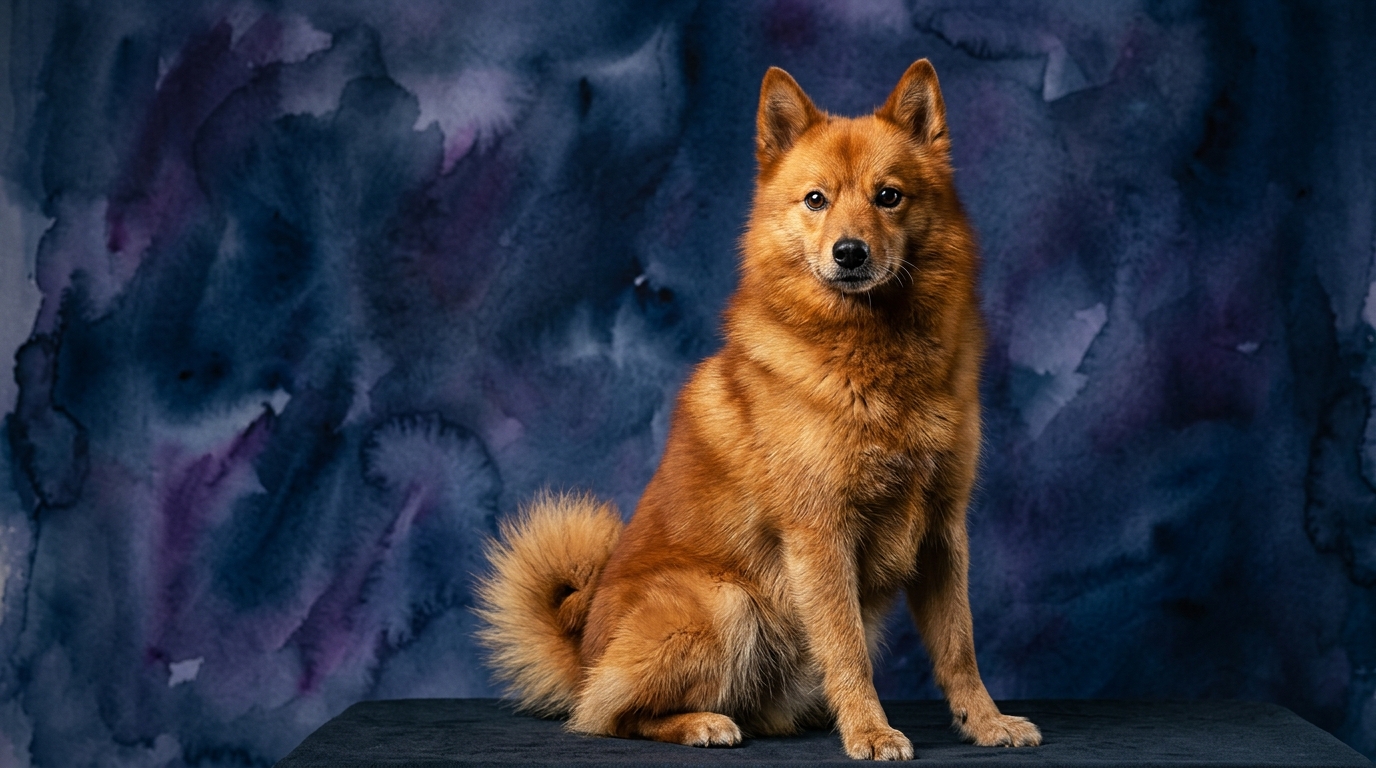
In contrast, the Finnish Spitz, a breed without a specific Coren ranking but with a clear history as a vocal bird dog, presents a more balanced, moderate cognitive profile across the board. Its IQ scores are: Problem Solving 3/5, Training Speed 3/5, Social Intelligence 3/5, Instinctive Drive 3/5, and Memory 3/5. This indicates a generalist, capable across various cognitive tasks without the profound specialization seen in the Bloodhound.
Where the Bloodhound's Cognition Excels
The Bloodhound's cognitive superiority lies unequivocally in its olfactory problem-solving and memory, scoring a perfect 5/5 in both. This isn't merely about detecting a scent; it's about the intricate processing and interpretation of a complex scent trail, often hours or even days old. Their problem-solving involves reconstructing events and trajectories from microscopic scent particles, navigating challenging terrains, and filtering out countless environmental distractions to maintain focus on a singular objective. This cognitive feat is a testament to their unparalleled ability to engage in sustained, high-level sensory analysis, allowing them to follow a specific individual's trail through a crowded urban environment or dense wilderness for miles.
Their 5/5 memory score is intrinsically linked to this drive; it allows them to 'remember' scent profiles and associate them with previous experiences or training, making them incredibly effective in repeated tracking scenarios. This deep, persistent focus on scent, their 5/5 instinctive drive, means their cognitive resources are overwhelmingly dedicated to this task, making them the ultimate specialists in scent detection and trailing. Their mental energy is almost entirely consumed by the intricate world of odors, a domain where their cognitive prowess is truly unmatched.
Where the Finnish Spitz's Cognition Shines
The Finnish Spitz, with its consistent 3/5 scores across all five IQ dimensions, demonstrates a form of practical, adaptable intelligence suited to its historical role as a bird dog and alert companion. While not reaching the extreme specialization of the Bloodhound, its cognitive strengths lie in its balanced approach to environmental interaction and communication. Its 3/5 problem-solving ability is geared towards practical, immediate challenges in a hunting context, such as locating birds, identifying optimal vantage points for barking, and navigating familiar territories effectively.
Their 3/5 social intelligence reflects an awareness of their human family and surroundings, enabling them to be vigilant watchdogs who communicate changes in their environment through their distinctive vocalizations. This isn't just random barking; it's a form of cognitive signaling, alerting owners to perceived threats or novelties. Their moderate instinctive drive (3/5) allows them to engage in bird flushing and barking without becoming overly fixated to the exclusion of other social cues, making them more generally responsive to a varied family life than a highly specialized breed might be. Their cognitive profile suggests a dog capable of making independent decisions within a defined context, rather than relying on constant human direction.
Training Dynamics: Stubborn Pursuit vs. Independent Cooperation
When it comes to ease of training, the Bloodhound (Training Speed 1/5) presents a significant challenge compared to the Finnish Spitz (Training Speed 3/5), primarily due to their profound cognitive specialization and intense instinctive drive. A Bloodhound's brain is wired for scent work; once it locks onto a trail, its cognitive resources are almost entirely consumed by that pursuit. This deep focus means that traditional obedience commands often fall on 'deaf ears' because the dog is literally processing a different reality – the world of scent – rather than human verbal cues. Their low training speed isn't a lack of ability to learn, but rather an extreme prioritization of their instinctive drive over human-directed tasks, making them appear stubborn.
The Finnish Spitz, with its moderate training speed, is generally more amenable to learning standard commands, though its independent nature means it might not always comply with enthusiasm or speed. They possess a keen awareness of their surroundings and a desire to communicate, which can be harnessed in training. However, their 3/5 instinctive drive, particularly their penchant for alert barking, means owners must be consistent and patient, teaching them appropriate times for vocalizations. While they may not learn commands at lightning speed, they are more likely to engage with and retain a broader range of tasks than a Bloodhound, whose cognitive bandwidth is largely reserved for scent.
Lifestyle Match: Dedicated Trailblazers vs. Vocal Companions
For active owners seeking a canine partner for specific, intense tasks, the Bloodhound is a match for individuals who are equally dedicated. Their extreme instinctive drive and problem-solving abilities demand an owner prepared to channel these traits into extensive, regular scent work, whether for sport, search and rescue, or simply for mental enrichment. A relaxed owner will quickly find themselves overwhelmed by a Bloodhound's relentless need to follow its nose, which can lead to destructive behaviors if not properly managed. They require a secure environment where their powerful olfactory drive won't lead them astray, often literally, on an unsupervised trail.
The Finnish Spitz suits owners who appreciate a dog with an independent spirit and a vocal nature. Their moderate activity level and balanced cognitive profile mean they can adapt to a wider range of lifestyles than the Bloodhound, fitting well into active family homes that enjoy outdoor adventures like hiking, but also appreciate a dog that can relax indoors. Owners must, however, be prepared for their consistent vocalizations, which are a key part of their cognitive makeup and communication strategy. They are not for owners seeking a silent, constantly compliant companion, but rather one that engages with its environment and family through sound and keen observation.
The Verdict
Choose the Bloodhound if you are a dedicated, active owner fascinated by the intricacies of scent work, willing to invest significant time and effort into harnessing their unparalleled olfactory and memory skills for specific tasks like trailing or search and rescue.
Opt for the Finnish Spitz if you seek a moderately active, vocal companion with a balanced cognitive profile, appreciating a dog that is alert, communicative, and possesses an independent streak for varied family life.
🧠 Find Your Pet's IQ Score
Our Pet IQ Lab assessment covers 25+ tests across 5 cognitive dimensions — personalized to your breed.
Take the Full IQ Test →Frequently Asked Questions
Is the Bloodhound difficult to train for basic obedience?
Yes, their training speed is rated 1/5. While capable of learning, their intense focus on scent often overrides attention to human commands, requiring immense patience and specialized, motivation-based training methods to achieve basic obedience.
What kind of mental stimulation does a Finnish Spitz need?
A Finnish Spitz benefits from mental stimulation that taps into its moderate problem-solving and instinctive drive, such as puzzle toys, consistent obedience training, and opportunities for 'watchdog' duties or supervised bird flushing. Their social intelligence also means they thrive on interaction with their family.
Can a Bloodhound be a good family pet despite its specific intelligence?
Yes, Bloodhounds can be affectionate family pets, but their primary cognitive drive for scent work must be accommodated. They need owners who understand their need for extensive mental and physical exercise focused on their nose, ensuring a well-adjusted and content family member.