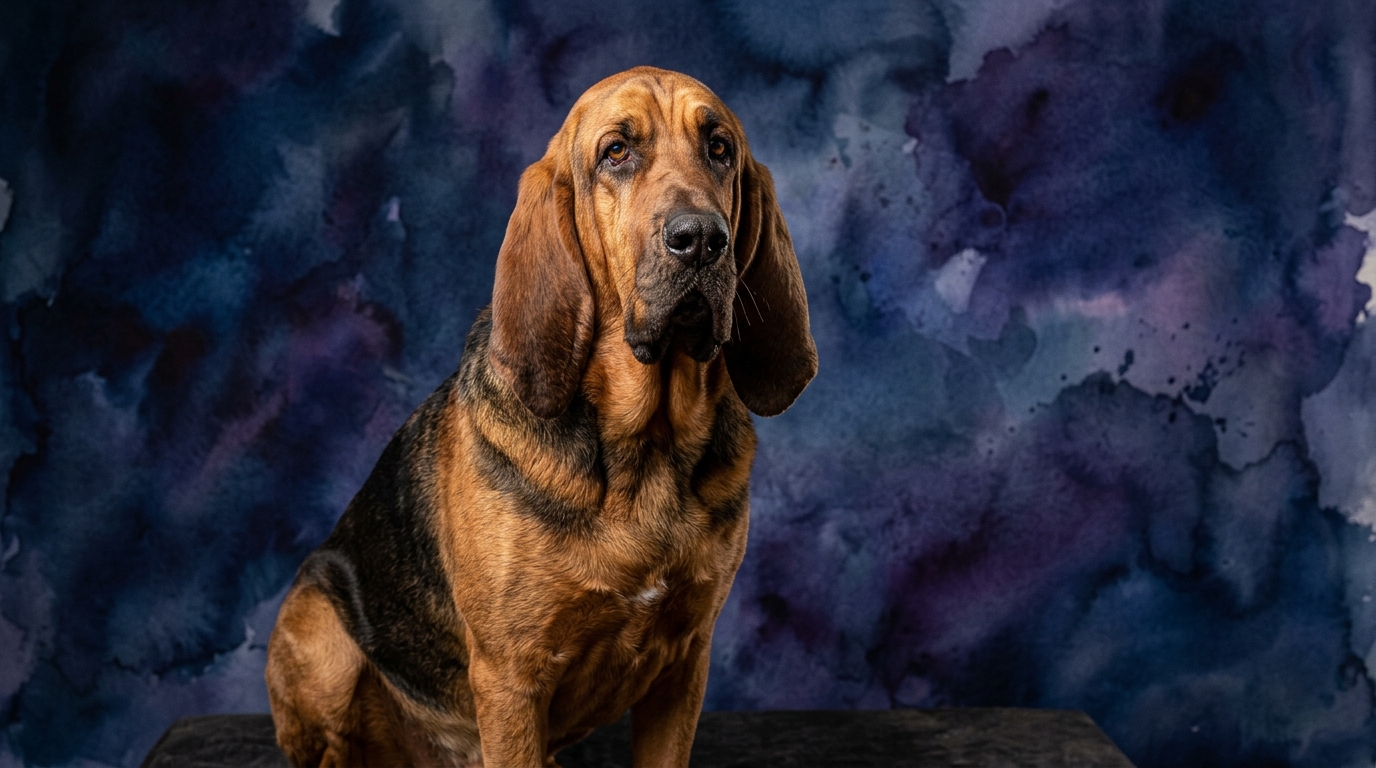
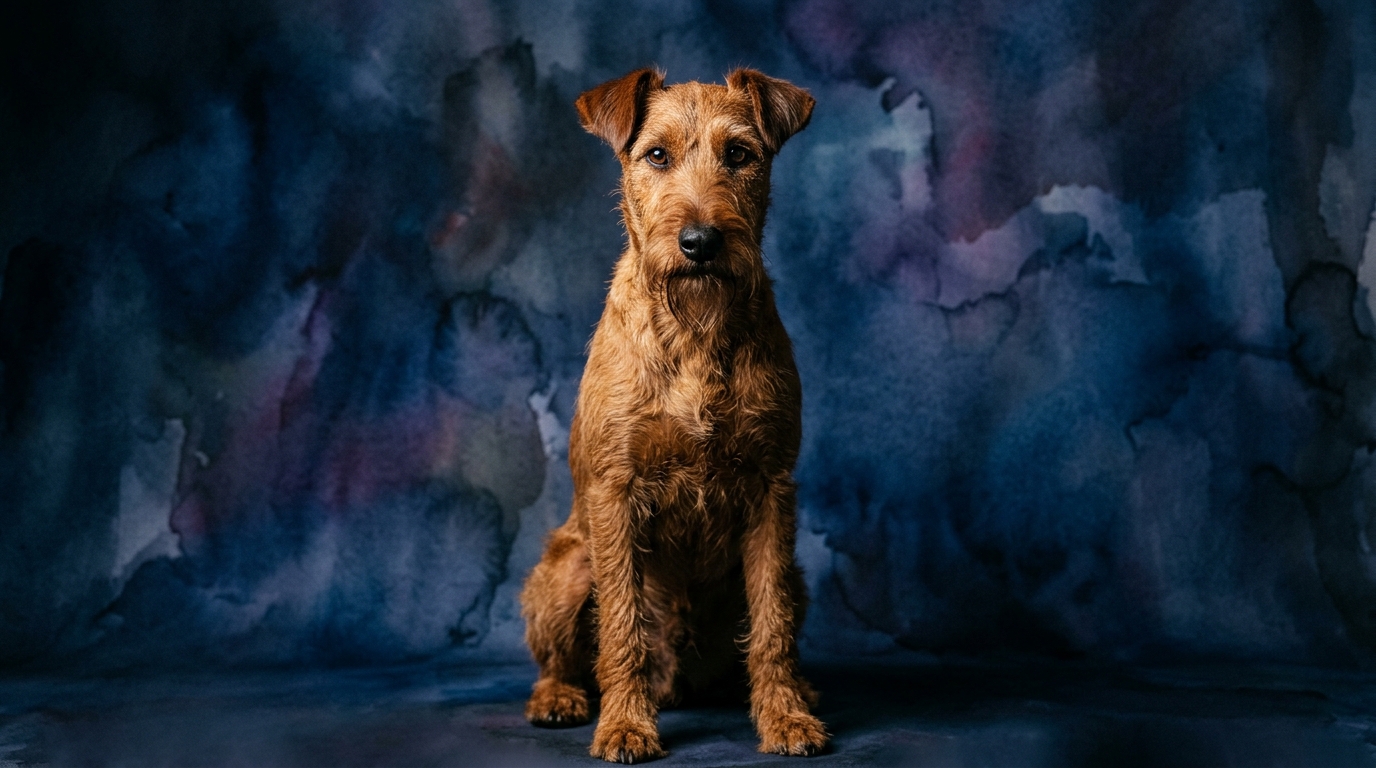
Side-by-Side IQ Profile: Bloodhound vs. Irish Terrier
The Cosmic Pet IQ Lab assesses canine cognition across five crucial dimensions, painting a detailed picture of each breed's mental landscape. For the Bloodhound, a breed ranked #74 by Coren, its profile is one of profound specialization.
Bloodhound's Cognitive Blueprint:
Problem Solving (5/5): This score reflects an intense, laser-focused ability to unravel complex scent puzzles over vast distances. Their logic is driven purely by olfactory data, meticulously following a trail until the solution – the source of the scent – is definitively found. Their problem-solving is not about abstract concepts but about a singular, persistent sensory task.
Training Speed (1/5): Bloodhounds are notoriously challenging to train in traditional obedience. Their single-minded focus on scent often overrides human commands, making them seem stubborn. They are not slow learners in their own domain, but their primary drive requires immense patience and highly specialized, motivation-based training techniques.
Social Intelligence (2/5): While gentle and affectionate within their trusted circle, Bloodhounds are often described as 'dog's dogs,' primarily driven by their nose rather than nuanced social cues from humans or other canines in many contexts. When on a scent, they can appear aloof or indifferent to social interactions.
Instinctive Drive (5/5): Unrivaled. Their entire being is geared towards scent work. This manifests as an unstoppable drive to track, often ignoring distractions and commands once a trail is engaged. This profound drive is their defining characteristic and their greatest strength.
Memory (5/5): Exceptional, particularly for scent patterns and locations. They can remember and differentiate countless specific odors and recall the path of a complex trail long after it was laid, a crucial component of their tracking prowess. Their memory is highly specialized and enduring.
The Irish Terrier, while not Coren-ranked, presents a more generalized yet robust cognitive profile.
Irish Terrier's Cognitive Blueprint:
Problem Solving (3/5): Irish Terriers possess a practical, resourceful problem-solving ability, often related to navigating their environment or achieving a desired outcome through trial-and-error. They are quick to assess situations and adapt, finding creative solutions to everyday challenges.
Training Speed (3/5): Moderately receptive to training, Irish Terriers are capable of learning new commands at a reasonable pace. They require consistent, engaging methods to prevent boredom and harness their spirited nature, responding well to positive reinforcement and varied tasks.
Social Intelligence (3/5): Generally sociable and responsive to human interaction, Irish Terriers are capable of forming strong bonds and understanding social cues within their family unit. They can be assertive with other dogs if not socialized well, but are typically well-attuned to their human companions.
Instinctive Drive (3/5): Exhibits a typical terrier drive for chasing small prey and a general assertiveness. This drive is present but manageable compared to the Bloodhound's singular focus, translating to a need for engaging activities that satisfy their natural inclinations.
Memory (3/5): Possesses a solid, functional memory for learned commands, routines, and familiar people and places. They retain information effectively for daily life and moderate training complexity, making them reliable companions.
Where the Bloodhound's Cognition Dominates
The Bloodhound's cognitive superiority lies in its profound specialization. No other breed can match its unparalleled scent discrimination and tracking capabilities. Their problem-solving is an independent, persistent exercise in olfactory deduction, where they meticulously follow a trail, sometimes for miles, without human intervention.
This breed demonstrates exceptional long-term memory specifically for complex scent patterns, allowing them to recall and differentiate faint odors over extended periods. Their ability to maintain focus and ignore overwhelming environmental distractions when engaged in a scent task is a testament to their singular cognitive strength. A Bloodhound doesn't just 'smell'; it cognitively processes and interprets a world of odors with an unmatched depth and dedication, making them invaluable in search and rescue or law enforcement roles.
Where the Irish Terrier's Cognition Excels
The Irish Terrier's cognitive strengths are found in its versatility and balanced profile. Unlike the Bloodhound's extreme specialization, the Irish Terrier demonstrates adaptability in various learning contexts, making them more generally receptive to diverse training methods and environments. Their problem-solving is resourceful and practical, allowing them to quickly assess novel situations that don't rely solely on scent and adapt their behavior accordingly.
With a quicker grasp of a wider array of obedience commands, the Irish Terrier integrates more smoothly into complex human social structures due to its higher social intelligence. This breed excels at being a well-rounded companion, capable of engaging in various activities from agility to general companionship, thanks to its balanced cognitive scores which promote overall responsiveness and adaptability.
Training Challenge: Bloodhound vs. Irish Terrier
When comparing ease of training, the Irish Terrier (Training Speed 3/5) significantly outpaces the Bloodhound (Training Speed 1/5) for general obedience. Irish Terriers are often more eager to please and less distracted by external stimuli when focusing on human instruction. Their balanced instinctive drive means they can more readily shift their attention from environmental curiosities to the task at hand, making them responsive to varied training approaches.
Bloodhounds, conversely, are not unintelligent, but their profound instinctive drive means they prioritize scent over almost all human commands once a trail is engaged. Training a Bloodhound requires an owner to understand and work with this innate purpose, rather than against it. It demands immense patience, consistent positive reinforcement, and often specialized methods that integrate their scent drive into the training process. Their 'stubbornness' is often a direct result of their brain being hardwired for olfactory pursuit, presenting a unique and demanding training challenge.
Matching Breeds to Lifestyles: Active vs. Relaxed Owners
For the Bloodhound, 'active owner' means someone prepared to provide consistent, structured outlets for their intense scent drive, not just physical exercise. They need long walks where they can follow their nose, dedicated scent work, and owners who appreciate their independent, nose-driven nature. A relaxed owner unprepared for their powerful tracking instincts and potential for selective deafness when on a trail would likely find a Bloodhound frustrating and difficult to manage, as their cognitive focus is so profoundly tied to their primary instinct.
The Irish Terrier suits active owners who enjoy engaging their dog in various physical and mental activities, from brisk walks to agility, puzzle toys, or even canine sports. Their moderate instinctive drive means they thrive with consistent mental and physical stimulation to prevent boredom and channel their spirited energy constructively. While adaptable, a truly relaxed owner might find the Irish Terrier's inherent terrier spirit and need for engagement a bit too demanding, as they require interaction to remain content and well-behaved.
The Verdict
Opt for a Bloodhound if you are captivated by the profound world of scent and are prepared to dedicate yourself to understanding and channeling their unparalleled tracking drive. They thrive with patient owners who can provide consistent, specialized mental engagement.
Select an Irish Terrier if you seek a spirited, adaptable companion eager to engage in various activities and responsive to diverse training approaches, offering a more generalized but equally rewarding dog-owner partnership.
🧠 Find Your Pet's IQ Score
Our Pet IQ Lab assessment covers 25+ tests across 5 cognitive dimensions — personalized to your breed.
Take the Full IQ Test →Frequently Asked Questions
Is the Bloodhound truly less intelligent than the Irish Terrier because of its Coren ranking?
The Coren ranking primarily assesses obedience and working intelligence, which aligns with how easily a dog learns human commands. The Bloodhound's lower rank (74) reflects its independent, scent-driven nature, not a general lack of cognitive power, as its problem-solving and memory for scent are exceptional and highly specialized.
Can an Irish Terrier be trained for scent work like a Bloodhound?
While an Irish Terrier can certainly be taught basic scent games and enjoy nose work, they lack the Bloodhound's extreme specialization in olfactory discrimination and endurance. Their instinctive drive is more generalized, making them capable of participating in scent activities but not expert in the same league as a dedicated scent hound.
How do their social intelligence scores impact life in a family home?
The Bloodhound's 2/5 social intelligence means they might be more independent and less attuned to nuanced human social cues, often prioritizing their nose over social interaction. The Irish Terrier's 3/5 suggests a more balanced social responsiveness, making them generally more engaged with family dynamics and easier to integrate into varied social settings.