
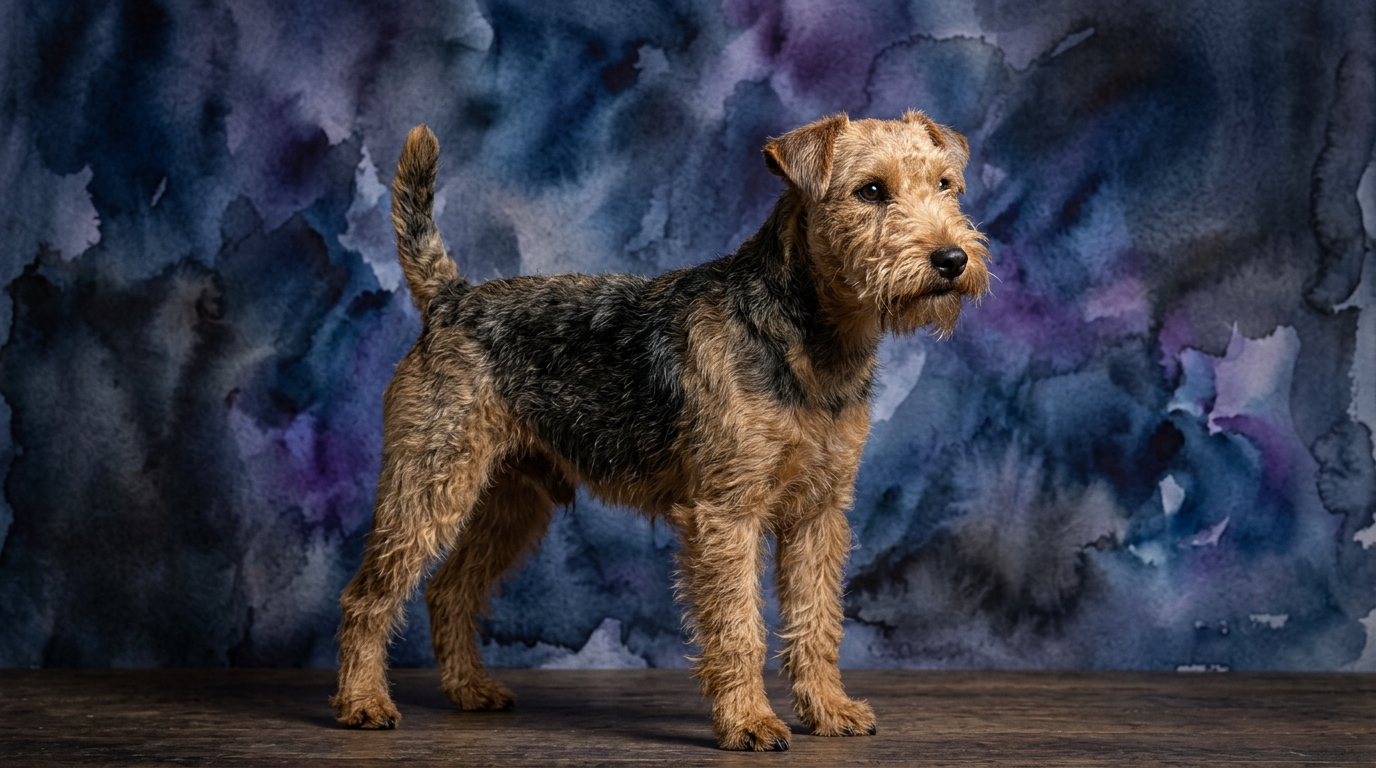
Side-by-Side IQ Profile: Bloodhound vs. Lakeland Terrier
The Bloodhound, with a Coren rank of #74, presents a profile of specialized cognitive brilliance. Its Problem Solving is 5/5, demonstrating unparalleled skill in unraveling complex scent puzzles. Training Speed, however, registers a low 1/5, reflecting their independent, scent-focused nature. Social Intelligence is 2/5, as their primary focus is often on the environment's olfactory tapestry. Instinctive Drive is a perfect 5/5, a testament to their relentless tracking prowess, complemented by a remarkable Memory of 5/5 for scent trails and environmental details.
In contrast, the Lakeland Terrier, not Coren-ranked, showcases a more balanced cognitive spread. Its Problem Solving skill is 3/5, indicating practical intelligence for navigating challenges in the field. Training Speed is 3/5, suggesting a moderate willingness to learn with consistent effort. Social Intelligence also stands at 3/5, meaning they are generally responsive to human interaction but retain a spirited independence. Instinctive Drive is 3/5, encompassing earthdog instincts for hunting and digging, and their Memory is also 3/5, allowing for sufficient recall of commands and routines.
Where the Bloodhound Excels Cognitively
The Bloodhound's cognitive superiority lies unequivocally in olfaction and sustained, complex problem-solving tied to scent. Their 5/5 Problem Solving isn't about general obedience, but about dissecting a myriad of airborne and ground scents, differentiating a target trail from countless others, and navigating intricate environments purely by smell. This unique faculty allows them to reconstruct events from faint scent particles, a cognitive feat unmatched by most breeds. Their 5/5 Memory is specifically tailored to retaining vast libraries of scent profiles and mapping out extensive, previously traversed trails, enabling them to pick up a cold trail with incredible accuracy. This specialized memory isn't for tricks, but for profound recall of sensory data crucial to their work.
Where the Lakeland Terrier Excels Cognitively
The Lakeland Terrier's cognitive advantages manifest in adaptability, quick situational awareness, and balanced engagement with its human environment. While their Problem Solving is 3/5, it's a versatile intelligence, enabling them to swiftly assess and react to dynamic situations, such as navigating tight underground spaces or outsmarting small prey. Their 3/5 Social Intelligence gives them an edge in understanding and responding to a broader spectrum of human communication and social cues, fostering a more interactive companionship. This balanced profile allows them to integrate more readily into diverse family routines and learn a wider array of tasks beyond a single, intense focus, making them more versatile in a general household setting.
Training Differences: Which Breed is More Amenable?
Training ease starkly differentiates these two breeds. The Lakeland Terrier, with a Training Speed of 3/5 and Social Intelligence of 3/5, is generally more amenable to traditional training methods. While possessing a typical terrier spirit and occasional stubbornness, they respond well to consistent, positive reinforcement and thrive on engaging with their human partners. Their moderate instinctive drive means it can be channeled into constructive activities, rather than overwhelming all other directives.
The Bloodhound, however, presents a significant training challenge, marked by a 1/5 Training Speed. This isn't due to a lack of processing ability, but an overwhelming 5/5 Instinctive Drive for scent. Once a Bloodhound is on a trail, their cognitive focus narrows almost exclusively to that scent, rendering human commands secondary or irrelevant. Their Problem Solving (5/5) and Memory (5/5) are dedicated to the pursuit of scent, not to performing tricks on command. Training a Bloodhound requires immense patience, understanding of their olfactory world, and specialized methods that integrate their natural drive, often making general obedience a lifelong, uphill journey where their nose will always take precedence.
Matching Breeds to Owner Lifestyles
Neither breed is suitable for a truly “relaxed” owner, but their activity needs differ significantly. The Bloodhound, despite its seemingly calm demeanor when not on a trail, requires a specific kind of active owner. Their 5/5 Instinctive Drive demands dedicated outlets for scent work, long structured walks where they can follow their nose, or participation in tracking sports. This isn't about high-energy sprints, but sustained mental and physical exertion through deep olfactory exploration. An owner must be prepared to commit hours to satisfying this primal need, understanding that ignoring it leads to a frustrated, potentially destructive dog.
The Lakeland Terrier suits a more generally active owner who enjoys varied activities. Their balanced 3/5 Instinctive Drive and 3/5 Problem Solving mean they thrive on vigorous play sessions, brisk walks, and mental challenges like puzzle toys or agility training. They are more adaptable to a family's general outdoor pursuits and can be a spirited companion for hikes or games of fetch. While they need consistent exercise, their needs are more flexible and less singularly focused than the Bloodhound's deep-seated tracking imperative, making them a good fit for families who enjoy a range of physical and mental engagement.
The Verdict
Choose a Bloodhound if you are captivated by the singular brilliance of a scent specialist, are prepared to dedicate substantial time to advanced tracking or search-and-rescue work, and possess the patience and understanding to manage a dog whose world is primarily defined by scent.
Opt for a Lakeland Terrier if you desire a spirited, versatile companion who enjoys a mix of physical and mental activities, can be trained for a variety of tasks, and thrives on being an active, engaged member of a dynamic household.
🧠 Find Your Pet's IQ Score
Our Pet IQ Lab assessment covers 25+ tests across 5 cognitive dimensions — personalized to your breed.
Take the Full IQ Test →Frequently Asked Questions
Are Bloodhounds stubborn during training?
Bloodhounds aren't stubborn in a disobedient sense; their low Training Speed (1/5) is a consequence of their overwhelming Instinctive Drive (5/5) for scent. Once they've picked up a trail, their cognitive focus shifts entirely, making human commands difficult to register or prioritize.
Do Lakeland Terriers require a lot of mental stimulation?
Yes, Lakeland Terriers, with their balanced 3/5 Problem Solving and Instinctive Drive, benefit greatly from mental stimulation. Activities like puzzle toys, earthdog trials, agility, or learning new tricks keep their minds engaged and prevent boredom-related behaviors.
Which breed is better for a first-time dog owner?
The Lakeland Terrier is generally a more manageable choice for a first-time owner due to its moderate Training Speed (3/5) and Social Intelligence (3/5). The Bloodhound's specialized cognitive profile and challenging training requirements (1/5 Training Speed) are best suited for experienced owners dedicated to their unique needs.