Side-by-Side IQ Profiles: Bloodhound vs. Lhasa Apso
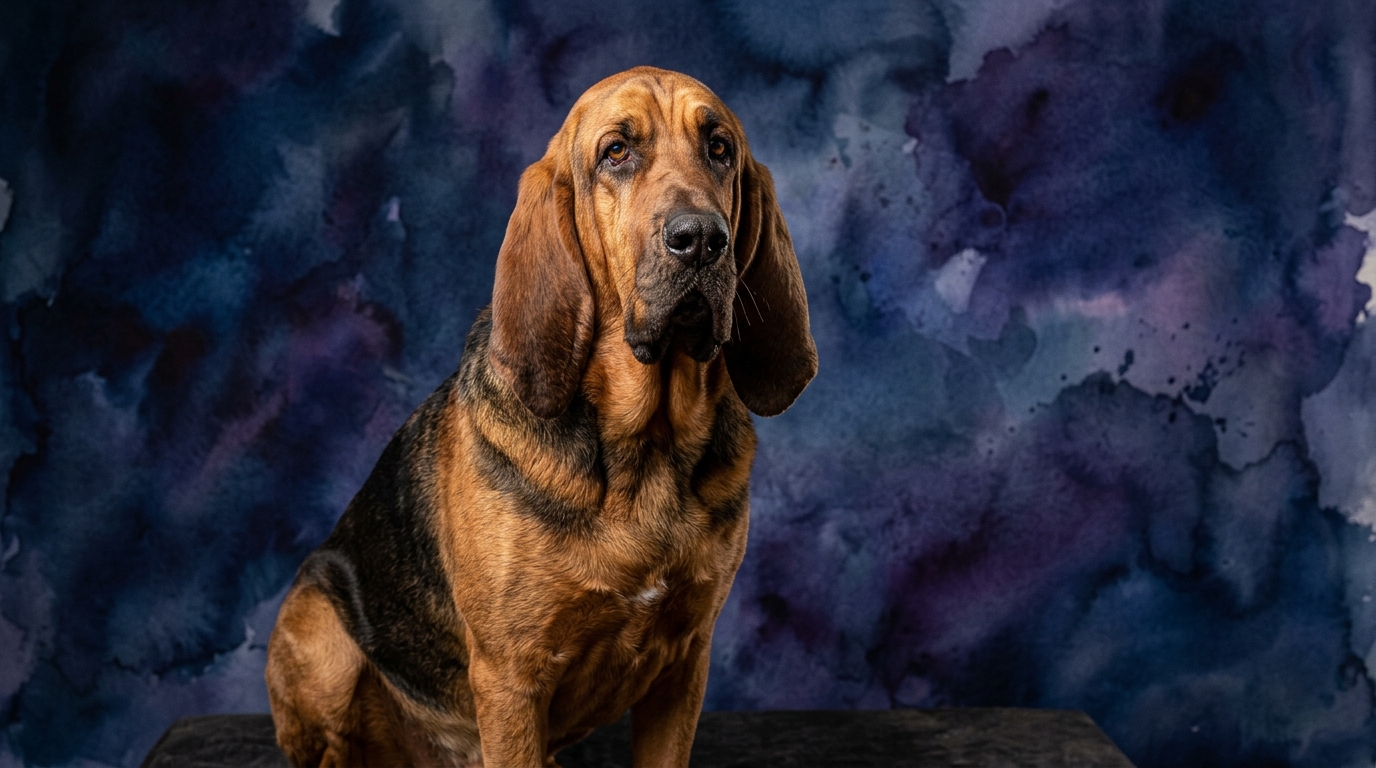
The Cosmic Pet Pet IQ Lab provides a granular look at canine cognitive abilities, moving beyond simple 'smart' labels to dissect specific dimensions. For the Bloodhound, ranked #74 on the Coren scale, its profile reveals a specialized genius: Problem Solving at a perfect 5/5, Instinctive Drive at 5/5, and Memory also at 5/5. However, this focused brilliance comes with a Training Speed of 1/5 and Social Intelligence at 2/5, indicating a dog whose mind is often elsewhere, specifically on a scent trail.
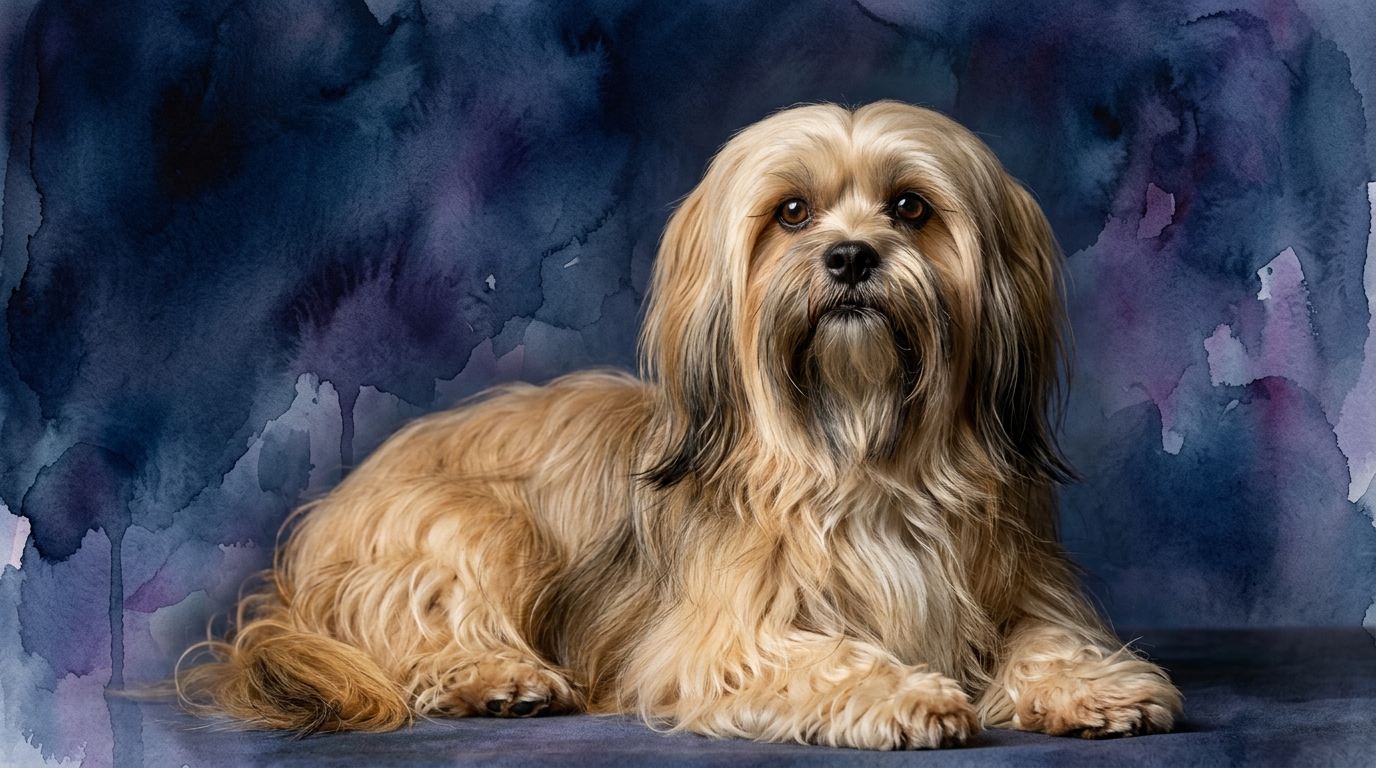
In contrast, the Lhasa Apso, positioned slightly higher at Coren rank #68, presents a more balanced, albeit less extreme, cognitive blueprint. Its scores across the board — Problem Solving 3/5, Training Speed 3/5, Social Intelligence 3/5, Instinctive Drive 3/5, and Memory 3/5 — paint a picture of a capable, adaptable dog without the profound specializations seen in the Bloodhound. This breed demonstrates a moderate aptitude in several areas, reflecting its historical role as a companion and sentinel.
These profiles underscore that a higher Coren rank doesn't equate to universal cognitive superiority. Instead, it often signifies a greater willingness to comply with human commands, a dimension where the independent Bloodhound falters. A true understanding requires examining the specific cognitive strengths and weaknesses each breed brings to the table, revealing how their minds are wired for different purposes and environments.
Where the Bloodhound's Cognition Excels
The Bloodhound's cognitive strengths are undeniably rooted in its olfactory prowess, which translates directly into its stellar Problem Solving (5/5), Instinctive Drive (5/5), and Memory (5/5) scores. When presented with a scent puzzle – tracking a missing person or an elusive animal – the Bloodhound's mind is unmatched. Their problem-solving isn't about manipulating objects or learning complex tricks for human entertainment; it's about navigating intricate scent landscapes, discerning faint traces, and following a trail with unwavering focus over vast distances and varied terrains.
This profound instinctive drive to track is not merely a physical trait but a deeply cognitive one, requiring immense mental stamina and sophisticated processing of sensory information. Their memory, also a perfect 5/5, is specifically tuned for scent recall, allowing them to remember and differentiate countless individual odors, linking them to specific targets or past experiences. This specialized memory is crucial for their work, enabling them to pick up an old trail or distinguish a target scent from a myriad of distractions. Their cognitive apparatus is a finely tuned instrument for detection and persistence, making them unparalleled in tasks requiring sustained, independent focus on a sensory input.
Where the Lhasa Apso's Cognition Stands Out
The Lhasa Apso's cognitive profile, while not featuring the peak scores of the Bloodhound in any single dimension, showcases a different kind of strength: a balanced, adaptable intelligence. With a Training Speed of 3/5, Social Intelligence of 3/5, and Problem Solving of 3/5, the Lhasa Apso demonstrates a more generalized capacity for learning and interaction. Their problem-solving often manifests in navigating their home environment, figuring out how to get attention, or devising strategies to achieve their comfort, rather than solving complex, external puzzles.
Their moderate social intelligence means they are capable of forming strong bonds and understanding household dynamics, though often with a distinct independent streak. Unlike the Bloodhound, whose world revolves around scent, the Lhasa Apso's cognitive focus is more centered on its immediate social group and territory. This balance allows them to integrate smoothly into family life, adapting to routines and exhibiting a discerning awareness of strangers, a trait stemming from their historical role as watchful companions. Their cognitive versatility ensures they are capable learners, even if they require consistent motivation and clear communication.
Training Ease: Bloodhound's Focus vs. Lhasa Apso's Adaptability
When it comes to training, the practical differences between these two breeds are stark, directly reflecting their IQ scores. The Bloodhound's Training Speed of 1/5 is a clear indicator that conventional obedience training can be a significant challenge. Their powerful instinctive drive (5/5) means their nose often takes precedence over human commands. Once they catch a scent, their cognitive processing becomes singularly focused on that trail, making it incredibly difficult to redirect their attention. This isn't a lack of intelligence, but rather a profound specialization; they are not wired for quick compliance when a compelling scent presents itself. Teaching a Bloodhound to 'sit' or 'stay' requires immense patience, consistency, and an understanding that their primary cognitive function is often overriding.
The Lhasa Apso, with a Training Speed of 3/5, presents a more manageable training experience. While they possess an independent spirit and can be stubborn, they are generally more receptive to learning commands and routines. Their social intelligence (3/5) means they understand the value of interaction and can be motivated by praise, treats, or the desire to please their human companions, albeit on their own terms. Their cognitive flexibility allows them to adapt to household rules and learn a broader range of behaviors, provided the training is engaging, positive, and consistent. Their independence means they might not always obey instantly, but they are certainly more trainable in a general obedience context than the scent-driven Bloodhound.
Matching Breeds to Lifestyles: Active vs. Relaxed Owners
The cognitive and behavioral profiles of the Bloodhound and Lhasa Apso dictate suitability for very different owner lifestyles. An active owner, particularly one who enjoys outdoor activities, tracking sports, or has a specific need for a working dog, would find a cognitive partner in the Bloodhound. Their immense instinctive drive (5/5) and need for mental stimulation through scent work means they require significant engagement. Owners must be prepared to provide extensive opportunities for their Bloodhound to use its nose, whether through formal tracking, long sniff-walks, or scent games. A Bloodhound left without an outlet for its primary cognitive function can become frustrated or destructive, channeling its problem-solving into less desirable behaviors.
Conversely, the Lhasa Apso's more balanced cognitive profile and moderate energy levels make it a better fit for relaxed owners. While they enjoy walks and playtime, their need for sustained, intense activity is lower. Their social intelligence (3/5) means they appreciate companionship and can be content with indoor living and moderate exercise. They are adaptable to apartment life, provided they receive daily walks and mental engagement through toys or interactive games. Owners who prefer a less demanding, yet still engaging, canine companion who can be both watchful and affectionate will find the Lhasa Apso's cognitive makeup aligns well with a calmer household dynamic.
The Verdict
Choose a Bloodhound if you are an active individual or family deeply committed to providing extensive scent work, tracking opportunities, and consistent, patient guidance for a highly specialized, independent mind.
Choose a Lhasa Apso if you seek a balanced, adaptable companion who thrives on moderate activity, values companionship, and can integrate well into a relaxed household with consistent, positive training.
🧠 Find Your Pet's IQ Score
Our Pet IQ Lab assessment covers 25+ tests across 5 cognitive dimensions — personalized to your breed.
Take the Full IQ Test →Frequently Asked Questions
Does a Bloodhound's low social intelligence mean they are not affectionate?
Not at all; a Bloodhound's 2/5 social intelligence indicates a mind more internally focused on scent, not a lack of capacity for affection. While they might not be as overtly demonstrative or people-pleasing as some breeds, they form deep, loyal bonds with their families, often expressing affection in quieter ways after their primary drive has been satisfied.
Is the Lhasa Apso's independence a sign of low intelligence?
No, the Lhasa Apso's independence is a hallmark of its specific cognitive makeup, not a deficit in intelligence. Their 3/5 problem-solving and social intelligence scores mean they are capable thinkers who can make their own decisions, a trait developed from their historical role as alert, self-sufficient guardians. This independence simply requires an owner who appreciates a dog with a mind of its own.
How does the Coren rank relate to the specific IQ dimensions for these breeds?
The Coren rank primarily measures 'working and obedience intelligence,' which correlates most strongly with the 'Training Speed' dimension in our IQ Lab. The Bloodhound's low Coren rank (#74) aligns with its 1/5 training speed, while the Lhasa Apso's slightly higher rank (#68) reflects its 3/5 training speed. It’s important to remember that these ranks do not capture specialized cognitive brilliance like the Bloodhound's problem-solving or memory related to scent work.