Side-by-Side Cognitive Profiles
At The Cosmic Pet Pet IQ Lab, we evaluate canine intelligence across five key dimensions. Let's break down how the Bloodhound and Pointer measure up, revealing their specialized cognitive blueprints.
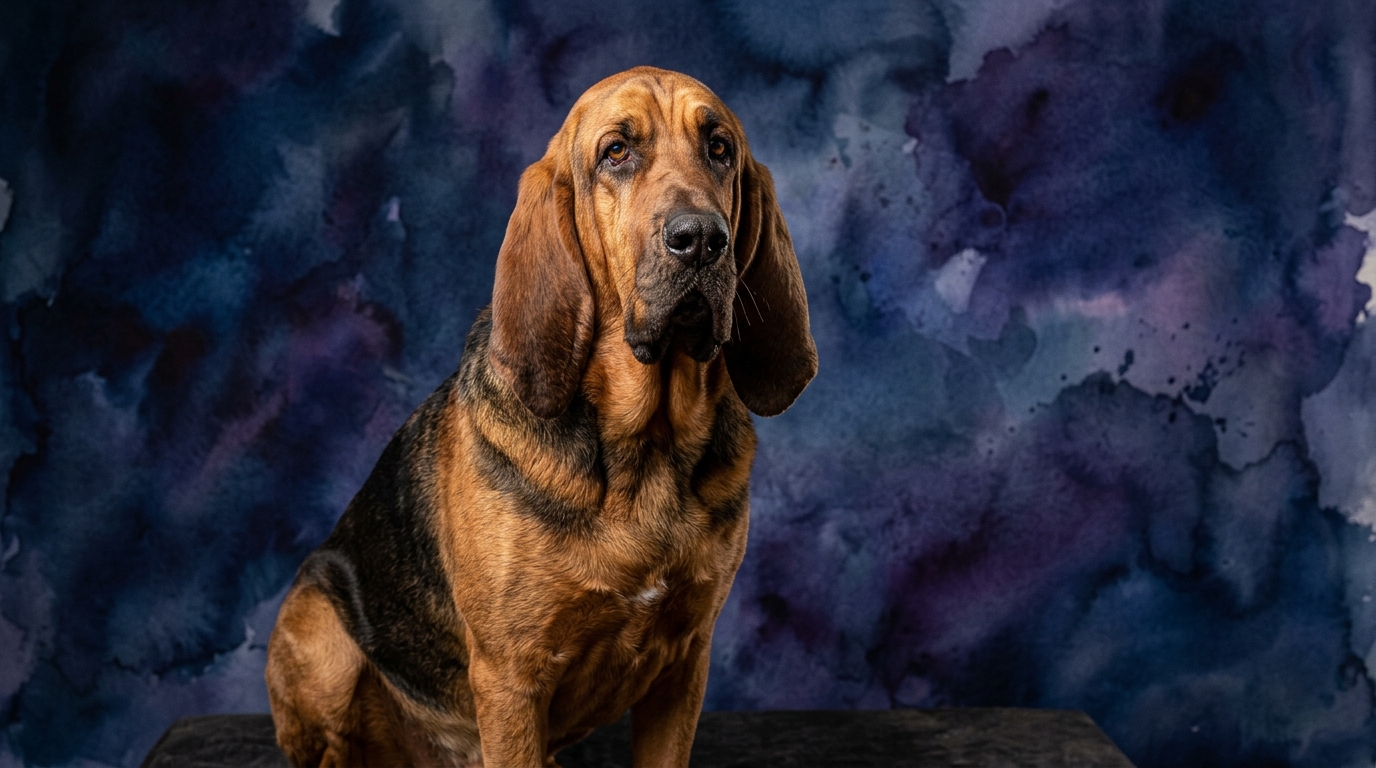
The **Bloodhound**, ranked #74 by Coren, presents a unique cognitive profile reflecting its specialized function:
- **Problem Solving (5/5):** This breed excels in deciphering complex scent puzzles, navigating intricate environments to follow a specific trail with unwavering focus. Their problem-solving is almost entirely dedicated to olfactory challenges, demonstrating a profound capacity for deductive reasoning through scent.
- **Training Speed (1/5):** Bloodhounds are notoriously challenging to train in conventional obedience. Their powerful instinctive drive often overrides a desire for human-directed tasks, making them appear stubborn and slow to learn commands that distract from their primary sensory input.
- **Social Intelligence (2/5):** While generally docile and affectionate with their families, Bloodhounds are not primarily driven by human social cues or a strong desire to please. Their social interactions are often secondary to their olfactory pursuits, making them less attuned to subtle human communication outside of their immediate pack.
- **Instinctive Drive (5/5):** The Bloodhound's life revolves around its nose. This extreme drive manifests as an almost uncontrollable compulsion to track, making them single-minded and persistent in following a scent trail, often to the exclusion of all else.
- **Memory (5/5):** Their memory is exceptional, particularly for scents. A Bloodhound can recall and distinguish specific scent profiles and complex trail patterns over long periods, a critical ability for their historical role in trailing.
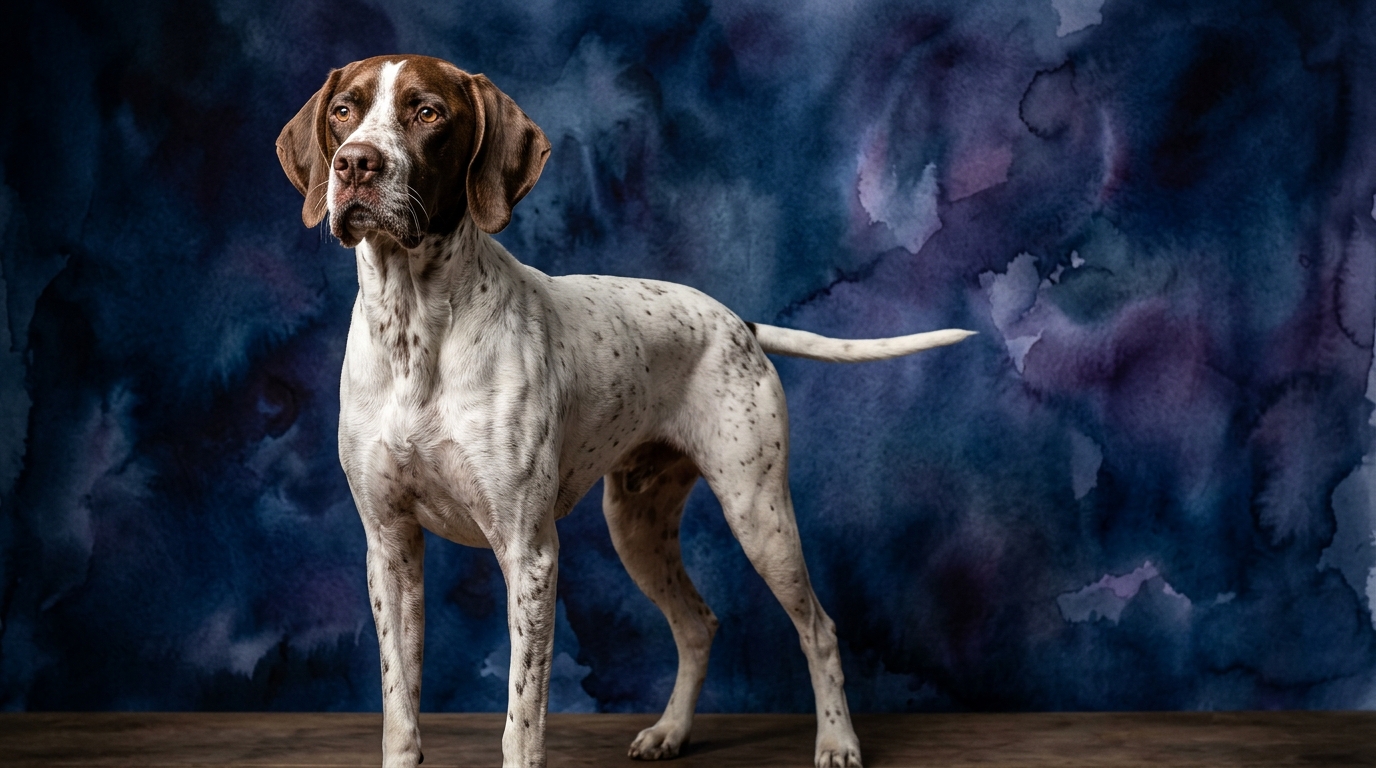
The **Pointer**, a Sporting breed not ranked by Coren, offers a more balanced, adaptable cognitive framework:
- **Problem Solving (3/5):** Pointers demonstrate moderate problem-solving abilities, capable of figuring out tasks related to their hunting role, such as flushing game or navigating varied terrain efficiently. Their approach is practical and adaptable, but not specialized in the same extreme way as the Bloodhound.
- **Training Speed (3/5):** Pointers are generally considered biddable and responsive to training. They learn commands at a reasonable pace, especially when motivated by positive reinforcement and activities related to their natural retrieving and pointing instincts.
- **Social Intelligence (3/5):** This breed possesses a balanced level of social intelligence, allowing them to form strong bonds with their human companions and respond well to social cues. They are generally cooperative and enjoy interaction, making them amenable household members.
- **Instinctive Drive (3/5):** Pointers exhibit a moderate instinctive drive for hunting, characterized by their distinct 'point' and retrieve behaviors. While focused in the field, this drive is typically more manageable and integrated with human direction than the Bloodhound's singular olfactory obsession.
- **Memory (3/5):** Pointers have a solid, functional memory, capable of recalling commands, learned routines, and the location of game or retrieve items. While effective for their purpose, it doesn't reach the specialized, long-term scent memory capacity of the Bloodhound.
Where the Bloodhound Excels Cognitively
The Bloodhound's cognitive superiority lies unequivocally in its olfactory capabilities. With a Problem Solving score of 5/5 and an Instinctive Drive of 5/5, they are unmatched in the canine world for deciphering scent. This isn't just about sniffing; it's about complex cognitive processing. A Bloodhound can differentiate between a fresh scent and an old one, isolate a specific human odor amidst a cacophony of other environmental smells, and follow a trail hours or even days old across varied terrain, through water, and even over paved surfaces. Their memory (5/5) is intrinsically linked here, allowing them to retain specific scent profiles and track patterns over extended periods, making them exceptional at piecing together a 'scent narrative' from fragmented data. This specialized cognitive architecture means they excel at tasks requiring relentless, self-directed investigation based solely on scent, demonstrating a unique form of deductive reasoning that is almost impossible for other breeds to replicate.
Where the Pointer Shines Cognitively
The Pointer's cognitive strengths manifest in its balanced and adaptable intelligence, particularly when it comes to cooperative work with humans. With a Training Speed of 3/5 and Social Intelligence of 3/5, the Pointer is significantly more receptive to human guidance and communication than the Bloodhound. Their Problem Solving (3/5) is more generalized, allowing them to adapt to various tasks within a hunting context, such as locating game, holding a steady point, and retrieving on command. Unlike the Bloodhound's singular focus, the Pointer's moderate Instinctive Drive (3/5) means their natural hunting behaviors are more easily integrated into a human-directed framework. They are more attuned to visual and auditory cues from their handler, making them more pliable for complex, multi-step commands and responsive to changes in direction. This cooperative intelligence makes them excellent partners in field sports and generally more adaptable family companions.
Training Dynamics: Bloodhound vs. Pointer
When comparing training ease, the Pointer (Training Speed 3/5) unequivocally holds the advantage over the Bloodhound (Training Speed 1/5). The fundamental difference lies in their inherent motivations and social orientation. Pointers, with their balanced social intelligence, are generally eager to please and receptive to human feedback. Their moderate instinctive drive means that while they possess a strong desire to hunt, this drive can be channeled and managed through training, making them responsive to commands and capable of learning complex sequences. They are attuned to their handler's presence and typically enjoy the collaborative aspect of training. In contrast, the Bloodhound's extreme instinctive drive (5/5) and lower social intelligence mean their primary motivation is often the pursuit of scent, making them notoriously independent and difficult to redirect once on a trail. Training a Bloodhound requires immense patience, understanding that their nose will often dictate their actions, and finding ways to integrate their scent drive into training rather than attempting to suppress it. Their 'stubbornness' isn't defiance, but an intense focus on their most compelling sensory input, requiring a different, often more creative, approach to motivation and control.
Matching Breeds to Lifestyles: Active vs. Relaxed Owners
Neither the Bloodhound nor the Pointer is truly suited for a 'relaxed' owner in the sense of minimal activity, but they demand different types of engagement. The Bloodhound, with its extreme instinctive drive (5/5), requires an owner dedicated to satisfying its profound need for purposeful scent work. This means long, deliberate 'sniff walks,' scent games, or even participation in tracking sports. For a Bloodhound, a simple stroll around the block isn't enough; their minds need to be engaged in deciphering a scent puzzle, which can be mentally and physically taxing for the dog and requires a committed, patient owner. An 'active owner' for a Bloodhound is someone who understands and embraces this unique drive, willing to spend hours allowing their dog to follow its nose. The Pointer, while also requiring significant activity, is more versatile. Its moderate instinctive drive and higher social intelligence mean it thrives on varied physical exercise like running, hiking, or participating in dog sports, alongside mental stimulation that often involves human interaction, such as obedience or agility. An 'active owner' for a Pointer is someone who can provide consistent, vigorous exercise and enjoys collaborative activities with their dog. A truly relaxed owner might struggle with either, but the Pointer's biddability makes it marginally more adaptable to a less specialized form of daily activity compared to the Bloodhound's singular intensity.
The Verdict
Choose the Bloodhound if you are a dedicated enthusiast of canine scent work, prepared to embrace and channel an almost unparalleled olfactory drive, and value a dog whose cognitive world revolves around scent.
Opt for the Pointer if you seek a cooperative, adaptable hunting or sporting companion, valuing a balanced intellect that responds well to human direction and thrives on varied physical and mental engagement.
🧠 Find Your Pet's IQ Score
Our Pet IQ Lab assessment covers 25+ tests across 5 cognitive dimensions — personalized to your breed.
Take the Full IQ Test →Frequently Asked Questions
Can a Bloodhound be a good family pet despite its low social intelligence score?
Yes, Bloodhounds are typically gentle and affectionate with their families. Their lower social intelligence primarily reflects their independent nature and focus on scent, not a lack of capacity for bonding or being a loyal companion within a home environment.
Do Pointers require a lot of exercise, given their balanced instinctive drive?
Pointers do require significant daily exercise to be content. Their moderate instinctive drive means they have a natural athleticism and energy level suited for field work, so consistent physical activity and mental stimulation are crucial to prevent boredom.
Is it possible to train a Bloodhound for tasks unrelated to scent work?
While challenging due to their low training speed and extreme scent drive, Bloodhounds can learn basic obedience with immense patience and positive reinforcement, but their primary cognitive strength will always lean towards olfactory tasks.