A Side-by-Side Look at Bloodhound and Pug Cognitive Profiles
The Cosmic Pet Pet IQ Lab employs five key dimensions to evaluate canine intelligence, offering a nuanced perspective beyond simple 'smart' or 'not smart' labels. These dimensions illuminate a breed's innate aptitudes and challenges, providing a clearer understanding of their mental makeup. For the Bloodhound, a breed with a Coren rank of #74, its cognitive strengths are overwhelmingly specialized, while the Pug, ranked #57, demonstrates a different, yet equally valid, set of aptitudes.
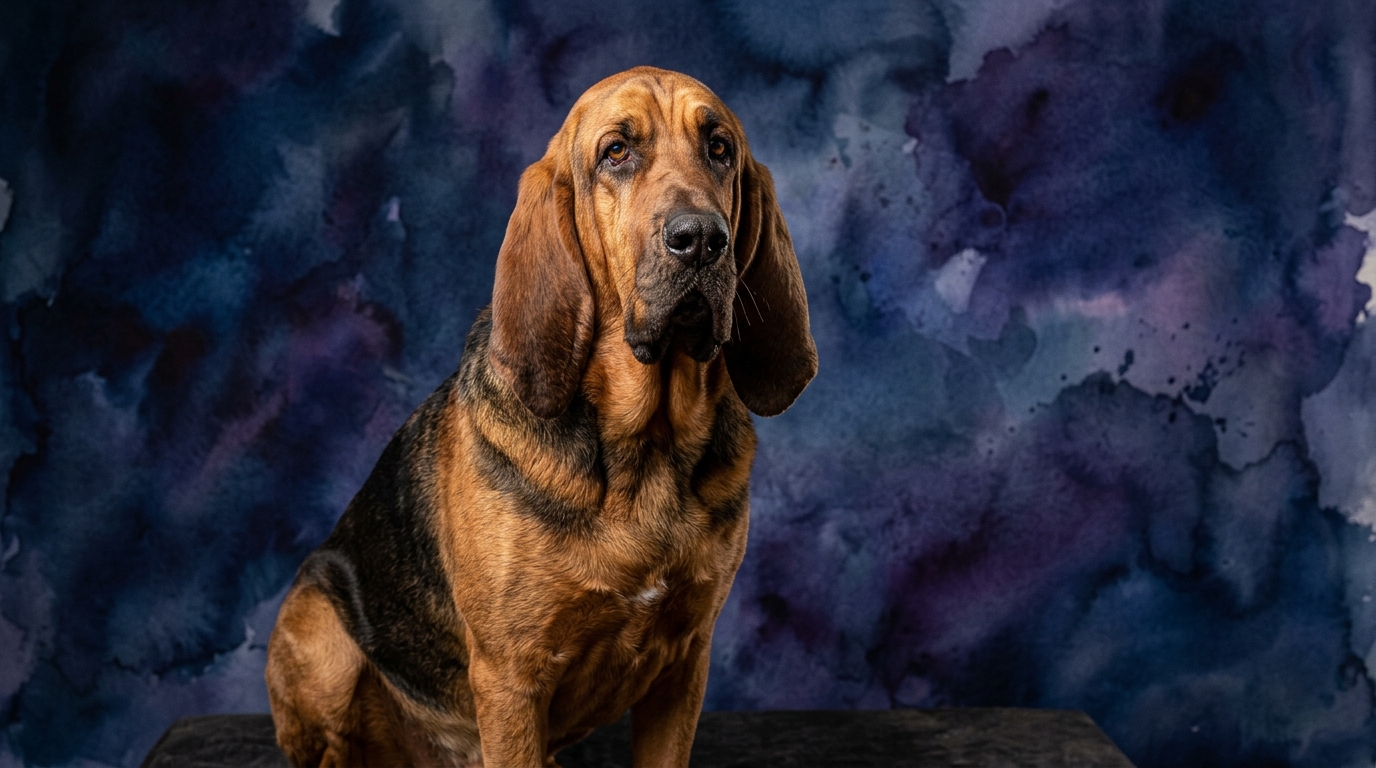
**Bloodhound IQ Profile:** This distinguished hound scores a remarkable 5/5 in Problem Solving, particularly when those problems involve intricate scent trails, and an equally impressive 5/5 in Memory, specifically for retaining vast olfactory data. Its Instinctive Drive is a perfect 5/5, indicating an overwhelming, inherent motivation to track. However, this intense focus comes at a cognitive cost: its Training Speed is a low 1/5, reflecting an independence often prioritized over human commands, and its Social Intelligence registers at 2/5, as its primary focus is typically on the task at paw rather than human emotional cues.
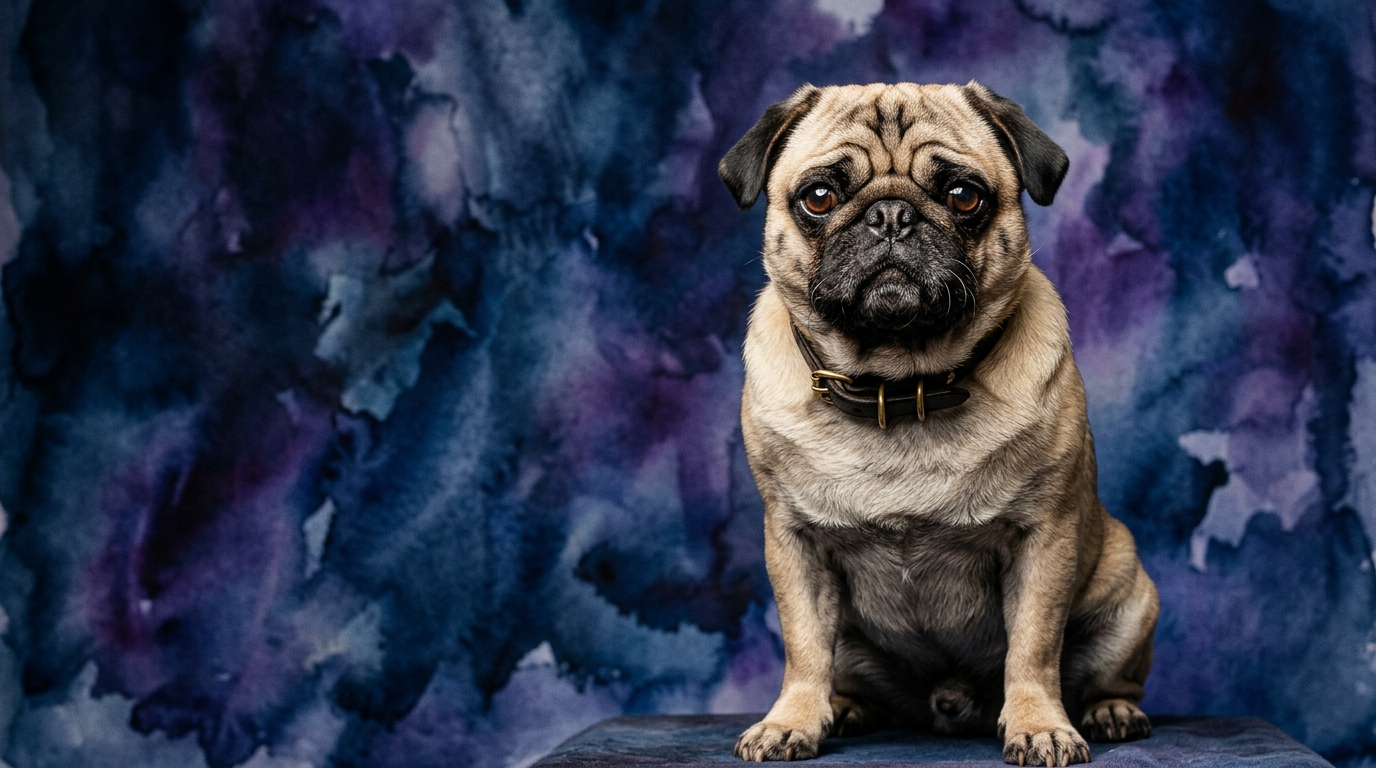
**Pug IQ Profile:** In contrast, the Pug's cognitive strengths lie in its social acumen. It earns a stellar 5/5 in Social Intelligence, showcasing a profound ability to interpret and respond to human emotions and interactions. Its Memory is a respectable 3/5, adept at recalling routines and social experiences. Its Problem Solving and Instinctive Drive are both rated 2/5, indicating a practical, human-centric approach to problem-solving rather than abstract tasks, and a minimal drive for independent hunting or tracking. Its Training Speed is a moderate 2/5, suggesting it can learn, but often requires consistent motivation and engagement.
Bloodhound's Cognitive Dominance: The Scent-Driven Mind
The Bloodhound's cognitive superiority undeniably lies in its specialized sensory processing and sustained, goal-oriented deduction. Its 5/5 Problem Solving isn't about fetching a ball, but about unraveling the most complex, aged, or faint scent puzzles, navigating intricate environments like dense forests or urban labyrinths to follow a specific trail. This involves a sophisticated cognitive process of sequential deduction, where each sniff provides a piece of information, guiding the dog towards a conclusion.
Furthermore, its 5/5 Instinctive Drive is a cognitive marvel, representing an unwavering focus that allows it to persist on a track for hours or even days, ignoring distractions that would derail most other breeds. This isn't mere persistence; it's a highly specialized cognitive mechanism that filters out irrelevant stimuli, maintaining singular attention on the olfactory task at hand. Paired with its 5/5 Memory, the Bloodhound can retain detailed scent profiles and environmental cues over extended periods, allowing it to pick up old trails, differentiate between similar scents, and recall the nuances of a specific target's path with astonishing accuracy.
Pug's Cognitive Strengths: The Art of Social Connection
The Pug’s cognitive triumphs are rooted deeply in its social world. Its perfect 5/5 in Social Intelligence means it possesses an exceptional capacity for reading human body language, interpreting subtle facial expressions, and responding to emotional states with remarkable accuracy. This isn't just about being friendly; it's a sophisticated cognitive ability to understand and participate in reciprocal social engagement, often anticipating human needs for comfort or interaction. A Pug might 'know' you're sad and offer a comforting nudge, a testament to its profound social awareness.
While its Problem Solving is rated 2/5, this doesn't diminish its practical, human-oriented problem-solving skills. A Pug excels at figuring out how to elicit attention, secure a comfortable spot on the couch, or charm its way into extra treats. These are not abstract puzzles, but real-world challenges solved through social manipulation and understanding human behavior. Their cognitive flexibility, while not a direct IQ dimension, is often an outcome of their high social intelligence; they adapt quickly to various human living situations and routines, showing a remarkable capacity to integrate into diverse family dynamics, a trait heavily dependent on their ability to understand and respond to social cues.
Training Dynamics: Bloodhound's Independence vs. Pug's Social Motivation
When it comes to ease of training, the Bloodhound and Pug present stark contrasts, primarily due to their differing cognitive priorities. The Bloodhound, with its 1/5 Training Speed and overwhelming 5/5 Instinctive Drive, is notoriously challenging to train in traditional obedience. Its nose, and the world of scents it perceives, is often a far more compelling motivator than any human command. A Bloodhound on a scent trail will exhibit extreme selective hearing, as its cognitive resources are entirely dedicated to the task it was bred for. Training requires immense patience, understanding their intrinsic motivation, and leveraging high-value, scent-related rewards. Trying to force a Bloodhound into a conventional obedience routine without acknowledging its powerful drive is often an exercise in futility; success comes from channeling their natural instincts.
The Pug, scoring a 2/5 in Training Speed, is moderately challenging but significantly more amenable to training than the Bloodhound. Their high 5/5 Social Intelligence is a powerful asset; Pugs are motivated by positive human interaction, praise, and the desire to be close to their people. They learn best through positive reinforcement, short, engaging sessions that prevent boredom, and consistency. While they can sometimes exhibit a stubborn streak, often interpreted as 'Pug-headedness,' this is usually a sign of disinterest or a lack of clear motivation rather than an inability to learn. Their desire for companionship means they generally want to please their owners, making them more responsive to training methods that foster connection and reward.
Matching Lifestyles: Active Explorers vs. Relaxed Companions
The choice between a Bloodhound and a Pug also hinges significantly on an owner's lifestyle and activity levels. The Bloodhound is an ideal match for active owners who are prepared to engage deeply with its specialized cognitive needs. These dogs require substantial mental and physical exercise, almost exclusively focused on scent work. Daily long walks are a minimum, but dedicated tracking activities, scent games, and opportunities to extensively use their nose are essential for their well-being. A relaxed owner will quickly find themselves overwhelmed by a Bloodhound's unfulfilled instinctive drive, which can manifest as destructive behaviors or incessant vocalization born of boredom and frustration. Their cognitive design demands a purpose, and an active owner provides that outlet.
Conversely, the Pug is perfectly suited for more relaxed owners or those living in smaller spaces. Content with moderate daily walks and ample indoor play, their primary need is human companionship, a direct reflection of their 5/5 Social Intelligence. They thrive on being near their people, whether lounging on the couch or accompanying them on errands. While they appreciate outdoor strolls, their physical limitations mean they aren't built for strenuous activity. An active owner might find their exercise needs too low, but Pugs are generally adaptable and can enjoy more activity if introduced gradually and without overexertion, as long as it involves their human companions. Their cognitive satisfaction comes from social engagement, not physical exertion.
The Verdict
Choose a Bloodhound if you are an active, dedicated individual or family seeking a highly specialized working companion for tracking or scent detection, who appreciates an independent, complex problem-solver and can commit to extensive, consistent training that channels their profound instinctive drive.
Opt for a Pug if you are looking for a dedicated, emotionally attuned companion dog that thrives on social interaction, excels at reading human cues, and prefers a more relaxed, indoor-centric lifestyle, valuing companionship above all else.
🧠 Find Your Pet's IQ Score
Our Pet IQ Lab assessment covers 25+ tests across 5 cognitive dimensions — personalized to your breed.
Take the Full IQ Test →Frequently Asked Questions
Can a Bloodhound be a good family pet?
Yes, Bloodhounds can be gentle and tolerant family pets, especially with children. However, they demand significant engagement with their scenting abilities and require consistent outdoor activity. Their independent nature means they aren't a passive companion but rather a working dog that integrates into family life.
Are Pugs truly stubborn during training?
Pugs can exhibit what appears to be stubbornness, but it's often a manifestation of disinterest or a lack of clear motivation rather than an inability to learn. Their training requires positive reinforcement, patience, and making sessions fun and rewarding, leveraging their strong desire for social interaction and treats to encourage cooperation.
How does Coren's rank relate to these IQ scores?
Coren's ranking primarily assesses 'working and obedience intelligence,' which strongly correlates with a breed's Training Speed. The Bloodhound's lower rank (74) and low training speed (1/5) reflect its independence and task-oriented focus over human commands, while the Pug's mid-range rank (57) and moderate training speed (2/5) align with its ability to learn with motivation, particularly in social contexts, rather than excelling in complex obedience tasks.