
Side-by-Side Cognitive Profiles
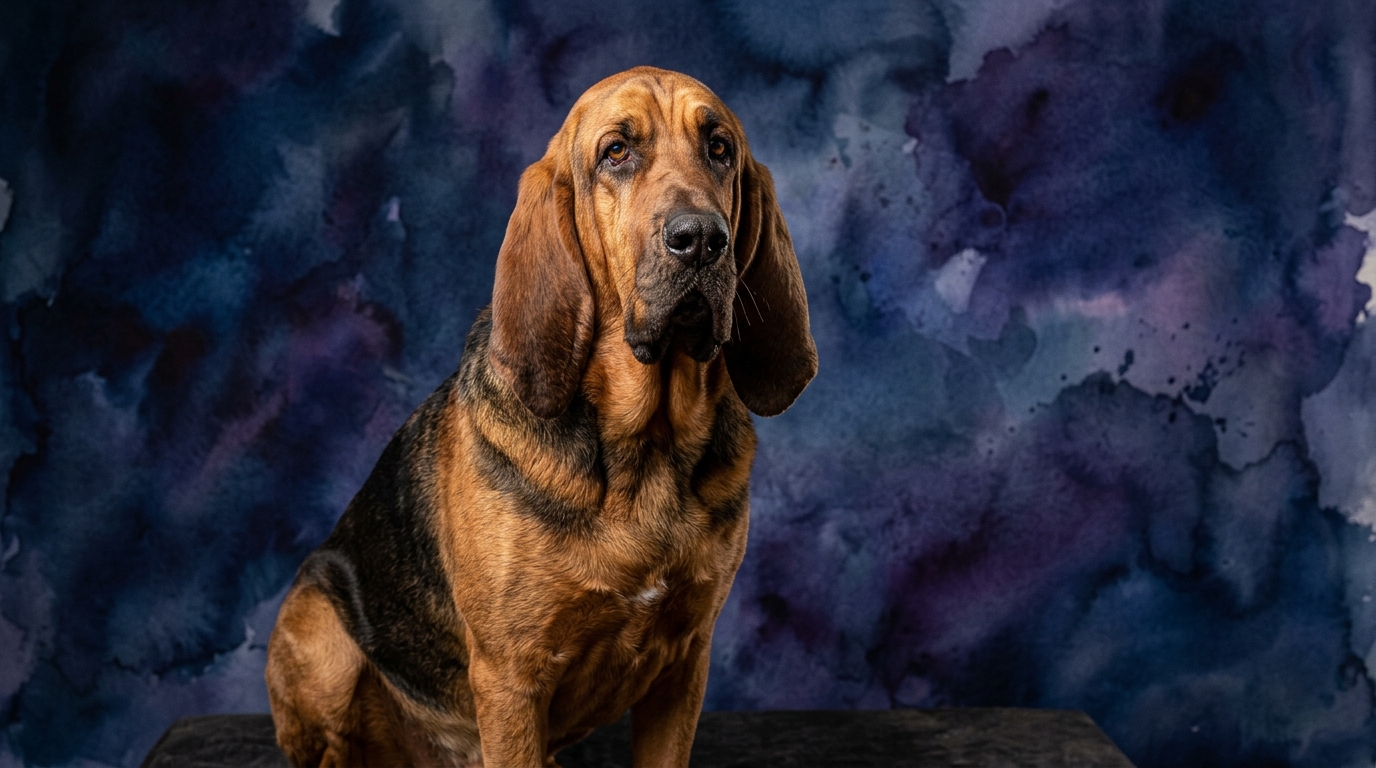
The Cosmic Pet Pet IQ Lab employs a multi-dimensional framework to assess canine intelligence, moving beyond a single, linear scale. For the Bloodhound, a breed deeply specialized in olfaction, its profile highlights extraordinary sensory processing. Its Problem Solving is rated 5/5, reflecting an unparalleled ability to navigate complex scent puzzles and overcome obstacles to follow a trail. Training Speed, however, registers at a challenging 1/5, indicating a strong independent streak and a primary focus on scent rather than human directives. Social Intelligence stands at 2/5, as their world is often dominated by olfactory information, potentially making them less attuned to nuanced human social cues. Instinctive Drive is a perfect 5/5, unequivocally dedicated to tracking, while Memory also scores 5/5, demonstrating an enduring capacity to recall intricate scent patterns and their associated environments.
In contrast, the Rat Terrier presents a more balanced, versatile cognitive blueprint. Its Problem Solving capability is rated 3/5, suggesting a practical aptitude for figuring out immediate environmental challenges, like accessing a toy or navigating a fence. Training Speed is a moderate 3/5, indicating a reasonable ability to learn and retain commands with consistent effort. Social Intelligence also sits at 3/5, showing a capacity for engaging with humans and other animals, though with a typical terrier's independent streak. Instinctive Drive, primarily focused on vermin control, is a 3/5, present but not as singularly consuming as the Bloodhound's scent drive. Memory is likewise 3/5, sufficient for retaining routines and learned behaviors without the Bloodhound’s exceptional recall for specific, complex sensory data.
Where the Bloodhound's Mind Excels
The Bloodhound's cognitive strengths are deeply rooted in its olfactory prowess, making it a master of specific, complex tasks. Its 5/5 Problem Solving isn't about obedience, but about an unyielding, methodical approach to deciphering and following a scent trail over vast distances and varied terrain. This involves intricate spatial reasoning, the ability to filter out irrelevant odors, and relentless persistence even when the trail seems lost. No other breed comes close to its capacity for this particular type of cognitive challenge. This breed can mentally reconstruct events from residual scent molecules, a feat of pure analytical deduction within its sensory domain.
Furthermore, the Bloodhound's 5/5 Memory is specifically tailored to its primary function: recalling the nuances of past scent experiences. It can remember specific scent signatures, the paths taken, and the environmental factors encountered, building a vast mental library of olfactory data. This memory isn't just about remembering a command; it's about storing and retrieving a complex tapestry of sensory information to inform current tracking efforts. Its 5/5 Instinctive Drive fuels this entire cognitive engine, providing an unwavering internal motivation to engage with and excel at scent work, demonstrating a singular focus that overrides most other stimuli.
Where the Rat Terrier's Mind Shines
The Rat Terrier's cognitive profile, while not reaching the extreme peaks of the Bloodhound in specialized areas, offers a balanced and adaptable form of intelligence. Its 3/5 Training Speed is a significant advantage, allowing it to pick up new commands and routines at a more accessible pace for the average owner. This moderate score reflects a willingness to engage with human instruction, a trait less pronounced in the highly independent Bloodhound. They learn through repetition and positive reinforcement, showing a practical responsiveness to training cues that makes them more amenable to diverse domestic roles.
The Rat Terrier's 3/5 Social Intelligence also provides a distinct edge in everyday interactions. They are generally more attuned to human emotional states and social signals, making them more adaptable companions in various family dynamics. This enables them to participate more readily in interactive games, respond to subtle body language, and integrate smoothly into social settings. Their 3/5 Problem Solving, while not as specialized as the Bloodhound's, is geared towards practical, immediate solutions – like figuring out how to get a toy from under furniture or navigating household obstacles – demonstrating a versatile, quick-thinking ingenuity relevant to a pet's daily life.
Training: A Tale of Two Temperaments
When considering ease of training, the Rat Terrier clearly holds an advantage due to its balanced cognitive profile. Its 3/5 Training Speed means it can learn new commands and cues at a reasonable pace, responding well to positive reinforcement and consistent methods. Their moderate Social Intelligence (3/5) allows them to be more responsive to human communication and motivation, making the training process a collaborative effort. They are often eager to please and enjoy the mental stimulation of learning, making them suitable for a variety of dog sports and obedience work.
The Bloodhound, with its 1/5 Training Speed, presents a fundamentally different training experience. Its powerful 5/5 Instinctive Drive to scent often overrides any desire to comply with human commands, especially once a scent is detected. They are not unintelligent; rather, their intelligence is directed towards their primary purpose. Training a Bloodhound requires immense patience, understanding of their independent nature, and a willingness to work with their overwhelming drive rather than against it. Recall, for instance, is notoriously difficult to instill reliably when a compelling scent is present, as their 5/5 Problem Solving is actively engaged in following the trail, not listening to human instruction. Their lower Social Intelligence (2/5) further means they may not prioritize human approval or subtle cues in the same way a Rat Terrier might.
Active Lifestyle vs. Relaxed Companionship
The choice between a Bloodhound and a Rat Terrier also largely depends on an owner's lifestyle and expectations for their dog's daily engagement. The Bloodhound, with its unparalleled 5/5 Instinctive Drive and 5/5 Problem Solving focused on scent, demands an owner who is prepared for a profoundly active and purpose-driven commitment. These dogs thrive when given regular, extensive opportunities to engage their nose, whether through dedicated tracking sports, long sniff-walks in varied environments, or even professional scent work. A relaxed owner who cannot provide this outlet will likely find a Bloodhound challenging, as their unfulfilled drive can manifest as restlessness or destructive behaviors. Their independent nature and low Training Speed also mean they are not content with passive companionship; they need a job.
Conversely, the Rat Terrier, with its balanced 3/5 in Instinctive Drive and Problem Solving, is adaptable to a wider range of active lifestyles. While they are energetic and enjoy activities like agility, fetch, or long walks, their drive is not as singularly consuming as the Bloodhound's. They can be content with a good daily exercise routine combined with interactive play and mental stimulation through training. Their moderate Social Intelligence (3/5) means they are generally more amenable to being a family companion, enjoying interaction and companionship without the overwhelming need for a specific, intense 'job.' They suit active owners who enjoy diverse activities, but also relaxed owners who can provide consistent exercise and engagement without needing to cater to a specialized, all-consuming drive.
The Verdict
Choose a Bloodhound if you are a dedicated, active individual eager to immerse yourself in the world of scent work and can provide extensive, consistent outlets for their unique olfactory intelligence.
Opt for a Rat Terrier if you seek a versatile, trainable companion for a moderately active lifestyle, appreciating their balanced problem-solving and social adaptability for diverse family settings.
🧠 Find Your Pet's IQ Score
Our Pet IQ Lab assessment covers 25+ tests across 5 cognitive dimensions — personalized to your breed.
Take the Full IQ Test →Frequently Asked Questions
Is a Bloodhound truly intelligent if it's difficult to train?
Yes, Bloodhounds possess a highly specialized form of intelligence, particularly in problem-solving related to scent and memory for complex trails. Their low training speed reflects an independent nature and profound focus on their instinctive drive, not a lack of cognitive capacity.
Do Rat Terriers make good family pets despite their terrier instincts?
Absolutely. Rat Terriers generally have a balanced social intelligence (3/5) and are adaptable, making them good family pets with proper socialization and training. Their instinctive drive for vermin control is present but manageable in a home environment.
Which breed requires more mental stimulation?
Both breeds benefit from mental stimulation, but in different ways. Bloodhounds require intensive mental engagement through scent work to satisfy their powerful instinctive drive and problem-solving abilities. Rat Terriers need varied mental challenges through training, puzzle toys, and interactive games to keep their balanced intelligence engaged.