Side-by-Side IQ Profile: Bloodhound vs. Sealyham Terrier
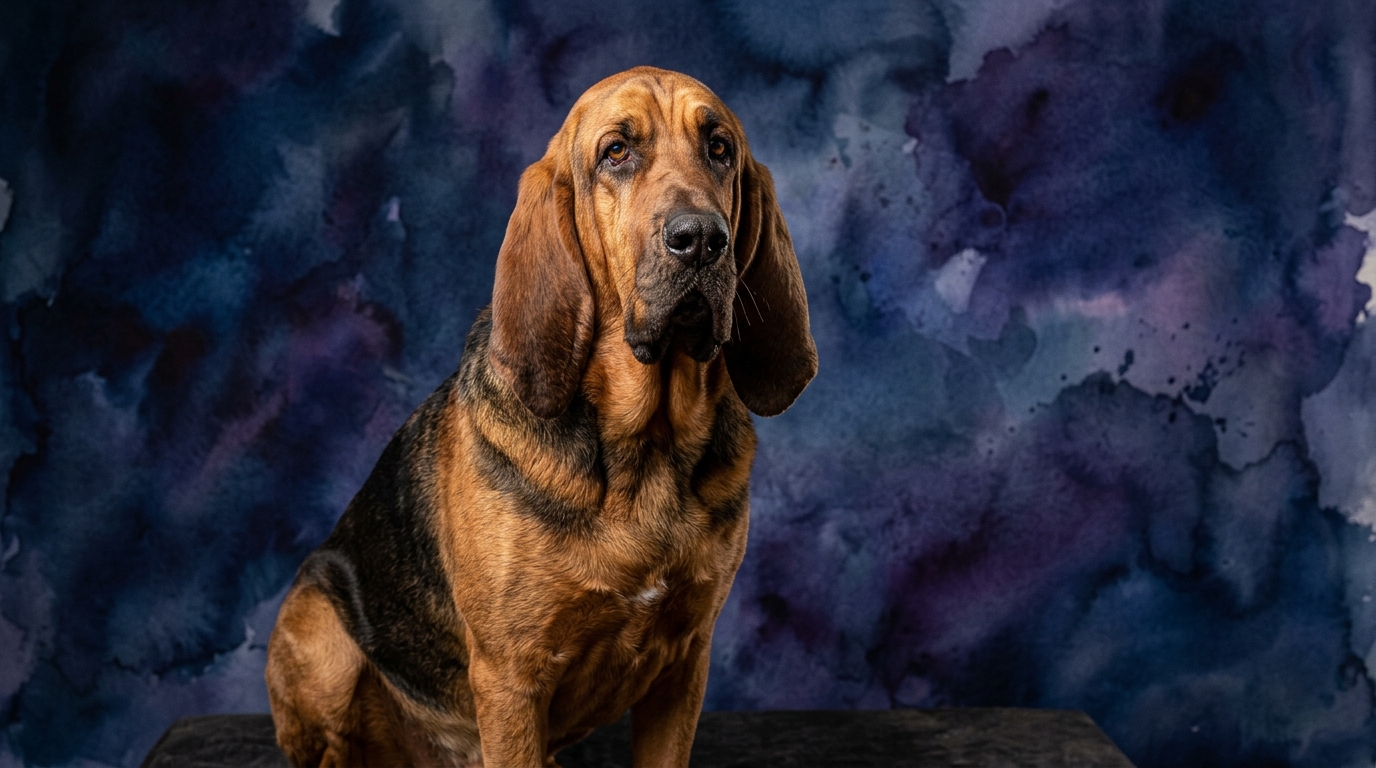
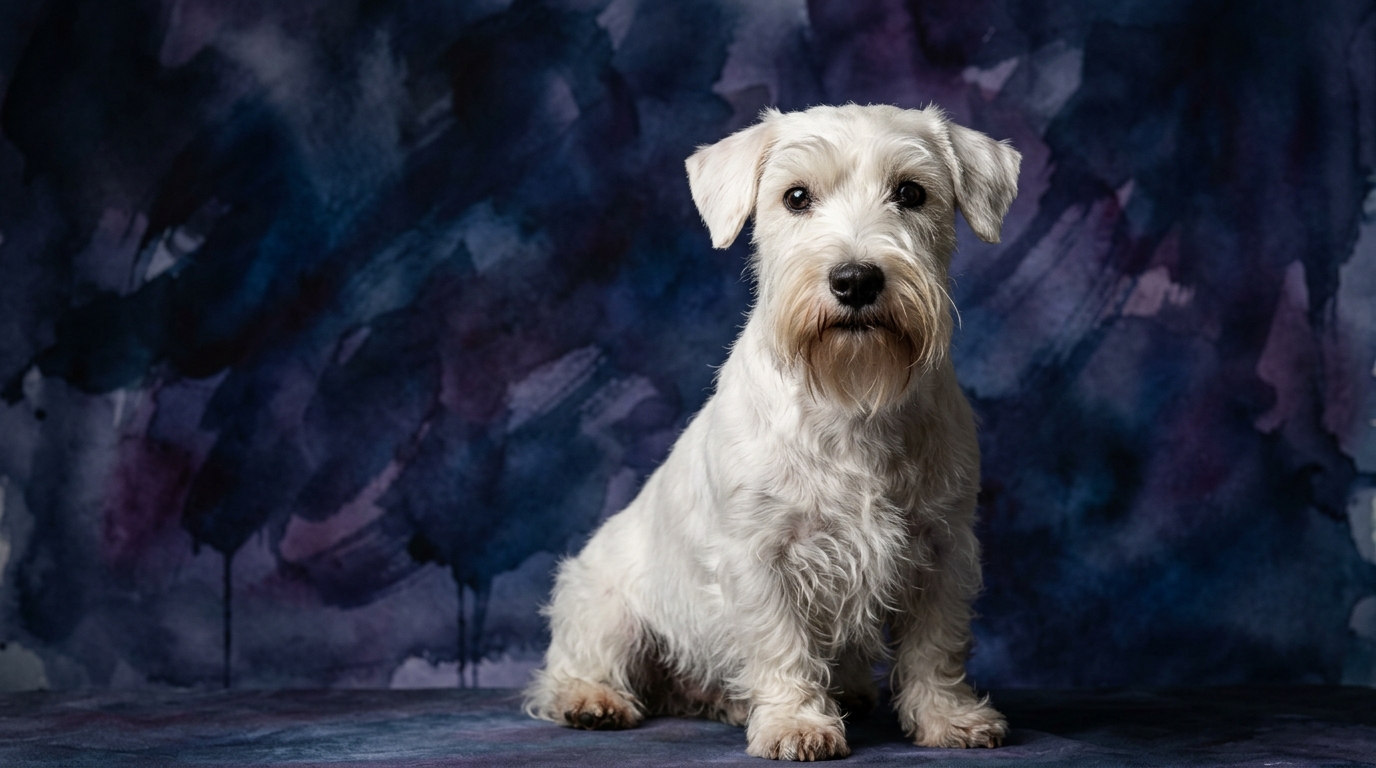
At The Cosmic Pet Pet IQ Lab, we analyze canine intelligence across five key dimensions. The Bloodhound, with a Coren rank of #74, presents a highly specialized cognitive profile, while the Sealyham Terrier, though not Coren-ranked, offers a balanced set of capabilities.
Bloodhound (Coren rank #74): Problem Solving 5/5 – Their cognitive prowess shines in deciphering complex scent trails, requiring sustained focus, deduction, and an ability to ignore distractions to follow a specific odor signature over varied terrains and time. Training Speed 1/5 – Bloodhounds exhibit a singular focus on scent, making them notoriously challenging for conventional obedience training. Their independent drive means they are not quick to respond to human commands when a compelling scent is present. Social Intelligence 2/5 – While generally amiable, their primary connection to the world is through their nose, often prioritizing scent information over nuanced human social cues or intricate pack dynamics beyond their immediate family. Instinctive Drive 5/5 – The Bloodhound's instinctive drive for scent tracking is unparalleled, a relentless, all-consuming urge to follow a trail to its conclusion, driven by centuries of selective breeding for this specific task. Memory 5/5 – Their memory is exceptional for scent patterns, recalling specific odors, their intensity, and the environmental context associated with them, crucial for re-acquiring lost trails or recognizing familiar scents over time.
Sealyham Terrier (Not Coren-ranked): Problem Solving 3/5 – Sealyhams display practical problem-solving skills, particularly in navigating confined spaces, overcoming obstacles to reach prey, or figuring out how to achieve a desired outcome through persistence and trial-and-error. Training Speed 3/5 – These terriers possess a moderate training speed. They are capable of learning commands and routines, but their inherent terrier independence and strong prey drive can make consistency a training challenge, requiring patience and engaging methods. Social Intelligence 3/5 – Sealyhams generally engage well with their human families, showing affection and understanding household routines. They are alert to their surroundings and can interpret social cues from their primary caregivers, though they retain a self-sufficient streak. Instinctive Drive 3/5 – Their instinctive drive is geared towards hunting small vermin, manifested in digging, barking at perceived intruders, and a tenacious pursuit of small, moving objects. It's present and influential, but not as singularly focused as the Bloodhound’s scent drive. Memory 3/5 – Sealyhams have a functional memory for routines, familiar people, and places. They can recall learned commands and experiences, but their memory isn't specialized to the same degree as a Bloodhound’s olfactory recall.
Where the Bloodhound's Cognition Excels
The Bloodhound’s profound cognitive advantage lies in its specialized olfactory processing and deductive reasoning. Their ability to discriminate between millions of scent molecules, follow a specific trail for miles, and then 'read' the aging and direction of that scent is a masterclass in biological data analysis. This isn't just sniffing; it’s a complex mental reconstruction of past events based on microscopic chemical signatures. Their memory for scent is also unmatched, allowing them to retain and recognize specific odor profiles over long periods, aiding in re-tracking or identifying individuals. Their problem-solving isn't about opening a latch; it's about solving a dynamic, three-dimensional puzzle across time and space using only their nose.
Where the Sealyham Terrier's Cognition Shines
The Sealyham Terrier's cognitive strengths lean towards adaptable, practical problem-solving in a dynamic environment, particularly one involving pursuit and evasion. Their problem-solving (3/5) reflects an ability to strategize in confined spaces, utilizing their physical attributes to navigate tunnels or dislodge prey. Their social intelligence (3/5) allows for more nuanced interactions within a family unit, making them generally more responsive to everyday human communication than a scent-absorbed Bloodhound. While not excelling in one specific area, their balanced cognitive profile makes them more generally versatile in adapting to various domestic and environmental challenges, requiring a broad range of quick decisions rather than sustained, singular focus.
Training Responsiveness: Bloodhound vs. Sealyham Terrier
Between these two, the Sealyham Terrier is generally easier to train, as indicated by its Training Speed score of 3/5 compared to the Bloodhound’s 1/5. The Bloodhound’s training difficulty stems directly from its overwhelming instinctive drive for scent work and its low social intelligence score. When a Bloodhound catches a compelling scent, its world narrows to that single stimulus, making it profoundly difficult to redirect its attention to human commands. They were selectively bred for independence in tracking, not for quick obedience. The Sealyham, while possessing its own terrier independence and a drive to hunt, is more amenable to learning and responding to human instruction, particularly when training is made engaging. Its higher social intelligence means it's more likely to engage with and seek approval from its owner, even if its own agenda sometimes takes precedence.
Matching Breeds to Lifestyles: Active vs. Relaxed Owners
Neither of these breeds is particularly suited for truly 'relaxed' owners in the sense of minimal engagement. The Bloodhound absolutely requires an active owner, specifically one dedicated to channeling its intense instinctive drive (5/5) into scent work, tracking, or similar mentally and physically demanding activities. Without such an outlet, their powerful drive can manifest as destructive behaviors or incessant vocalization. They need extensive, consistent exercise and mental stimulation that engages their olfactory prowess.
The Sealyham Terrier also suits an active owner, but one who appreciates a more versatile activity partner. While they have an instinctive drive (3/5) for hunting, it's not as singularly obsessive as the Bloodhound’s. They thrive on regular walks, play sessions, and mental puzzles that challenge their problem-solving (3/5). They are more adaptable to various forms of exercise and training, making them a fit for owners who enjoy a range of outdoor pursuits without necessarily committing to specialized scent work. A 'relaxed' owner might struggle with their inherent terrier tenacity and need for engagement.
The Verdict
Opt for a Bloodhound if you are an owner deeply committed to specialized scent work, possess the patience for independent, persistent tracking endeavors, and are prepared for a dog whose primary world is defined by its nose.
Select a Sealyham Terrier if you appreciate a tenacious, adaptable companion for varied activities, value a balance of independence and family engagement, and seek a dog that offers practical intelligence in diverse situations.
🧠 Find Your Pet's IQ Score
Our Pet IQ Lab assessment covers 25+ tests across 5 cognitive dimensions — personalized to your breed.
Take the Full IQ Test →Frequently Asked Questions
Are Bloodhounds difficult to live with due to their intelligence?
Bloodhounds present unique challenges not because of a lack of problem-solving ability, but due to their specialized focus. Their intense instinctive drive for scent work and low training speed mean they require significant management and dedication to channel their cognitive strengths appropriately, which can be demanding for an inexperienced owner.
How does the Sealyham Terrier's non-Coren ranking impact our understanding of its intelligence?
The absence of a Coren ranking for the Sealyham Terrier simply means it wasn't included in that specific study's methodology, not that it lacks intelligence. Our Cosmic Pet Pet IQ Lab data provides a granular view of its cognitive dimensions, highlighting its balanced problem-solving and social intelligence, offering a different perspective on its capabilities.
Can a Bloodhound learn general obedience despite its low training speed?
Yes, a Bloodhound can learn general obedience, but it requires immense patience, consistency, and highly motivating rewards. Their low training speed and strong independent drive mean that training sessions must be engaging and short, and owners must understand that a compelling scent will almost always override a learned command.