Side-by-Side Cognitive Profiles: Bloodhound vs. Soft Coated Wheaten Terrier
The Cosmic Pet Pet IQ Lab employs five key dimensions to evaluate canine intelligence, offering a nuanced view beyond simplistic 'smartness.' For the Bloodhound, ranked #74 by Coren, and the unranked Soft Coated Wheaten Terrier, these dimensions reveal distinct cognitive architectures.
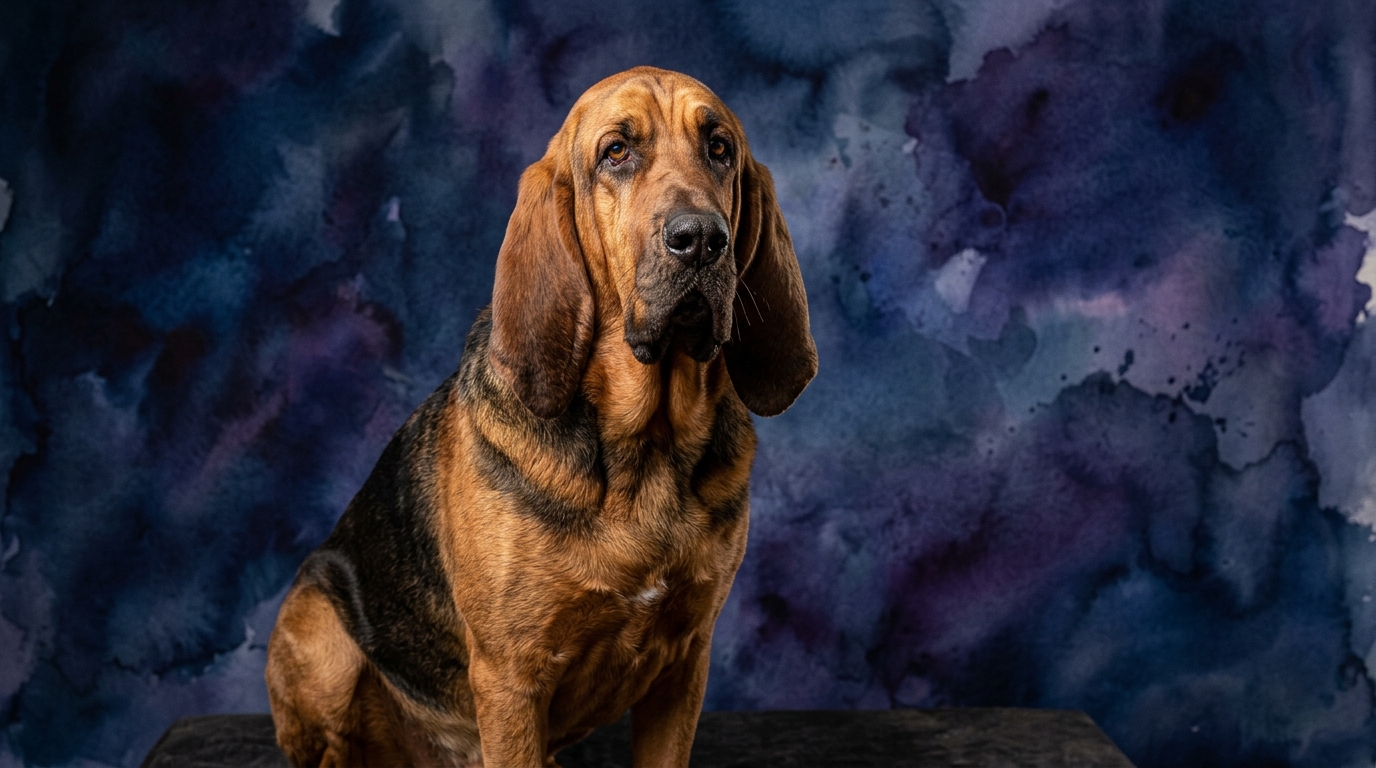
**Bloodhound (Coren Rank #74):**
**Problem Solving (5/5):** This isn't about solving traditional puzzles; it's the profound cognitive process of constructing a mental map from olfactory data. A Bloodhound analyzes scent molecules, differentiates between individual human 'signatures,' and filters out environmental noise, all while predicting the path a scent trail might take over varied, complex terrains. This requires immense deductive reasoning and a specialized form of spatial awareness based on smell.
**Training Speed (1/5):** Their low training speed isn't a lack of capacity to learn, but a deep-seated prioritization. Commands that don't align with their primary drive to track are often perceived as secondary. Their mental focus is so profoundly dedicated to scent that human instructions, especially in the presence of an interesting odor, frequently become background noise, requiring extraordinary persistence and motivation from the trainer.
**Social Intelligence (2/5):** While affectionate and amiable with their human companions, a Bloodhound's social intelligence is not primarily geared towards intricate social reciprocity. They are not typically seeking to 'read' their owner's nuanced emotional states or adjust their behavior based on subtle social cues in the same way a more companion-oriented breed might. Their interactions are often straightforward, driven by their gentle temperament rather than complex social navigation.
**Instinctive Drive (5/5):** This is the core of their being. The instinctive drive to follow a scent is not merely a strong urge; it's a cognitive imperative that overrides almost all other considerations. This drive dictates their problem-solving, their memory, and significantly impacts their trainability and social interactions, making them singularly focused on their olfactory mission.
**Memory (5/5):** Their olfactory memory is a cognitive marvel, allowing them to store and recall a vast library of scent profiles. They can remember specific trails for days, even weeks, and differentiate between hundreds of individual human scents. This specialized, long-term memory for smell is foundational to their tracking prowess and sets them apart from virtually all other breeds.
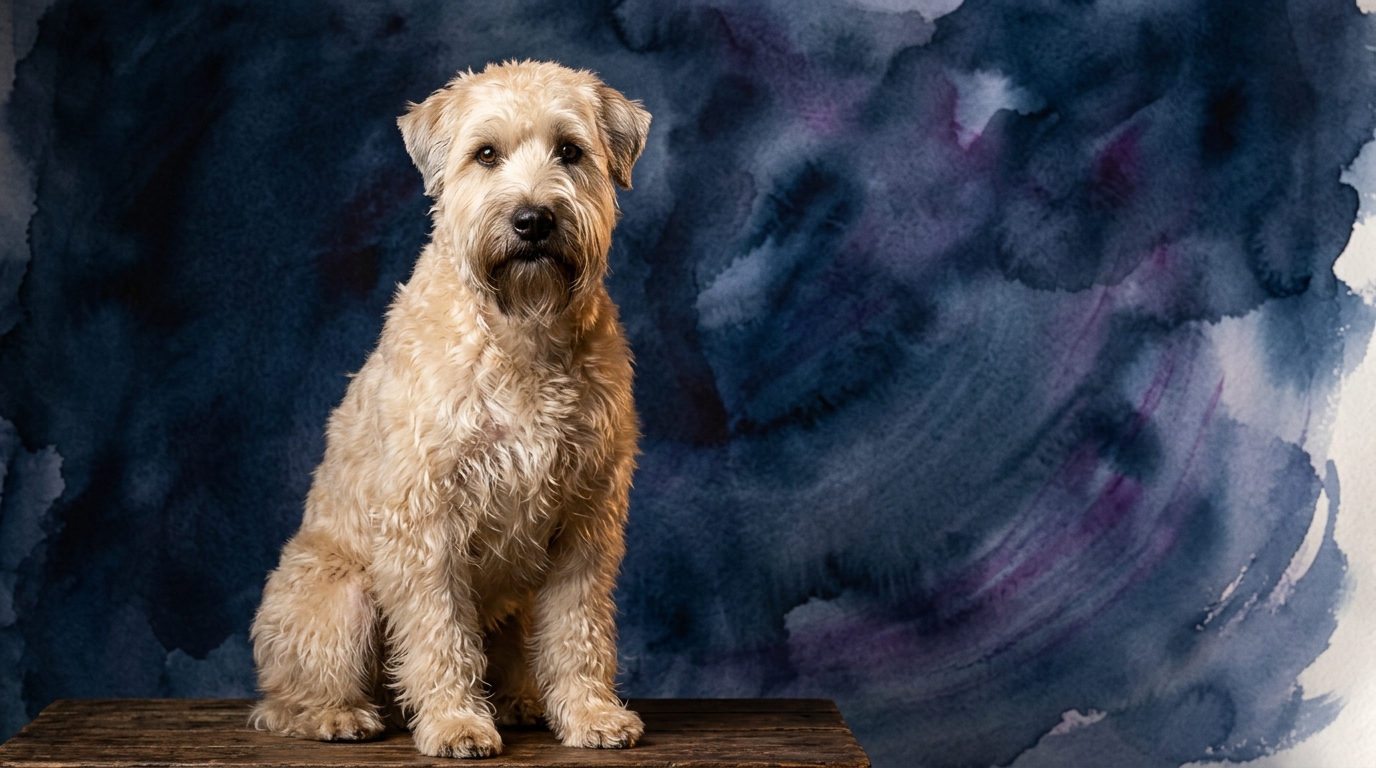
**Soft Coated Wheaten Terrier (Not Coren-Ranked):**
**Problem Solving (3/5):** Wheatens exhibit a practical, adaptable form of problem-solving. They can assess a situation, such as a closed door or a toy under furniture, and devise a solution through observation, trial-and-error, or even a bit of clever manipulation. Their solutions are often immediate and context-dependent, reflecting a general cognitive flexibility rather than a hyper-specialized skill.
**Training Speed (3/5):** Wheatens learn at a moderate pace, typically requiring consistent repetition but responding well to positive reinforcement and engaging training methods. Their willingness to engage with their handler, coupled with a balanced instinctive drive, means they can grasp new commands and routines effectively, though they might not achieve the lightning-fast acquisition seen in some working breeds.
**Social Intelligence (3/5):** Their social intelligence is well-rounded, enabling them to understand and respond to a range of human social cues, from vocal tones to body language. They generally enjoy interacting with family members and can adapt their behavior in social contexts, making them engaging and responsive companions within a household environment.
**Instinctive Drive (3/5):** As a terrier, the Wheaten possesses an instinctive drive for chasing, digging, and exploring, but this drive is typically balanced and manageable. It provides motivation for play and engagement but doesn't singularly dominate their cognitive landscape, allowing for a broader range of interests and trainability compared to the Bloodhound's intense focus.
**Memory (3/5):** Wheatens have a functional, general memory that serves them well in daily life. They remember learned commands, household routines, familiar faces, and preferred play spots. This memory is practical for navigating their environment and maintaining learned behaviors, without the specialized, sensory-specific recall seen in the Bloodhound.
Where the Bloodhound Excels Cognitively
The Bloodhound's cognitive superiority lies almost entirely within its specialized olfactory domain. Their Problem Solving score of 5/5 is a testament to their unrivaled capacity for complex scent discrimination and retention. This isn't merely a good nose; it's a sophisticated mental process that allows them to unravel a tangled web of odors, filter out irrelevant stimuli, and persist on a faint trail for miles, making deductions based on minute olfactory clues that are imperceptible to other breeds or even humans.
Furthermore, their Memory score of 5/5 highlights a cognitive marvel: the ability to store and recall a vast library of scent profiles. They can remember specific trails for days, even weeks, and differentiate between hundreds of individual human scents. This specialized, long-term memory for smell is foundational to their tracking prowess and represents a profound cognitive strength unmatched by the more generalized memory of the Wheaten. Once locked onto a scent, the Bloodhound exhibits an almost obsessive cognitive persistence, demonstrating a laser-like focus that allows them to ignore all other stimuli to achieve their primary goal.
Where the Soft Coated Wheaten Terrier Excels Cognitively
The Wheaten's cognitive strengths are found in its more generalized adaptability and balanced approach to interaction. With a Problem Solving score of 3/5, they demonstrate practical, immediate problem-solving skills that apply to a wider array of daily challenges. Unlike the Bloodhound's singular focus, the Wheaten can assess and devise solutions for common household obstacles, such as figuring out how to open a cabinet or retrieve a toy from a difficult spot, often through observation and trial-and-error.
Their Social Intelligence score of 3/5 also allows them to engage more fluidly in reciprocal interactions with humans. Wheatens are more attuned to subtle human body language and vocal tones, making them generally more responsive to social cues than the independently-minded Bloodhound. This translates to a more integrated family dynamic, where they are more likely to seek interaction and participate in human-centric activities, showcasing a balanced and adaptable social understanding.
Training Aptitude: Which Breed is Easier?
Based on their IQ profiles, the Soft Coated Wheaten Terrier is generally easier to train than the Bloodhound. The Wheaten's Training Speed of 3/5, combined with a Social Intelligence of 3/5 and a more balanced Instinctive Drive (3/5), indicates a dog that is more receptive to human instruction and motivated by positive reinforcement. They learn new commands at an average pace and are typically eager to engage with their handler, making consistent training efforts more rewarding and efficient.
In contrast, the Bloodhound's Training Speed of 1/5 is a significant hurdle. Their profound Instinctive Drive (5/5) for scent work often overrides any desire to comply with human commands, especially when a compelling scent is present. This isn't a lack of cognitive capacity, but a powerful redirection of their mental focus. Training a Bloodhound requires immense patience, consistency, and a deep understanding of their motivations, as their primary cognitive effort is dedicated to their olfactory world, making the process lengthy and challenging, particularly for novice owners. They are not inherently seeking to please in the same way a Wheaten might be; their internal reward system is heavily tied to their nose.
Owner Suitability: Active vs. Relaxed Lifestyles
Neither the Bloodhound nor the Soft Coated Wheaten Terrier are ideal for truly 'relaxed' owners who prefer minimal engagement. Both breeds require significant mental and physical stimulation, though their needs diverge greatly in nature.
For **active owners**, both breeds demand commitment. The Bloodhound suits owners who are active in a very specific, dedicated way: those interested in intensive scent work, tracking sports, or search and rescue. Their physical activity is often tied directly to their mental engagement in tracking, requiring extensive, focused outdoor exploration where their nose can lead for hours. A relaxed owner would quickly become overwhelmed by their profound need to follow scent and the resulting independent behaviors.
The Soft Coated Wheaten Terrier, while also requiring active engagement, suits owners who enjoy varied daily activities. They thrive on regular walks, playtime, and can excel in diverse dog sports like agility, obedience, or rally. Their activity needs are more general and adaptable to a typical active lifestyle, making them a better fit for owners who want a versatile companion without needing to commit to a highly specialized pursuit like tracking. For an owner seeking consistent, moderate engagement without the demands of a professional tracker or athlete, the Wheaten offers a more adaptable, though still demanding, partnership.
The Verdict
If your passion lies in dedicated scent work, tracking, or search and rescue, and you possess the patience and understanding to manage a dog whose primary cognitive focus is its nose, the Bloodhound will be an unparalleled partner.
If you seek a companion with balanced cognitive abilities, moderate trainability, and a social nature that integrates well into a family life with varied daily activities, the Soft Coated Wheaten Terrier offers a more adaptable and generally responsive partnership.
🧠 Find Your Pet's IQ Score
Our Pet IQ Lab assessment covers 25+ tests across 5 cognitive dimensions — personalized to your breed.
Take the Full IQ Test →Frequently Asked Questions
Are Bloodhounds easy to live with?
Bloodhounds are generally gentle and docile indoors, but their profound instinctive drive requires significant mental and physical outlets, primarily scent work, to prevent frustration and potential destructive behaviors. Their independent nature means they aren't always seeking to please.
Do Wheatens bark a lot?
Soft Coated Wheaten Terriers can be prone to barking, especially if not adequately exercised or stimulated. They often use their voice to alert to new arrivals or express excitement, making consistent training important to manage this trait.
Which breed is better for first-time dog owners?
The Soft Coated Wheaten Terrier is generally a better choice for first-time owners due to its more balanced trainability and social responsiveness. The Bloodhound's intense instinctive drive and independent nature require a very specific and experienced owner.