Side-by-Side Cognitive Profiles
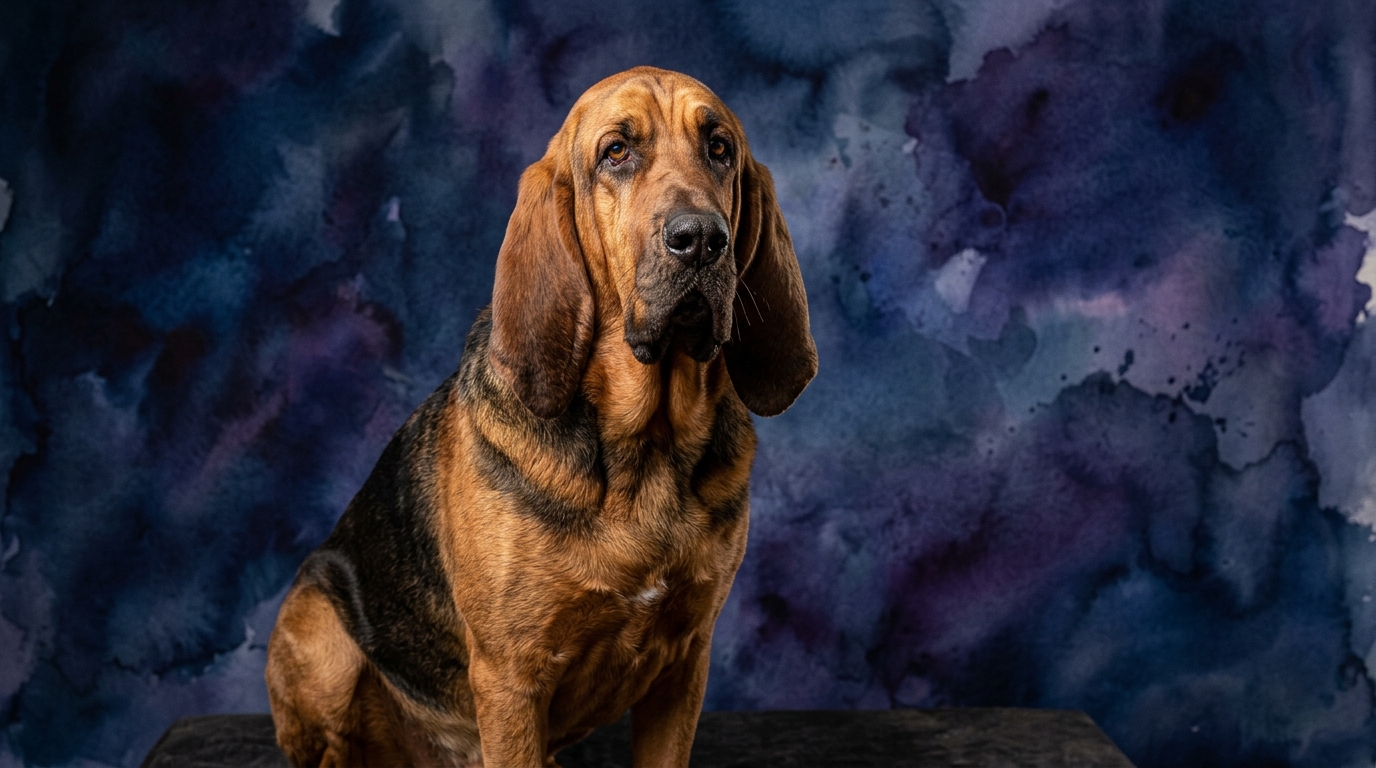
The Bloodhound's cognitive landscape is profoundly shaped by its olfactory prowess. Its Problem Solving is rated 5/5, indicating an exceptional ability to unravel complex challenges, especially those involving scent trails. This isn't about generalized puzzle-solving, but an unparalleled capacity to follow and interpret intricate olfactory data, navigating distractions and time decay with remarkable persistence. Training Speed, however, registers a low 1/5; their single-minded focus on scent often makes them less interested in human-directed commands when a compelling odor is present, presenting a challenge for conventional obedience. Social Intelligence at 2/5 reflects their more independent nature; while affectionate, their primary focus often lies outside human interaction when on a scent. Instinctive Drive is a perfect 5/5, wholly centered on tracking. Their Memory, also 5/5, is particularly impressive for retaining scent patterns and locations, allowing them to recall and re-establish lost trails with precision.
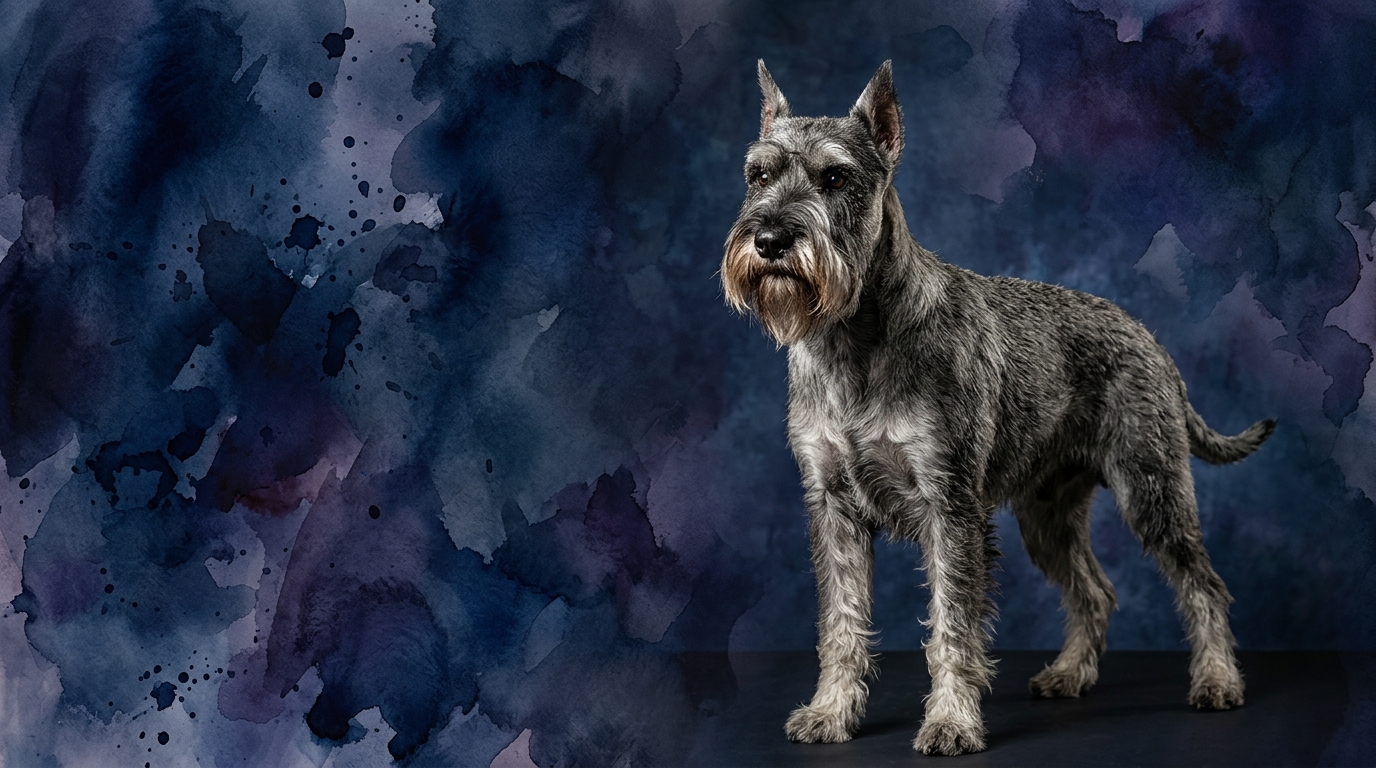
In contrast, the Standard Schnauzer presents a more balanced and versatile cognitive profile, typical of a working breed. Their Problem Solving is a robust 4/5, demonstrating a good capacity for understanding and resolving various situations, from navigating obstacles to learning complex tasks. Training Speed is a strong 4/5, indicating they are generally quick to grasp new commands and routines, eager to engage with their human companions. Social Intelligence, at 3/5, suggests a moderate awareness of human cues and social dynamics, making them responsive and cooperative companions. Their Instinctive Drive, rated 3/5, is present but more generalized, encompassing guarding, herding, and general utility work rather than a singular, overwhelming focus. Memory, at 4/5, allows them to retain training, routines, and experiences effectively, contributing to their adaptability.
Where the Bloodhound Excels Cognitively
The Bloodhound's cognitive strengths are undeniably rooted in its specialized olfactory processing. With a perfect 5/5 in both Problem Solving and Memory, coupled with an unparalleled 5/5 Instinctive Drive for scent work, this breed demonstrates a cognitive architecture uniquely optimized for tracking. Their problem-solving isn't about abstract logic, but about deciphering a world of invisible scent molecules; they excel at following faint, aged, or disrupted trails over vast distances, ignoring visual cues or other distractions that would derail most other breeds. This involves intricate cognitive mapping and memory recall to reconstruct a path, even after significant time has passed. For example, a Bloodhound can differentiate between individual human scents and maintain focus on a specific target, a feat of sustained cognitive effort and discrimination. Their memory isn't just for commands, but for the complex tapestry of scents that make up a trail, allowing them to effectively "reboot" their search if they lose the path momentarily.
Where the Standard Schnauzer Excels Cognitively
The Standard Schnauzer's cognitive strengths lie in its adaptability, responsiveness, and balanced working intellect. With a 4/5 in Training Speed and 3/5 in Social Intelligence, they are inherently more attuned to human instruction and social cues than the Bloodhound. This translates to a quicker understanding of new commands and a greater willingness to perform them in diverse environments. Their Problem Solving at 4/5 reflects a generalist aptitude for various tasks, from agility courses to complex obedience routines, rather than a singular, intense focus. They excel at learning multi-step sequences and applying learned behaviors to new situations, demonstrating a flexible and engaged mind. A Standard Schnauzer is more likely to assess a situation, look to its owner for guidance, and then execute a learned response, showcasing a cooperative intelligence vital for many working roles beyond specialized tracking.
Which Breed is Easier to Train, and Why
For most owners seeking a responsive companion, the Standard Schnauzer will prove significantly easier to train. Their 4/5 Training Speed means they typically grasp new concepts and commands with relative swiftness, often eager to please and engage with their human partners. Their 3/5 Social Intelligence further supports this, as they are more inclined to pay attention to human body language, tone, and expectations, making communication during training more fluid. In contrast, the Bloodhound's 1/5 Training Speed and 2/5 Social Intelligence present substantial training challenges. Their overwhelming 5/5 Instinctive Drive for scent means that once a compelling odor captures their attention, their focus becomes almost singular, making it exceedingly difficult to redirect them with conventional obedience commands. A Bloodhound might understand "sit" perfectly in a quiet living room, but that command often loses all meaning when a fascinating scent trail beckons in the park. Training a Bloodhound requires immense patience, understanding of their scent-driven world, and often specialized methods that leverage their natural inclinations rather than attempting to suppress them.
Which Suits Active Owners vs. Relaxed Owners
Neither the Bloodhound nor the Standard Schnauzer is suitable for a truly "relaxed" owner who prefers minimal engagement. Both breeds require significant mental and physical stimulation, but their needs manifest differently. The Bloodhound is an ideal match for an owner who is not only active but also dedicated to providing consistent, structured outlets for its extraordinary scenting abilities. This means regular, extensive tracking sessions, often involving specialized training or participation in scent work sports. An active owner for a Bloodhound isn't just someone who enjoys long walks; it's someone committed to understanding and fulfilling the breed's singular, intense drive. They thrive when given a "job" that engages their olfactory problem-solving and memory, and without such an outlet, their boundless energy and single-mindedness can lead to frustration for both dog and owner.
The Standard Schnauzer, while also requiring an active owner, offers more versatility. Their balanced drives and quicker training speed mean they excel in a variety of activities, from agility and obedience to hiking and dog sports. They thrive with owners who enjoy varied physical exercise and mental challenges, who can provide consistent training and social engagement. They are better suited for owners who want a responsive partner for a range of adventures, rather than focusing on one specialized activity. While they need regular exercise and mental stimulation, their needs are less singularly focused than the Bloodhound's, allowing for more diverse types of activity.
The Verdict
Opt for a Bloodhound if you are a dedicated individual deeply passionate about canine scent work, prepared to channel their unparalleled olfactory problem-solving and instinctive drive into consistent, specialized tracking activities.
Select a Standard Schnauzer if you desire a versatile, responsive companion eager to learn, thriving on varied physical and mental challenges, and capable of excelling in diverse activities from obedience to agility.
🧠 Find Your Pet's IQ Score
Our Pet IQ Lab assessment covers 25+ tests across 5 cognitive dimensions — personalized to your breed.
Take the Full IQ Test →Frequently Asked Questions
Are Bloodhounds difficult to live with due to their strong scent drive?
Bloodhounds can be challenging if their innate scent drive isn't adequately managed and channeled. Their tendency to follow scents can lead to them becoming oblivious to commands and prone to wandering if not securely contained or engaged in appropriate activities. Owners must be prepared for their independent nature when a compelling odor is present.
Do Standard Schnauzers require a lot of grooming?
Standard Schnauzers have a dense, wiry coat that requires regular grooming to prevent matting and maintain its distinctive appearance. This typically involves weekly brushing, professional stripping or clipping every few months, and regular trimming of their beard and eyebrows.
Which breed is better with children?
Both breeds can be good with children when properly socialized and trained, but their approaches differ. Standard Schnauzers, with their moderate social intelligence and desire to engage, often adapt well to family life and can be playful companions. Bloodhounds are generally gentle but their independent, scent-focused nature means they might be less inclined to actively participate in children's games compared to a more socially oriented breed.