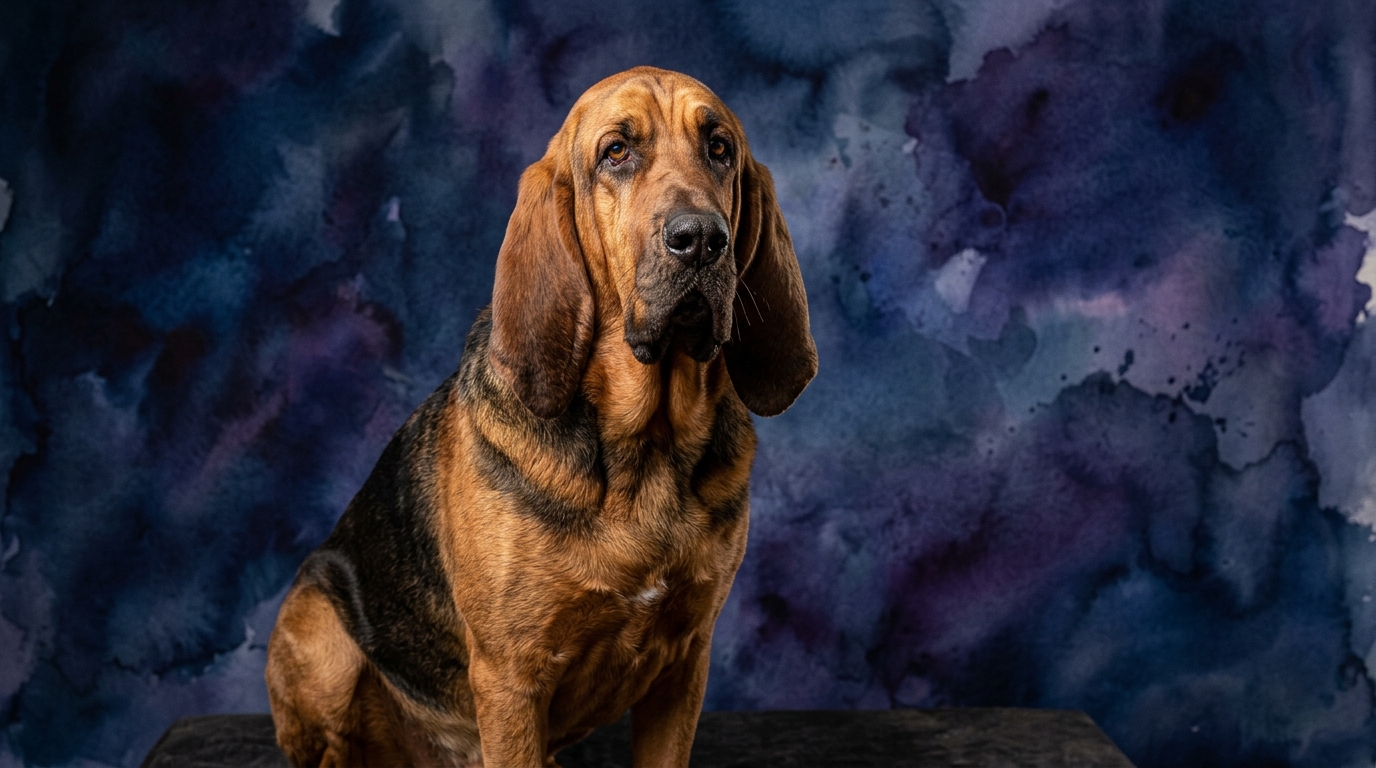

Side-by-Side Cognitive Profile: Bloodhound vs Sussex Spaniel
The Cosmic Pet Pet IQ Lab's assessment provides a clear breakdown of each breed's cognitive strengths across five key dimensions. For the Bloodhound, its Problem Solving scores an exceptional 5/5. This breed excels in complex, multi-stage challenges, particularly those involving scent-based navigation and deduction; their capacity to unravel intricate scent trails, distinguishing individual odors amidst a cacophony of others, demonstrates an exceptional cognitive ability to process and interpret sensory data to achieve a goal. However, its Training Speed is a notably low 1/5, reflecting a strong independent drive and singular focus that can make rapid command acquisition difficult. Social Intelligence registers at 2/5; while generally amiable, a Bloodhound's social acumen is moderate, often prioritizing olfactory pursuits over nuanced interpersonal interactions. Its Instinctive Drive is an unparalleled 5/5, centered almost entirely on scent work, making this powerful, innate compulsion the cornerstone of its cognitive makeup. Finally, its Memory is also a perfect 5/5, indicating an extraordinary recall for scents and the paths they have followed, allowing them to pick up old trails with surprising accuracy.
In contrast, the Sussex Spaniel presents a more balanced cognitive profile. Its Problem Solving is a moderate 3/5, capable of navigating common household puzzles or learning routine tasks with a reasonable degree of success, often geared towards achieving comfort or companionship. Training Speed for the Sussex Spaniel is 3/5, meaning it absorbs new commands and routines with steady, consistent effort, generally eager to please its owners, which aids in its learning process. Social Intelligence is also 3/5; these spaniels exhibit a moderate level of social intelligence, capable of reading human moods and interacting appropriately within a family setting, adapting to new social situations. Their Instinctive Drive is a balanced 3/5, encompassing a moderate prey drive suitable for flushing game, alongside a strong desire for companionship. Similarly, its Memory is 3/5, demonstrating reliable recall for routines, commands, and familiar individuals, contributing to their adaptability as companion animals, though perhaps not with the same specificity as a scent-focused breed.
Where the Bloodhound Excels Cognitively
The Bloodhound's cognitive superiority shines in tasks demanding profound sensory analysis and sustained, independent focus. Their 5/5 problem-solving capability is intrinsically linked to their legendary olfactory sense; they don't just follow a trail, they cognitively reconstruct an event through scent, discerning subtle changes and temporal layers in a way few other breeds can. This exceptional aptitude allows them to navigate complex environments, overcome obstacles, and disregard distractions, all while meticulously adhering to a scent path. Furthermore, their 5/5 instinctive drive is not just a compulsion, but a powerful cognitive engine that fuels this relentless dedication, enabling them to work for hours on a single task without wavering. Coupled with a 5/5 memory for intricate scent patterns and geographical routes, a Bloodhound's cognitive architecture is a masterclass in specialized, high-performance tracking and deductive reasoning, making them unmatched in forensic or search-and-rescue applications.
Where the Sussex Spaniel Wins Cognitively
Conversely, the Sussex Spaniel's cognitive strengths lie in its balanced adaptability and social engagement, areas where the Bloodhound's specialized focus presents limitations. With a 3/5 social intelligence, the Sussex Spaniel is more attuned to human emotional states and social dynamics, making them more responsive to nuanced interactions within a family environment. Their 3/5 training speed, while not exceptional, signifies a greater willingness and capacity to learn and comply with a broader range of human-initiated commands and routines compared to the Bloodhound's independent nature. This moderate cognitive flexibility allows them to integrate more seamlessly into various companion roles, adapting to different household expectations and social situations with greater ease. Their balanced instinctive drive (3/5) also means they are less singularly fixated, making them more open to diverse activities and less prone to being entirely consumed by a single pursuit, unlike the Bloodhound's intense scent drive.
Training Dynamics: Which is Easier to Train?
When considering ease of training, the Sussex Spaniel decidedly takes the lead due to its 3/5 training speed and 3/5 social intelligence. These scores reflect a canine more inclined to collaborate and respond to human direction. Sussex Spaniels typically exhibit a greater eagerness to please and a stronger desire for owner interaction, which translates into more straightforward and rewarding training sessions. They are generally receptive to learning a variety of commands and routines, understanding that compliance often leads to positive reinforcement and continued companionship. Their moderate instinctive drive means they are less likely to become singularly distracted by external stimuli, maintaining focus on the task at hand.
The Bloodhound, with its 1/5 training speed, presents a far greater challenge. Its profound 5/5 instinctive drive for scent work often overrides any desire to comply with human commands, especially if a compelling scent is present. Their independent nature and single-minded focus mean that training requires immense patience, creativity, and a deep understanding of their motivations, often needing to integrate scent work into obedience to capture their attention. Basic obedience for a Bloodhound can be a prolonged endeavor, as their cognitive framework is geared towards autonomous tracking rather than human-directed tasks, whereas a Sussex Spaniel will likely grasp fundamental commands much faster and with less resistance.
Matching Canine Cognition to Owner Lifestyles
The choice between these breeds often aligns with an owner's lifestyle and activity levels. The Bloodhound, with its 5/5 instinctive drive and 5/5 problem-solving in tracking, is best suited for highly active owners who are prepared to engage deeply with its specialized needs. This breed requires extensive mental stimulation through scent work, long walks where they can follow trails, and owners who appreciate their independent, driven nature. They are not dogs that are content with minimal exercise or passive companionship; their cognitive design demands a purpose and an outlet for their formidable tracking abilities, thriving in environments where their unique talents are utilized.
Conversely, the Sussex Spaniel, with its more balanced 3/5 instinctive drive and 3/5 activity requirements, is a better fit for relaxed owners seeking a devoted companion. While they benefit from regular walks and playtime, their needs are more manageable and less specialized. They thrive on being part of the family, enjoying comfortable routines and moderate activity, making them excellent companions for those who appreciate a calmer, more adaptable canine presence in their home without the intense demands of a working tracker. Their social intelligence also makes them more suitable for families seeking an interactive and responsive pet.
The Verdict
Choose a Bloodhound if you are an experienced, dedicated owner seeking a highly specialized working dog for scent-based activities, appreciating their independent nature and extraordinary tracking capabilities over rapid obedience.
Opt for a Sussex Spaniel if you desire a balanced, amiable, and moderately active companion dog that integrates well into family life and responds readily to training, valuing a steady temperament and social connection.
🧠 Find Your Pet's IQ Score
Our Pet IQ Lab assessment covers 25+ tests across 5 cognitive dimensions — personalized to your breed.
Take the Full IQ Test →Frequently Asked Questions
Is a Bloodhound difficult to manage in a typical home setting?
Yes, their intense 5/5 instinctive drive for scent work and 1/5 training speed can make them challenging without consistent management. They require secure environments to prevent them from following a scent trail and ample opportunities for appropriate mental stimulation to prevent boredom and destructive behaviors.
Do Sussex Spaniels require a lot of grooming?
Sussex Spaniels have a thick, moderate-length coat that requires regular grooming to prevent matting and keep it healthy. Weekly brushing and occasional professional trims are typically sufficient to maintain their appearance and comfort, especially around their ears and feathering.
Can a Sussex Spaniel participate in dog sports?
Absolutely. With their balanced 3/5 problem-solving and 3/5 training speed, Sussex Spaniels can excel in various dog sports like obedience, rally, and even some scent work or agility, enjoying the mental and physical engagement that these activities provide.