
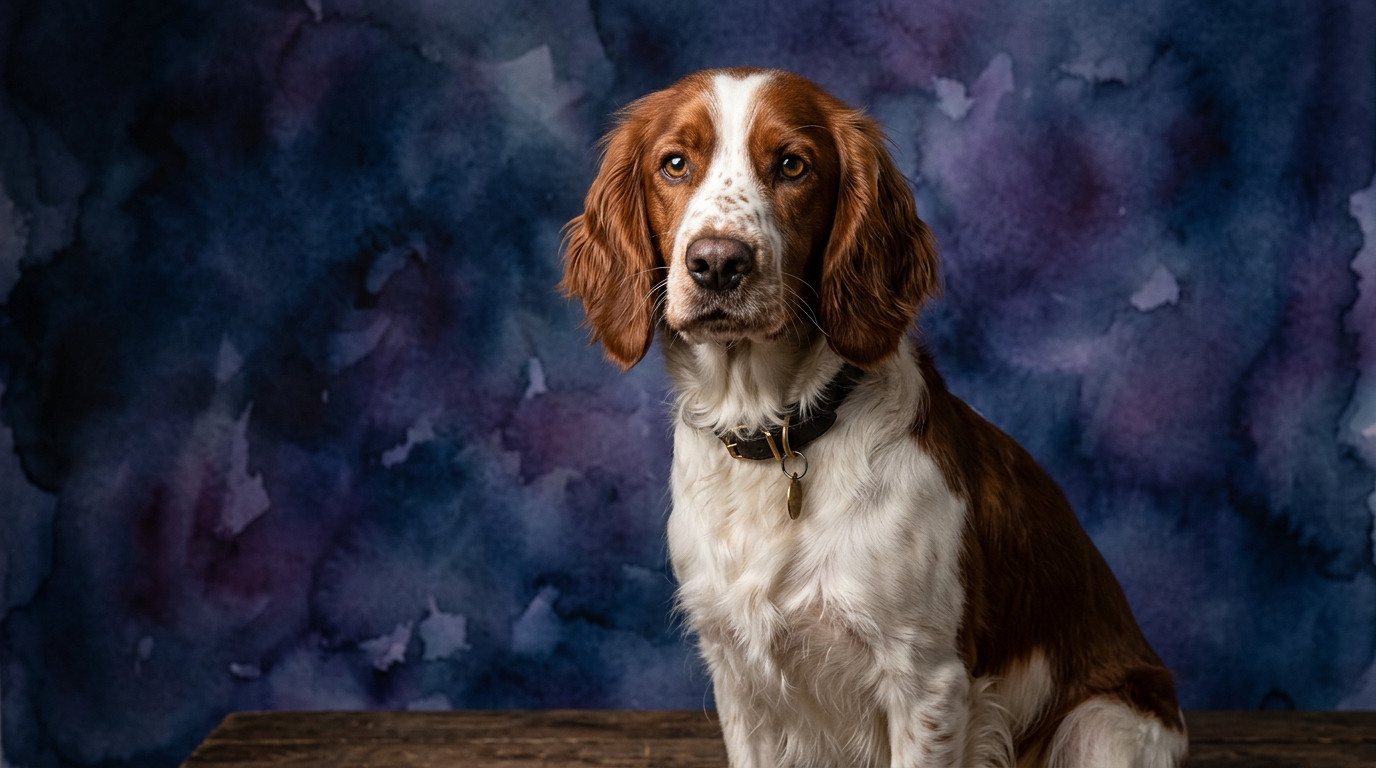
Side-by-Side IQ Profile: Bloodhound vs. Welsh Springer Spaniel
The Bloodhound, ranked #74 by Coren, demonstrates a remarkable problem-solving ability of 5/5, almost exclusively channeled into deciphering intricate scent puzzles, navigating complex trails, and demonstrating extraordinary deductive reasoning through olfaction. However, its training speed is a challenging 1/5, reflecting an inherent independence and a primary motivation driven by scent, often overriding human directives. Social intelligence sits at 2/5; while capable of affection, the Bloodhound's working focus is less on reading human emotional cues and more on its environment's olfactory data. Instinctive drive is an unparalleled 5/5, manifesting as relentless, single-minded pursuit of a scent source. Its memory, also a perfect 5/5, allows it to retain vast libraries of scent information, track routes, and recall specific odor signatures over long periods.
The Welsh Springer Spaniel, ranked #31 by Coren, demonstrates a strong 4/5 in problem-solving, adept at figuring out how to retrieve objects from challenging locations, navigating obstacles in the field, and understanding sequences of tasks. Its training speed is a commendable 4/5, indicating a quick grasp of new commands and a willingness to learn through positive reinforcement. Social intelligence is rated 3/5; these dogs are generally attuned to their human companions, responsive to moods, and eager to participate in family life. The instinctive drive is a balanced 3/5, encompassing a natural aptitude for flushing game and retrieving, but within a framework that allows for handler control. Memory is a solid 4/5, enabling them to recall a wide array of commands, remember the location of hidden items, and retain learned routines effectively.
Where the Bloodhound Excels Cognitively
The Bloodhound's cognitive superiority lies almost entirely within the realm of olfaction and its associated problem-solving. They possess an unparalleled capacity for scent discrimination, able to isolate and follow a specific human or animal trail even hours or days old, amidst a cacophony of other odors. This isn't just sniffing; it's a complex cognitive process involving pattern recognition, short-term and long-term scent memory, and an almost deductive reasoning skill applied to olfactory data. Their perseverance in a scent-related task is unmatched; once on a trail, their focus is absolute, demonstrating an incredible mental stamina for sustained cognitive effort in their specialized field. This single-minded determination to unravel an olfactory puzzle is where their intellectual prowess truly shines, making them peerless in tracking and search-and-rescue scenarios.
Where the Welsh Springer Spaniel Excels Cognitively
The Welsh Springer Spaniel excels in a more generalized form of intelligence, particularly in cooperative tasks and social adaptability. Their cognitive strengths are evident in their ability to quickly learn and execute complex multi-step commands, demonstrating a higher training speed and a greater eagerness to work in partnership with a human handler. They are adept at reading human body language and vocal cues, which contributes to their superior social intelligence and makes them more versatile in various domestic and sporting environments. Their problem-solving, while not as specialized as the Bloodhound's, is more broadly applicable to navigating human-centric tasks, such as agility courses, obedience trials, or figuring out how to retrieve a toy from an unusual spot. This breed's strength lies in its balanced cognitive profile, allowing for adaptability and harmonious integration into a human family structure.
Ease of Training: Behavioral Differences
The Welsh Springer Spaniel is unequivocally easier to train compared to the Bloodhound, primarily due to fundamental differences in their motivational drives and social intelligence. Welsh Springers possess a higher training speed (4/5) and a greater desire to please their human companions (social intelligence 3/5), making them highly responsive to positive reinforcement and command-based learning. They thrive on interaction and view training as a cooperative venture, quickly forming associations between actions and rewards or handler approval. In contrast, the Bloodhound's training speed is a challenging 1/5, stemming from its overwhelming instinctive drive (5/5) for scent work. When a Bloodhound catches a scent, its world narrows to that olfactory trail; it becomes 'selectively deaf' to human commands, as its primary cognitive focus is consumed by the scent puzzle. Training a Bloodhound requires immense patience, specialized motivation often tied to scent-based rewards, and an understanding that their independence is not defiance but a manifestation of their profound genetic programming. While both breeds can be trained, the Welsh Springer Spaniel's inherent biddability and cooperative spirit make the training process significantly smoother and more rewarding for the average owner.
Matching Breeds to Owner Lifestyles
The choice between these two breeds largely hinges on an owner's lifestyle and their definition of 'active.' A Bloodhound absolutely requires an active owner, but one whose activity aligns with the breed's singular passion: scent work. Owners must be prepared for extensive daily tracking exercises, long walks where the dog is allowed to follow scent, and a commitment to providing outlets for their powerful instinctive drive. A relaxed owner will quickly find themselves overwhelmed by a Bloodhound's persistent need to engage its nose, which can lead to destructive behaviors or an unmanageable dog if not properly channeled. Their physical stamina for trailing is immense.
The Welsh Springer Spaniel also suits active owners, but their activity needs are more generalized and often align with common family pursuits. They thrive on hiking, jogging, playing fetch, and participating in dog sports like agility or obedience. While energetic, their exercise can be more varied and less specialized than a Bloodhound's, making them a better fit for owners who enjoy a range of outdoor activities but might not be dedicated to advanced scent trailing. A relaxed owner might find a Welsh Springer's energy a bit much without regular outlets, but their biddable nature makes managing their activity easier than the Bloodhound's intense, independent drive.
The Verdict
Choose a Bloodhound if you are dedicated to advanced scent work, tracking, or search-and-rescue activities, and appreciate an independent problem-solver primarily focused on its nose.
Choose a Welsh Springer Spaniel if you seek a biddable, energetic, and cooperative companion for family life, various dog sports, and a more generalized outdoor activity partner.
🧠 Find Your Pet's IQ Score
Our Pet IQ Lab assessment covers 25+ tests across 5 cognitive dimensions — personalized to your breed.
Take the Full IQ Test →Frequently Asked Questions
Is a Bloodhound difficult to manage in a home environment?
Yes, a Bloodhound can be challenging if its powerful instinctive drive for scent work is not adequately fulfilled. Their independence and single-minded focus on scent can make them less responsive to conventional commands when a compelling odor is present, requiring consistent, specialized training and mental stimulation.
Do Welsh Springer Spaniels bark a lot?
Welsh Springer Spaniels can be prone to barking, especially if bored, left alone for extended periods, or not given sufficient mental and physical exercise. They are generally vocal dogs, often alerting their owners to new sights or sounds, but consistent training can help manage excessive barking.
Can a Bloodhound be a family pet?
A Bloodhound can certainly be a devoted family pet, known for its gentle nature and patience with children. However, prospective owners must be prepared for their significant exercise needs, particularly scent-based activities, and understand their independent, often stubborn, cognitive focus on odors, which requires dedicated management.