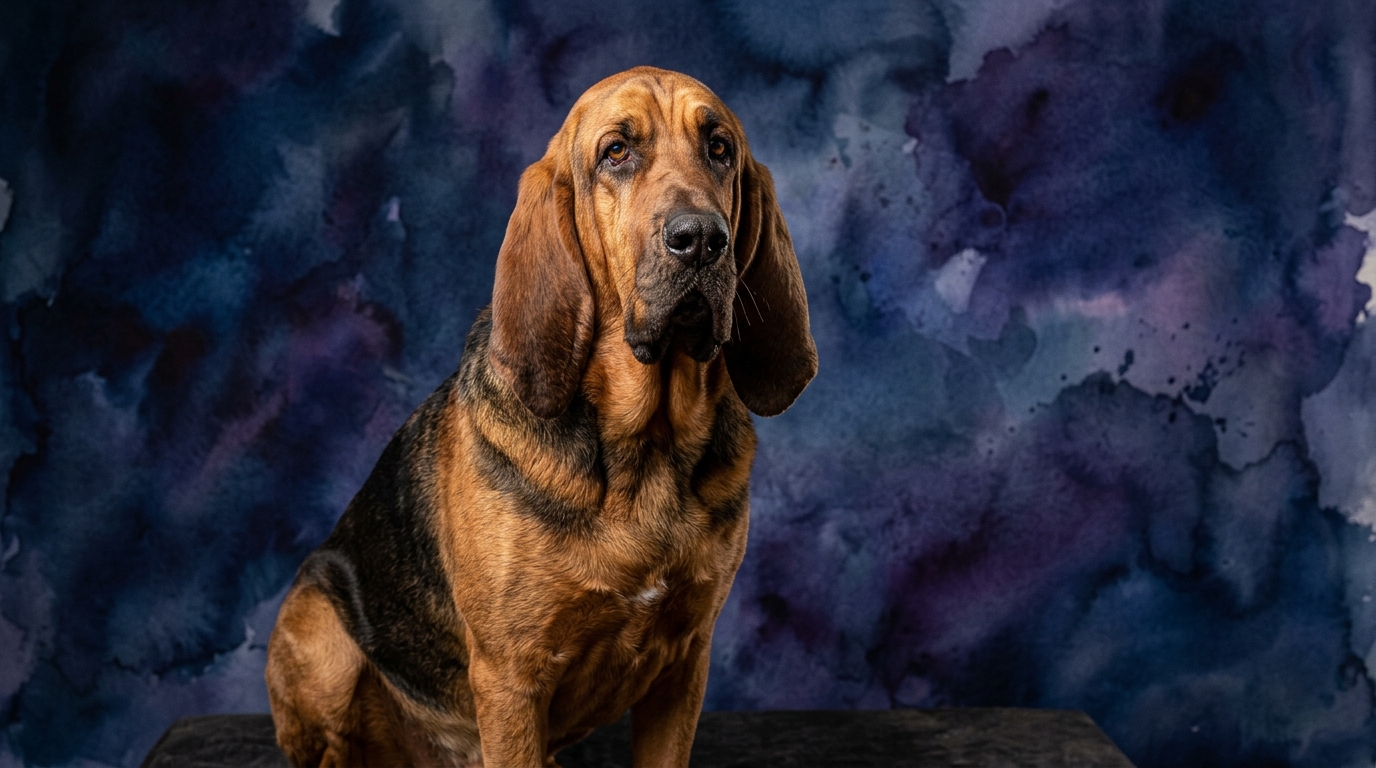
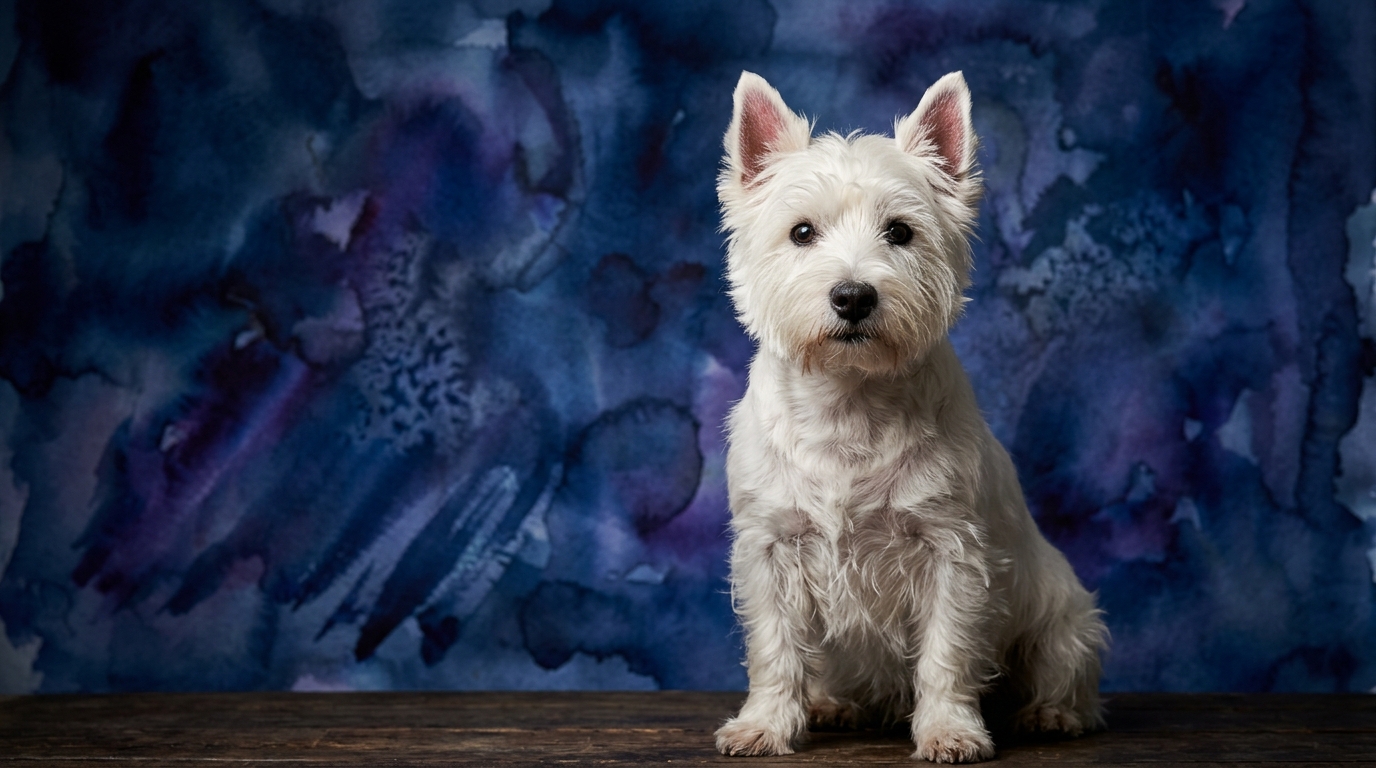
Side-by-Side IQ Profile: Bloodhound vs. Westie
The Cosmic Pet Pet IQ Lab data reveals distinct cognitive architectures for these two breeds. The Bloodhound, with a Coren rank of #74, exhibits a highly specialized intellect. Their Problem Solving score of 5/5 highlights an extraordinary capacity for complex analytical tasks, particularly when deciphering intricate scent trails over vast distances and varied terrain. Training Speed, however, registers at a challenging 1/5, reflecting a profound independence and a singular focus on their primary drive. Social Intelligence stands at 2/5, indicating that while capable of forming bonds, their attention is often internally directed or fixated on their work rather than on human social cues. An Instinctive Drive of 5/5 underscores their unwavering, almost compulsive dedication to tracking, a trait that overrides most other stimuli. This drive is powerfully supported by a Memory score of 5/5, enabling them to retain and recall vast, detailed olfactory information and complex environmental layouts.
The West Highland White Terrier, holding a more favorable Coren rank of #47, presents a more balanced and adaptable cognitive blueprint for general companionship. Their Problem Solving ability rates 3/5, demonstrating a resourceful and often ingenious approach to navigating their environment and achieving personal goals, though perhaps less systematically than a Bloodhound. Training Speed is a moderate 3/5, meaning they are capable learners, receptive to consistent instruction, but possess a terrier's characteristic independent streak that can sometimes manifest as selective hearing. Social Intelligence scores 3/5, indicating a reasonable awareness of human interaction and an ability to engage, making them generally responsive companions. Their Instinctive Drive, at 3/5, points to a strong prey drive typical of terriers, but it is generally more manageable and less all-consuming than the Bloodhound's singular obsession. A Memory score of 4/5 suggests a good capacity for remembering commands, routines, and experiences, contributing to their adaptability in various settings.
Where the Bloodhound Wins Cognitively
The Bloodhound's cognitive superiority lies unequivocally in its specialized problem-solving and memory related to scent. With a perfect 5/5 in both Problem Solving and Memory, this breed exhibits an unparalleled ability to process, interpret, and follow the most faint and ancient scent trails, often across diverse and challenging environments. Their cognitive architecture is built for sustained, complex analytical work in the olfactory domain; they can differentiate between countless individual scent signatures and recall the specific patterns of a target, even after long periods. This isn't just about following a line; it involves sophisticated pattern recognition, exclusion of irrelevant data, and persistent focus that few other breeds can match. Their cognitive strength is their unwavering, singular dedication to a task once engaged by their primary sense.
Where the West Highland White Terrier Wins Cognitively
The West Highland White Terrier excels in areas that contribute to a more versatile and integrated domestic companionship, particularly evident in their Coren rank of #47, significantly higher than the Bloodhound's #74. Their cognitive strengths are rooted in a more balanced profile across various dimensions. With a Training Speed of 3/5 compared to the Bloodhound's 1/5, Westies are considerably more amenable to learning and retaining a broader range of commands and routines, making them more adaptable to human expectations. Their Social Intelligence score of 3/5 also surpasses the Bloodhound's 2/5, indicating a greater attentiveness to human cues, emotions, and social structures within a household. This cognitive attunement allows them to integrate more seamlessly into family life, responding to verbal and non-verbal communication more readily. While their Problem Solving (3/5) isn't as specialized as the Bloodhound's, it allows for resourceful and independent thought in everyday situations, often leading to clever, if sometimes mischievous, solutions.
Which Breed is Easier to Train and Why
When considering ease of training, the West Highland White Terrier clearly holds an advantage. Their Training Speed of 3/5, combined with a Social Intelligence of 3/5, means they are generally more receptive to conventional training methods. Westies are motivated by positive reinforcement and respond well to consistent, engaging sessions. They are more inclined to work with their owner, understanding that compliance often leads to rewards or positive attention, reflecting their better grasp of social dynamics. For example, a Westie is more likely to quickly learn a “sit” or “stay” command in various contexts, seeking to please or earn a treat.
The Bloodhound, with a Training Speed of 1/5 and a potent Instinctive Drive of 5/5, presents a significantly greater challenge in traditional obedience. Their cognitive focus is overwhelmingly on scent, not on human directives. When a Bloodhound catches a trail, their brain is singularly dedicated to that sensory input, making it incredibly difficult to redirect their attention with verbal commands or even treats. This isn't a lack of comprehension but a profound cognitive prioritization; their instinct overrides learned behaviors. Training a Bloodhound requires immense patience, understanding their fundamental motivations, and often involves integrating their natural tracking abilities into the training process rather than trying to suppress them. For instance, teaching a Bloodhound recall might involve making the recall itself part of a scent game, rather than simply expecting them to disengage from a compelling trail on command. Their perceived “stubbornness” is a direct manifestation of their highly specialized cognitive architecture.
Matching Breeds to Owner Lifestyles
The definition of “active” and “relaxed” owners takes on different meanings when comparing these two breeds. An “active owner” for a Bloodhound is someone prepared for extensive, focused mental and physical exercise centered around their olfactory capabilities. This means long, dedicated tracking sessions, often lasting hours, where the owner facilitates the dog's work rather than dictating it. Their physical endurance for following a trail is immense, but they aren't necessarily dogs that want to play fetch for an hour in the park. A “relaxed owner” would likely find the Bloodhound's relentless instinctive drive and independent problem-solving overwhelming, as failure to engage their cognitive needs can lead to frustration and unwanted behaviors.
For the West Highland White Terrier, an “active owner” is someone who provides daily walks, engaging playtime, and consistent mental stimulation through training and puzzle toys. Their activity needs are moderate but consistent, and they enjoy being involved in family activities. They can adapt to various lifestyles, thriving with owners who enjoy outdoor adventures but also appreciate quiet time indoors. A “relaxed owner” might find a Westie more manageable, provided they can still commit to regular walks and interactive play. While they possess an instinctive drive, it is generally easier to channel and satisfy with daily routines, allowing them to settle contentedly indoors afterward. The Westie's cognitive adaptability makes them a more flexible companion for a broader spectrum of owner activity levels.
The Verdict
Choose a Bloodhound if you are a dedicated individual seeking to partner with a dog whose profound olfactory talent and unwavering focus on scent work will be consistently engaged through extensive tracking activities. Be prepared for a highly independent cognitive style that requires patient, specialized training and appreciates a unique, task-driven companion.
Opt for a West Highland White Terrier if you desire a spirited, adaptable companion who integrates well into family life, responds readily to a wider range of training, and thrives on moderate activity and consistent social interaction. They are an excellent fit for owners who appreciate a dog with a robust personality and balanced cognitive abilities.
🧠 Find Your Pet's IQ Score
Our Pet IQ Lab assessment covers 25+ tests across 5 cognitive dimensions — personalized to your breed.
Take the Full IQ Test →Frequently Asked Questions
Do Bloodhounds make good family pets despite their low social intelligence score?
Bloodhounds can be gentle and affectionate family members, but their social intelligence score (2/5) indicates they prioritize their task-oriented instincts over constant human interaction. They might not be as attuned to subtle family dynamics as other breeds, but they are generally tolerant and calm once their cognitive needs for tracking are consistently met.
Is a Westie's problem-solving ability (3/5) sufficient for complex tasks?
A Westie's problem-solving ability (3/5) means they are resourceful and can figure out solutions to everyday challenges, like opening cabinets or finding hidden toys, demonstrating cleverness in their environment. While not excelling in highly complex, multi-step puzzles like some specialized breeds, their tenacity often helps them achieve their goals through persistence.
How does instinctive drive differ between these two breeds?
The Bloodhound's instinctive drive (5/5) is overwhelmingly focused on scent tracking, making them relentless in pursuing a trail to the exclusion of almost all else, a profound cognitive specialization. The Westie's instinctive drive (3/5) is primarily a prey drive, leading them to chase small animals, but it is generally more manageable and less all-consuming than the Bloodhound's singular, all-encompassing olfactory focus.