
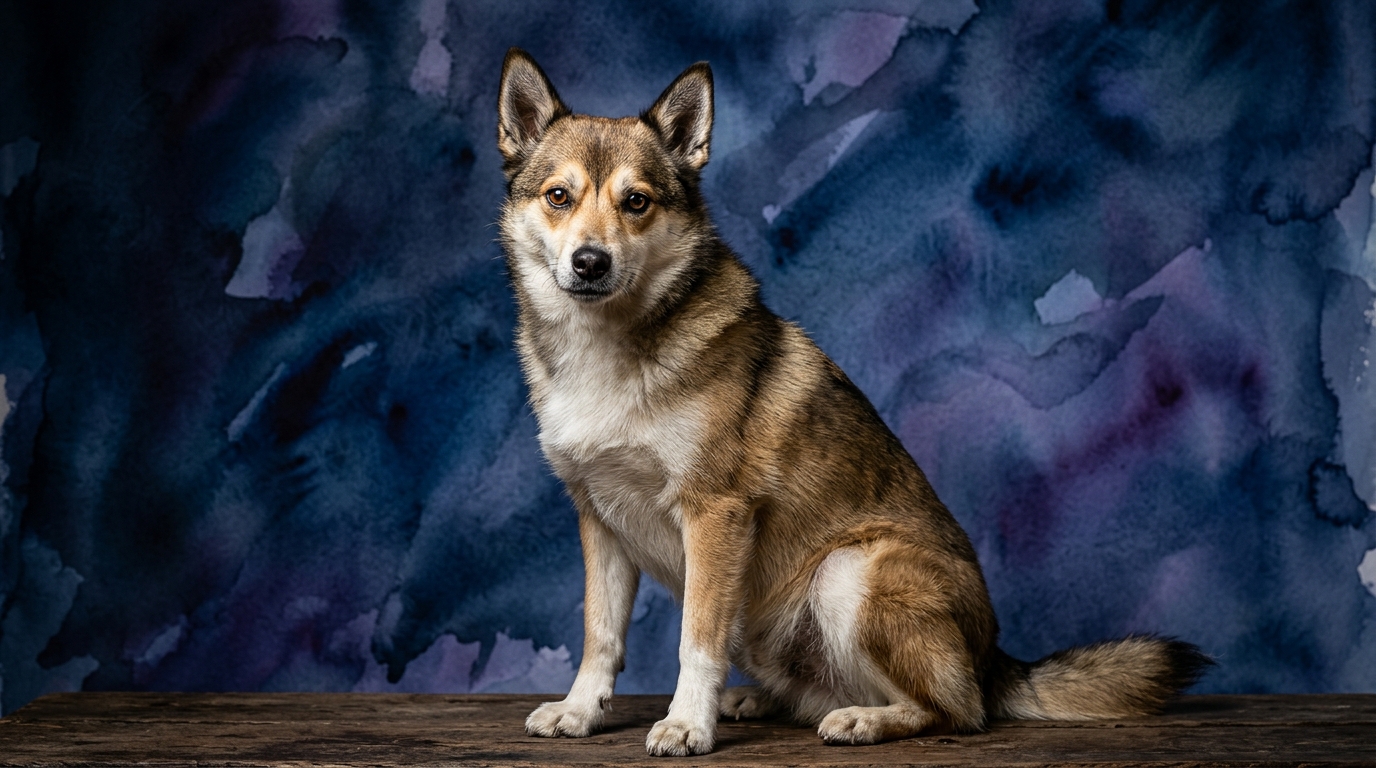
Side-by-Side IQ Profile: Boerboel and Norwegian Lundehund
At first glance, the IQ profiles for both the Boerboel and the Norwegian Lundehund appear remarkably similar, each scoring 3 out of 5 across all five dimensions measured by The Cosmic Pet Pet IQ Lab. This uniformity, however, belies a rich tapestry of cognitive expression shaped by their respective evolutionary paths and roles alongside humans. A '3/5' score indicates a moderate, capable level of intelligence, suggesting neither breed is a lightning-fast learner nor particularly slow, but rather possesses a practical, functional intellect.
For Problem Solving (3/5), the Boerboel often demonstrates this by assessing environmental changes related to security, quickly identifying potential threats or breaches in its territory. The Lundehund, conversely, applies its problem-solving to navigating complex, uneven terrain, such as finding a path through rocky cliffs or extracting prey from tight crevices, showcasing spatial reasoning and adaptability.
Training Speed (3/5) for the Boerboel means it absorbs commands and routines effectively with consistent, clear instruction, especially when tasks align with its protective instincts. The Lundehund also learns at a moderate pace, but its training often requires more patience and creative engagement, as its independent nature means it may question the purpose of repetitive drills, preferring to learn through exploration and discovery.
Social Intelligence (3/5) in the Boerboel manifests as a strong understanding of pack hierarchy and family dynamics, recognizing social cues and responding to its human companions with loyalty and protective instincts. The Lundehund's social intelligence, while present, is often geared towards understanding its immediate environment and the subtle signals of its human companions during cooperative tasks, though it retains a degree of self-reliance.
Instinctive Drive (3/5) for the Boerboel centers on guarding and territory defense, driven by a deep-seated need to protect its family and property. The Lundehund's instinctive drive is primarily rooted in its historical role as a puffin hunter, exhibiting a strong prey drive, exceptional agility, and an innate ability to navigate challenging natural environments. Finally, Memory (3/5) for both breeds indicates a solid capacity to recall learned behaviors, commands, and experiences, remembering faces, places, and routines with moderate retention, aiding in their respective roles and daily lives.
Where the Boerboel Wins Cognitively
While both breeds share identical 3/5 scores, the Boerboel’s cognitive strengths are distinctly channeled towards its role as a formidable guardian. Its Problem Solving (3/5) often translates into a superior ability to quickly assess and respond to perceived threats, making rapid decisions on how to deter intruders or protect its family. This isn't about abstract puzzles, but practical, real-world security scenarios.
The Boerboel’s Social Intelligence (3/5) is particularly pronounced in its capacity to understand complex family dynamics and hierarchy. It registers subtle shifts in human mood and behavior, allowing it to act as a sensitive yet steadfast protector. This nuanced social awareness, combined with its instinctive drive for protection (3/5), enables it to differentiate between a friendly visitor and a genuine threat, acting decisively when necessary. Its Memory (3/5) reinforces this, allowing it to consistently recall who belongs and who doesn't, contributing to a stable and reliable presence within its domain.
Where the Norwegian Lundehund Wins Cognitively
The Norwegian Lundehund's cognitive advantages are inextricably linked to its extraordinary physical adaptations and historical purpose as a puffin hunter. Its Problem Solving (3/5) shines in navigating highly irregular and confined spaces. This breed displays exceptional spatial reasoning, figuring out how to contort its flexible spine and shoulders to squeeze through tight rock crevices or scale slippery cliffs to reach bird nests. This is a very different kind of problem-solving than the Boerboel's, focused on physical manipulation of the environment.
The Lundehund’s Instinctive Drive (3/5) is a marvel of specialized adaptation, driving it to explore, burrow, and retrieve, often independently. This drive for self-directed activity, combined with its moderate Memory (3/5), allows it to recall complex routes and hunting strategies in challenging, dynamic landscapes. Its Training Speed (3/5), while moderate, benefits from its innate curiosity and agility, making it adept at learning complex sequences of movements and tricks that leverage its unique physical capabilities, rather than strict obedience for its own sake.
Which is Easier to Train and Why
Despite both breeds scoring 3/5 for Training Speed, their approaches to learning differ significantly due to their inherent temperaments and historical roles. The Boerboel, with its strong desire to please its family and its inherent protective instincts, generally responds well to a firm, consistent training regimen. Its social intelligence (3/5) makes it attuned to its handler's expectations, and its memory (3/5) ensures it retains commands, especially those that reinforce its role as a guardian. Training often involves establishing clear boundaries and leadership, which the Boerboel respects, leading to a relatively straightforward learning process for obedience and protection work.
The Norwegian Lundehund, however, presents a different training dynamic. Its long history of independent hunting means it possesses a strong will and a tendency to think for itself. While it has a 3/5 training speed, its problem-solving (3/5) and instinctive drive (3/5) are geared towards self-sufficiency rather than strict adherence to human commands. Training a Lundehund requires immense patience, creativity, and positive reinforcement; it thrives on varied tasks and games that engage its unique physical abilities and curiosity. Repetitive drills can quickly lead to boredom or stubbornness, making its training feel more challenging for owners who expect immediate, unwavering compliance.
Which Suits Active Owners vs. Relaxed Owners
For active owners, the Norwegian Lundehund is an excellent match, provided that 'activity' is interpreted as varied, engaging, and often self-directed exploration. Its need for physical and mental stimulation isn't about endless, monotonous runs, but rather opportunities to climb, burrow, and investigate. Owners who enjoy hiking, agility courses, or exploring new environments will find the Lundehund's zest for discovery highly rewarding, as its unique physical capabilities demand outlets for expression.
The Boerboel, while appearing more relaxed due to its calm demeanor indoors, still requires significant engagement. Its 'activity' is often more structured and purposeful, demanding regular walks, training sessions, and opportunities to patrol its territory. Relaxed owners might find the Boerboel's need for consistent mental stimulation and clear leadership challenging, as neglecting these can lead to boredom or undesired protective behaviors. While not requiring constant high-impact exercise like some sporting breeds, its cognitive and physical needs are substantial and require an owner committed to structured activity and mental enrichment.
The Verdict
Choose the Boerboel if you seek a steadfast, intelligent guardian capable of discerning threats and thriving within a clear family structure, valuing its practical problem-solving in security. Be prepared to provide consistent leadership and purposeful engagement to channel its protective instincts effectively.
Opt for the Norwegian Lundehund if you are an adventurous owner who values an independent, agile companion with exceptional spatial problem-solving and a strong drive for exploration. Be ready to engage its unique physical and mental needs through varied activities and patient, creative training methods.
🧠 Find Your Pet's IQ Score
Our Pet IQ Lab assessment covers 25+ tests across 5 cognitive dimensions — personalized to your breed.
Take the Full IQ Test →Frequently Asked Questions
Do the identical IQ scores mean these breeds are equally easy to live with?
No, identical IQ scores of 3/5 indicate a similar moderate capacity for learning, but their application of that intelligence differs greatly. The Boerboel's protective nature and the Lundehund's independence mean their daily behaviors and needs for management are quite distinct, impacting ease of living.
How important is early socialization for both the Boerboel and Norwegian Lundehund?
Early socialization is crucial for both breeds, though for different reasons. For the Boerboel, it helps temper its natural protective instincts, ensuring it distinguishes between real threats and everyday encounters. For the Lundehund, it fosters adaptability and confidence in various environments, preventing shyness or excessive caution due to its independent nature.
Do their unique physical traits impact how their intelligence is expressed?
Absolutely. The Boerboel's powerful build and presence directly inform its problem-solving in territorial defense, while the Lundehund's incredible flexibility and six toes enable its unique spatial reasoning for navigating complex terrains. Their physical form dictates the specific ways their moderate intelligence is put into action.