
Side-by-Side IQ Profile: Boerboel
Problem Solving (3/5): Boerboels demonstrate practical problem-solving, adept at assessing their environment for threats and making decisive judgments regarding protection and territorial integrity. Their cognitive strength lies in real-world situational analysis, such as discerning a true intruder from a familiar visitor.
Training Speed (3/5): Generally responsive to consistent, fair training, Boerboels grasp commands with moderate repetition, driven by a desire to please their primary family. Their independent nature and formidable presence necessitate a confident handler for effective guidance.
Social Intelligence (3/5): Their social acumen centers on the family unit, forming deep bonds and understanding emotional states within their trusted circle. Outside this, interactions are reserved and discerning, requiring careful socialization.
Instinctive Drive (3/5): Primarily driven by guarding and protection, they exhibit strong territorial instincts. A robust prey drive is secondary, requiring careful management, especially around smaller animals.
Memory (3/5): Boerboels have solid memory for routines, boundaries, and past interactions, which significantly influences future behavior and trust. This aids their guarding duties and long-term training retention.
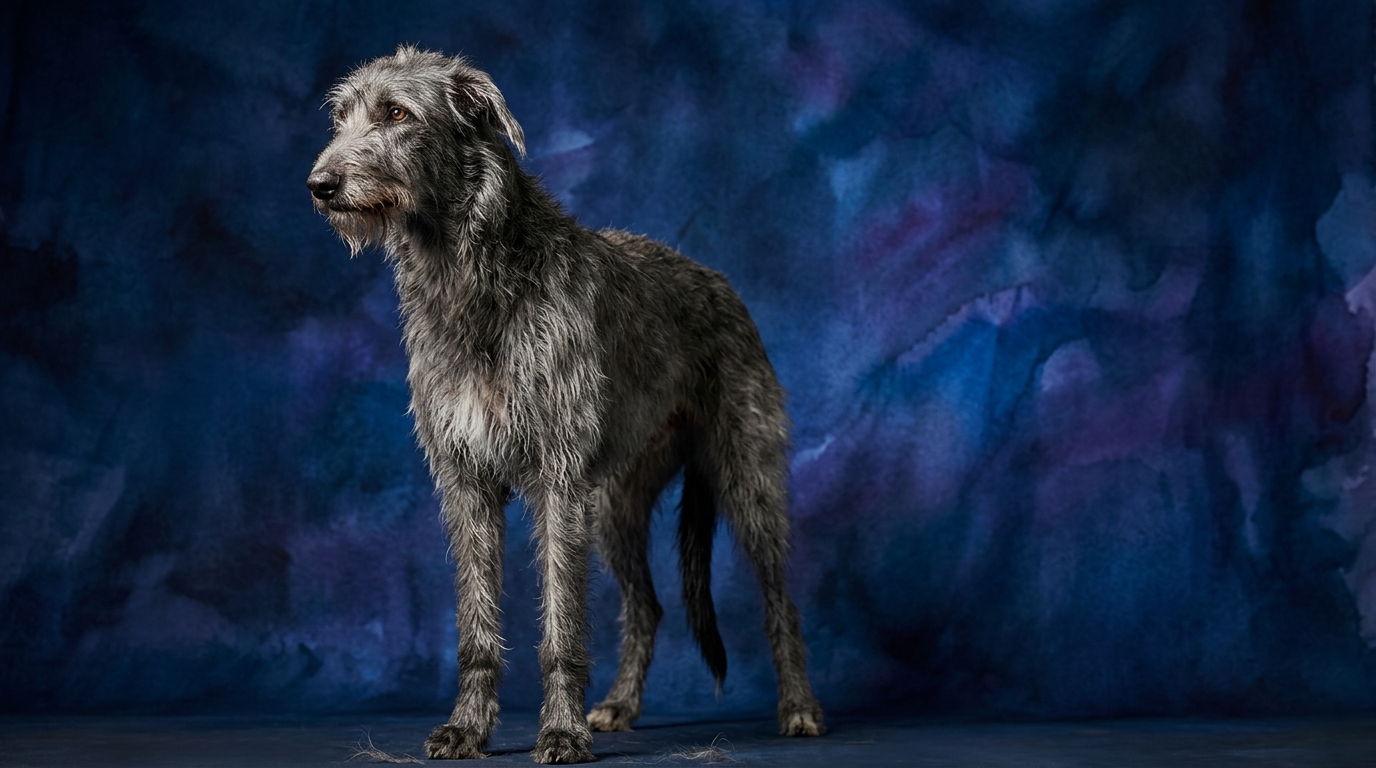
Side-by-Side IQ Profile: Scottish Deerhound
Problem Solving (3/5): Deerhound problem-solving often relates to hunting, manifesting as strategic pursuit. They excel at anticipating prey movements and efficiently navigating varied terrain. This also translates to gracefully maneuvering their environment and subtly communicating desires.
Training Speed (3/5): They learn commands moderately, but their independent sighthound nature means compliance is often self-motivated. Positive reinforcement and engaging methods work best, as harshness can lead to stubbornness.
Social Intelligence (3/5): Typically gentle and sensitive, Deerhounds interact politely with family and familiar dogs. They are often 'velcro dogs' with chosen people, attuned to emotional cues for quiet companionship. They are reserved with strangers.
Instinctive Drive (3/5): Their dominant drive is powerful prey pursuit, geared towards chasing fast-moving objects. This deep-seated instinct makes off-leash reliability challenging in unsecured areas.
Memory (3/5): Deerhounds possess good memory for pleasant experiences, familiar people, and routines. They recall comfy spots and enjoyable activities, though command retention can be influenced by their independent streak.
Where Boerboel Wins Cognitively
Despite similar numerical scores, the Boerboel's cognitive strengths distinctly align with its guardian heritage. Its problem-solving capacity, while rated 3/5, is acutely focused on practical application: assessing and responding to environmental changes or perceived threats. This breed excels at making swift, accurate judgments in dynamic situations concerning the safety of its family and territory. For instance, a Boerboel might independently analyze a new person's body language or a strange sound, deciding whether to alert or observe, showcasing a nuanced understanding of its protective duties. Its social intelligence, also 3/5, is geared towards deeply understanding the emotional states and hierarchy within its immediate human family. This profound connection allows it to anticipate owner needs or reactions, acting as a highly attuned, yet formidable, protector. Furthermore, its memory is particularly robust for recalling past interactions and reinforcing who is accepted within its boundaries, a critical asset for effective, long-term guardianship.
Where Scottish Deerhound Wins Cognitively
The Scottish Deerhound, while also scoring 3/5 across cognitive dimensions, demonstrates distinct advantages rooted in its sighthound lineage. Its problem-solving, though rated identically, excels in observational analysis and strategic pursuit. Deerhounds are masters of visual processing, capable of spotting distant movement and quickly calculating the most efficient trajectory to intercept. This translates into an intuitive understanding of physics in motion, allowing them to navigate complex terrains at speed while maintaining focus on a target. This cognitive strength is less about direct confrontation and more about elegant, efficient action. Their social intelligence, also 3/5, manifests as a gentle, empathetic connection with their chosen humans, often displaying a quiet understanding of moods and a desire for close, calm companionship. They offer a comforting presence rather than overt protection. Their memory, while rated 3/5, is particularly strong for spatial awareness and remembering favored resting spots or enjoyable past activities, reflecting their preference for comfort and routine.
Which is Easier to Train and Why
Determining which breed is 'easier' to train is less about raw cognitive capacity and more about their inherent motivations and behavioral predispositions. Both breeds hold a 3/5 in training speed, but their approaches to learning diverge significantly. The Boerboel, with its strong working drive and desire to please its primary handler, often exhibits a more direct willingness to engage in structured training. They thrive on having a job and understanding their role within the family unit, which can make them quite receptive to commands when motivated by praise and consistency. However, their formidable size and protective instincts mean that early, consistent socialization and impulse control training are absolutely crucial to channel their natural drives appropriately. Without this foundation, their independent nature and powerful build can become challenging to manage. In contrast, the Scottish Deerhound, while capable of learning, often approaches training with a more independent spirit. Their sighthound nature means they are less driven by a desire to please and more by their own internal motivations, particularly their powerful prey drive. This can make recall training incredibly challenging if an enticing target appears, as their instinct to chase often overrides learned commands. They are sensitive dogs who respond best to positive reinforcement, gentle guidance, and making training feel like a fun, collaborative activity rather than a strict imposition. Harsh methods will likely lead to stubbornness or disengagement. Therefore, while both are moderately trainable, the Boerboel might be considered 'easier' for an experienced owner seeking a dedicated working partner, while the Deerhound requires a patient owner who understands and respects its independent, chase-driven nature.
Which Suits Active Owners vs Relaxed Owners
The choice between a Boerboel and a Scottish Deerhound also hinges significantly on an owner's lifestyle and activity level. The Boerboel, despite its calm demeanor indoors, is fundamentally a working breed that thrives on purpose and mental engagement. While it doesn't require constant, high-speed running, it does need regular, substantial exercise to maintain its physical and mental well-being. This includes structured walks, obedience training sessions, and opportunities for mental stimulation, such as puzzle toys or 'jobs' around the home. An active owner for a Boerboel isn't necessarily a marathon runner, but rather someone who is consistent, dedicated, and capable of providing strong leadership and a stimulating environment. They are best suited for owners who enjoy purposeful activities and are prepared to integrate their dog into a structured routine. Conversely, the Scottish Deerhound presents a unique blend of activity requirements. They possess an explosive, high-speed energy that demands regular opportunities for full-out running in a securely fenced area. These bursts of activity, however, are often followed by extended periods of quiet relaxation indoors, where they transform into elegant couch potatoes. A Deerhound owner needs to be active enough to provide these crucial running outlets, but also content with a large, calm companion for much of the day. They are not suited for apartment living unless ample, safe running space is readily available. Therefore, while both require significant commitment, the Boerboel suits owners who enjoy consistent, purposeful activity and training, while the Deerhound is ideal for those who can accommodate intense, short bursts of speed balanced with long periods of serene companionship.
The Verdict
Choose a Boerboel if you seek a dedicated, protective companion who thrives on purpose and consistent, firm guidance, and you are prepared for extensive socialization and training to channel its formidable instincts.
Opt for a Scottish Deerhound if you appreciate a gentle, independent giant who needs secure space for intense sprints but otherwise enjoys a quiet, affectionate home life, and you understand their profound sighthound prey drive.
🧠 Find Your Pet's IQ Score
Our Pet IQ Lab assessment covers 25+ tests across 5 cognitive dimensions — personalized to your breed.
Take the Full IQ Test →Frequently Asked Questions
Do Boerboels and Scottish Deerhounds learn at the same pace?
While both are rated 3/5 for training speed, their learning styles differ. Boerboels often respond well to consistent, purpose-driven training due to their desire to please their family. Deerhounds, being more independent, learn best with positive reinforcement and patience, as their strong prey drive can sometimes override commands.
How do their problem-solving skills differ despite similar scores?
The Boerboel's problem-solving focuses on practical, situational assessment for protection and territorial integrity, making quick judgments about threats. The Scottish Deerhound's problem-solving excels in observational analysis and strategic pursuit, calculating efficient paths and tracking movement during a chase.
Are these breeds suitable for first-time dog owners?
Neither the Boerboel nor the Scottish Deerhound is typically recommended for first-time dog owners. Both breeds are large, powerful, and possess strong, inherent drives that require experienced handling, extensive socialization, and a deep understanding of their specific needs and temperaments.