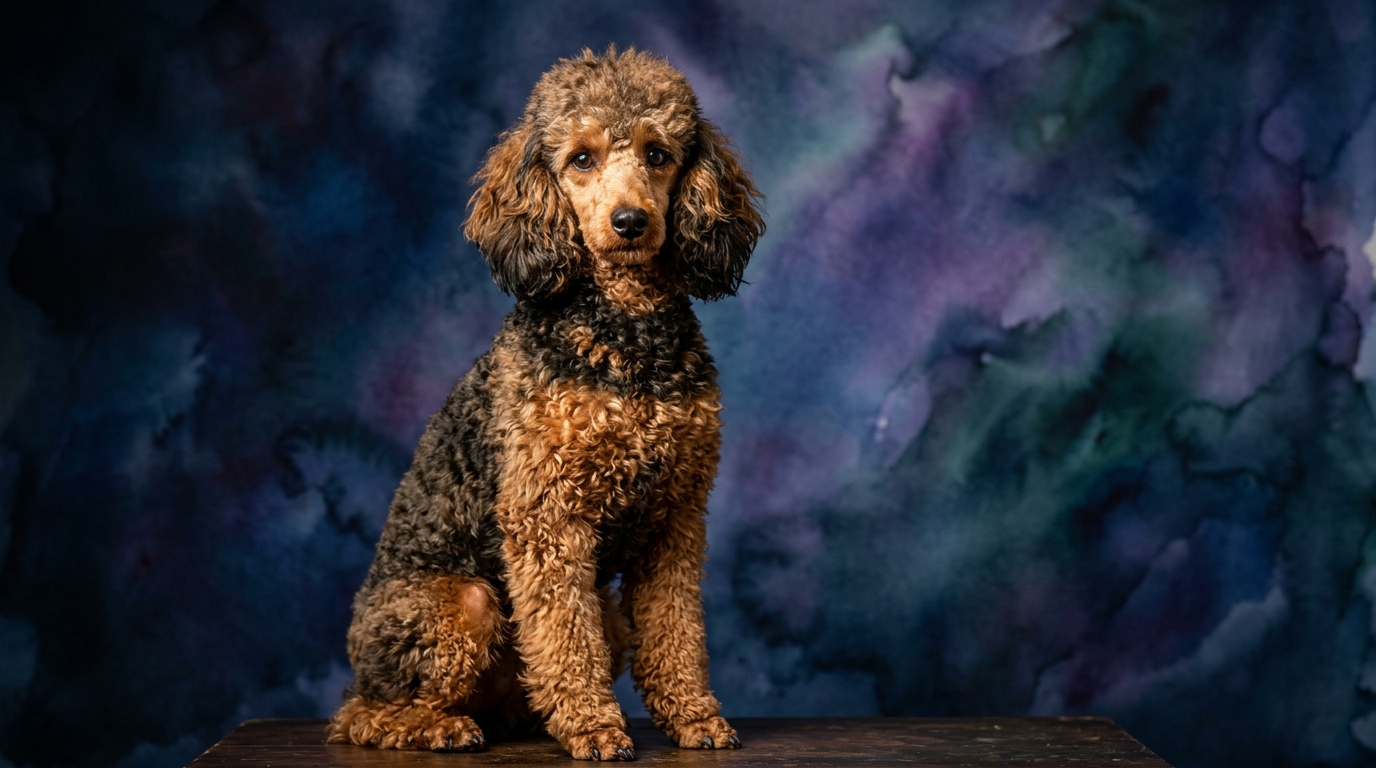
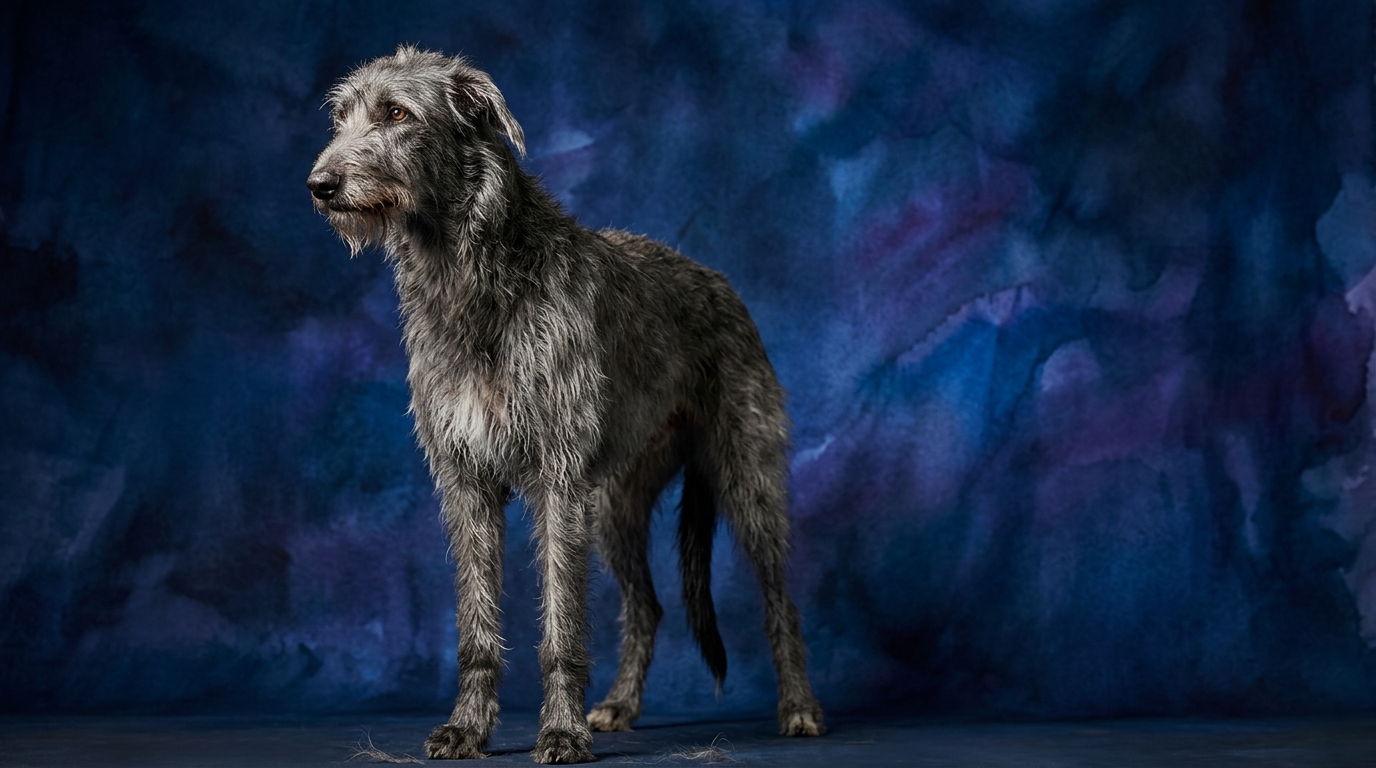
Side-by-Side IQ Profile: Poodle (Standard) vs. Scottish Deerhound
The Cosmic Pet Pet IQ Lab employs a five-dimensional framework to assess canine cognition, providing a nuanced understanding beyond simple obedience. Let's examine how the Standard Poodle and Scottish Deerhound measure up.
The **Standard Poodle** consistently demonstrates a highly adaptable and responsive cognitive profile. Its **Problem Solving** score of 5/5 indicates an exceptional capacity to navigate novel situations, understand complex sequences, and independently devise solutions to environmental challenges. This breed often figures out how to open gates or solve intricate puzzle toys with minimal guidance. For **Training Speed**, a 5/5 rating signifies rapid acquisition of new commands and behaviors, often requiring only a few repetitions before mastery, coupled with excellent retention over time. Their **Social Intelligence** also stands at 5/5, reflecting a profound ability to interpret human emotions, body language, and subtle vocal cues, leading to deep, empathetic connections and a strong desire to collaborate. The **Instinctive Drive** for the Poodle is 4/5, indicating a moderate yet versatile drive that can be channeled effectively into various activities like retrieving, agility, or obedience without becoming overwhelmingly singular. Finally, their **Memory** is rated 5/5, meaning they possess an outstanding recall of learned information, routines, and specific experiences, even after extended periods.
In contrast, the **Scottish Deerhound** exhibits a cognitive profile that aligns with its historical role as a sighthound, emphasizing independence and specialized focus rather than broad versatility. Its **Problem Solving** score of 3/5 suggests competence in addressing straightforward issues but less inclination for abstract problem-solving or sustained effort on complex, multi-step puzzles. Deerhounds tend to rely on instinct or established patterns rather than actively seeking novel solutions. For **Training Speed**, a 3/5 rating means they learn new commands at a steady pace, but often require more repetitions and consistent reinforcement than a Poodle, and may apply learned behaviors selectively. Their **Social Intelligence** also scores 3/5; while they form affectionate bonds with their families, they are often described as reserved or dignified, not always seeking constant human interaction or displaying the same level of emotional attunement as a Poodle. The **Instinctive Drive** for the Deerhound is 3/5, primarily centered around their powerful sighthound prey drive for chasing moving objects, which can be intense but is often specific in its manifestation and less easily redirected into diverse working tasks. Their **Memory** is rated 3/5, indicating a functional capacity to retain information and routines, though less extensive or enduring for infrequently practiced tasks compared to a Poodle.
Where Poodle (Standard) Wins Cognitively
The Standard Poodle's cognitive strengths lie in its unparalleled adaptability and eagerness for collaborative learning. Its 5/5 scores in Problem Solving, Training Speed, Social Intelligence, and Memory coalesce to create a highly versatile companion capable of excelling in diverse roles. Poodles demonstrate a remarkable capacity for understanding abstract concepts, making them adept at complex obedience, trick training, and even service work where nuanced decision-making is required. Their superior social intelligence allows them to anticipate human needs and respond with remarkable empathy, fostering a partnership built on mutual understanding. This breed's cognitive profile means it thrives on mental engagement, easily mastering new skills and retaining them, making it an ideal candidate for owners seeking a dog that can participate in a wide array of activities, from competitive dog sports to sophisticated companion tasks.
Where Scottish Deerhound Wins Cognitively
While its scores may appear lower in a general comparison, the Scottish Deerhound’s cognitive profile is perfectly suited for its specific heritage and certain lifestyles. The Deerhound's focused instinctive drive, while specific to sighthound pursuits, allows it to excel in its original purpose with unwavering dedication when stimulated by movement. Its moderate social intelligence translates into a dignified independence, meaning it is not overly demanding of constant human attention or prone to separation anxiety, which can be a distinct advantage for owners who appreciate a more self-reliant canine presence. The Deerhound's cognitive strengths foster a calm, quiet demeanor indoors, despite its capacity for explosive bursts of speed outdoors. This breed's mental makeup allows it to be a less 'busy' companion, appreciating comfort and quiet companionship without a constant need for complex mental tasks or intricate social navigation.
Which Is Easier to Train and Why
Based on their respective IQ profiles, the Standard Poodle is unequivocally easier to train than the Scottish Deerhound. The Poodle's 5/5 Training Speed and Problem Solving scores mean it grasps new commands with remarkable swiftness, often anticipating what is desired and adapting quickly to new cues. Their high social intelligence further enhances trainability, as they are often eager to please and highly motivated by human interaction and approval. This combination of rapid learning, strong retention, and a desire to collaborate makes Poodles highly responsive and biddable, capable of mastering complex chains of commands and performing with precision.
In contrast, the Scottish Deerhound's 3/5 ratings across most cognitive dimensions, particularly Training Speed and Problem Solving, indicate a more deliberate and independent approach to learning. Deerhounds require more patience, repetition, and consistent motivation during training sessions. Their lower social intelligence means they may not be as driven by human approval as a Poodle, and their independent nature, coupled with a specific instinctive drive, can make them less inclined to perform repetitive tasks or commands that don't immediately resonate with their inherent motivations. While trainable, success with a Deerhound often hinges on understanding their sighthound mentality, using positive reinforcement effectively, and recognizing that they may choose to comply rather than instantly obey, especially if distractions are present.
Which Suits Active Owners vs. Relaxed Owners
The Standard Poodle is an ideal match for owners seeking an active, engaged, and mentally stimulating partnership. Their high problem-solving abilities and versatile instinctive drive mean they require consistent mental challenges in addition to physical exercise. Owners who enjoy dog sports like agility, obedience, rally, or even intricate trick training will find the Poodle an enthusiastic and capable participant. Their social intelligence means they thrive on interaction and can become bored or exhibit undesirable behaviors if not adequately engaged both physically and mentally. This breed suits owners dedicated to providing a rich, varied environment that encourages cognitive growth and utilizes their impressive mental faculties daily.
The Scottish Deerhound, conversely, is better suited for owners who appreciate a more relaxed indoor presence, balanced with specific, intense bursts of physical activity. While they need ample space to run and express their sighthound instincts in a safe, enclosed area, they are largely calm and quiet indoors, earning them the nickname 'Royal Couch Potato.' They do not demand constant mental puzzles or intricate training sessions to be content. Their moderate cognitive scores and independent nature mean they are not prone to frantic energy or destructive boredom if their mental stimulation isn't constant. This breed thrives with owners who can provide a secure environment for their sprints, followed by a quiet, comfortable home life, without the expectation of a perpetually 'on' cognitive companion.
The Verdict
Choose a Standard Poodle if you seek a highly responsive, adaptable, and deeply collaborative canine partner eager for complex mental and physical engagement.
Opt for a Scottish Deerhound if you appreciate a dignified, independent companion with specific physical exercise needs, content with a more relaxed indoor cognitive presence.
🧠 Find Your Pet's IQ Score
Our Pet IQ Lab assessment covers 25+ tests across 5 cognitive dimensions — personalized to your breed.
Take the Full IQ Test →Frequently Asked Questions
Do Scottish Deerhounds require less mental stimulation than Standard Poodles?
Yes, generally. While all dogs benefit from mental engagement, the Scottish Deerhound's cognitive profile suggests less of a constant need for complex problem-solving or intricate learning tasks than the Standard Poodle. Their mental stimulation often revolves around their instinctive drives for chasing, rather than continuous training or puzzle work.
How does social intelligence impact the bond with each breed?
The Standard Poodle's 5/5 social intelligence fosters a highly empathetic and deeply collaborative bond, with the dog often anticipating needs and reacting sensitively to human emotions. The Scottish Deerhound's 3/5 social intelligence means they form affectionate bonds but are often more reserved and independent, appreciating companionship without necessarily seeking constant, intense interaction or emotional attunement.
Is a Scottish Deerhound difficult to live with due to its lower training speed?
Not necessarily difficult, but different. A Scottish Deerhound's 3/5 training speed means they require more patience, consistency, and positive reinforcement during training, and may not respond with the same rapid obedience as a Poodle. Owners should be prepared for a more independent learner who might choose to comply rather than instantly obey, especially if their sighthound instincts are piqued.