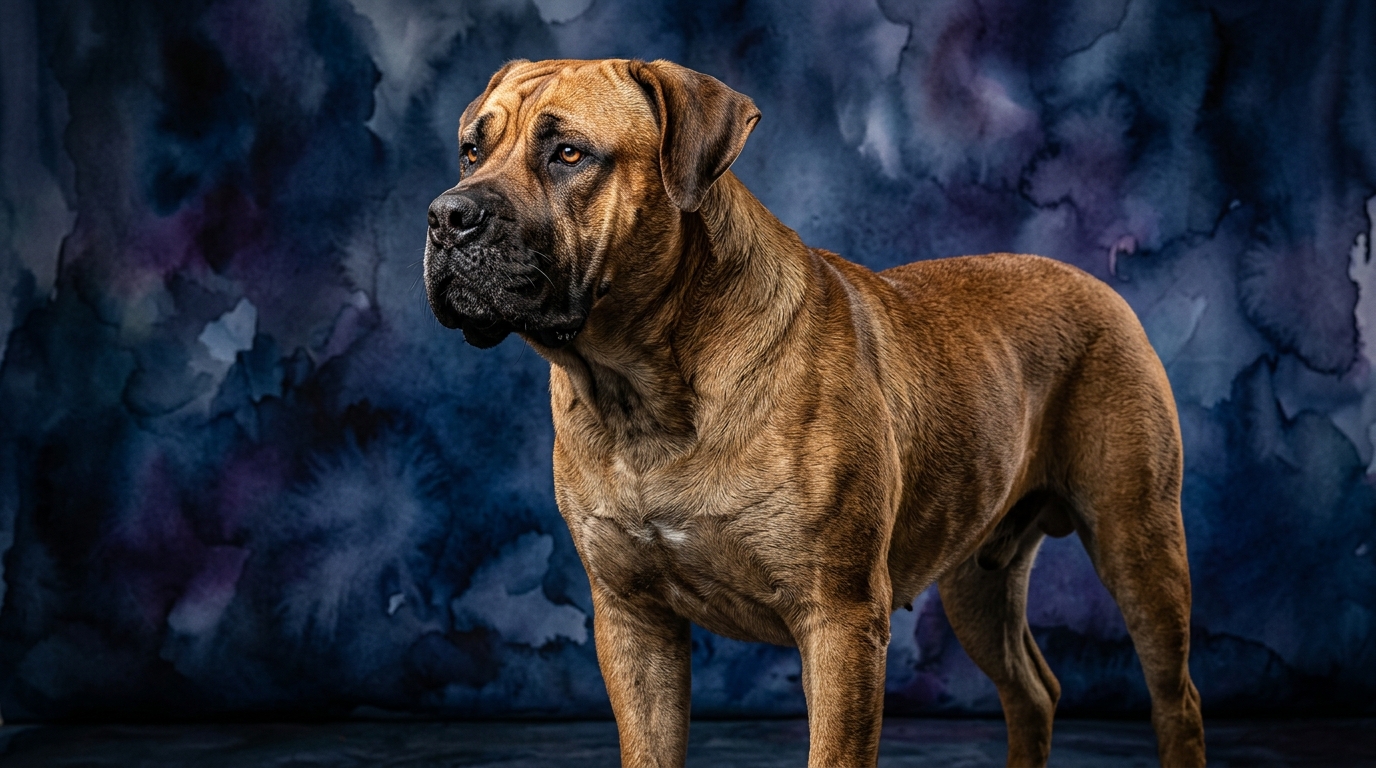
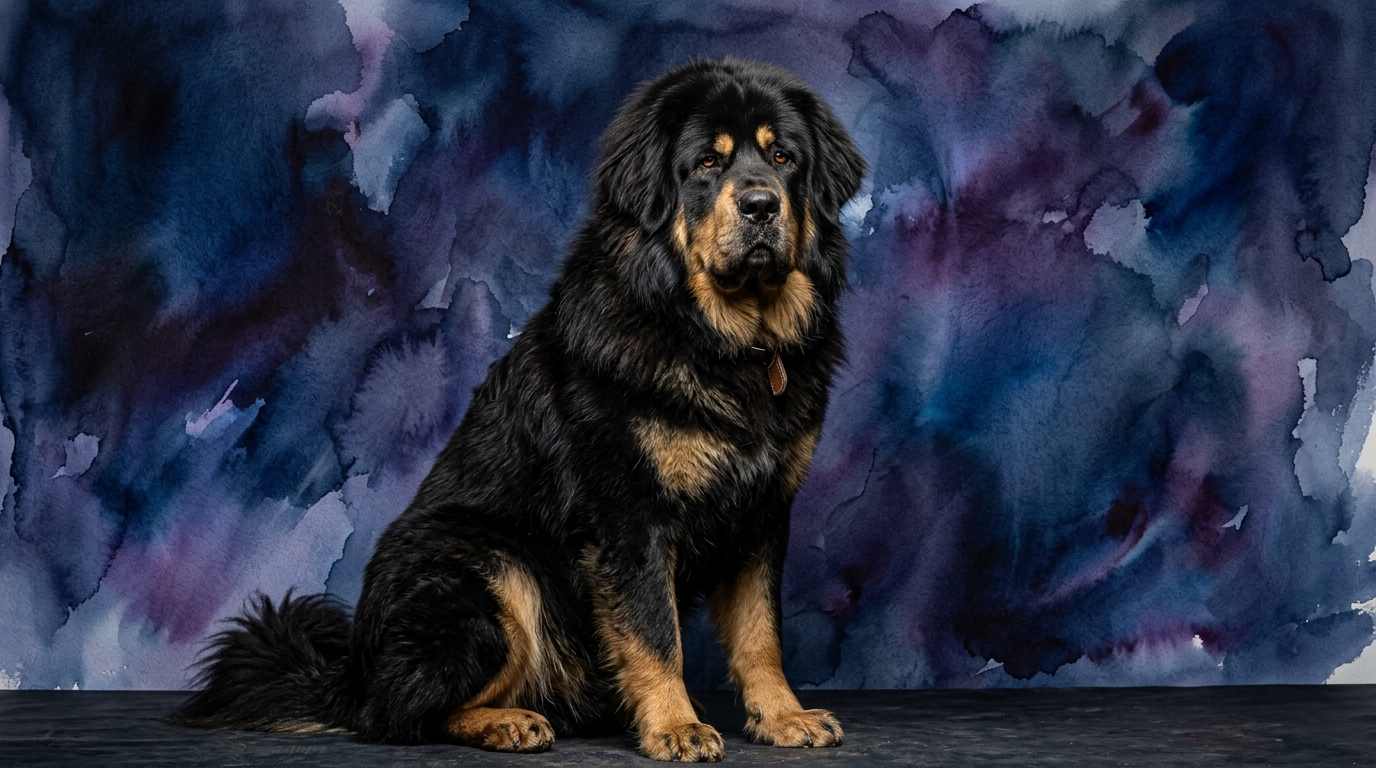
Side-by-Side Cognitive Profile: Boerboel vs. Tibetan Mastiff
**Boerboel - Problem Solving (3/5):** This dimension in the Boerboel manifests as practical, situation-specific judgment, particularly in threat assessment and property defense. They excel at evaluating dynamic scenarios within their guarded territory, often making swift, decisive actions on how to neutralize perceived dangers, rather than engaging in complex, abstract puzzles. Their solutions are typically direct, protective, and geared towards maintaining the safety of their family and domain, demonstrating a strong cognitive link between observation and immediate, effective response.
**Tibetan Mastiff - Problem Solving (3/5):** For the Tibetan Mastiff, problem-solving revolves around independent vigilance and strategic territorial management. Their cognitive efforts are geared towards understanding their expansive domain, identifying optimal vantage points for surveillance, and determining the most effective, often subtle, strategies for deterring intruders. This often involves a thoughtful, deliberate approach to their environment, prioritizing self-reliance and long-term security over immediate human direction, reflecting a deep, ingrained understanding of their ancient guarding role.
**Boerboel - Training Speed (3/5):** Boerboels demonstrate a robust capacity to learn new commands and routines, but their progress isn't marked by eager, unquestioning compliance. Their training speed is influenced by a discerning nature; they require clear, consistent communication and a strong, fair leader to accept instruction. They often need to understand the practical purpose behind a command or the validity of the request before integrating it into their behavioral repertoire, making them thoughtful rather than impulsive learners.
**Tibetan Mastiff - Training Speed (3/5):** The Tibetan Mastiff's training speed is a testament to their profound independence and ancient heritage of self-reliance. While perfectly capable of learning, their inherent autonomy means they are not naturally inclined to follow human directives without question. Training requires immense patience, positive reinforcement, and a deep respect for their autonomous spirit, as they process and decide whether to comply on their own terms, often at a pace dictated by their own assessment of the situation.
**Boerboel - Social Intelligence (3/5):** Boerboels exhibit strong, discerning social bonds with their immediate family, displaying an ability to read and respond to their owners' moods, intentions, and subtle cues for safety. Outside this inner circle, their social intelligence is characterized by a cautious wariness; they are adept at evaluating strangers and other animals, often reserving their trust and affection for those they know and deem safe, indicating a selective but deep social awareness within their protective sphere.
**Tibetan Mastiff - Social Intelligence (3/5):** The Tibetan Mastiff's social intelligence is marked by a profound, yet often understated, loyalty to their family, often expressed through quiet, watchful devotion rather than overt displays of affection. With outsiders, their social interactions are typically reserved, aloof, and highly evaluative. They possess a keen ability to observe and assess new individuals, but their default setting is one of cautious independence, rarely seeking external validation or engagement, preferring to maintain a dignified distance.
**Boerboel - Instinctive Drive (3/5):** The Boerboel's instinctive drive is predominantly centered on protection and territorial defense, manifesting as a powerful, innate urge to guard their family and property. This is often expressed through vigilant patrolling, authoritative warning barks, and a readiness to intervene if a threat is perceived. Their drive is rooted in a deep sense of responsibility for their domain, driving their constant awareness and protective actions.
**Tibetan Mastiff - Instinctive Drive (3/5):** For the Tibetan Mastiff, instinctive drive is an all-encompassing force of territorial guardianship, particularly pronounced during the night. This ancient drive compels them to survey their surroundings, respond acutely to environmental cues, and protect their perceived flock or property with unyielding dedication. It's a primal, self-directed instinct that prioritizes vigilance, deterrence, and an unwavering commitment to their assigned domain.
**Boerboel - Memory (3/5):** Boerboels possess a reliable, long-term memory for learned commands, established routines, and the individuals they encounter, whether friend or potential foe. They accurately remember positive and negative experiences, which can significantly influence their future interactions and training responses. Their memory robustly supports their role as consistent, dependable guardians, allowing them to recall who belongs and who does not with precision.
**Tibetan Mastiff - Memory (3/5):** The Tibetan Mastiff's memory is remarkably robust, particularly regarding their expansive territory, established boundaries, and the identity of those within their accepted circle. They retain detailed knowledge of past events and perceived threats, informing their future guarding strategies and vigilance. This consistent memory contributes significantly to their unwavering, independent surveillance and protective behaviors over time.
Where the Boerboel Wins Cognitively
Despite identical scores, the Boerboel often demonstrates a more direct and responsive cognitive approach to human-directed tasks and family integration, which can be perceived as an advantage in a modern household. Their problem-solving, while rated 3/5, is more readily applied to understanding and executing specific commands related to protection or obedience within a structured family environment. They process social cues from their immediate human companions with a nuanced understanding that often translates into a more immediate, albeit still discerning, willingness to engage and follow direction. This means their cognitive strengths are particularly effective in scenarios where a guardian needs to operate in close concert with human decision-making, offering a more collaborative mental framework for defense and daily life, making them more adaptable to varied family routines and activities.
Where the Tibetan Mastiff Wins Cognitively
Conversely, the Tibetan Mastiff excels in cognitive independence and self-directed vigilance, even with a 3/5 rating across the board, making them supremely effective in their traditional role. Their problem-solving is unparalleled in its autonomous application to territorial management, allowing them to assess and respond to environmental changes and potential threats without constant human oversight or instruction. Their social intelligence, while reserved, is profoundly attuned to their expansive surroundings, enabling them to make independent judgments about potential threats from a distance, relying on their own keen observations. This breed's cognitive architecture is optimized for self-sufficiency, thriving in roles where they are expected to make their own decisions regarding protection and surveillance, showcasing a deep, internal locus of control that requires minimal human intervention for effective guarding.
Training Dynamics: Which is Easier and Why?
While both breeds share a 3/5 training speed, the Boerboel is generally perceived as easier to train due to nuanced behavioral differences. Boerboels, though strong-willed, typically possess a greater desire to please their primary human, provided that individual establishes clear, consistent leadership. They respond better to structured training sessions and benefit from understanding the 'why' behind a command, but once convinced, they are more likely to integrate the lesson. The Tibetan Mastiff, on the other hand, is famously independent and views commands as suggestions rather than directives. Their training requires an extraordinary level of patience, creativity, and an acceptance that they will often prioritize their own judgment over an owner's instruction, making progress slower and less predictable.
Matching Lifestyles: Active vs. Relaxed Owners
For active owners seeking a canine partner for structured activities or engagement, the Boerboel presents a more suitable cognitive match. Their 3/5 instinctive drive can be channeled into protection sports, advanced obedience, or even active family outings, benefiting from mental stimulation that involves human participation. Their problem-solving abilities, while practical, are more adaptable to learning new skills within a guided framework. A relaxed owner, particularly one with a large, secure property and an appreciation for a self-sufficient guardian, might find the Tibetan Mastiff more fitting. This breed thrives on independent surveillance, and their cognitive strengths are best utilized when they can observe and protect their domain largely on their own terms, requiring less direct, active engagement from their owner in terms of daily tasks or training.
The Verdict
Choose the Boerboel if you seek a formidable guardian who, while independent, will integrate more readily into a structured family life and actively collaborate in training and protection duties.
Choose the Tibetan Mastiff if you value an ancient, self-reliant guardian whose profound independence and autonomous vigilance are paramount, requiring an owner who respects their self-directed nature.
🧠 Find Your Pet's IQ Score
Our Pet IQ Lab assessment covers 25+ tests across 5 cognitive dimensions — personalized to your breed.
Take the Full IQ Test →Frequently Asked Questions
Do Boerboels and Tibetan Mastiffs respond differently to strangers?
Yes, Boerboels are discerning but often more directly assertive in their assessment of strangers within their territory, while Tibetan Mastiffs tend to be more aloof, reserved, and watchful, often preferring to maintain a distance. Both are protective, but their initial social responses differ in intensity and engagement.
How does their 3/5 memory score impact their daily lives?
Their 3/5 memory means both breeds effectively recall routines, people, and past experiences. For Boerboels, this supports consistent guard duties and reliable responses to known commands. For Tibetan Mastiffs, it reinforces their understanding of territorial boundaries and who belongs, contributing to their unwavering vigilance.
Can a Boerboel or Tibetan Mastiff be a good first-time dog for an owner?
Neither breed is recommended for first-time dog owners due to their strong guarding instincts, independent nature, and sheer power. Both require experienced handlers who understand dominant breeds, are committed to extensive socialization, and can provide consistent, firm leadership.